
First Acevedo meeting was a disgrace. That must not be repeated, Miami commissioners | Editorial
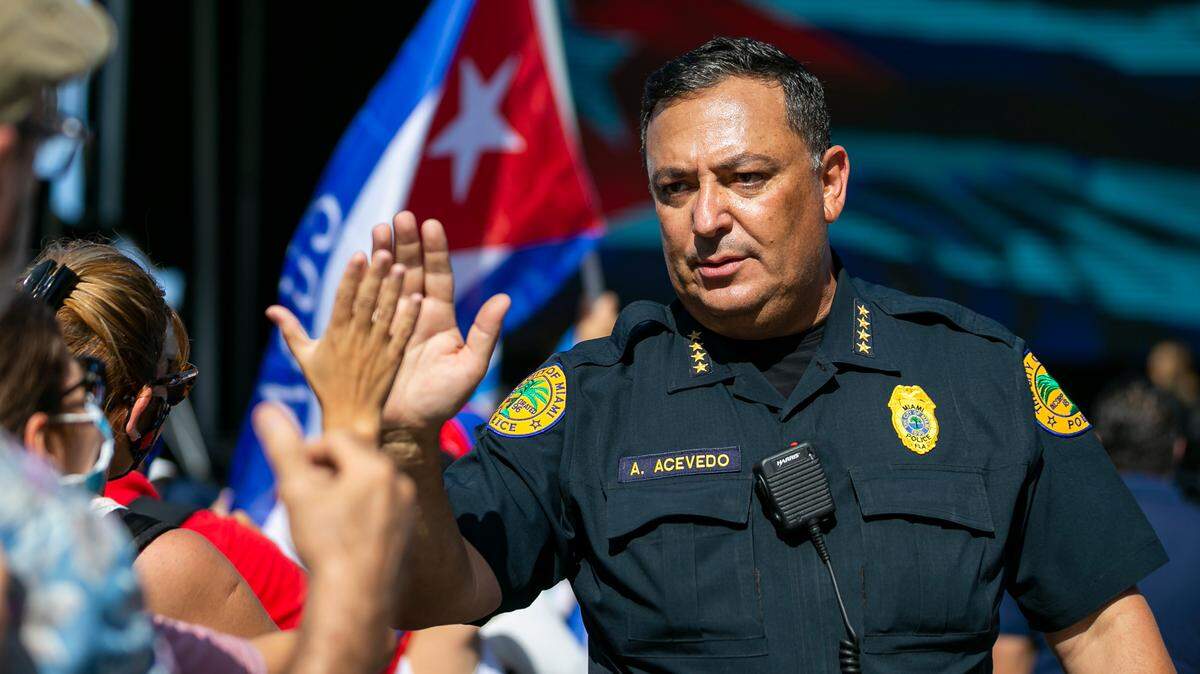
Part II of Miami Police Chief Art Acevedo’s reckoning kicks off Friday in Miami City Hall. Unfortunately, rowdy Part I left the city with an embarrassing black eye. Let’s not repeat it.
Starting at 1 p.m., Miami City Commissioner Joe Carollo will be on the dais again, leading the discussion, which began on Monday, detailing Acevedo’s conduct during his professional career in Los Angeles, Austin and Houston — his stops before arriving in Miami in April.
“On Friday, we will focus on Chief Acevedo’s time in Miami.” That’s all Carollo would tell the Editorial Board on the eve of the special commission meeting. Finally, Carollo & Co. took Miamians on an unnecessary cross-country tour of the chief’s career on Monday.
Acevedo’s time in Miami has been short, about 26 weeks. But a lot has happened. Acevedo has ruffled the feathers of other local leaders, including prosecutors and judges — and even gone after Gov. Ron DeSantis. He has fired or demoted several high-ranking officers and has been camera-ready for the media. Carollo believes it is to enhance his political aspirations. We believe that possibility is irrelevant.
Not well-vetted
But Carollo’s central point has been that Acevedo was not properly vetted for the job of top cop by City Manager Art Noriega, his direct boss and the only one who can fire him. Commissioners can only saber-rattle.
Carollo has implied that Miami Mayor Francis Suarez and Noriega were both enthralled with the idea of hiring a celebrity police chief — Acevedo was a frequent commentator on CNN. In the process, they ignored the work of a Miami search committee that had narrowed the field to another eight candidates for the job.
Alone, Noriega and Suarez hired Acevedo in secrecy, then announced it to the public. Jaws dropped within the department.
We believe that Mayor Suarez meant to do the best for a city he is trying to transform. To his credit, he is always thinking outside the box. We think he viewed Acevedo as a great reformer; he would clean house in the department and bring it into a new day. And Acevedo’s missteps aside, isn’t that much of what’s driving the haters? That he’s disrupted the comfy status quo of cronyism, the status quo of department racism against Black officers? As the inquisition continues today, perhaps, one courageous commissioner or another should dig deeper into that particular shame. Blacks in law enforcement should be fighting crime, not their Anglo and Hispanic colleagues’ intolerance.
Mayor takes a pass
On Monday, as his handpicked chief was being criticized by commissioners, Suarez remained in his office. He is not required to be in chambers, but considering Acevedo was his pick, a show of support is in order on Friday.
In the case of Acevedo, his mission of “reformer” has put him on a hit list of those who will be “reformed” — in other words, pushed out, demoted, or reassigned.
We know that the chief finds himself in that kind of situation within his department. Some want him gone. The Fraternal Order of Police conducted a recent survey of the rank and file and reported Monday that 615 officers tallied had no confidence in the chief. Internal enemies have been tipping off the media on every Acevedo misstep.
But the chief has fought back. He has accused the commissioners of interfering in an investigation within his department and said he would report them to the feds. In other words, he has set the stage for a whistle-blower status for himself. Savvy move.
We don’t know what will happen Friday, but the people of Miami deserve more-professional proceedings this time around. Part I was a disgrace.
BEHIND THE STORY
MOREWhat's an editorial?
Editorials are opinion pieces that reflect the views of the Miami Herald Editorial Board, a group of opinion journalists that operates separately from the Miami Herald newsroom. Miami Herald Editorial Board members are: opinion editor Amy Driscoll and editorial writers Isadora Rangel and Mary Anna Mancuso. Read more by clicking the arrow in the upper right.
What's the difference between an op-ed and a column?
How does the Miami Herald Editorial Board decide what to write about?
The Editorial Board, made up of experienced opinion journalists, primarily addresses local and state issues that affect South Florida residents. Each board member has an area of focus, such as education, COVID or local government policy. Board members meet daily and bring up an array of topics for discussion. Once a topic is fully discussed, board members will further report the issue, interviewing stakeholders and others involved and affected, so that the board can present the most informed opinion possible. We strive to provide our community with thought leadership that advocates for policies and priorities that strengthen our communities. Our editorials promote social justice, fairness in economic, educational and social opportunities and an end to systemic racism and inequality. The Editorial Board is separate from the reporters and editors of the Miami Herald newsroom.
How can I contribute to the Miami Herald Opinion section?
The Editorial Board accepts op-ed submissions of 650-700 words from community members who want to argue a specific viewpoint or idea that is relevant to our area. You can email an op-ed submission to oped@miamiherald.com. We also accept 150-word letters to the editor from readers who want to offer their points of view on current issues. For more information on how to submit a letter, go here.
This story was originally published October 1, 2021 at 9:12 AM.