
Miami-Dade’s crumbling courthouse a real injustice. After Surfside, make it top priority | Editorial
Miami-Dade County didn’t follow its own safety requirement for maintenance of older buildings when it let the downtown courthouse’s 40-year recertification process drag on for years. And no one seems to have a reasonable explanation as to why.
We’ve learned the hard way in this community about the importance of structural integrity in older buildings. After the Surfside condo collapse on June 24 that killed 98 people, the county launched an inspection of older buildings, as it should have. Many municipalities, including Miami, began reviews as well. And when a July 6 courthouse inspection turned up an “excessively corroded” column on the 25th floor, Chief Judge Nushin Sayfie shut down the historic building.
That was the right move until engineers can be completely certain the building is safe for people. A different engineering firm’s inspection later in July found the courthouse safe to reopen, though, so far, the courthouse has remained closed, and Mayor Daniella Levine Cava told the Herald’s Editorial Board on Wednesday that the county is “aggressively monitoring” the situation, the responsible thing to do.
But none of that answers the question: Why was a 27-floor building constructed in the 1920s was allowed to reach this crisis point?
‘Daunting deterioration’
It’s not as though people weren’t aware that the courthouse needed serious repairs. Judges and lawyers had been complaining for years about mold and water damage. A 1987 engineer’s report described deterioration in basement columns. In 2014, a city inspector posted a notice at the courthouse entrance stating that structural and safety certifications — required every decade once a building reaches its 40th year — had not been completed. There was even a 2016 report by Miami-Dade’s inspector general specifying that the courthouse was among a number of older county buildings out of compliance with the recertification requirement of the building code.
That provision was added after the collapse of a federal Drug Enforcement Administration building in Miami in 1974 that killed seven. Apparently, that terrible lesson faded with time.
As a Miami Herald story Wednesday put it, the courthouse — long considered the centerpiece of Miami’s downtown — has now become “a case study in deferred maintenance and daunting deterioration” that has stretched into a second mayor’s term.
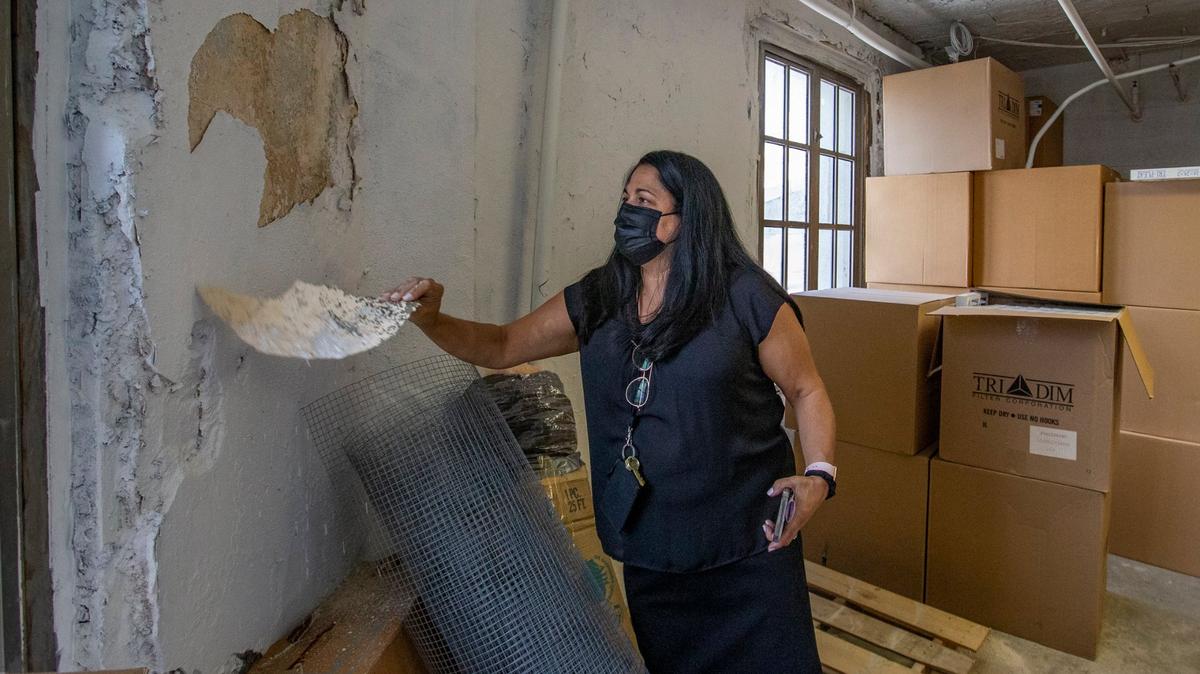
One photo accompanying the Herald’s story shows the county’s former chief judge, Bertila Soto, peeling off a chunk of painted plaster from a wall in an old storage room in the courthouse in late July.
Several delays
More column work is needed in the basement and was supposed to start three years ago. After problems with bids in 2018, the county was supposed to start over — but that didn’t happen. A new solicitation for bids to do the work is now supposed to go out later this month.
A new courthouse is being built next door and expected to be finished in 2024. And the old courthouse is supposed to be sold, to offset some of the costs of the new building. That’s a good solution for the future.
But this was a building that the public used for the past seven years, when county and city officials knew it hadn’t passed muster for basic safety. Repair work was supposed to start three years ago. It didn’t. The 40-year recertification didn’t happen, either. Where was the leadership to get this building — and any others that needed it — in shape?
There’s a bit of hope in that arena now. Local, state and federal officials are set to meet Aug. 30 for a working group to help coordinate legislation, consider recertification timelines and discuss the qualifications for inspectors, among other issues raised by the Surfside collapse, according to Miami-Dade Mayor Daniella Levine Cava. That’s a good idea.
Levine Cava told the Board that the county is “aggressively monitoring” what is happening with the courthouse and “doing everything possible to reassure everyone that we are being very diligent.” That will help.
The continuing work by cities and the county to inspect older buildings — and take action when needed — will also go a long way to dispel fears.
The courthouse was a problem allowed to fester for far too long. If things really have changed, let’s fix the courthouse quickly and efficiently. That’s the proof we need — and deserve.