
After violent Miami Beach police arrests, Miami-Dade commission review-panel delay indefensible | Editorial
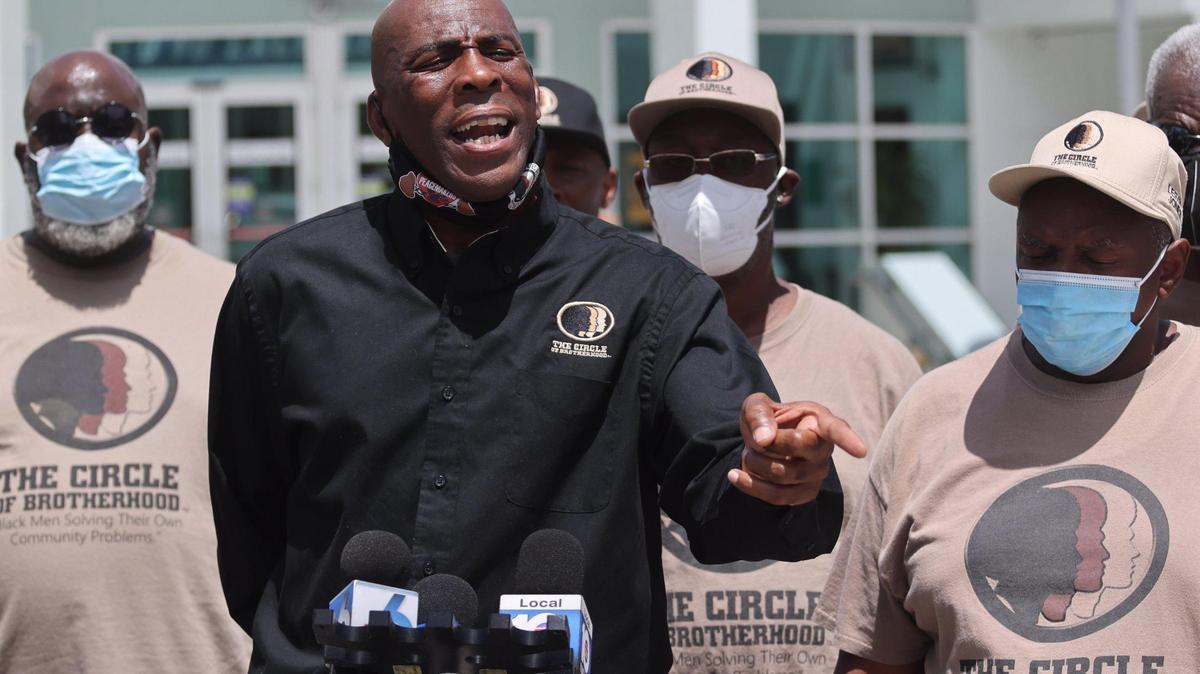
We’ve just seen stark and brutal proof that the county’s Independent Civilian Panel — revived last year by the Miami-Dade Commission to give voice to residents who think they have been mistreated by police — should already be up and running.
The violent arrest last week of two Black men at a Miami Beach hotel was fortuitously captured on video and, thankfully, quickly addressed by the police chief and Miami-Dade’s state attorney. The officers’ own body cams and security footage from the Royal Palm Hotel told a clear story of excessive force that led to five officers being suspended and charged with misdeamenors.
But what if there had been no video of the officers kicking and slamming the head of handcuffed Dalonta Crudup, 24, on the lobby floor and of hotel guest Khalid Vaughn, 28, being tackled as he videotaped the incident with his cell phone — the apparent reason for his unjust arrest?
What if it had just been the word of two Black men against the ridiculous number of officers — 21 — who showed up to the arrest, to watch or land some kicks and blows themselves?
We’re not soft on criminals. Crudup deserved to be arrested for allegedly injuring a police officer with his scooter then fleeing to the Royal Palm. But he didn’t deserve to be beaten once handcuffed on the ground. And Vaughn was videotaping something the officers didn’t want to be recorded, and that’s what got him tackled and arrested. Charges against Vaughn later were dropped.
Commission obstinance
But what recourse would Crudrup and Vaughn have?
Maybe, they could have filed their complaint of police misconduct with the Independent Civilian Panel, relaunched by the Miami-Dade Commission in August 2020 after vetoes and battles.
Back then, a divided commission agreed to each name an appointee to create a 13-member panel that would publicly review allegations of police misconduct, all a result of citizens’ outcry over the murder of George Floyd by Minneapolis police that year.
But someone like Vaughn or Crudup couldn’t appeal to the panel even if they wanted to. A year later, the county’s Independent Civilian Panel still does not exist.
Members have yet to be impaneled; no first meeting has been scheduled — and likely won’t be until next year.
Unbelievable.
A Herald editorial first detailed the reason for the needless delay in June. Nothing has changed — except that the impasse has grown into a full-fledged standoff over appointees. According to the ordinance that created the ICP, only two members from the same profession can be named to the panel. But four commissioners — Sally Heyman, Oliver Gilbert, Keon Hardemon and Kionne McGhee — have named attorneys as their appointees. And none of them will budge.
‘Internal squabbling’
At least one commissioner is fuming over the delay in relaunching the panel.
“That this panel be relaunched was the will of the people, “ Heyman told the Board. “The community spoke out, and the commission voted for it. It should be in place now. It’s been a year.”
Some community advocates agree.
“This internal squabbling is delaying a critical avenue for police accountability and reform. It took too long to even pass the ordinance, and now further delays leave survivors of police brutality with limited options. This is not in the best interests of the people of Miami-Dade,” Melba Pearson, a former Miami-Dade prosecutor and civil-rights attorney, told the Editorial Board.
We praise Heyman for coming up with a proposed solution to get past the stalemate, but it will take time.
Heyman has filed an ordinance to amend the ICP ordinance so that the two attorneys are selected based on the order of their appointments, first named, first picked. The Heyman ordinance passed first reading and was scheduled for a public hearing in the July 15 meeting of the Community Safety and Security Committee, but that meeting was canceled.
The next meeting where it can be addressed is Sept. 16. The ordinance would then be placed on the agenda for an October commission meeting in for second reading and, possibly, final passage.
If it passes second reading, then the two commissioners whose attorney appointees are not the first two named would have to appoint new people. But by then, we’re approaching the holidays.
Choose someone else
If the ordinance does not pass second reading, then we are back to using the random selection process, and the two commissioners whose attorney appointees are not randomly selected have to appoint two new people. But commissioners are protective of their picks.
Heyman said she “adhered to the requirements “and ended up assigning first, naming Coral Gables attorney and mediator Pamela Perry as her pick. “I think she’s eminently qualified; she’s perfect for the job,” Heyman said of Perry.
Gilbert, too, told the Board he’s standing by his attorney pick, Loreal A. Arscott, past president of the Wilkie D. Ferguson Jr. Bar Association.
“I am more than confident she will perform her duties with the same integrity, passion and dedication she has exemplified throughout her career,” Gilbert told the Board. “She’s more than just an attorney.”
But there also are other professionals in this town, other than attorneys, whose experience could enrich the panel’s work.
As we said in June, the revitalization of this panel is crucial. Bad policing needs a public airing. Maybe some of the battling commissioners need to realize the panel’s mission is bigger than any one person, one appointee.
Inadvertantly, this attorney dispute is doing a disservice to this community.
Work it out, please.
BEHIND THE STORY
MOREWhat's an editorial?
Editorials are opinion pieces that reflect the views of the Miami Herald Editorial Board, a group of opinion journalists that operates separately from the Miami Herald newsroom. Miami Herald Editorial Board members are: opinion editor Amy Driscoll and editorial writers Isadora Rangel and Mary Anna Mancuso. Read more by clicking the arrow in the upper right.
What's the difference between an op-ed and a column?
How does the Miami Herald Editorial Board decide what to write about?
The Editorial Board, made up of experienced opinion journalists, primarily addresses local and state issues that affect South Florida residents. Each board member has an area of focus, such as education, COVID or local government policy. Board members meet daily and bring up an array of topics for discussion. Once a topic is fully discussed, board members will further report the issue, interviewing stakeholders and others involved and affected, so that the board can present the most informed opinion possible. We strive to provide our community with thought leadership that advocates for policies and priorities that strengthen our communities. Our editorials promote social justice, fairness in economic, educational and social opportunities and an end to systemic racism and inequality. The Editorial Board is separate from the reporters and editors of the Miami Herald newsroom.
How can I contribute to the Miami Herald Opinion section?
The Editorial Board accepts op-ed submissions of 650-700 words from community members who want to argue a specific viewpoint or idea that is relevant to our area. You can email an op-ed submission to oped@miamiherald.com. We also accept 150-word letters to the editor from readers who want to offer their points of view on current issues. For more information on how to submit a letter, go here.
This story was originally published August 8, 2021 at 6:00 AM.