
To mask or not to mask: We spoke to experts on how to keep kids COVID-free at school | Editorial
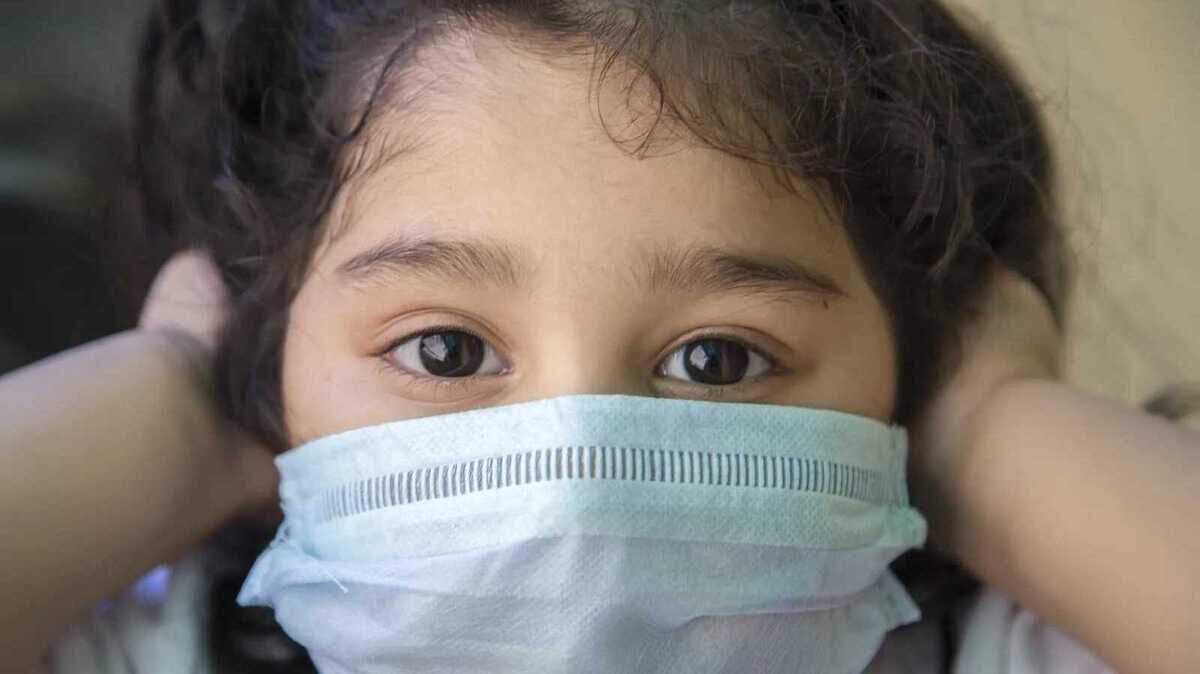
Masks are the hot-button issue as schools gear up for the next school year.
Our advice: Stop listening to the politics and and pay attention to what a majority of doctors and the Centers for Disease Control and Prevention say: Masks are safe and necessary as children return to in-person instruction at a time when Florida once again is the epicenter for new COVID-19 cases and pediatric hospitalizations.
In Miami-Dade County, school resumes on Aug. 23, and the district hasn’t yet announced its mask policy. Gov. Ron DeSantis has made reaching a decision needlessly complicated with his scorched-Earth crusade against mask mandates.
Regardless of what the district decides, parents should be armed with the best information. Vaccines remain their best tool to protect their children, but kids under 12 are not yet eligible for them. The whole debate has spurred so much emotion over the past weeks in Florida, that the Editorial Board spoke with experts who have looked closely at this issue:
▪ Dr. Sonja O’Leary, a pediatrician based in Denver, Colorado, chairs the American Academy of Pediatrics Council on School Health, which issued a recommendation in July that everyone older than age 2 should wear masks, regardless of vaccination status, when schools reopen.
▪ Dr. Mobeen Rathore, a pediatric infectious-disease specialist in Jacksonville, chairs the Emerging Infections Task Force at the Florida Chapter of the American Academy of Pediatrics. It also recommends the universal use of masks at schools.
▪ Dr. Aileen Marty, an expert in infectious-disease and disaster medicine at Florida International University, sits on a medical task force advising Miami-Dade County Public Schools.
We asked:
Are children safe from COVID-19?
Severe illness, hospitalization and death are less common among children.
However, that doesn’t mean children cannot get sick. As the highly contagious delta variant spreads, pediatric hospitalizations have skyrocketed, and Florida had more children in the hospital on Aug. 3 than did any other state, the Herald reported.
“It is true that children in general don’t get as sick as adults do, but children do get sick, children do get hospitalized, children do get into the ICU, children do get intubated and on a respirator,” Rathore said.
He pointed out children with co-morbidities, such as obesity and diabetes, are more susceptible to developing a serious infection just like adults are. Children are also at risk of multisystem inflammatory syndrome, a rare but dangerous inflammation of different parts of the body that can occur after a COVID-19 infection.
As of Aug. 8, the CDC reports there have been 542 COVID-19 deaths in the United States among people ages 0 to 17 since the beginning of the pandemic, the lowest number among all age groups. Florida has reported seven deaths among children (the state stopped reporting fatalities by age group to the CDC in July, the Herald reported).
But death counts aren’t the be-all-and-end-all.
“The challenge with that is that children are not supposed to die, right?” CDC Director Rochelle Walensky said during a June 30 Johns Hopkins University-University of Washington Symposium. “And so [deaths are] absolutely the wrong benchmark, and I think that’s what our pediatricians are saying.”
Why should children wear a mask?
The American Academy of Pediatrics’ recommendation was based on studies and input from experts in different areas, such as infectious disease. O’Leary estimates 25 to 30 experts looked at the recommendation before it became public in July. The AAP based its decision on several factors: the need to keep schools open to in-person learning, the rapid rise of delta, the fact that even vaccinated people can spread it and that children under 12 cannot get vaccinated. Even among older children, vaccination rates remain low: 41% in Florida as of last week.
Masks, when well fitted, “reduce the number of viral particles you breathe in,” Marty said, adding that children can “absolutely” transmit the virus to others.
“When people wear masks, transmission is reduced, period,” she said.
Are masks safe for children?
Some parents fear that masks reduce oxygen levels or cause long-term health issues in children, but there’s no evidence that either is the case, the experts told the Board.
A research letter that came out in the prestigious JAMA Pediatrics journal in June exacerbated those fears by reporting high levels of carbon dioxide by German standards in air inside masks worn by children in a lab setting. But the journal retracted that study, citing concern over its methodology and “numerous scientific issues” that “the authors did not provide sufficiently convincing evidence to resolve.”
The CDC says masks do not raise the carbon dioxide level in the air you breathe.
“To me, it’s a lot of misinformation that’s just being couched as scientific information, but there’s no reason to suggest there’s any long-term impact of wearing a mask on a child,” O’Leary said.
Are there children who shouldn’t wear a mask?
Children under the age of 2. Masks are also not recommended during some sports — gymnastics, cheerleading and wrestling — because they could become a choking hazard, and in water sports, the AAP says.
O’Leary noted that children with “very specific pulmonary conditions” might not have to wear masks if determined by a pediatric pulmonologist.
The experts acknowledged that special accommodations might be needed for some children with disabilities. In that case, people taking care of these kids should be vaccinated and wear a mask. Class sizes should be kept small.
What kind of masks should they wear?
“You have to choose the right mask and you want one that’s going to create a nice little air pocket and it’s not pressing up against our nostrils and your mouth and you’re comfortable,” Marty said.
Marty said children should wear a surgical mask or the equivalent of one, such as a cloth one. N95 masks, which are usually reserved for medical professionals, are not needed unless children “have a really high risk,” Marty said. But KN95 masks, which are readily available in stores and online, are a good option that create that air pocket, she said.
The CDC recommends properly-fitted surgical, or multi-layer, or tightly woven fabric cloth masks and has a mask guide on its website.
The information on masks is out there. It’s now up to parents to make well-informed decisions to protect their children — in, and out, of the classroom.
BEHIND THE STORY
MOREWhat's an editorial?
Editorials are opinion pieces that reflect the views of the Miami Herald Editorial Board, a group of opinion journalists that operates separately from the Miami Herald newsroom. Miami Herald Editorial Board members are: opinion editor Amy Driscoll and editorial writers Isadora Rangel and Mary Anna Mancuso. Read more by clicking the arrow in the upper right.
What's the difference between an op-ed and a column?
How does the Miami Herald Editorial Board decide what to write about?
The Editorial Board, made up of experienced opinion journalists, primarily addresses local and state issues that affect South Florida residents. Each board member has an area of focus, such as education, COVID or local government policy. Board members meet daily and bring up an array of topics for discussion. Once a topic is fully discussed, board members will further report the issue, interviewing stakeholders and others involved and affected, so that the board can present the most informed opinion possible. We strive to provide our community with thought leadership that advocates for policies and priorities that strengthen our communities. Our editorials promote social justice, fairness in economic, educational and social opportunities and an end to systemic racism and inequality. The Editorial Board is separate from the reporters and editors of the Miami Herald newsroom.
How can I contribute to the Miami Herald Opinion section?
The Editorial Board accepts op-ed submissions of 650-700 words from community members who want to argue a specific viewpoint or idea that is relevant to our area. You can email an op-ed submission to oped@miamiherald.com. We also accept 150-word letters to the editor from readers who want to offer their points of view on current issues. For more information on how to submit a letter, go here.
This story was originally published August 10, 2021 at 9:08 AM.