
Healthcare workers shouldn’t make patients sick. Hospitals must mandate COVID vaccines | Editorial
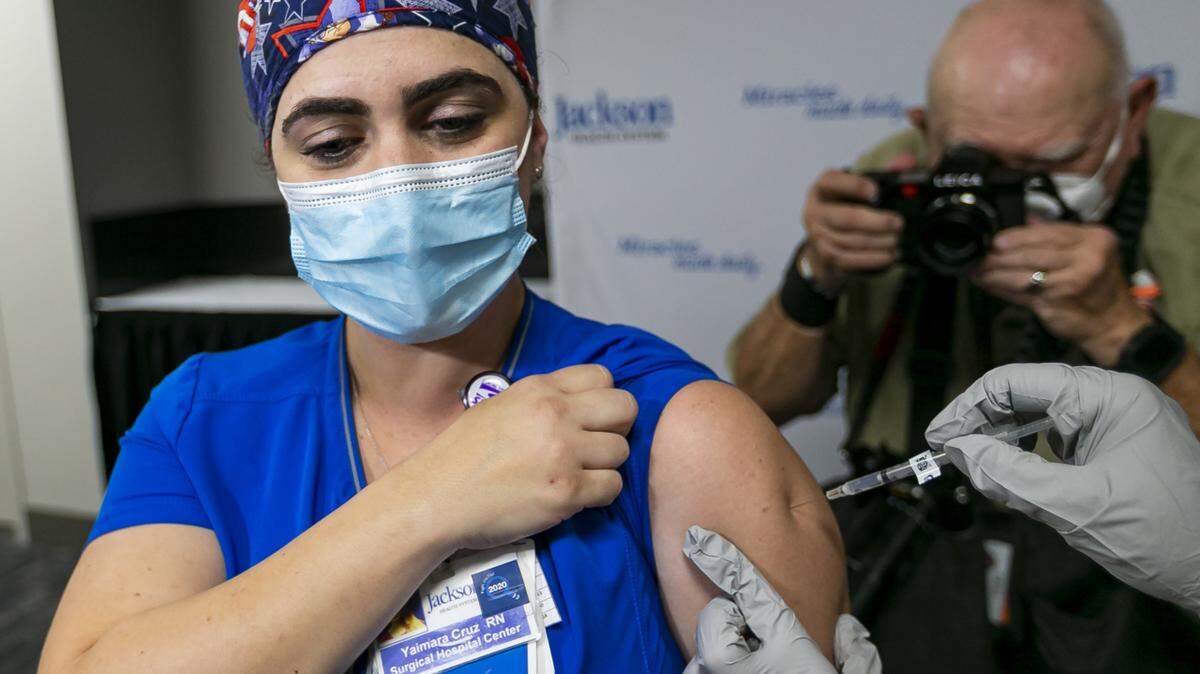
With COVID cases skyrocketing and the delta variant raging across Florida, it seems like this should be obvious: All hospital workers should be vaccinated.
You’re at your most vulnerable when you go to a hospital. You’re seriously ill or need surgery. Maybe you’re medically frail or have a compromised immune system from chemotherapy. You shouldn’t have to wonder for one instant if the people you turn to for help at that moment — people who choose to work in the healthcare field, after all — have taken the single most effective step to prevent transmission of the deadly virus that has plagued us since 2020.
Have they been vaccinated? Why is that even a question?
But right now, you’re not wrong to wonder. While more than 96% of doctors in a national survey in June said they had been vaccinated — that’s according to the American Medical Association — the rate for other health workers is estimated to be much lower — too low, in fact. The overall vaccination rate among the approximately 13,000 workers at Jackson Health System, Miami-Dade County’s public hospital system, is only about 60%. That means 40% of the people at work in the hospital aren’t vaccinated. Across the country, long-term care and nursing home workers have been stuck at roughly that rate as well, for months.
Forcing the issue
Recently, though, hospitals and medical organizations have started to force the issue. On Monday, the Department of Veterans Affairs, which runs one of the largest healthcare systems in the country, announced that it would start requiring the vaccines for its frontline workers. On Tuesday, the Mayo Clinic, which has a hospital in Jacksonville, said it would do the same. A group of almost 60 health organizations just issued a joint statement that called on employers of healthcare and long-term care workers to require COVID-19 vaccines. The statement called it an ethical obligation to put patients first.
Is this a tipping point? We fervently hope so.
In Texas, the Houston Methodist system announced it would make COVID vaccines a work requirement back on March 31 — they say they were the first hospital system to do so — and initially it didn’t go well. Staff members protested and 150 left. But in the end, 97% of the remaining staff complied. The patients there are safer because of Houston Methodist’s common-sense action.
The U.S. Equal Opportunity Employment Commission has said the mandates are legal, though there could be exemptions for medical or religious reasons as there have been for flu vaccine requirements. A lawsuit filed by former Houston Methodist employees was dismissed by U.S. District Judge Lynn Hughes, who noted that “Methodist is trying to do their business of saving lives without giving them the COVID-19 virus. It is a choice made to keep staff, patients and their families safer.”
We hope that ruling stiffens the resolve of hospitals in South Florida. And maybe it has. Trinity Health, which owns Holy Cross Health in Fort Lauderdale, announced July 8 that it would require all its workers to be vaccinated. About 75% already had been, but the medical system — with 117,000 employees across 22 states — said it was looking to “close the gap with this requirement.”
Mandates are an option
At Jackson, about 87% of doctors are vaccinated, but only about 55% of nurses, CEO Carlos Migoya told the Miami Herald Thursday. Jackson launched a two-day, get-vaccinated campaign for staff at the end of the week to boost the percentage of vaccinated workers, which Migoya agrees must be drastically increased.
If it isn’t? “All options are on the table,” he said.
That might mean a mandate, the kind Houston Methodist imposed. Another possibility: vaccinate or submit to weekly COVID tests.
Other South Florida hospitals should take note — and consider their responsibilities. If they’re not going to lead the way on such a critical healthcare issue, who is?
Hospitals aren’t alone in switching from carrots to sticks when it comes to vaccines. Mandates have been issued for New York City workers and California state employees and healthcare workers. Two Florida counties — Leon and Orange — announced Wednesday that county workers must get the shots. In Miami, some restaurateurs are requiring vaccines of their employees. Big Tech has joined in: Google and Facebook will now require staffers to get vaccines in order to go back to their offices. The NFL is tying vaccines to financial penalties and forfeited games.
Heavy-handed? Not with so many lives at stake. Plus, gentle persuasion didn’t work in the NFL, and it hasn’t worked here in Florida. Just look at our new case numbers: more than 16,000 new cases on Tuesday, the seventh day in a row that the state racked up numbers over 12,000. Deaths are up, and the positivity rate is up — higher than 10% in Miami-Dade and more than 17% in the state as a whole. That indicates widespread community transmission. Again.
It’s time for the healthcare industry to lead, without apology and without hesitation. Baptist Health said it does not have a mandate but is considering one. Martha Baker, the president of Jackson Health Care Union SEIU 1991, told the Miami Herald Editorial Board that the union’s leadership board is in favor of a vaccine mandate at Jackson.
“I think this is more than an individual decision. I think this is a public-health issue,” she said. “This is an issue that we need to get out front on.”
Politics and confusion
Of course, there will be hurdles. There are unions to be bargained with and politics to be reckoned with. Hospitals have been short-staffed through the pandemic, and mandates may mean losing a portion of their workforce. We live in a state that, in addition to being the source of a whopping 20% of new cases in the entire nation, is also home to a governor whose reelection campaign is hawking beer koozies that say “Don’t Fauci my Florida” — a reference, of course, to Dr. Anthony Fauci. In this case, though, Gov. Ron Desantis indicated back in May that he won’t stand in the way of businesses imposing vaccine requirements.
It’s true that the messaging by state and federal government has been muddled and has confused some people. The Food and Drug Administration’s slowness in giving full approval to COVID vaccines hasn’t helped, either.
But the delta variant has forced our hand.
Migoya said Thursday that nearly all of the 217 COVID patients at Jackson that day were unvaccinated. The handful that had been vaccinated were immuno-compromised or had organ transplants.
Numbers like that should be enough to convince people that they need the vaccines, but, for too many people, it hasn’t. It’s time to try something new. It’s time for Jackson and Baptist and all the other big hospitals — and tech companies and the NFL and businesses big and small — to lead the way so we can stop reliving this pandemic nightmare, over and over.
BEHIND THE STORY
MOREWhat's an editorial?
Editorials are opinion pieces that reflect the views of the Miami Herald Editorial Board, a group of opinion journalists that operates separately from the Miami Herald newsroom. Miami Herald Editorial Board members are: opinion editor Amy Driscoll and editorial writers Isadora Rangel and Mary Anna Mancuso. Read more by clicking the arrow in the upper right.
What's the difference between an op-ed and a column?
How does the Miami Herald Editorial Board decide what to write about?
The Editorial Board, made up of experienced opinion journalists, primarily addresses local and state issues that affect South Florida residents. Each board member has an area of focus, such as education, COVID or local government policy. Board members meet daily and bring up an array of topics for discussion. Once a topic is fully discussed, board members will further report the issue, interviewing stakeholders and others involved and affected, so that the board can present the most informed opinion possible. We strive to provide our community with thought leadership that advocates for policies and priorities that strengthen our communities. Our editorials promote social justice, fairness in economic, educational and social opportunities and an end to systemic racism and inequality. The Editorial Board is separate from the reporters and editors of the Miami Herald newsroom.
How can I contribute to the Miami Herald Opinion section?
The Editorial Board accepts op-ed submissions of 650-700 words from community members who want to argue a specific viewpoint or idea that is relevant to our area. You can email an op-ed submission to oped@miamiherald.com. We also accept 150-word letters to the editor from readers who want to offer their points of view on current issues. For more information on how to submit a letter, go here.
This story was originally published July 31, 2021 at 5:17 PM.