
COVID is surging in Florida. Wanna bet DeSantis won’t put that on his beer koozie? | Editorial
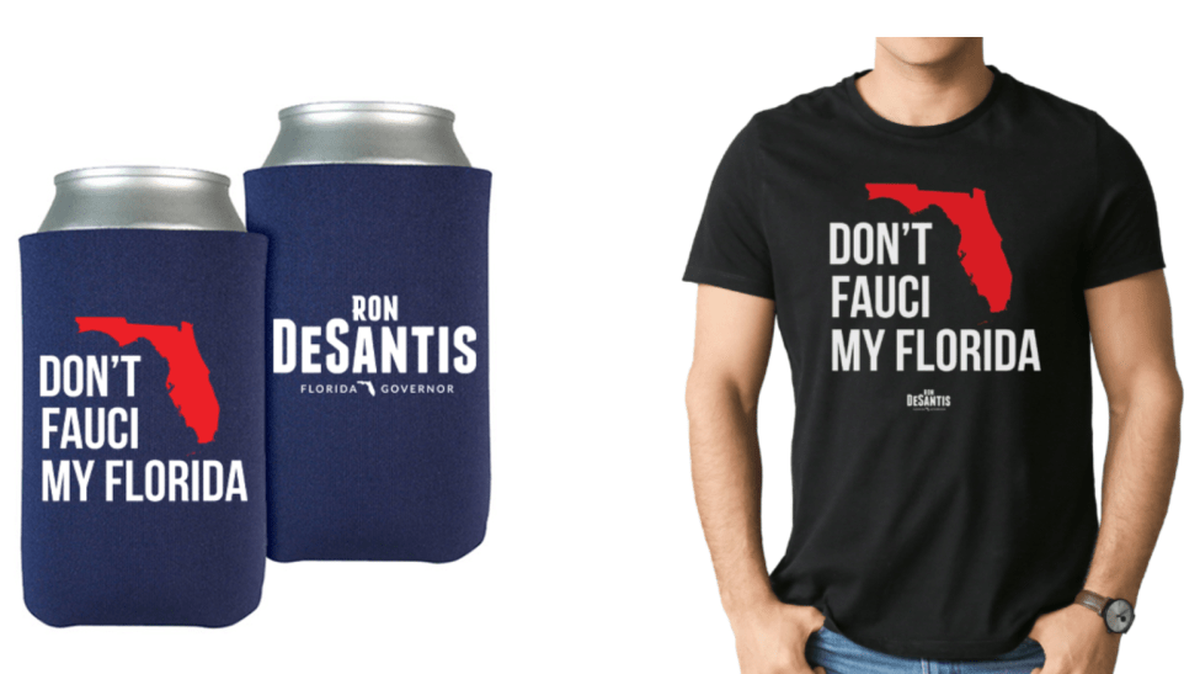
As Florida faces one the highest rates of new coronavirus cases in the country, a more transmissible variant and millions of eligible Floridians have yet to be vaccinated, Gov. Ron DeSantis has found a way to make a buck from distrust in science and masks.
His campaign on Monday dropped a new line of merchandise, including drink koozies and T-shirts emblazoned with “Don’t Fauci my Florida,” “How the hell am I going to be able to drink a beer with a mask on?” and “Keep Florida Free.”
Perhaps the slogan “Florida has lost more than 38,000 people to COVID-19” or “Coronavirus cases have nearly doubled in the past weeks in South Florida” were taken — or wouldn’t sell any T-shirts.
As Floridians have ditched precautions to curb the spread of the virus, this new surge, fueled by the more contagious delta variant, could mean another bad summer for the Sunshine State.
July 2020 was the worst month of Florida’s COVID epidemic last year. Things probably won’t be as bad this time, thanks to vaccines, but could be better if fewer people weren’t so reluctant to get a shot — and if our governor spent his political capital encouraging his supporters to get vaccinated instead of fueling mistrust of scientific authorities and guidance.
Mask up — again
Just over 10 million people have been fully vaccinated in Florida, and there are more than 8 million who are eligible but have not yet been fully vaccinated, the Herald reported.
It’s clear the governor isn’t coming to our rescue, so the best Floridians, especially in South Florida, can do is mask up indoors — regardless of your vaccination status.
But didn’t the CDC say you can ditch your mask if you have been fully vaccinated?
Yes, but that’s guidance for the country as a whole, which was seeing about 31 new cases per 100,000 people last week, Mary Jo Trepka, an epidemiologist at Florida International University, told the Herald Editorial Board. In Miami-Dade, that rate was 150 per 100,000 for the same time period and it’s higher than in previous weeks and likely to continue rising, Trepka said. The World Health Organization also advised fully vaccinated people to continue to wear masks because of the delta variant.
“We are not the rest of the country,” Trepka said. “We are a special case right now.”
Miami-Dade has relatively high vaccination rates with 73 percent of people ages 12 and up having received at least one dose of a shot, according to state data. But Miami-Dade is the U.S. county with the second-highest number of cases per 100,000 over a seven-day average, behind only Los Angeles County, according to the CDC. That’s likely because the virus has found groups with lower vaccination rates, such as younger people, who are less likely to be vaccinated and make up a growing share of hospitalizations.
An attack on science
The last thing we need is our governor saying “Don’t Fauci my Florida.” Dr. Anthony Fauci has become a lightning rod for the political right and those who balk at federal guidelines on masks and vaccines.
Attacking Fauci is obviously a play for DeSantis’ conservative base — and a dangerous one. Florida counties that voted for Donald Trump in 2020 generally had lower vaccination rates than those that voted for Joe Biden, with few exceptions, according to a Sun Sentinel analysis. People who mistrust vaccines also tend to mistrust masks, making them sitting ducks for the virus.
DeSantis recognizes the importance of the vaccine. He got a Johnson & Johnson shot, his office said in April, after much speculation over whether he would do so. Of course, there was no fanfare or an announcement, a sharp contrast to how he promotes his priorities, such as banning cruise lines and other businesses from requiring proof of vaccination.
DeSantis enjoys good popularity ratings, especially among Trump supporters — many of whom live in Miami-Dade. How nice would it be to see him travel the state telling them the vaccine is safe and that they can trust a fellow Republican’s word on it? That’s what he did early on with seniors and that likely saved countless lives.
But, unfortunately, sound public health campaigns aren’t good fodder for koozies.
BEHIND THE STORY
MOREWhat's an editorial?
Editorials are opinion pieces that reflect the views of the Miami Herald Editorial Board, a group of opinion journalists that operates separately from the Miami Herald newsroom. Miami Herald Editorial Board members are: opinion editor Amy Driscoll and editorial writers Isadora Rangel and Mary Anna Mancuso. Read more by clicking the arrow in the upper right.
What's the difference between an op-ed and a column?
How does the Miami Herald Editorial Board decide what to write about?
The Editorial Board, made up of experienced opinion journalists, primarily addresses local and state issues that affect South Florida residents. Each board member has an area of focus, such as education, COVID or local government policy. Board members meet daily and bring up an array of topics for discussion. Once a topic is fully discussed, board members will further report the issue, interviewing stakeholders and others involved and affected, so that the board can present the most informed opinion possible. We strive to provide our community with thought leadership that advocates for policies and priorities that strengthen our communities. Our editorials promote social justice, fairness in economic, educational and social opportunities and an end to systemic racism and inequality. The Editorial Board is separate from the reporters and editors of the Miami Herald newsroom.
How can I contribute to the Miami Herald Opinion section?
The Editorial Board accepts op-ed submissions of 650-700 words from community members who want to argue a specific viewpoint or idea that is relevant to our area. You can email an op-ed submission to oped@miamiherald.com. We also accept 150-word letters to the editor from readers who want to offer their points of view on current issues. For more information on how to submit a letter, go here.
This story was originally published July 15, 2021 at 6:58 PM.