
Florida gaming commission no watchdog for the people. It lets DeSantis reward his friends | Editorial
A Florida commission to catch “nefarious” gambling activity in the state, as Senate President Wilton Simpson put it last week, sounds like something any sane citizen would jump at, considering the vast plan to expand gaming that lawmakers seem intent on passing in Tallahassee this week.
But take a look at the details. That’s when it becomes clear that the proposed Florida Gaming Control Commission will be both ineffectual — it won’t be able to regulate Seminole gaming, the largest player in the state — and create a high-priced political patronage system for the governor. This is no watchdog group. It’s just one more attempt to put one over on voters while forcing them to pay for it.
Under the proposal, the five-member Florida Gaming Control Commission would regulate gambling in the state including parimutuel wagering, cardrooms and slot machine facilities — for a hefty salary of about $136,000 a year, according to a legislative staff analysis of the bill.
The commission would start out neutered. It wouldn’t be able to lay a hand on the most important gambling interest in the state: the Seminole Tribe of Florida, the Hard Rock gaming powerhouse hoping to expand its reach many times over by adding an exclusive 30-year deal for sports betting in this session.
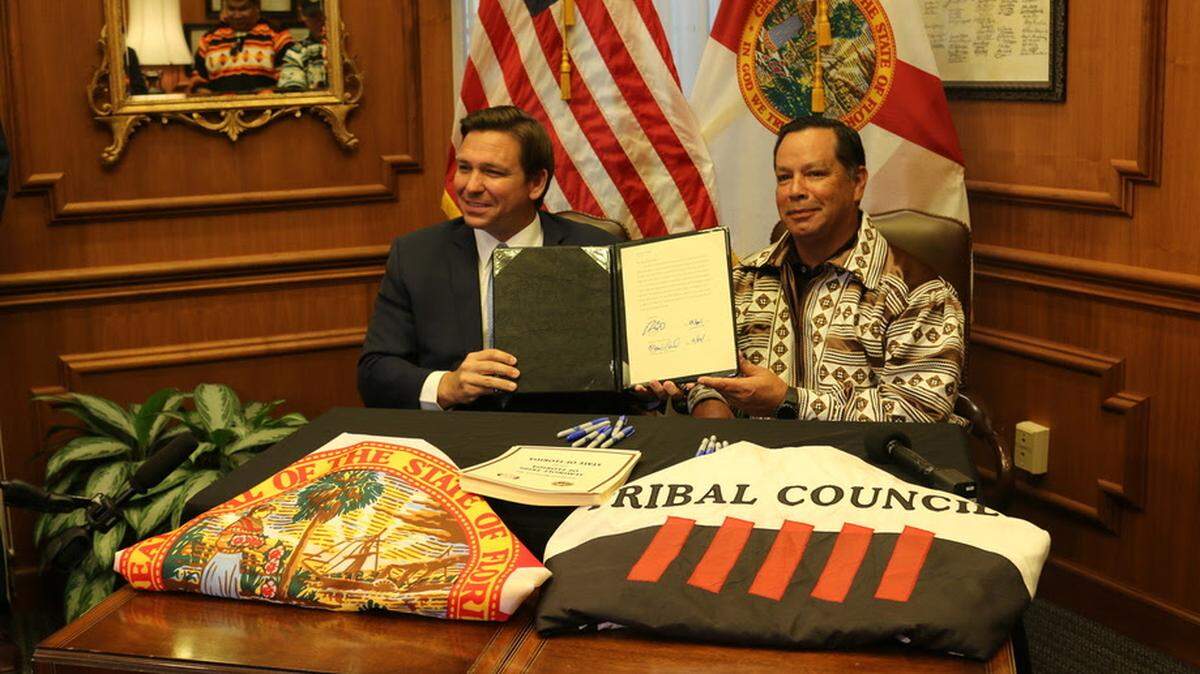
Gov. DeSantis has already signed a revenue-sharing deal, or compact, with the Tribe worth at least $2.5 billion to the state over five years. Now it must be approved by the Legislature and the federal government. More than a dozen other gambling-related bills are also under consideration, including the one creating the state gaming commission.
Of course, there’s a bit of language in the bill dressed up to look like the commission has some say over tribal gambling. The commission could “propose” to the Seminole Tribe’s own regulatory agency that it add consumer-protection measures to its sports-betting app, such as procedures to help gambling addicts or to stop children from being able to bet.
Those words have zero regulatory power. The Tribe runs its gaming on sovereign soil and is regulated under the federal Indian Gaming Regulatory Act, commission or no commission.
Funny, that’s exactly DeSantis is relying on to get this compact done. The Tribe will share its revenue with the state in exchange for the long-term rights to sports betting — using computer servers on tribal land. It’s a blatant attempt to get around a 2018 constitutional amendment that required voter approval of an expansion of casino gambling.
So not only is this commission designed to do little but falsely placate voters — who may well worry about gambling infiltrating every corner of the state — it also gives the governor a chance to award cushy jobs to his cronies.
That’s win-win for the governor and a lose-lose for the state.
Some voices in the Legislature are raising questions, thank goodness. Sen. Jeff Brandes, a Republican from St. Petersburg, argues — correctly — that the state could simply strengthen its existing regulations under the Division of Pari-Mutuel Wagering instead of “paying exorbitant salaries to gaming commissioners.”
After all, that’s how gambling is being regulated right now.
“Does the commission become the Legislative Retirement Act, where commissioners make $150,000 to rarely work?” Brandes wondered.
We’d bet on it.
BEHIND THE STORY
MOREWhat's an editorial?
Editorials are opinion pieces that reflect the views of the Miami Herald Editorial Board, a group of opinion journalists that operates separately from the Miami Herald newsroom. Miami Herald Editorial Board members are: opinion editor Amy Driscoll and editorial writers Isadora Rangel and Mary Anna Mancuso. Read more by clicking the arrow in the upper right.
What's the difference between an op-ed and a column?
How does the Miami Herald Editorial Board decide what to write about?
The Editorial Board, made up of experienced opinion journalists, primarily addresses local and state issues that affect South Florida residents. Each board member has an area of focus, such as education, COVID or local government policy. Board members meet daily and bring up an array of topics for discussion. Once a topic is fully discussed, board members will further report the issue, interviewing stakeholders and others involved and affected, so that the board can present the most informed opinion possible. We strive to provide our community with thought leadership that advocates for policies and priorities that strengthen our communities. Our editorials promote social justice, fairness in economic, educational and social opportunities and an end to systemic racism and inequality. The Editorial Board is separate from the reporters and editors of the Miami Herald newsroom.
How can I contribute to the Miami Herald Opinion section?
The Editorial Board accepts op-ed submissions of 650-700 words from community members who want to argue a specific viewpoint or idea that is relevant to our area. You can email an op-ed submission to oped@miamiherald.com. We also accept 150-word letters to the editor from readers who want to offer their points of view on current issues. For more information on how to submit a letter, go here.
This story was originally published May 18, 2021 at 6:00 AM.