
Reflections on nonviolent resistance in Venezuela | Opinion
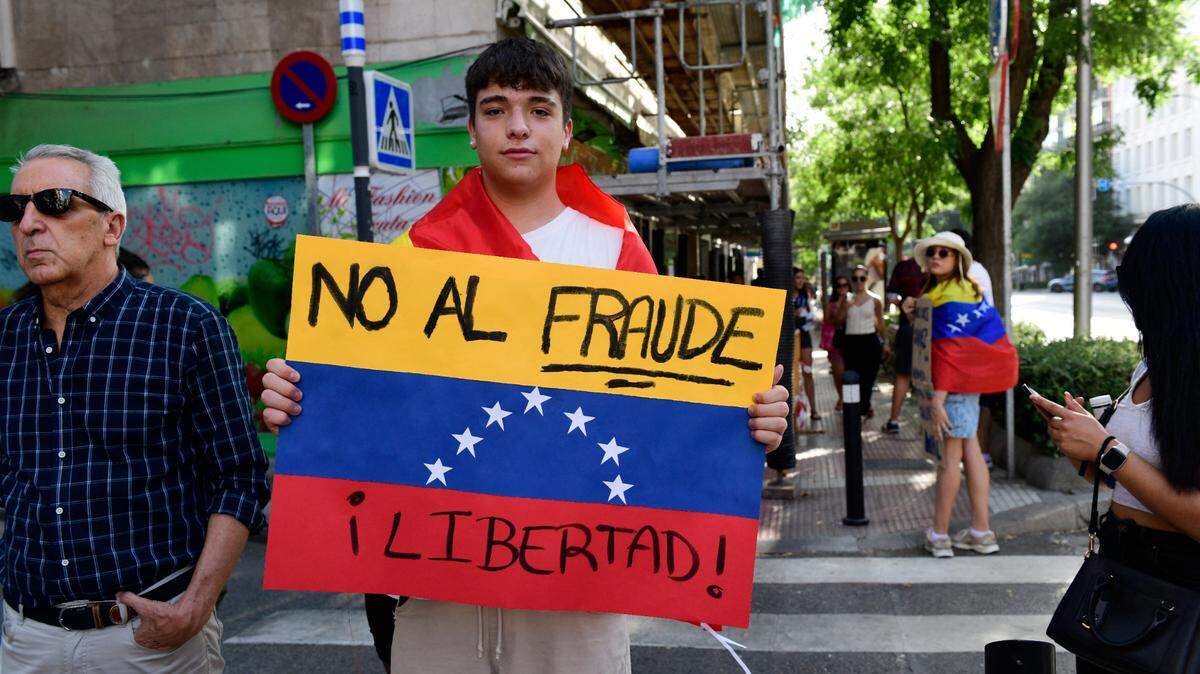
The Venezuelan people and democratic leaders now have a duty to defend popular sovereignty as demonstrated civically through their vote for freedom, and they appear to be doing so.
Some may argue that they should not have gone to the elections with a National Electoral Council that is an extension of the chavista regime, among other adversities and evidence that fraud, as in previous occasions, would be the regime’s way of maintaining power, delaying the inevitable day of freedom.
The process should have been contested when chavismo violated the Barbados accords and María Corina Machado was barred from participating as a candidate.
It should have been flagged the moment international observers were denied entry after it was decided they’d participate in the elections, and the irregularities that occurred during the day, which exemplified the gangster-like chavista regime’s intentions, should have been more forcefully denounced.
Despite the regime’s perverted and criminal nature, which is true of communist governments, the Venezuelans chose to accept the challenge. They opted to vote for Edmundo González , and the vast majority supported change.
This happened in Poland, Czechoslovakia, Hungary, Albania, Latvia, Estonia, Lithuania, Chile, and South Africa. People under repressive regimes, as Venezuelans are now doing, follow agreements between the parties to promote and ensure the legitimacy of those processes. They overcame tyranny by their ballots because their leaders were steadfast, and the international community was supportive.
Those who ignore this and try to diminish the civic struggle that people have chosen to achieve their freedom or who undervalue nonviolence as a path to free and prosperous societies have every right to believe otherwise. Still, violence is not a guarantee of success.
In their 2008 study “Why Civil Resistance Works: The Strategic Logic of Nonviolent Conflict,” university academics Maria J. Stephan and Erica Chenoweth compared the outcomes of 323 violent and nonviolent resistance actions from 1900 to 2006. They found that major nonviolent initiatives were successful 53% of the time, compared to 26% of violent resistance actions.
The investigation additionally demonstrates “that nonviolent campaigns are more likely to succeed than violent campaigns in the face of brutal repression.”
Those who believe in and offer extreme remedies, which are not radical because radical means getting to the root of the problem, and the central issue in totalitarian systems is a lack of popular sovereignty, should amass troops and war resources to achieve their objective. However, this would be a mistake because violence rarely results in freedom or healthy nations.
In 1981, Narcotics Anonymous published “the basic text,” which stated that “insanity is repeating the same mistakes and expecting different results.” The same is true for both addicts and people who resort to violence.
What will happen in Venezuela now is up to democratic leaders and their voters. Let us hope Venezuelans do not grow weary but continue in their civic demand through their mobilization for the nation’s freedom.
What will the international community do? The Biden administration said Thursday it is getting ready to officially recognize González as the country’s president-elect.
This is also a subject free nations must address. The supportive position is to refuse to recognize the dictator and establish an independent commission to review all voting records and thus declare the civic opposition’s victory, as all evidence indicates is the will of the Venezuelan people.
If those who have taken over Venezuela over the past 25 years do not accept it, then impose an international boycott, as was done in Apartheid South Africa in the 1980s. We have requested the same sanctions for Communist Cuba, as well as for Maduro’s dictatorship.
Venezuelans are ultimately the protagonists. They will determine whether they will overcome tyranny this time or whether they will have to wait over 65 years to obtain their freedom, as we Cubans still do.
Regis Iglesias Ramírez is the spokesperson for the Christian Liberation Movement. John J. Suárez is executive director of the Center for a Free Cuba