What Hurricane Andrew did to us. See how the ‘Big One’ in Miami changed our lives
By Miami Herald Archives
Where were you during Andrew? If you were in South Florida, surely you remember.
It’s a hurricane that changed our landscape and our lives.
Let’s look back at the storm that destroyed parts of South Miami-Dade, ripped families from their homes, turned us into survivalists with no power or landmarks — and gave us the determination to rebuild.
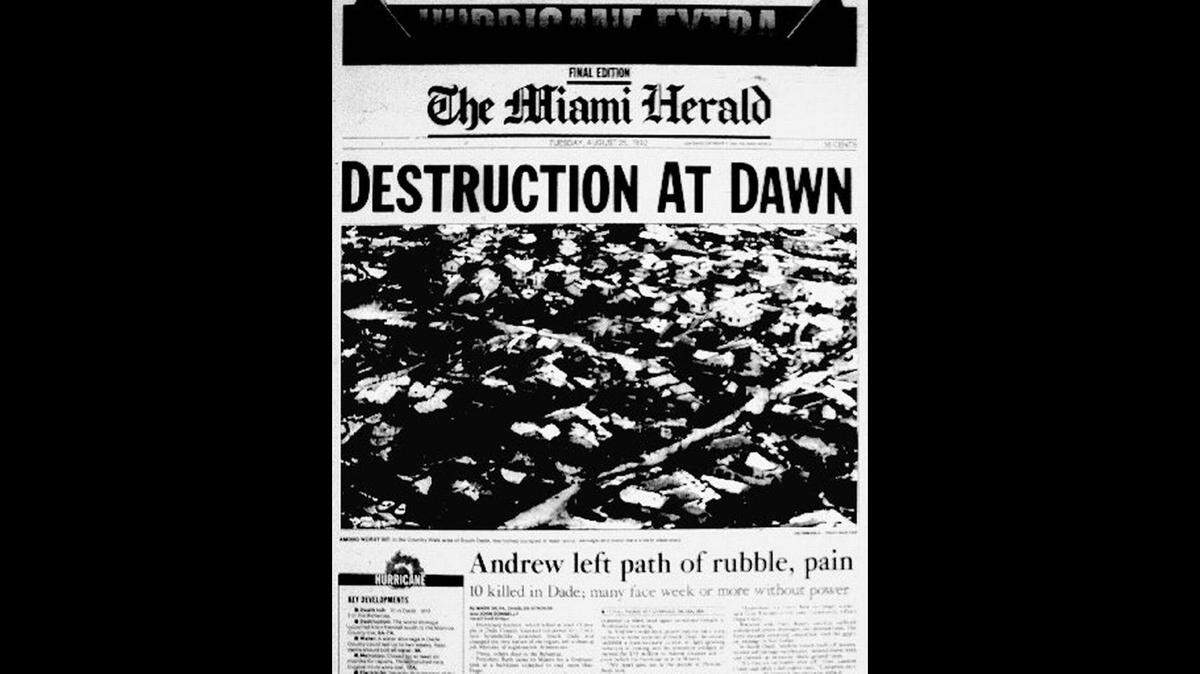
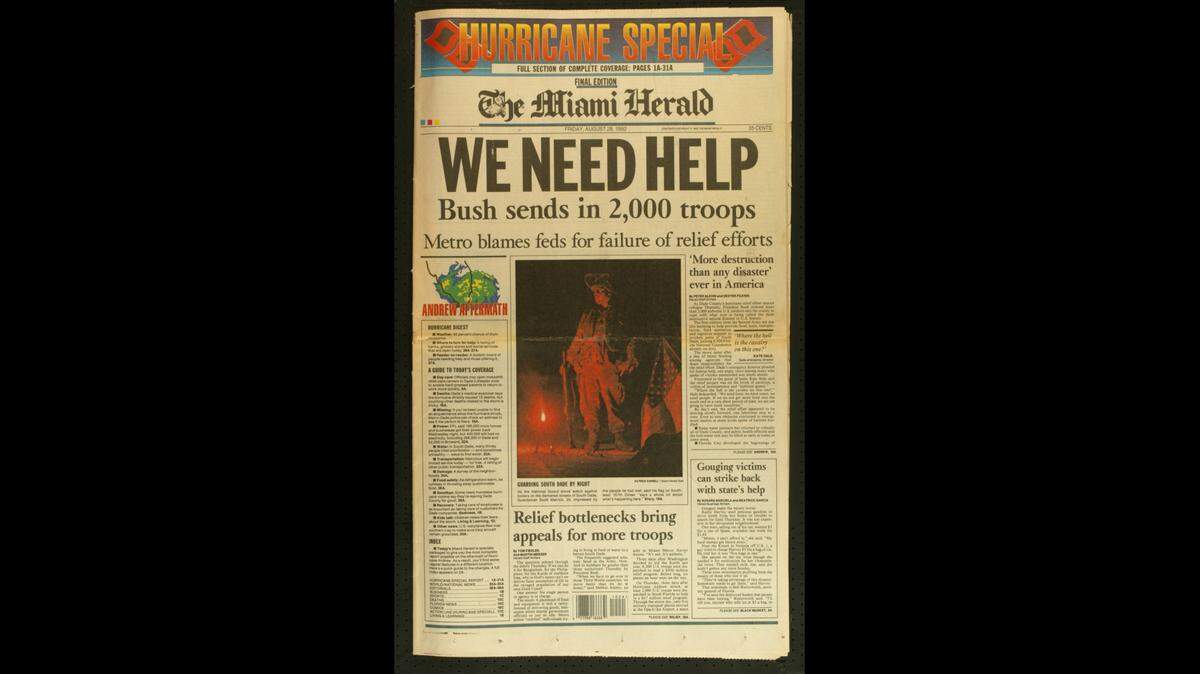
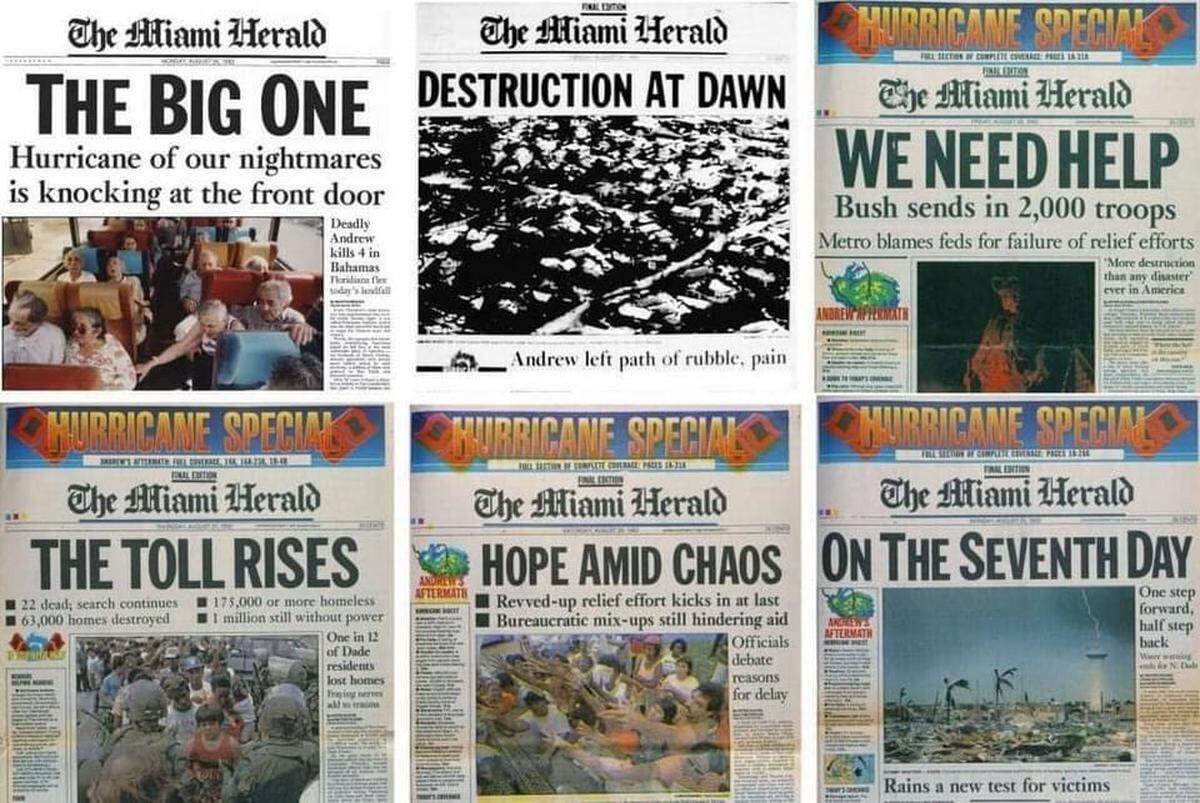
In 1992, the “big one” was “knocking at the front door” on Aug. 23, and then caused “destruction at dawn” on Aug. 24.
WHAT IT LOOKED LIKE
In this file photo from Aug. 25, 1992, residents at the Saga Bay apartment complex see firsthand what happened to their units after Hurricane Andrew blasted South Miami-Dade a day earlier on Aug. 24, 1992. Here, a man is seen inside his unit. Chuck Fadely Miami Herald file
In ‘Untitled,’ shot in 1992, Marjorie Conklin cools off in a tub of water filled with a hose, surrounded by what’s left of her south Miami-Dade County home several days after the destruction of Hurricane Andrew. C.W. Griffin Miami Herald file
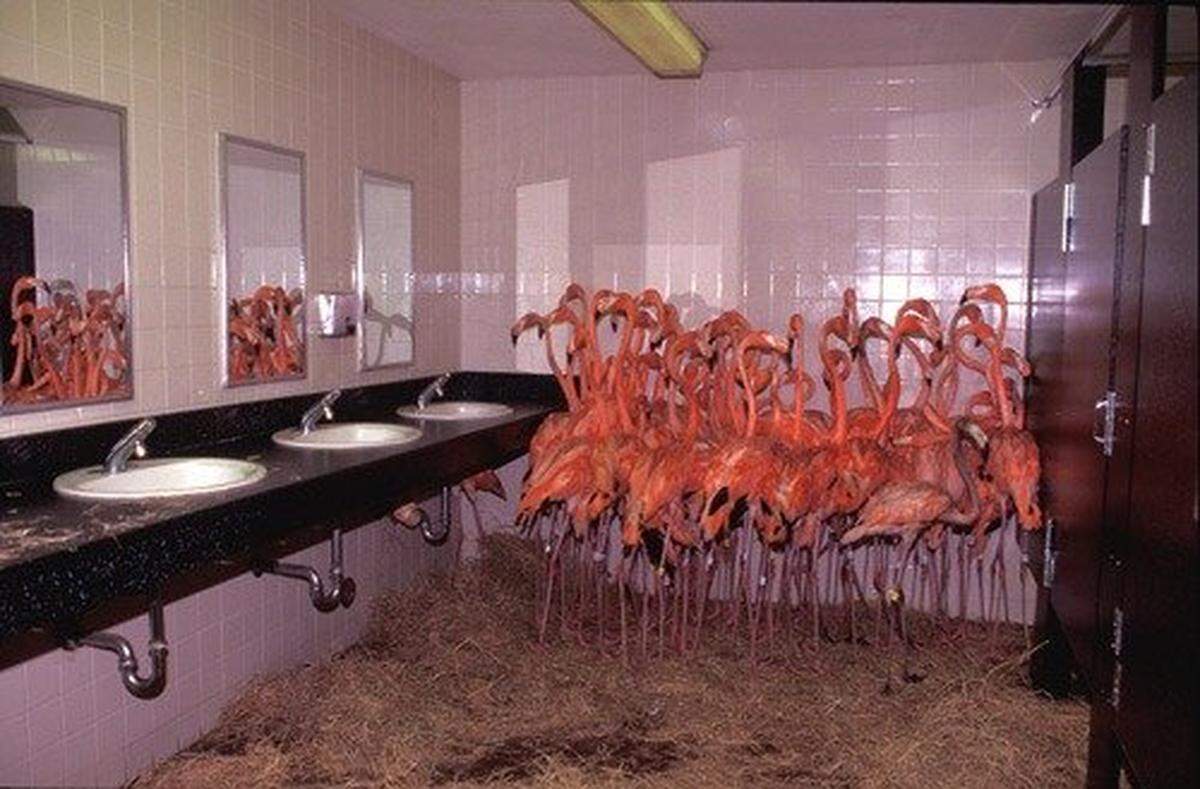
Flamingos huddling in the bathroom of Miami Metrozoo (later renamed Zoo Miami). Ron Magill along with the staff of then Miami Metrozoo) rounded up the flamingos and put them in the bathroom for safety against Hurricane Andrew in August 1992. Ron Magill
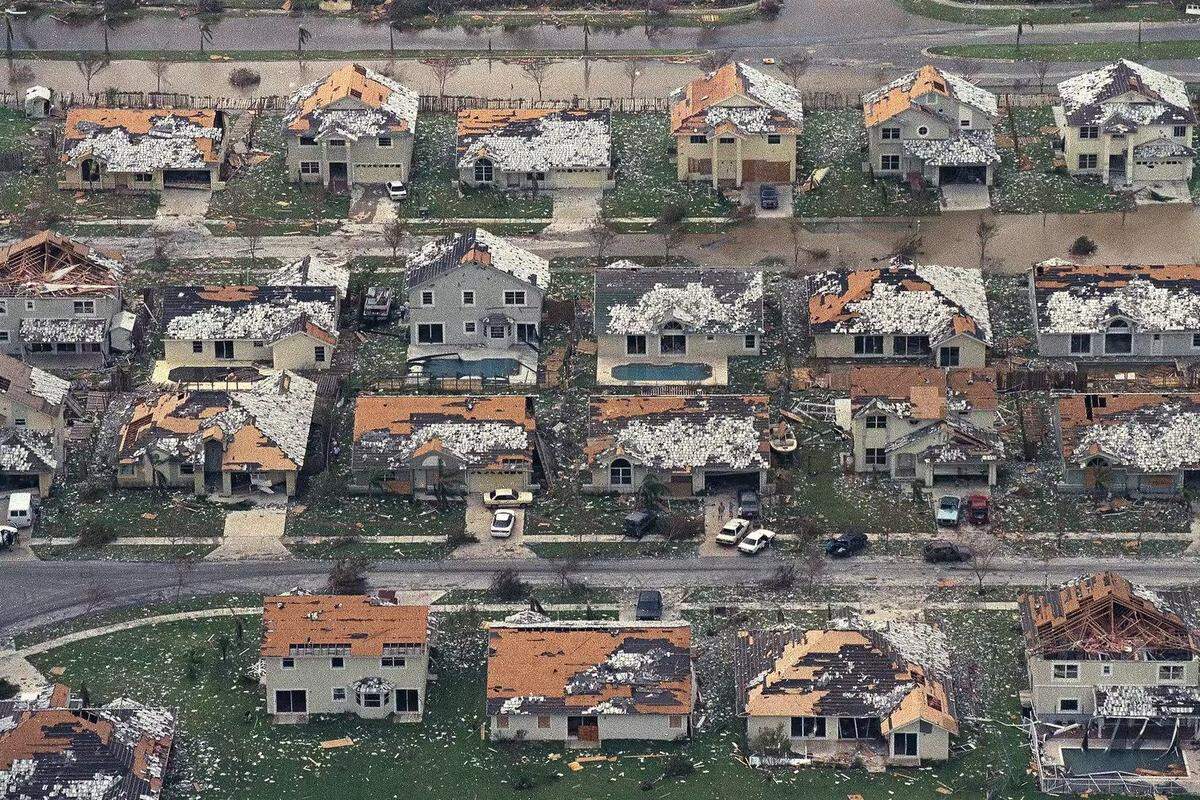
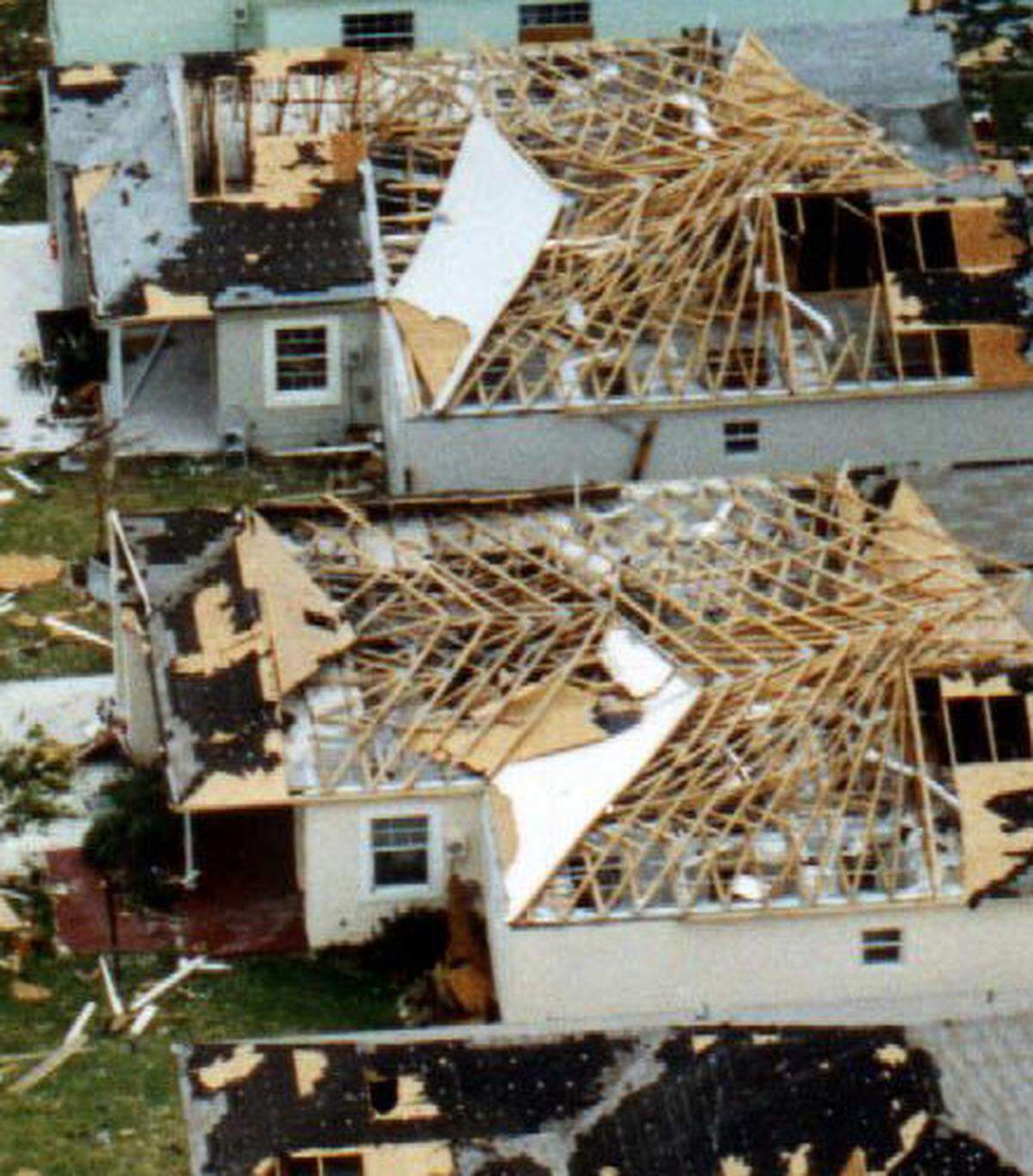
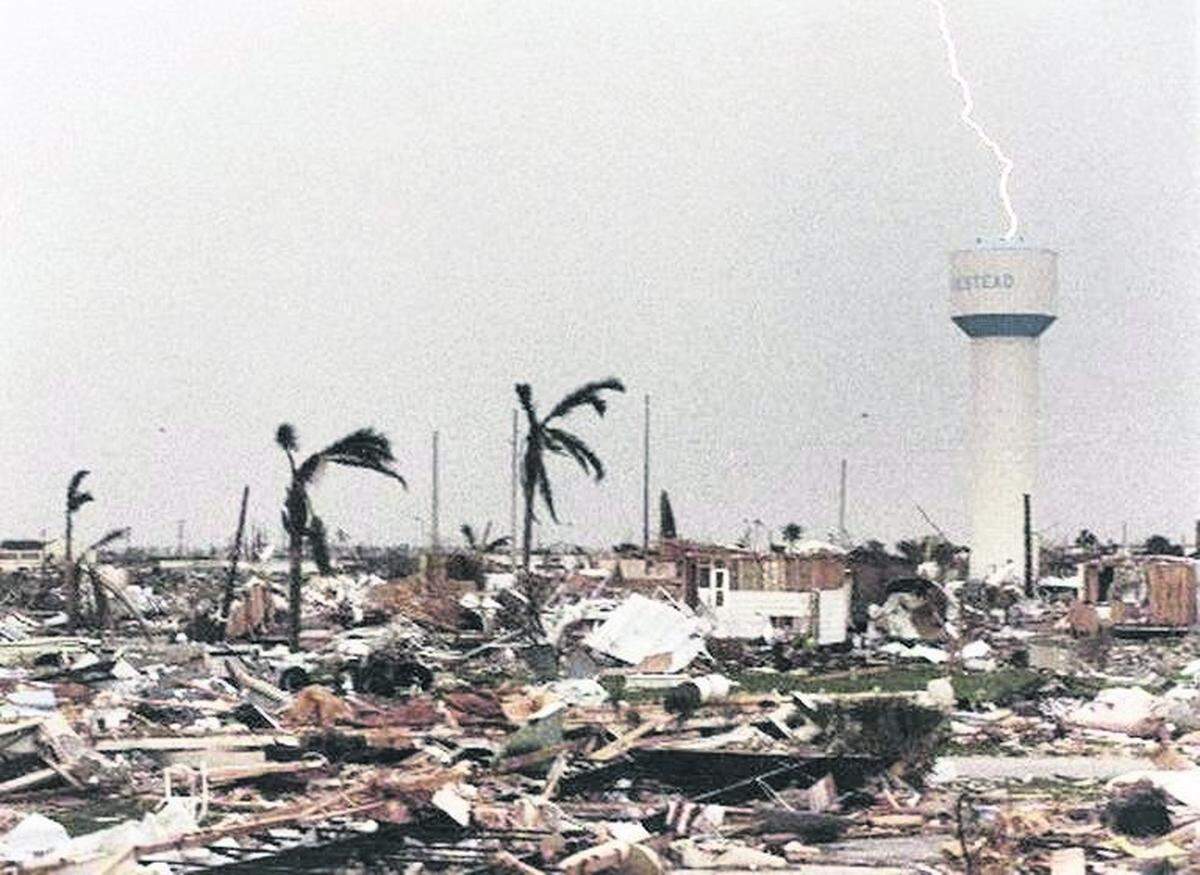
Hurricane Andrew hit South Florida with sustained winds of 165 mph and gusts over 200 mph as a Category 5 storm on Aug. 24, 1992. Andrew hammered Homestead and the rest of South Miami-Dade, killed 15 people in Miami-Dade and was indirectly responsible for at least 25 more deaths. It destroyed 25,000 homes in South Florida and damaged more than 101,000 others, as seen in this file photo. Miami Herald file
Photo from the aftermath of Hurricane Andrew at a location in Florida City. Charles Trainor Jr./Miami Herald file Charles Trainor Jr. Miami Herald file
Aerial of Countrywalk after Hurricane Andrew. Herald file photo by Bill Frakes
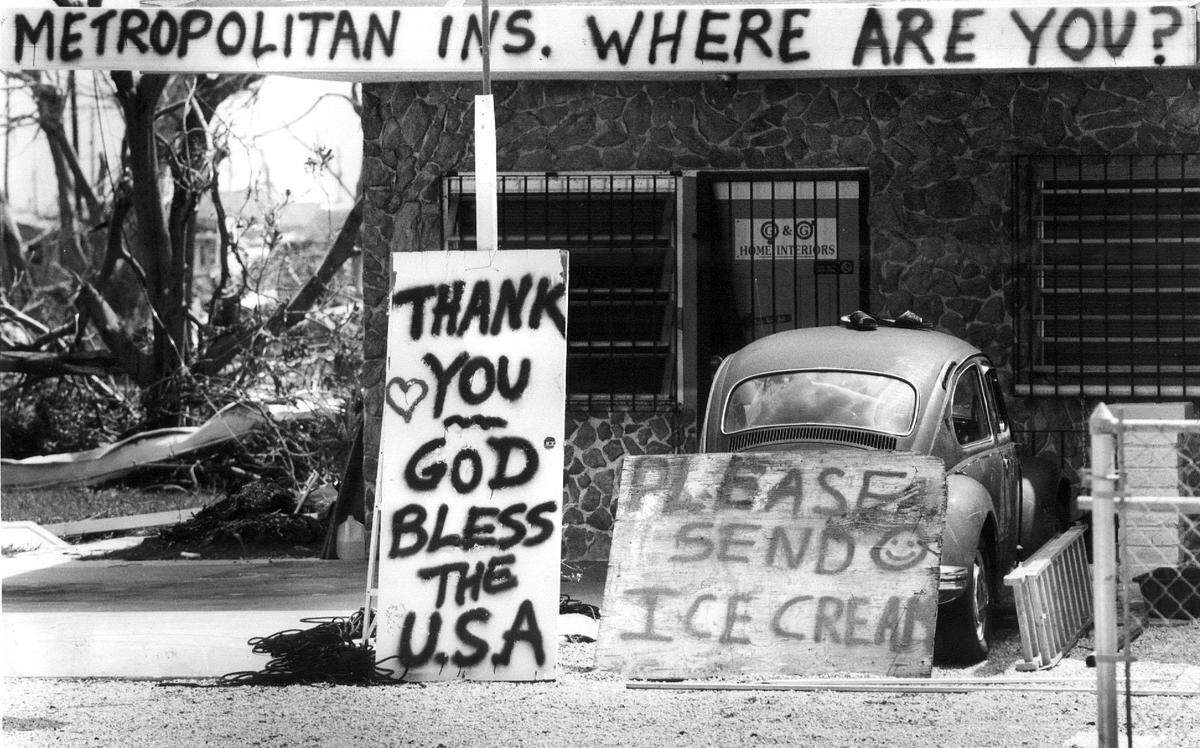
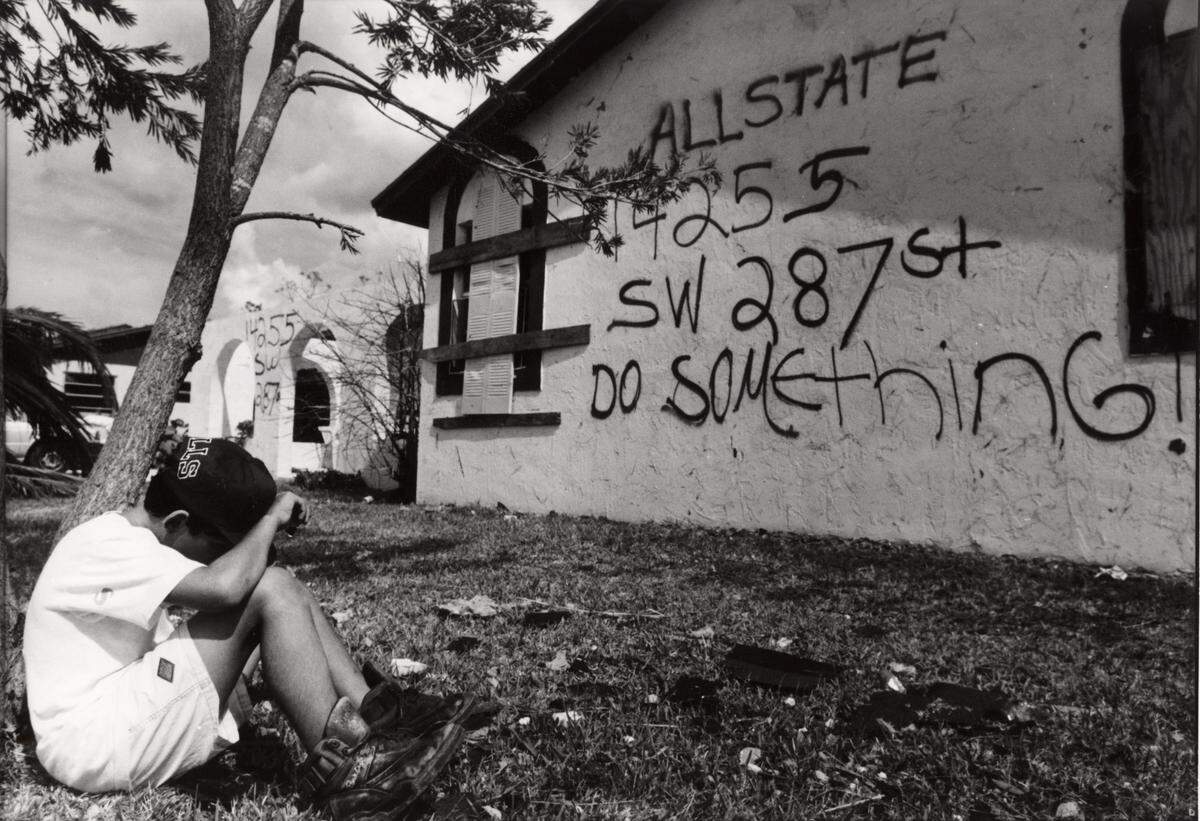
Charles Trainor Jr., Miami Herald Staff - Hurricane Andrew - 8/27/1992 - Richard Colon, 11, sits by a tree at his house in Pleasure City, on Aug. 27, 1992. The family has not seen any officials or help since the storm destroyed their home. They plead for help by writing on their walls. Andrew made landfall on Aug. 24. Charles Trainor Jr. Miami Herald file
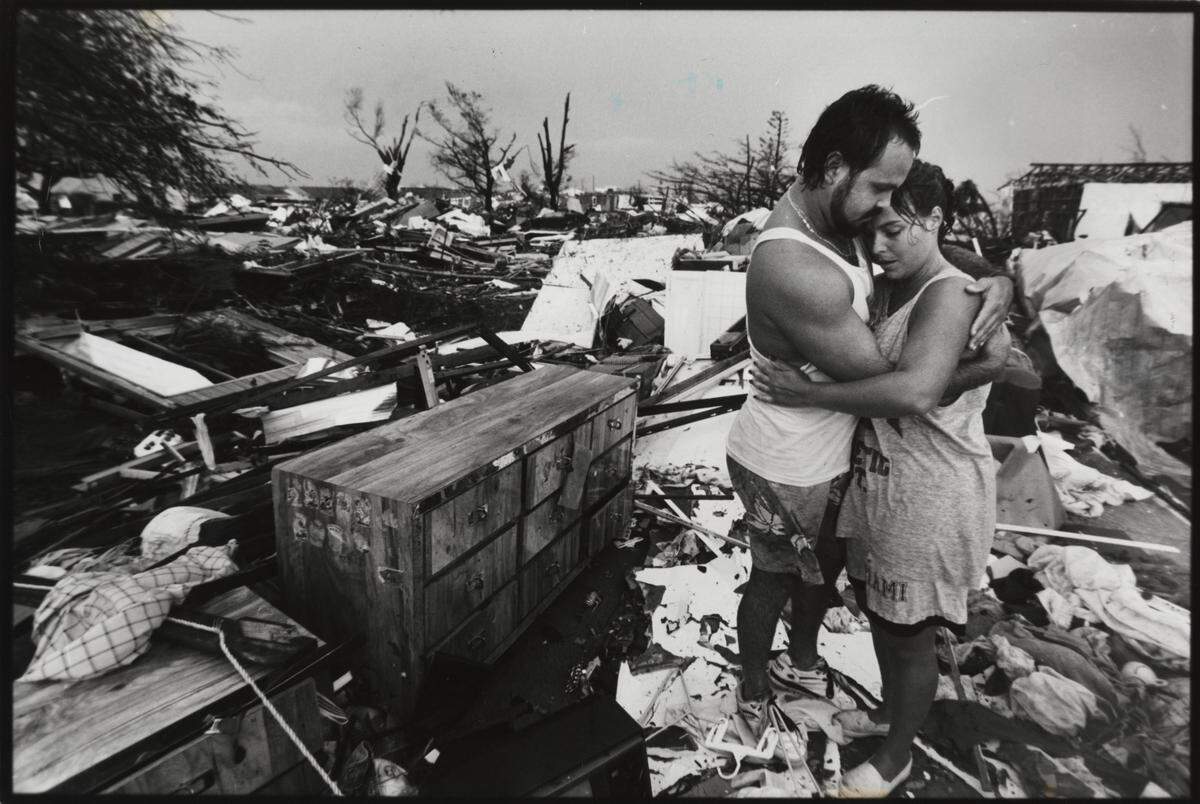
Vivian and Lazaro Hernandez embraced after finding some salvageable memories, like wedding photos in the remains of what was their home in this file photo after Hurricane Andrew hit South Miami-Dade on Aug. 24, 1992. Bill Frakes Miami Herald file
A familiar photo from the Miami Herald archive shows ruins left in Hurricane Andrew’s wake. The calamity led to changes in rules governing construction. Miami Herald file
Harold Keith, 69, returned to his Florida City trailer park to find his home flattened by the 165-mph sustained winds of Hurricane Andrew. The Category 5 storm roared through South Miami-Dade on Aug. 24, 1992. C.M. Guerrero Miami Herald file
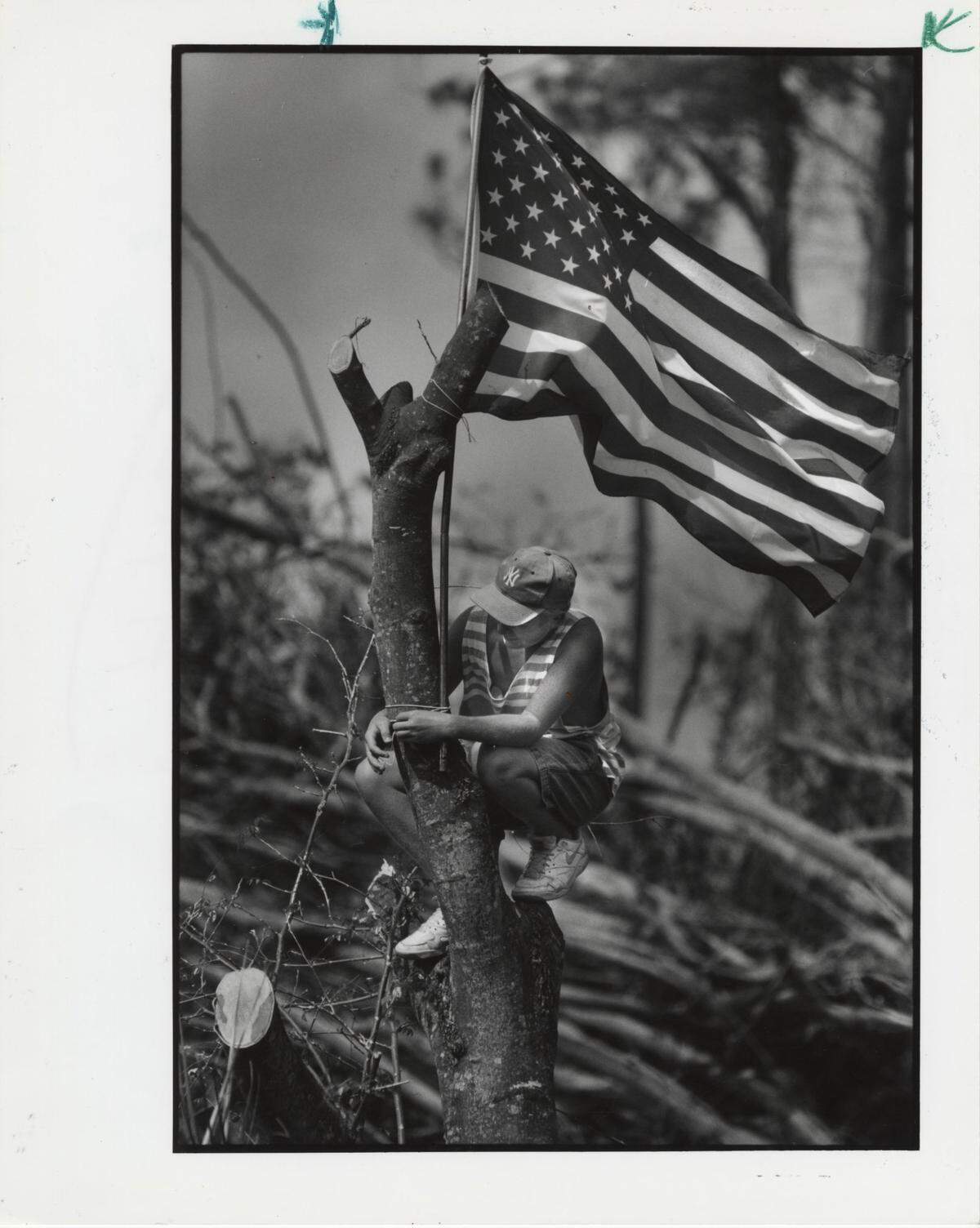
In this file photo from Sept. 4, 1992, after having cleared the tree debris from his front yard left behind by Hurricane Andrew a little over a week earlier, then-14-year-old Chris Schere erected his personal symbol of “hope” at his South Miami-Dade home high in a trimmed tree. Candace Barbot Miami Herald file
THE MAPS
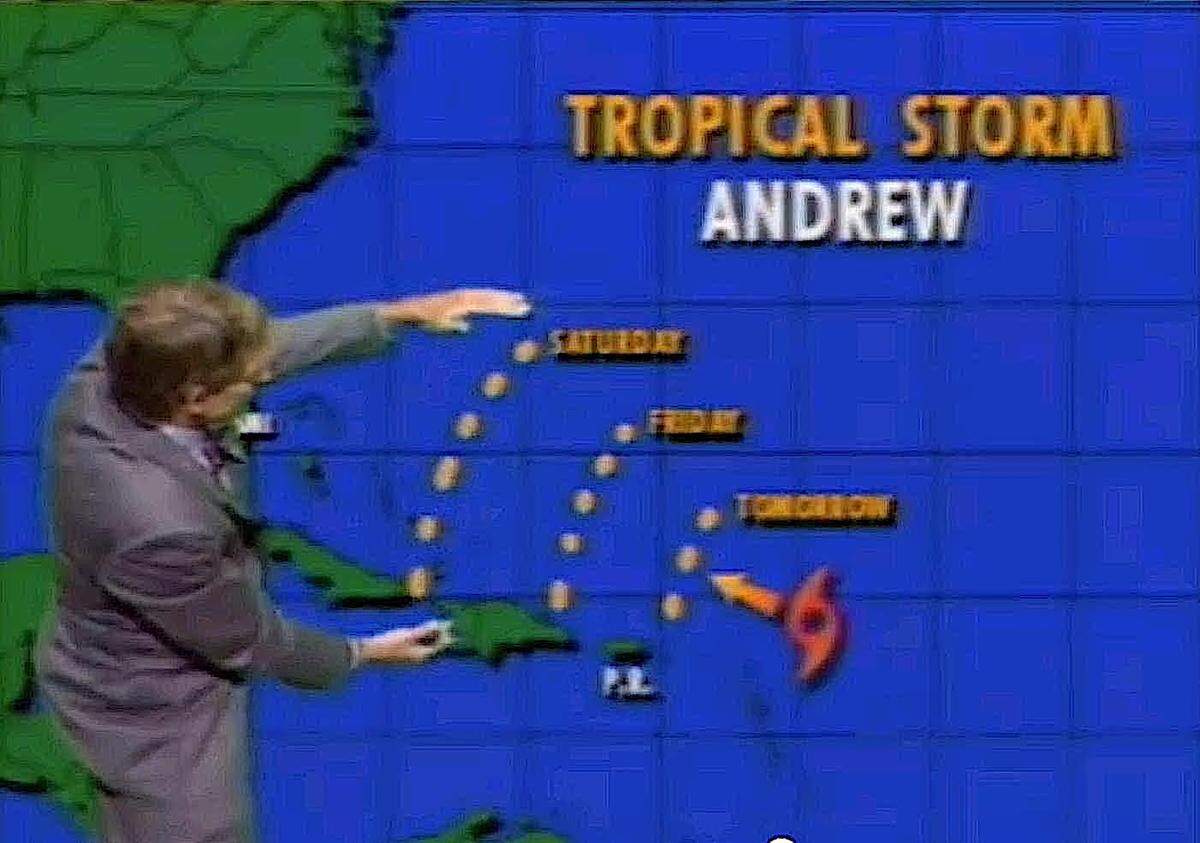
Bryan Norcross, the famous TV meteorologist who broadcast throughout Hurricane Andrew in 1992, debuted the first version of what is now the hurricane cone of uncertainty the week before Andrew hit Florida. Bryan Norcross
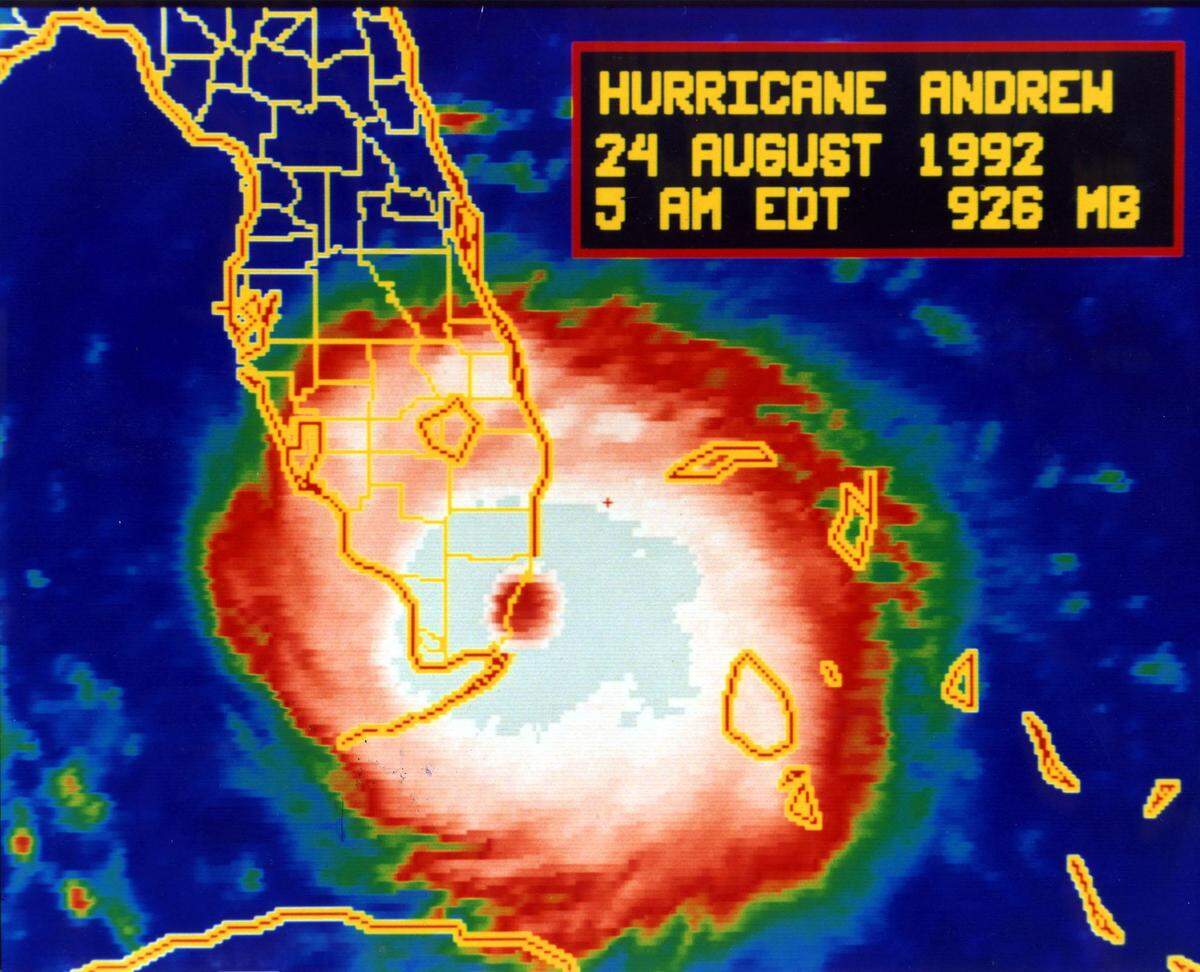
Photo from NOAA satellite showing Hurricane Andrew making landfall near Homestead Air Force Base in Florida at 5 a.m. EDT, Aug. 24, 1992, with sustained winds at 145 mph and gusts of 175 mph. National Hurricane Center

.JPG "0409201969 (1).JPG")

.JPG "hurricaneandrew20120714005_a(3).JPG")
.jpg "19920828_1_BigOne (1).jpg")