Hurricane Andrew’s legacy: Five ways one storm forever changed South Florida

READ MORE
Hurricane Andrew: 30 years later
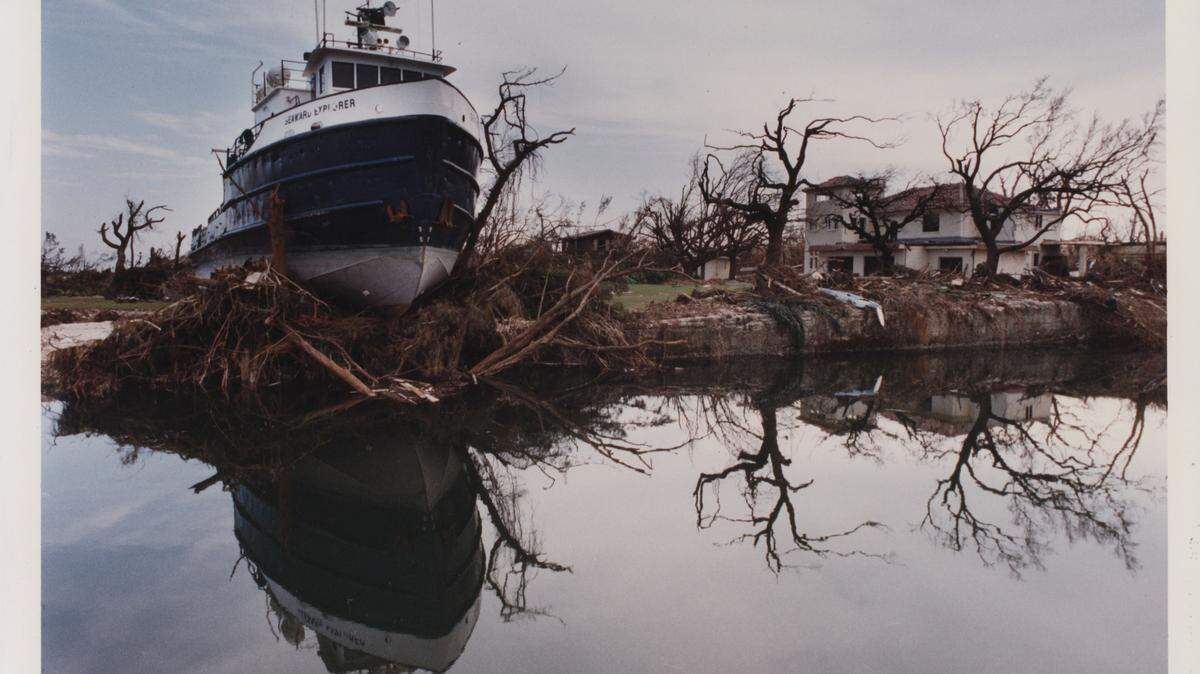
The storm changed lives in South Florida. It destroyed homes and landmarks. And it left indelible memories of survival. Hurricane Andrew roared ashore on Aug. 24, 1992, 30 years ago.
Expand All
Thirty years later, the staggering damage from Hurricane Andrew has disappeared but its legacy remains, strong and sweeping.
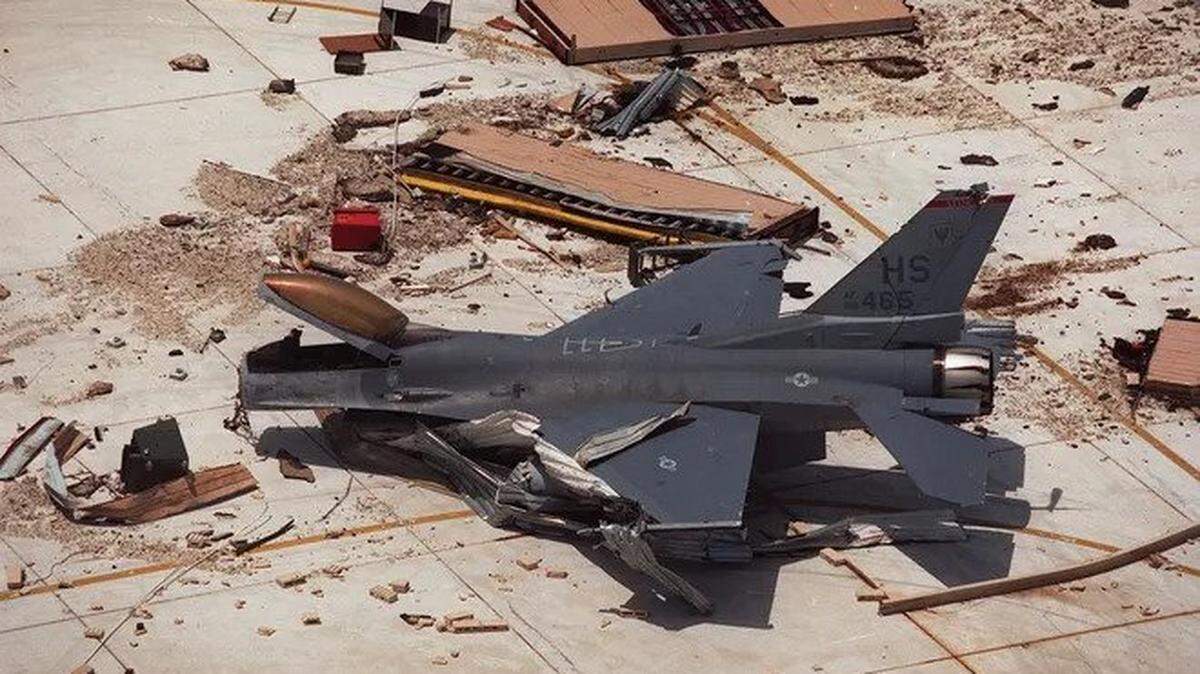
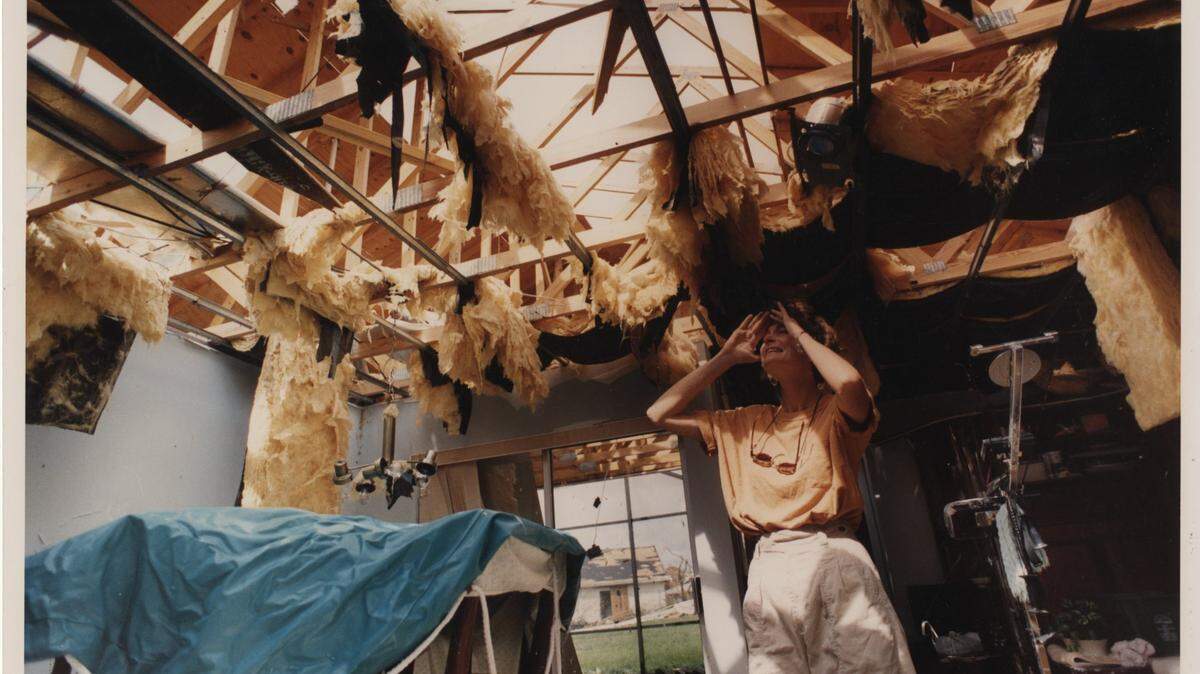
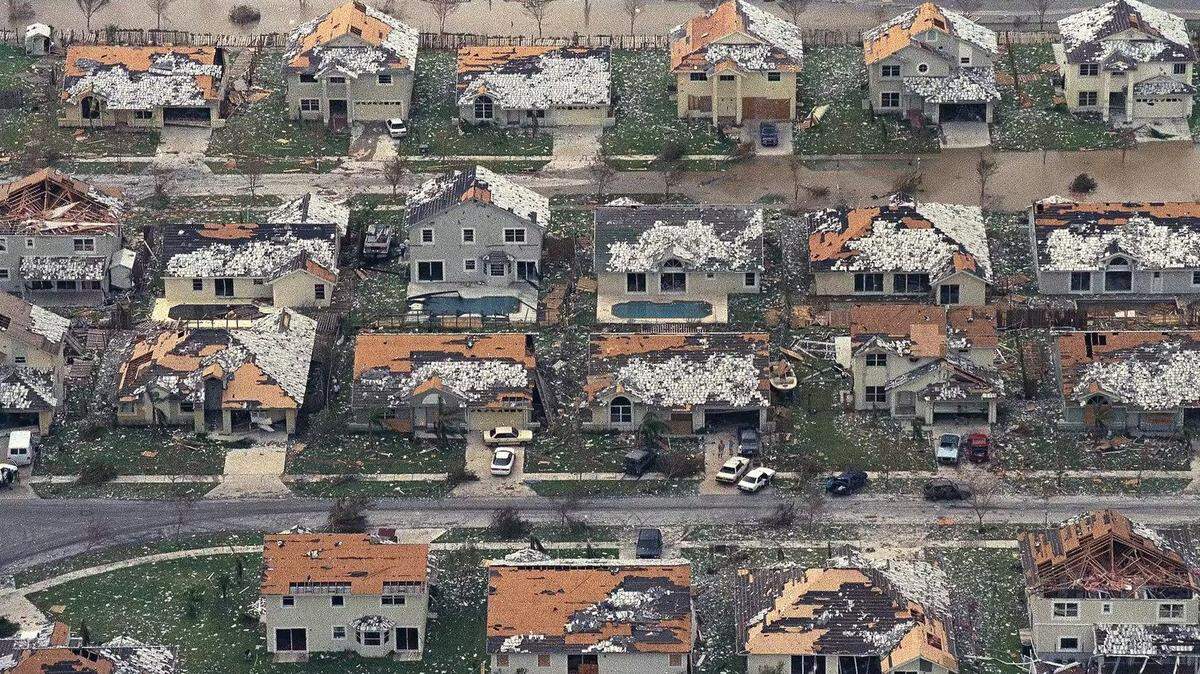
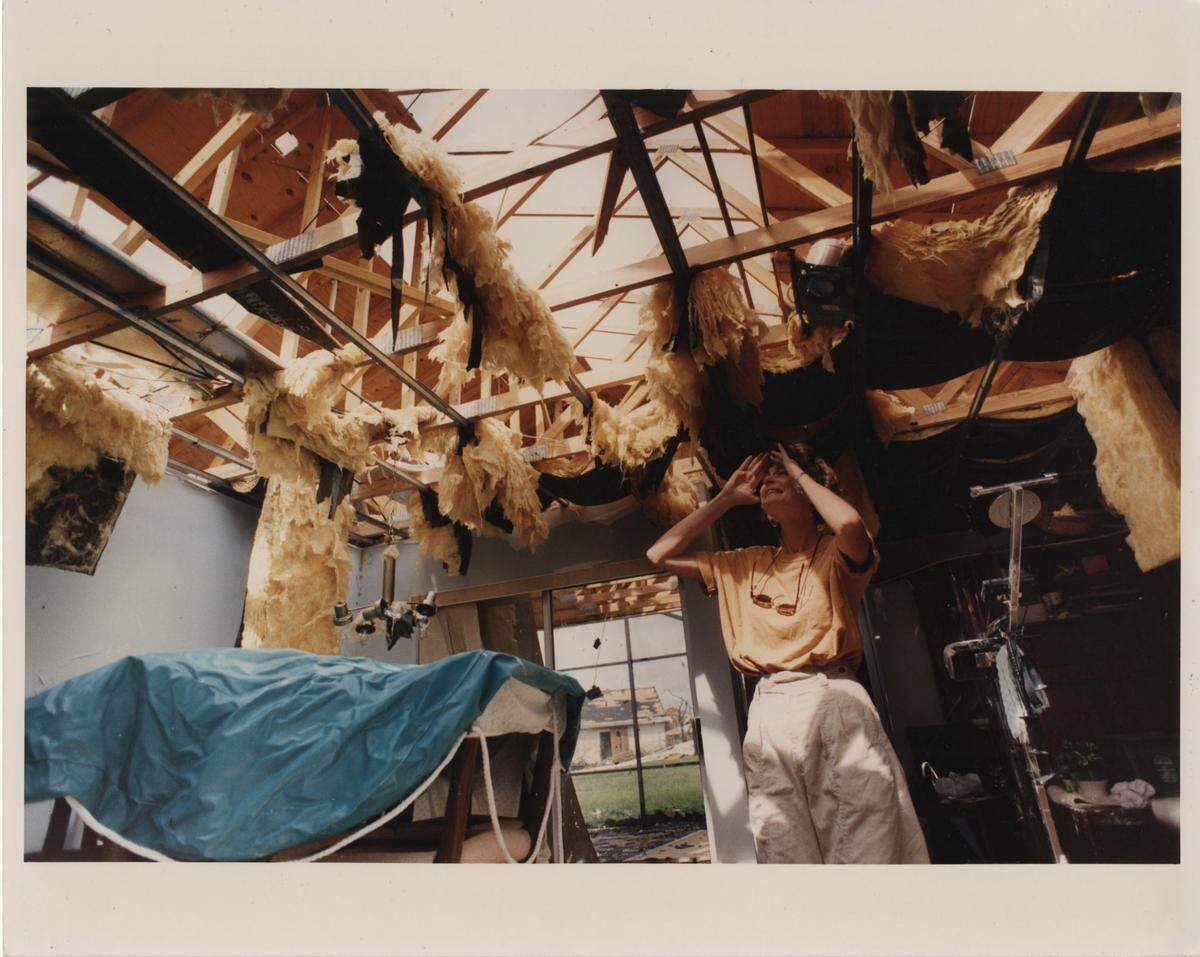
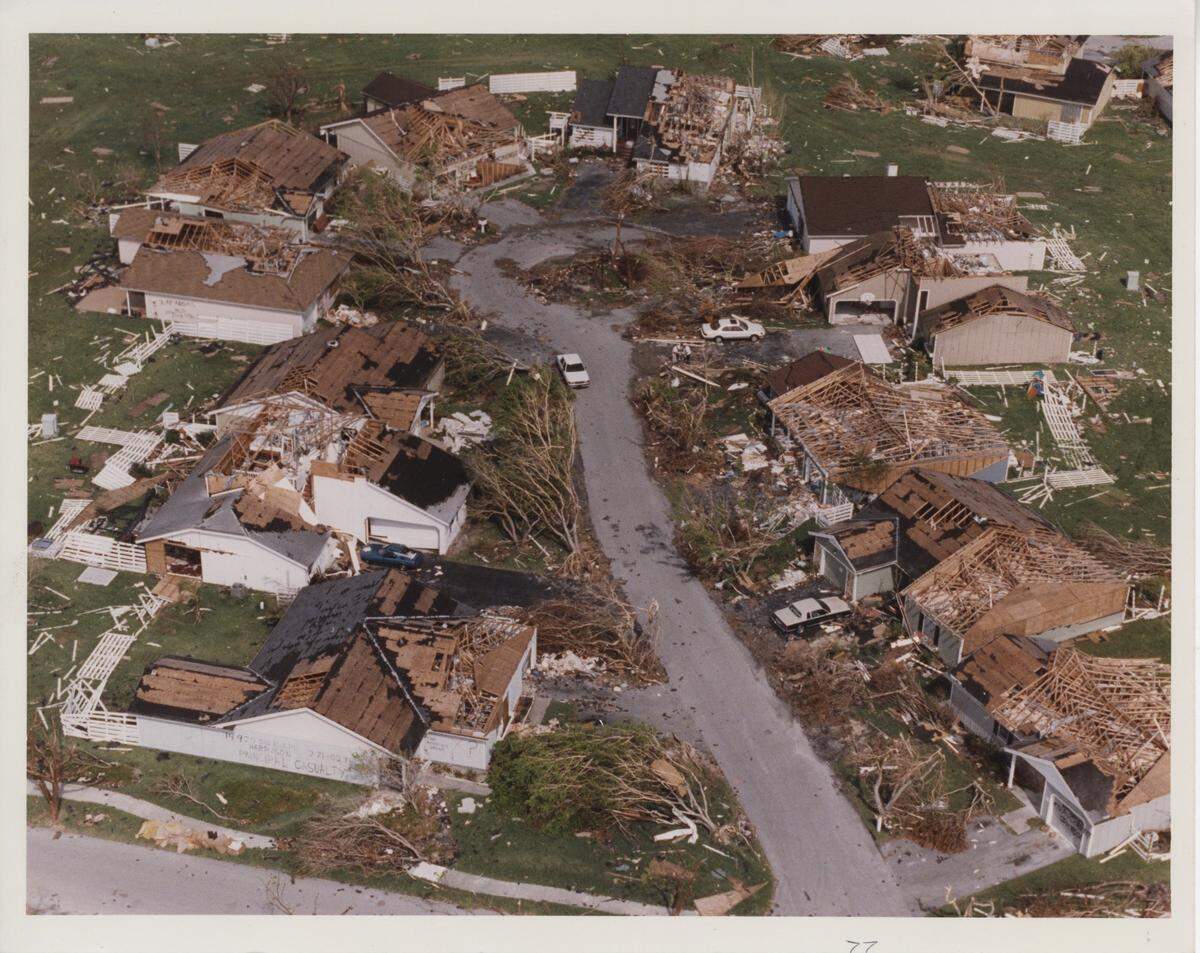
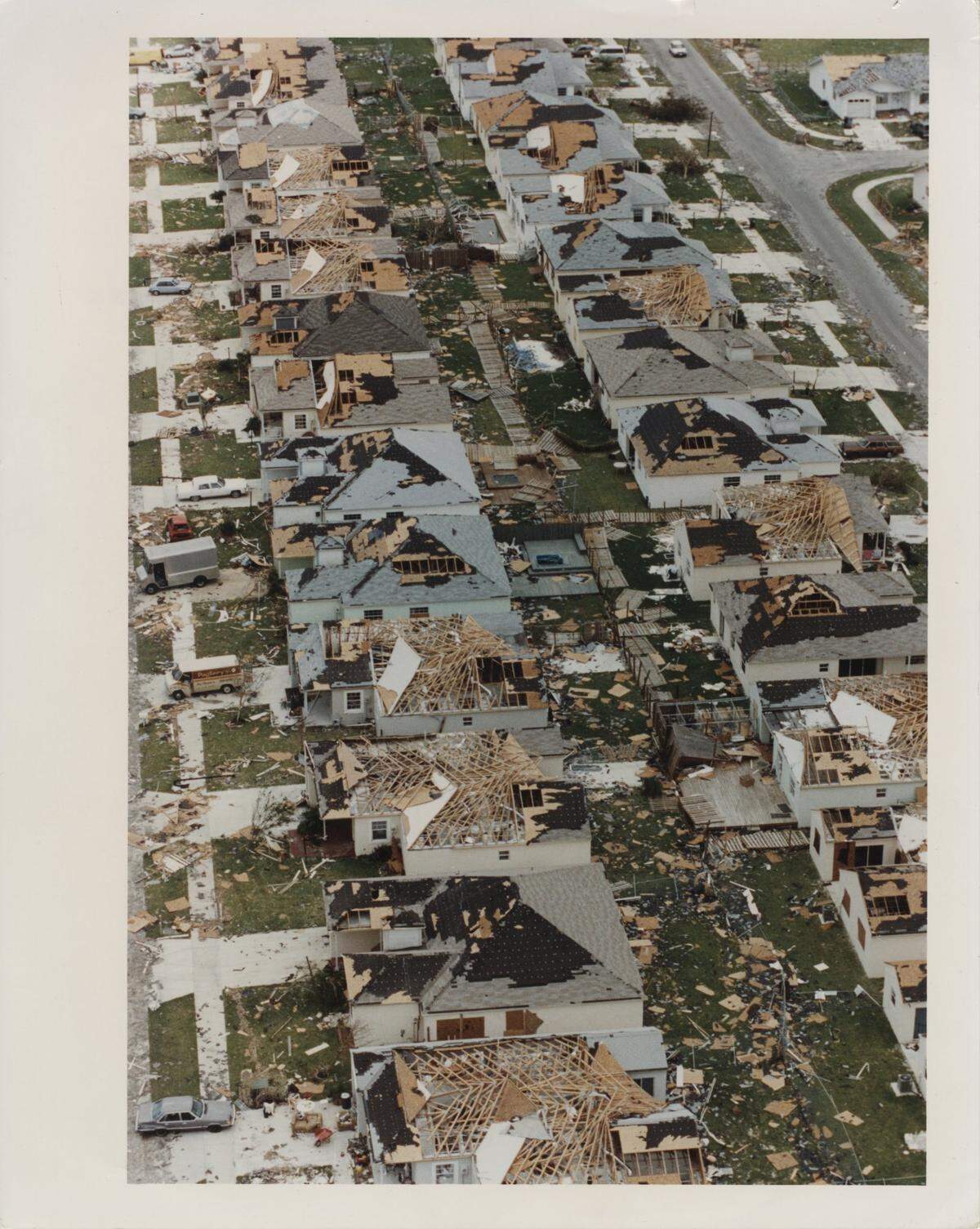
The 49,000 homes it destroyed and 108,000 it damaged when it roared ashore on Aug. 24, 1992, in South Miami-Dade County have been repaired, razed or rebuilt.
But the record-breaking Category 5 hurricane set in motion changes still evident today in everything from the home insurance market (the price is still skyrocketing) to television weather reporting (there’s 24-7 local and Weather Channel storm coverage now) to a massive population shift in South Florida (a lot of people moved north).
Virtually every new home in South Florida is built stronger now, right down to special roofing nails. And the devastation, including 43 deaths, led to the development of new high-tech tracking and forecasting systems and better public warnings. The “cone of uncertainty” didn’t exist when Andrew loomed.
And for anyone who lived through it, the storm left an indelible memory — the harsh reality of the state’s true vulnerability to major hurricanes.
“I want to forget, but I can’t,” National Hurricane Center senior storm specialist Richard Pasch said with a wry laugh.
Building Codes
Hurricane Andrew’s greatest legacy can be seen nearly everywhere you look in a major city. Every new building built (or redeveloped) in the last 20 or so years is safer because of strict new regulations in place after the storm.
Building codes are a set of minimum standards, and before the storm, South Florida’s were considered some of the best. Andrew turned that on its head and exposed a building code full of loopholes, along with rampant shoddy construction work and lax enforcement from governments charged with keeping residents safe.
But it wasn’t just that the standards were inadequate. Two grand juries convened by the state found that South Dade homes were also poorly built and inadequately inspected. Some of the destroyed homes were built mostly with particle board, and others had roofs that weren’t even nailed down.
Dottie Mazzarella, vice president of government relations for the International Code Council, said after Andrew, Florida established some of the most stringent storm-related building codes in the world, which have since been adopted internationally.
“It was truly a wake-up call, she said.
The first change was in 1994, when all new South Florida homes were required to have storm shutters or impact windows, part of a new standard for extreme winds developed by the American Society of Civil Engineers. The standard also came with maps designating high-velocity wind zones. Anyone within those zones was required to have lab-tested windows, doors and other construction materials that can withstand the screaming winds of a major hurricane.
By 2002, much of South Florida’s building code had been exported to the rest of the state — though some areas continue to be built to lesser wind-speed standards.
Around the same time, the three different regional building codes in the U.S. came together as one national building code, and some of these wind standards were included for other coastal states, Mazzarella said. Some states, counties and cities have since adopted those standards.
“We learn from these tragedies. The good that comes out of it is we build better,” she said.
Insurance
Andrew caused a shocking amount of damage in South Florida. Ahead of landfall, an industry veteran predicted a storm of that severity could cost between $4 billion to $5 billion in damage. It was triple that.
In 1992, Andrew was the most expensive storm to ever hit the U.S. Although as more people (and expensive real estate) cluster along the coast, it’s gone down on the list. Today, with all totals adjusted for inflation, it only ranks as the seventh most costly storm.
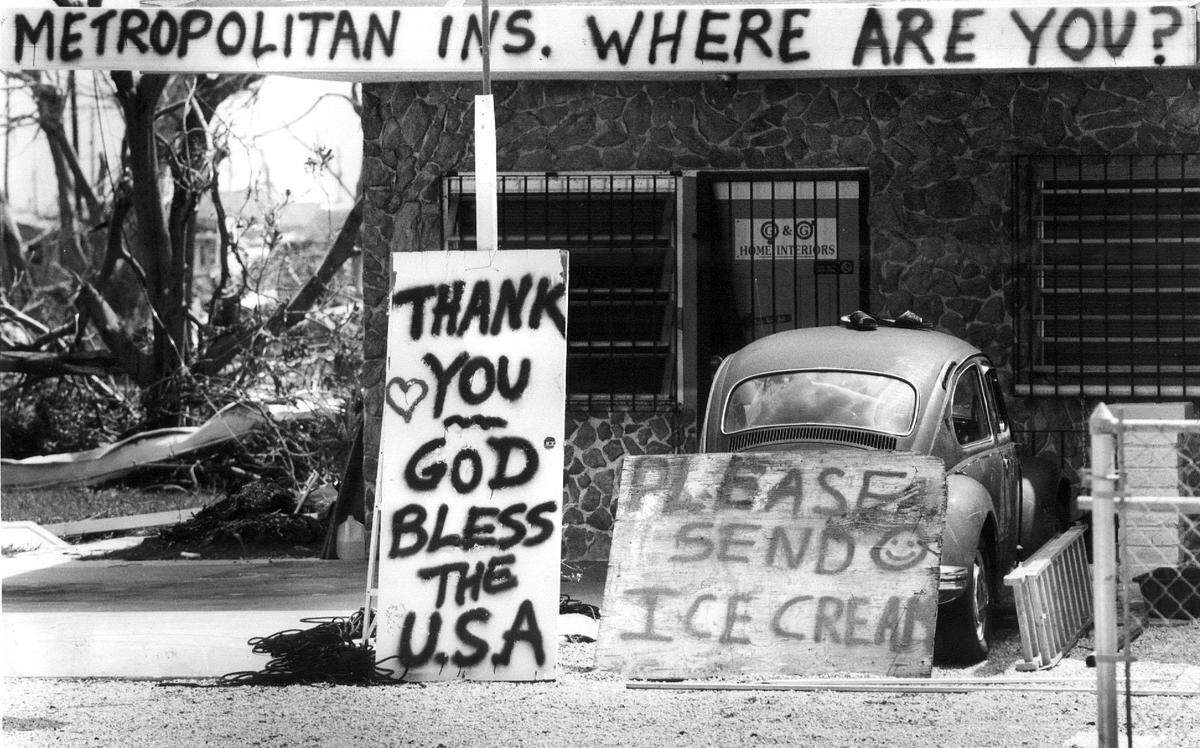
But at the time, Florida insurers were unprepared to pay up. Eight companies went broke trying to cover all the claims.
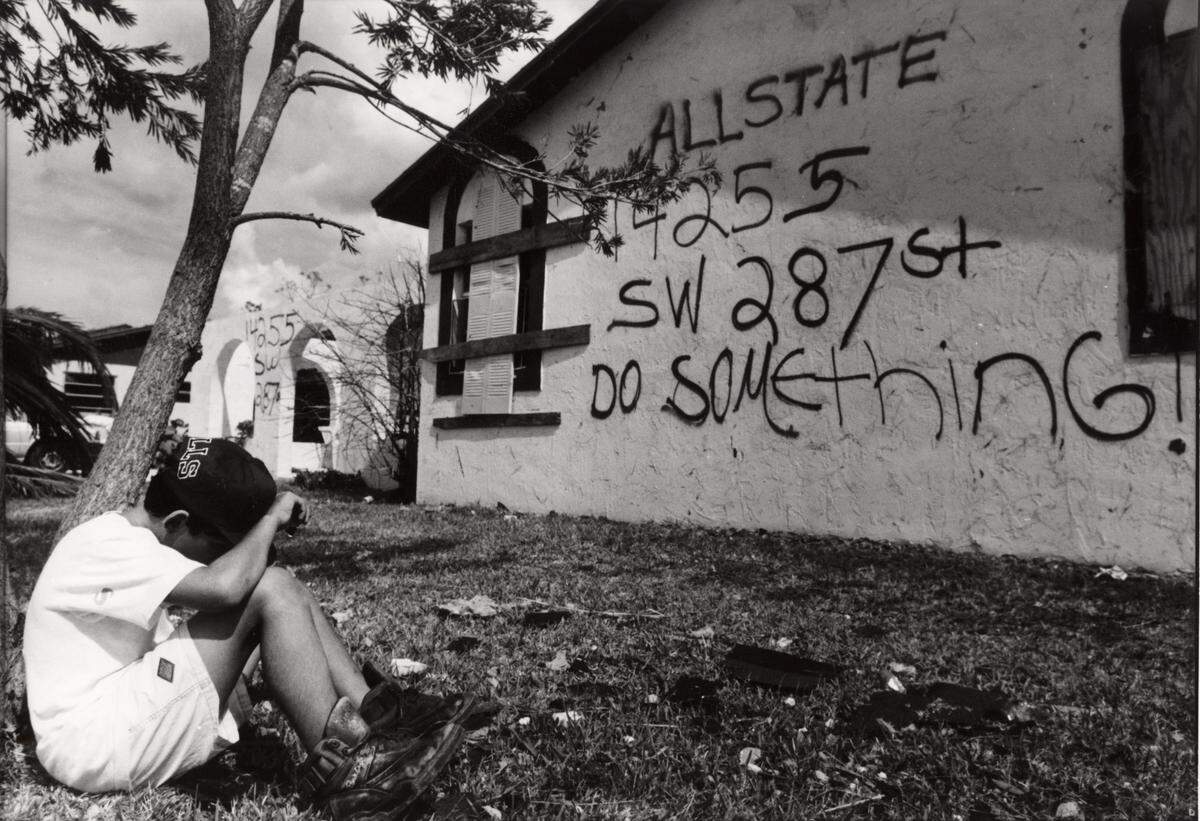
In response, insurers tried to cancel and non-renew policies in risky coastal spots, charge major premium increases and withdraw from some areas entirely. Lawmakers panicked at the prospect of a huge upset to the real estate market, the state’s economic engine, and paused many of those efforts. In response, many national companies fled.
Before Andrew, almost everyone in Florida had a policy from a big national insurance company. Only 6% of the market was Florida-based companies primarily serving Floridians.
Thirty years later, that’s flipped. About 75% of the state property insurance market comes from small Florida-based companies, with major national companies now making up a small slice of the market. And in 2002, the Legislature created Citizens Property Insurance Company intended as an insurer of last resort that wound up taking on many high-risk coastal properties. With many small private firms folding, Citizens is expected to swell above a million policies this year.
Mark Friedlander, communications director for the Insurance Information Institute, said one of the state’s first moves to stabilize the economy after Andrew was to set up the Florida Hurricane Catastrophe Fund, a safety net for residents stuck with bankrupt insurance companies.
The cat fund, which is still in place today, is funded by insurance companies and helps cover claims for companies that run out of cash after a big storm.
Another now-familiar post-Andrew invention is the hurricane deductible — a cash amount a property owner is responsible for covering after storm damage. This figure is usually higher than the deductible for other losses and it covers damage from any number of storms in a single hurricane season.
“Florida was the first state to enact hurricane deductibles,” Friedlander said. “Today you see hurricane deductibles in some form in every coastal state.”
Insurance companies quickly realized the importance of having their own insurance, so the demand for “reinsurance” exploded, particularly in the offshore haven of Bermuda, where most of the industry still exists today.
“This really kick-started the global reinsurance market,” Friedlander said.
TV Meteorology
If there’s a face for Hurricane Andrew, it’s Bryan Norcross.
The energetic WTVJ meteorologist went deep on hurricanes and hurricane risk before it was mainstream. And all that work proved vital in 1992 when the largest storm to hit a U.S. city in 30 years came knocking at his doorstep.
No other storm before this one had live TV coverage, cameras in the field to capture all the action or a TV station with generators and backup lines to transmitters to keep broadcasting during a storm.
“It really was the first big storm of the modern media era where the broadcast stayed on the air. That set some expectations that kind of ring true today,” said Norcross, now a hurricane specialist with FOX Weather. “Things completely changed after Andrew. People knew they had to focus on hurricanes. Every news outlet focused on Andrew almost nonstop for two years.”
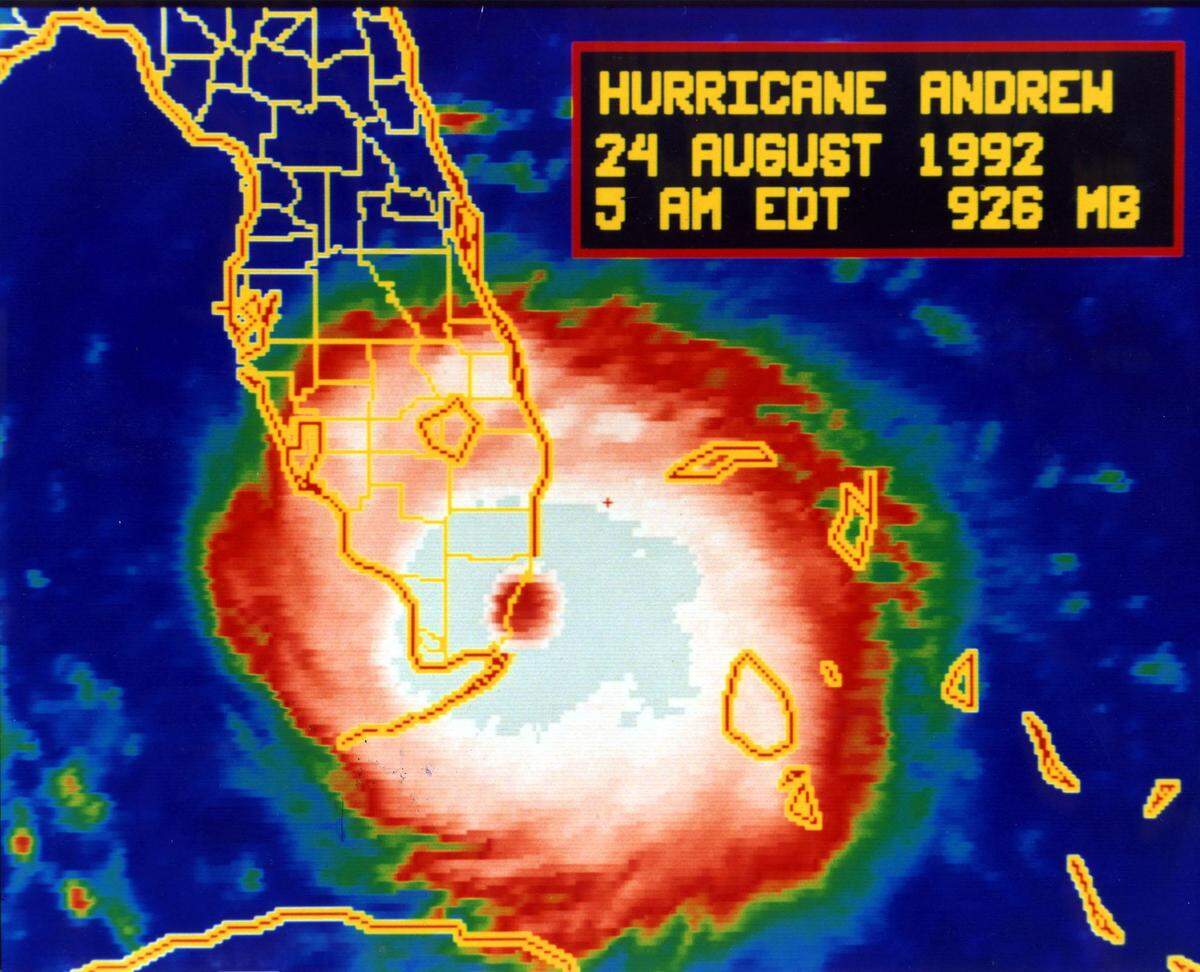
Viewers tuned in from across the nation to watch Norcross explain to South Floridians what was about to happen in great detail. He told them how the pressure change would feel as the eye traveled overhead. He said it would be louder than anything you can imagine.
After Andrew, it became standard practice for anyone in the path of a storm to switch on their TV and expect wall-to-wall live coverage, now with newer, shinier graphics and a rotating cast of weather experts armed with up-to-the-second data feeds.
It’s hard to imagine that coverage without the prerequisite clip of an elected official — usually donning a baseball cap and windbreaker — gravely warning the public of the risks they face.
But before 1992, politicians were rare sights on TV before, during and after a storm.
“That came as a result of Andrew,” Norcross said.
After the nonstop media frenzy for Andrew, elected officials realized the importance of having their face on the news and began the now traditional regular press conference updates.
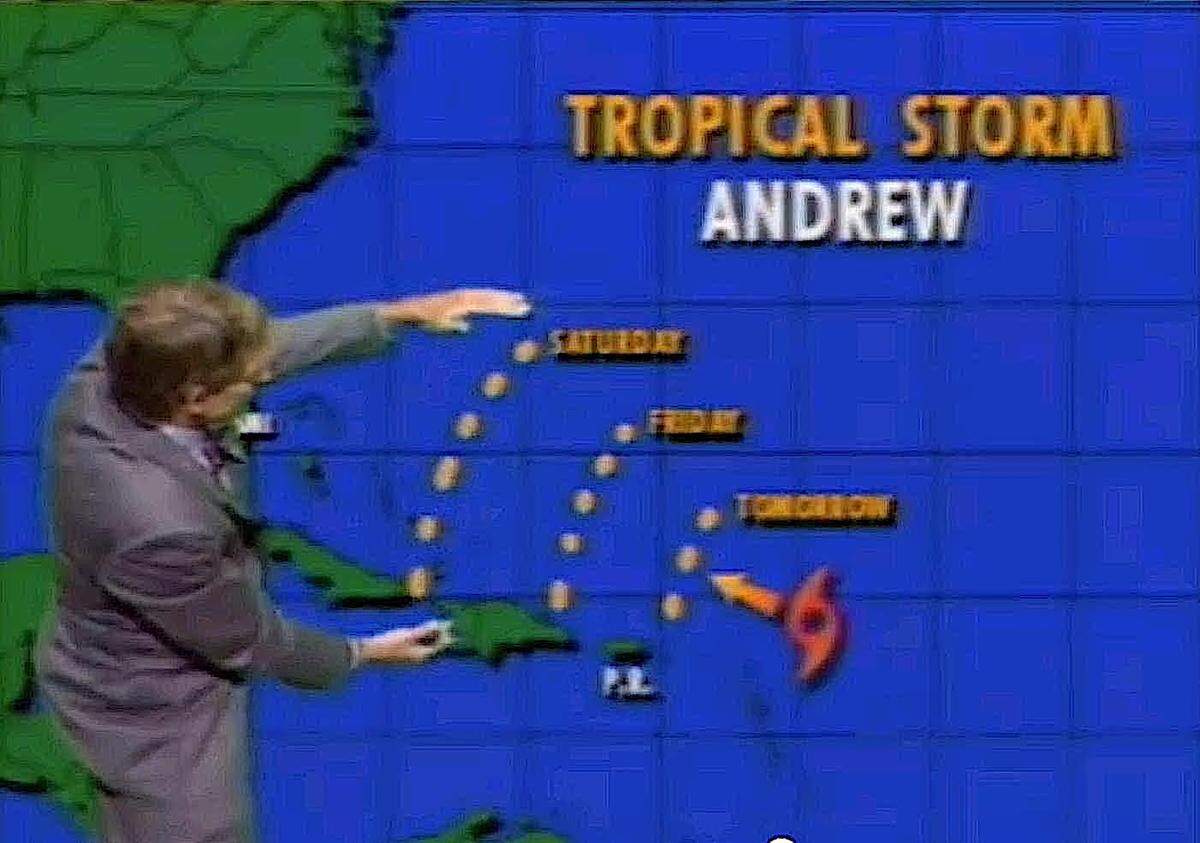
Another post-Andrew legacy: the ubiquitous cone of uncertainty.
In the ’90s, the National Hurricane Center released specific coordinates for the center of a hurricane, and storm watchers could plot it on a map of the Atlantic to follow along. But the margin of error for where the storm might hit was still huge, Norcross said.
“From Jacksonville to the Keys was the average error,” he said. “No one thought we could predict where a storm was going to hit in three days.”
The Wednesday before Andrew struck, Norcross debuted a new graphic that showed an arc instead of a single point, representing the range in errors. A few years later, a graphics update allowed Norcross to turn those arcs into an ice cream cone representing where the storm could hit.
“I premiered the cone more or less as we know it today,” he said.
In 2002 the National Hurricane Center formally adopted the concept and began publicly showing the cone of uncertainty for all tropical storms and hurricanes.

Hurricane Science
Richard Pasch is the last hurricane specialist left at the National Hurricane Center who was there when Andrew hit.
Pasch was on the team responsible for sending out updates through the night as the Category 5 hurricane raged. At one point, the howling winds ripped off the radar mounted atop the hurricane center. At the time, the center was located in Coral Gables, on the sixth floor of a building off Dixie Highway.
The building (sans radar) and the scientists inside all survived. But the intensity of Andrew gave new urgency to the hurricane center’s mission to build a newer, safer headquarters.
“Various aspects of our operation were compromised. We were in a crippled mode for weeks afterward,” Pasch said.
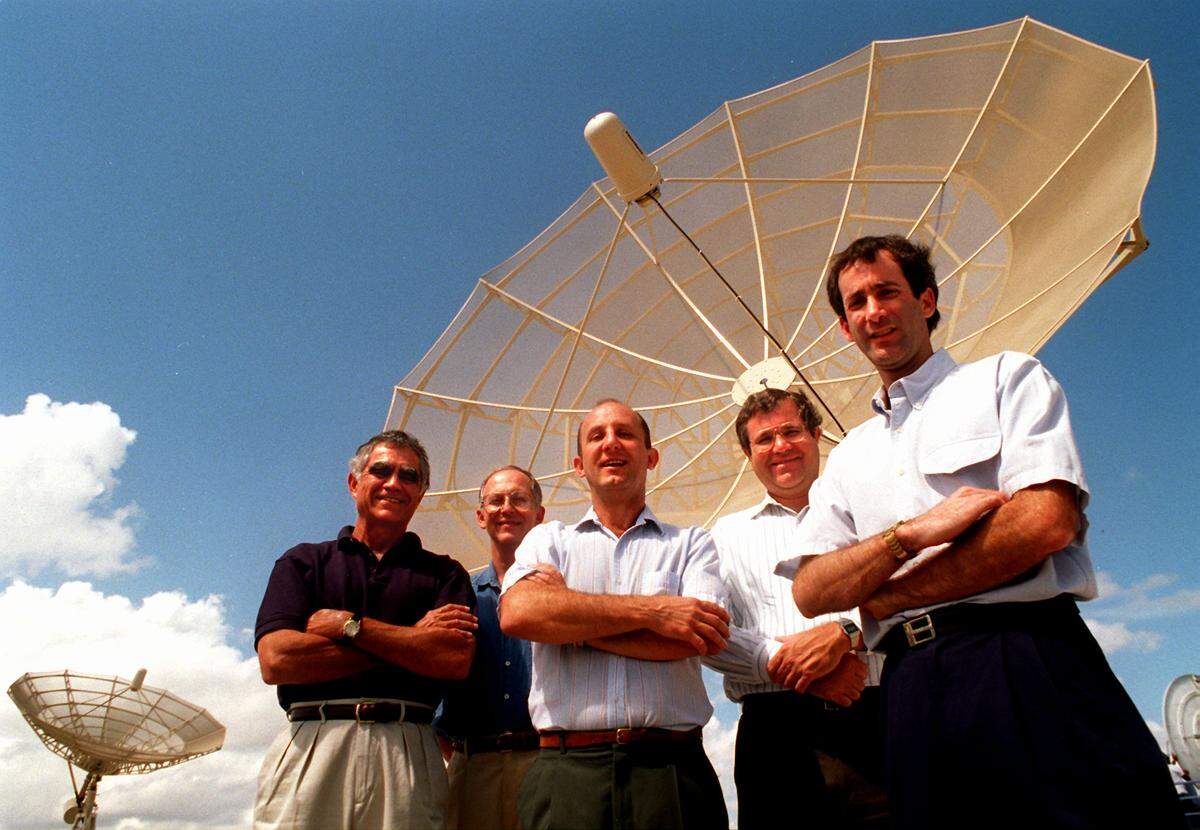
In the wake of Andrew’s devastation, NHC Director Robert Sheets worked with top engineers to design a new hurricane center that could withstand the high winds of a Category 5 storm and keep everyone inside safe, as well as keep producing forecasts.
And, of course, it was inland.
“We weren’t going to move the building somewhere we were vulnerable to storm surge,” Pasch said.
The center, at 11691 SW 17th St., is located on Florida International University’s Modesto A. Maidique Campus and is where today’s storm forecasters use new technology to better predict when and where a hurricane will hit.
That’s thanks to new and improved satellites, technology to sample wind speeds and pressure and computer models that chew up all that data and spit out a vastly more accurate forecast. Pasch said the average error range for a storm one day out in 1992 is now the same uncertainty the hurricane center has for a storm three days away from landfall.
“The computer models have gotten so much better in the last couple of decades,” he said. “You go back a few decades, you really didn’t have those kinds of observations.”
Another aspect of hurricane science that’s leaps and bounds better, Pasch said, is the social science aspect. The hurricane center is much better at communicating the specific risks for a given storm, and fewer people are dying preventable deaths these days.
Despite that, he warned that folks still need to be prepared for every hurricane season and keep a close eye on the center’s latest forecasts.
“You can’t let your guard down,” Pasch said.
Demographics
Hurricane Andrew flattened Homestead. Tens of thousands of residents lost their homes and their jobs. Recovery was a slow process, so many people decided to simply leave and start again somewhere else.
For most, that meant southwest Broward County. What used to be strawberry fields and soggy wetlands turned into strips of tract homes seemingly overnight as the population ballooned.
“It’s a whole different landscape than it was in 1992 in terms of population density, in terms of housing development,” said Ned Murray, associate director of the Jorge M. Perez Metropolitan Center at Florida International University.
IRS records showed more than 83,000 people left Miami-Dade County in the wake of Andrew, and Broward’s population swelled by more than 20,000, according to the Sun Sentinel.
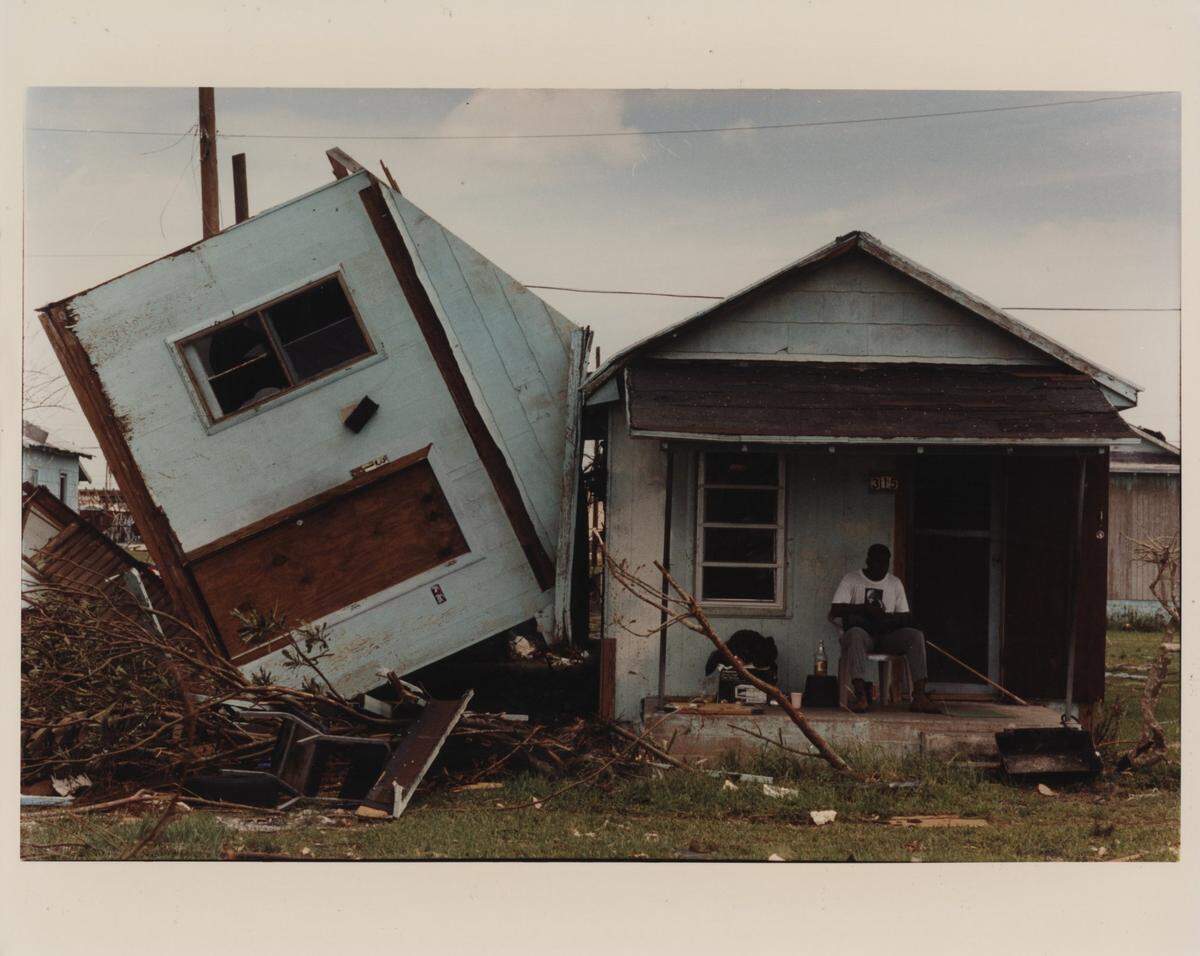
That rings true for South Dade as well, Murray said. Before Andrew, the population of Homestead was just under 27,000. Recovery happened slowly, and then all at once. By 2005, Homestead topped national lists as one of the fastest-growing cities in the country.
As of 2022, Murray said, Homestead’s population now hovers around 85,000.
“A lot has happened in 30 years in terms of growth,” he said. “That’s fairly reflective of South Dade in general, which now has half a million people living there.”
Unfortunately, despite the population explosion in South Dade, economic opportunities haven’t caught up to the number of new residents — and job seekers.
“The area has never really recovered. We have all this population growth but no real economy for them to be the beneficiaries of,” Murray said.

This story was originally published August 24, 2022 at 4:30 AM.