Here’s how hot (extremely) and probably wet (very) it will get in Miami Saturday
READ MORE
Sizzling South Florida
Extreme heat is already leaving South Florida sweating. How will we adapt to the warming world?
Expand All
Dangerously oppressive heat soaked at some point by showers that could bring local flooding.
Welcome to Saturday in South Florida as described by the National Weather Service forecast.
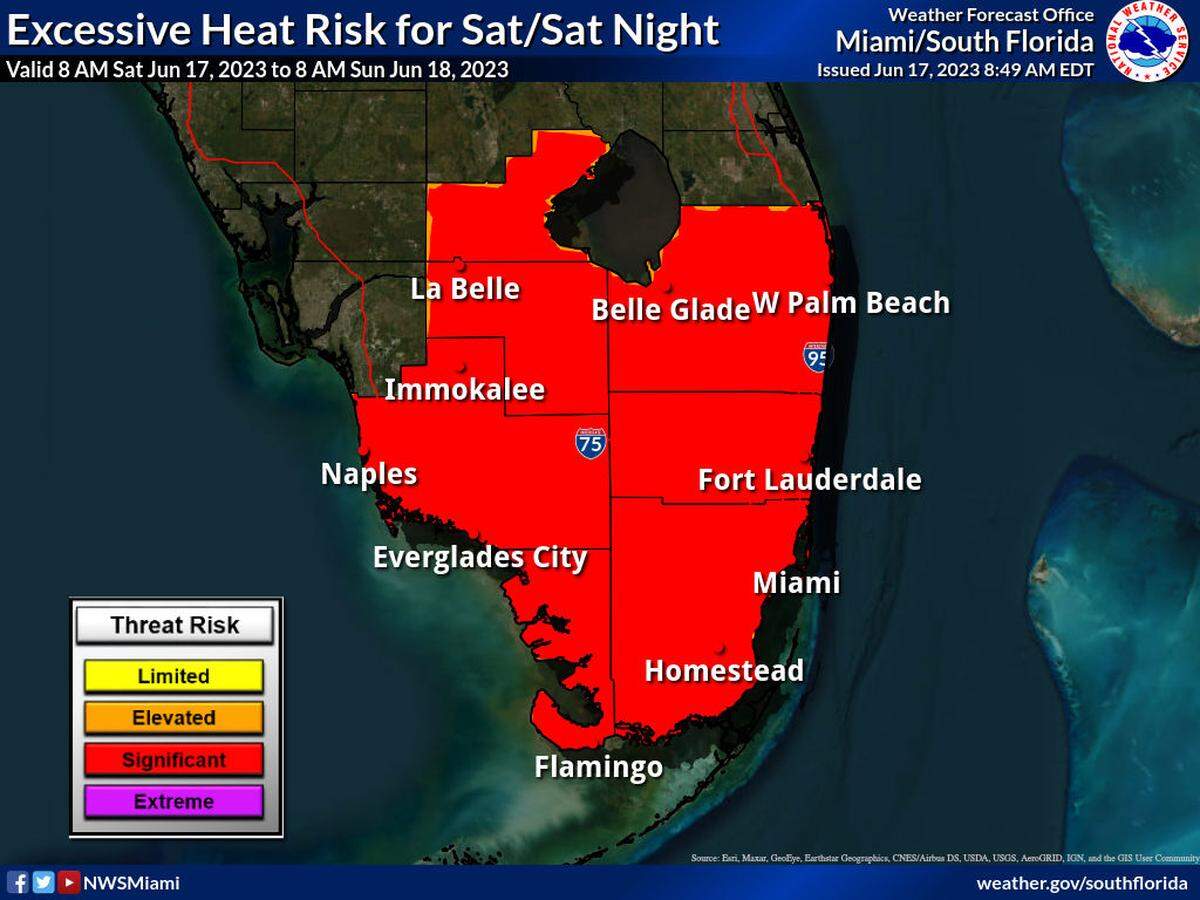
Or, more accurately, Saturday in Florida’s lower quarter, seeing as how the NWS’s heat advisory starts in Monroe County, consumes the counties of Miami-Dade, Collier, Broward, Palm Beach, Hendry and extending into Glades County.
But, when the NWS uses “Let’s start with...” to open its discussion of the day’s weather issues, you know many Florida events will be visiting at once.
In the heat of the night (and day)
Florida has the Panhandle at its northern end, but the southern end will be a skillet Saturday.
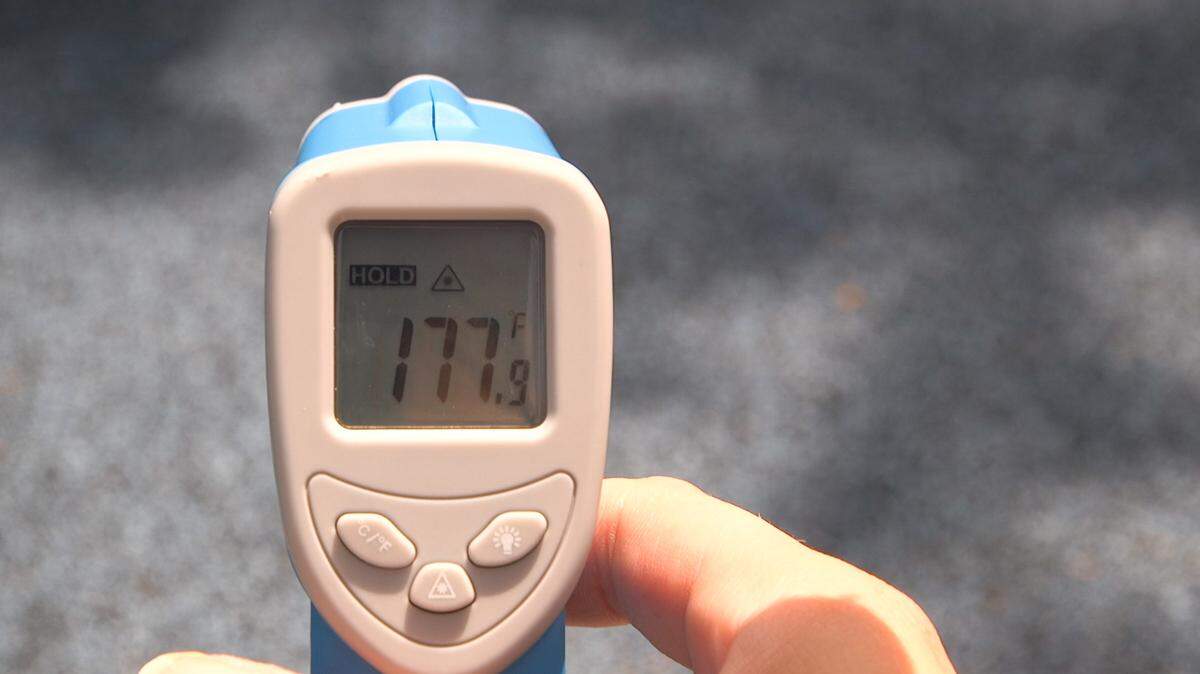
The aforementioned heat advisory, which lasts until 7 p.m., warns of a heat index from 105 to 108 degrees, putting it in NWS’ “Significant” category. The hazardous weather outlook says some areas could reach 110 degrees.
That means, “Dangerous and potentially deadly heat stroke likely with prolonged exposure.”
Stay in rooms with air conditioning or some other cooling mechanism. Do not stay out in the sun for an extended period unless absolutely necessary. Wear loose, light clothes. And, most importantly, stay hydrated.
As of 10 a.m., the temperature at Miami International Airport was already 88 degrees with a heat index of 95.
Here comes the rain again
Summers in the Miami-Fort Lauderdale-Boca Raton slice of Florida, the question isn’t “Will it rain?” but “When and how heavily...?”
The answers: likely after 2 p.m. and from 0.75 of an inch to 1.0 inch.
“With the potential for heavy downpours with storms today and additional rounds of activity, localized flooding will be possible especially across the east coast metro areas,” the NWS said.
Other pieces of weather hitting South and Southwest Florida
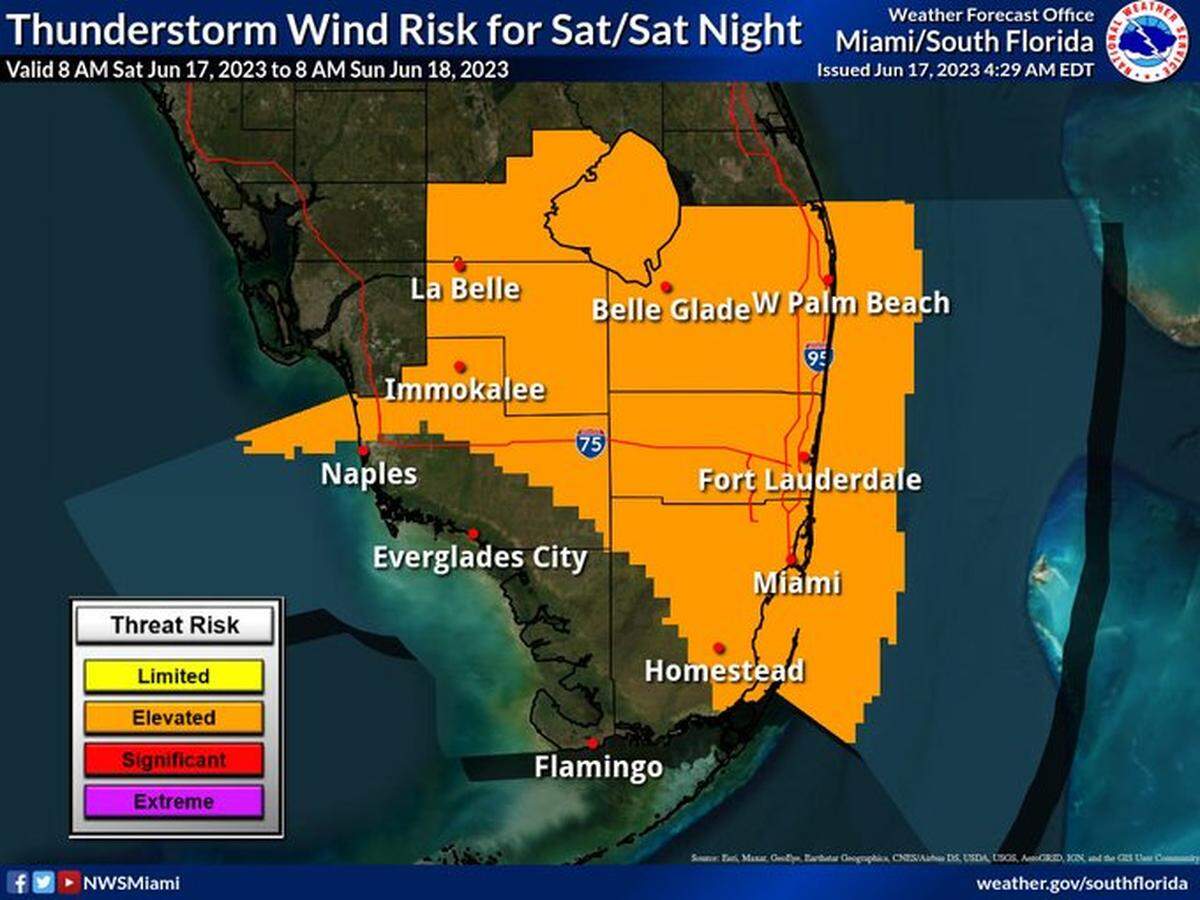
In addition to the rain, there’s “the potential of damaging wind gusts, small hail, and frequent lightning,” the NWS says.
The wind gusts could reach 20 mph. The hail could be “up to the size of a quarter.”
Oh, and “an isolated funnel cloud cannot be ruled out as well.”