When does ‘rainy season’ start in Florida — and what does it mean for the forecast?
Sunday is the start of rainy season in South Florida, according to the National Weather Service.
Since it seems we don’t really get all the feels of the traditional seasons — especially spring and fall — to go along with the dreaded hurricane season, you may wonder what rainy season is all about.
Here’s a quick look at what to expect:
When is rainy season?
Rainy season starts Sunday in South Florida. In Southwest Florida, it runs May 15 to Oct. 15, and in West Central Florida it’s May 25 to Oct. 10.
“The rainy season can begin abruptly in some years and the onset can take weeks to develop in other years,” meteorologists at the weather service say.
Apparently, the latter could be the case for South Florida and the Keys. The current forecast calls for a mostly sunny week, Sunday’s rainy season start or not.
Defining the rainy season
“In general, the rainy season is characterized by warm, humid conditions with frequent showers and thunderstorms,” the service says. “The start date of the rainy season varies from year to year and is largely determined by the onset of almost daily showers and thunderstorms over the Florida peninsula, as well as late night and morning showers and thunderstorms over the waters of the eastern Gulf of Mexico.”
What has to happen?
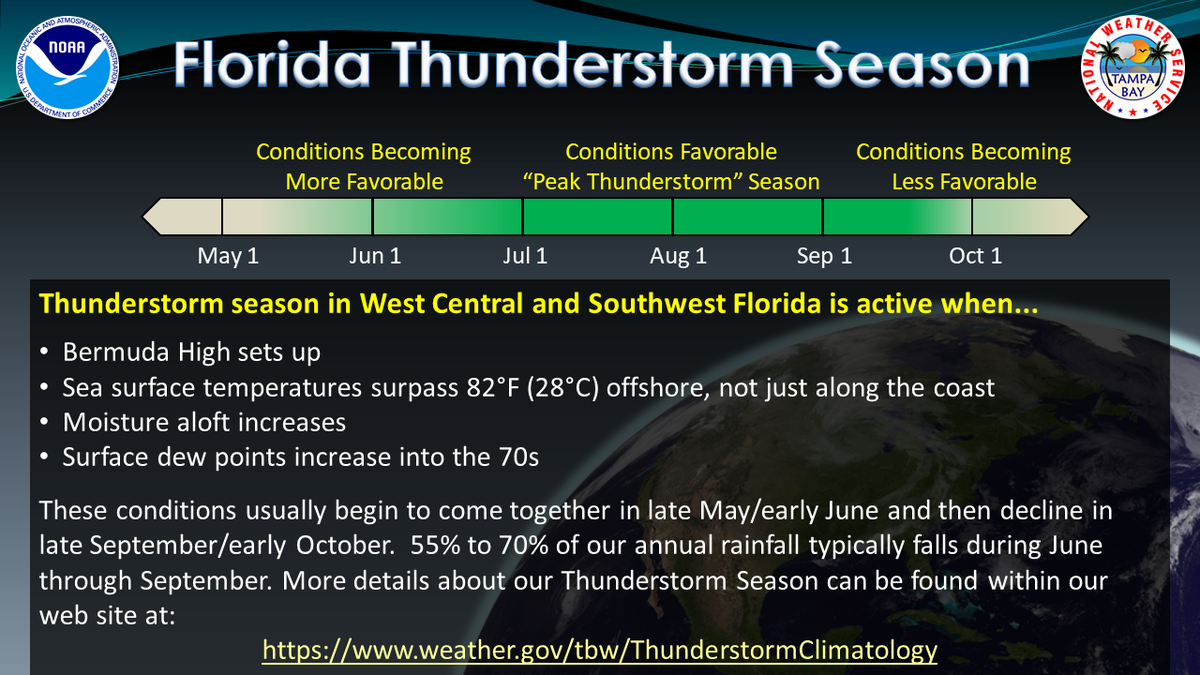
Rainy season is active when a Bermuda high sets up (a high pressure system over the Atlantic), sea surface temperatures top 82 degrees offshore and not just along the coast, moisture aloft increases, and surface dew points increase into the 70 degrees — with daily low temperatures in the 70s to around 80, and high temperatures in the upper-80s to mid-90s.
Phases of the rainy season
The rainy season usually has three phases, according to the National Weather Service.
▪ Phase One: Late May through June is when severe storms are most likely. These storms can produce hail, damaging winds and waterspouts, including tornadoes. Of course, heavy rain and frequent lightning come along with these storms.
▪ Phase Two: July through early September is when the rainy season peaks. “While the overall threat for severe weather diminishes, heavy rainfall and seasonal river flooding remain significant hazards, along with frequent lightning,” the service says.
▪ Phase Three: Mid-September through early October. This is the “wind-down” phase and tends to have more variability in rainfall forecasts due to potential tropical systems, like hurricanes in their peak of the season, and cold fronts that could start in the fall.