
‘Secretive’ creatures not seen in 30 years rediscovered in FL wetland, study says
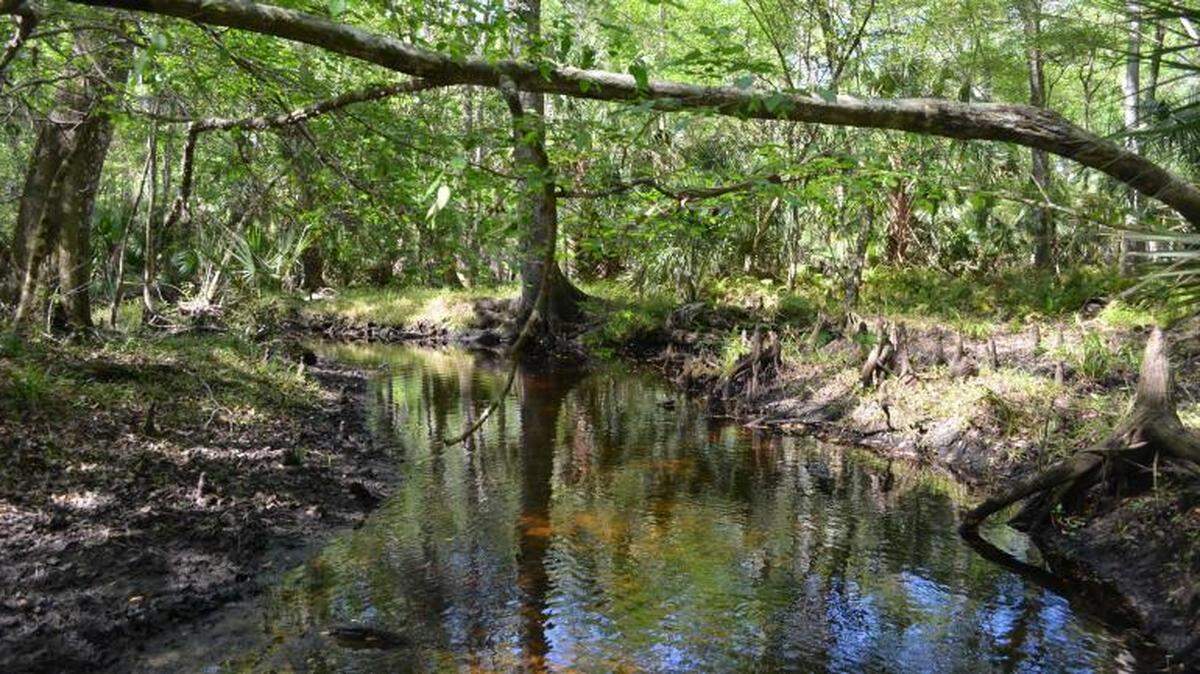
Researchers ventured into the blackwater streams of Florida’s wetlands on the hunt for a rare species that hadn’t been documented in the state in over 30 years.
They found nearly two dozen.
A study published in the Florida Field Naturalist by the Florida Ornithological Society documents the rediscovery of the many-lined salamander, which is native to coastal areas stretching from northeast Florida to Virginia.
The last sighting of the salamander before the recent study was in 1991, and some believed the species had disappeared from Florida entirely, according to the Florida Fish and Wildlife Conservation Commission.
“In general, we know relatively little about this salamander, but it has likely been impacted by the loss of wetland habitats throughout its range,” the study authors wrote.
Before 1991, the species was only found in four counties (Baker, Columbia, Nassau and Union) in northeast Florida, which is the southernmost edge of its range, according to the FWC. But the “secretive,” mostly aquatic species is relatively rare even throughout the rest of its range, herpetologists with the University of Georgia say.
The FWC’s Fish and Wildlife Research Institute teamed up with researchers from the North Carolina Wildlife Resources Commission and a timberland company to carry out a dedicated survey for the elusive species.
From 2022 to 2024, the team surveyed over a dozen sites consisting of blackwater streams flowing through the north Florida wetlands to try to identify where the salamanders had made their home, if they were in fact still in the state.
“In 2022, we searched for salamanders using a variety of aquatic amphibian survey techniques, including dredging, dip-netting and hand raking, to conduct regular timebased surveys at each site,” the study authors wrote.
But high water levels made it hard to search certain habitats, so they deployed a more “novel” technique and used bags filled with leaf detritus anchored to the bottom of streams to simulate the mucky environment the salamanders prefer. The salamanders could hide in the bags, which researchers would periodically check.
Of all the sites surveyed, the team found salamanders at two locations: 17 in Osceola National Forest and six in John M. Bethea State Forest. Eight of the 23 salamanders were adults.
Because of the small number of salamanders they found over the course of two years, the study authors said it’s difficult to draw conclusions about how common the salamanders are.
“The species has long been considered rare in Florida and difficult to survey,” according to the paper. “It is likely that the many-lined salamander has always been relatively uncommon in Florida, where it reaches the southern extent of its geographic range.”
The many-lined salamanders are a species of greatest conservation need in Florida, according to the FWC. The study authors said projected climate change and habitat loss could further affect the small salamanders, and they recommended the population be monitored going forward.
“Species that occur on the periphery of their range are seldom prioritized for conservation action,” the authors said. “Still, many-lined salamanders are a unique component of Florida’s natural heritage.”