‘Cryptic’ 7-foot-long sea creature found on beach in Florida. It’s a new species

In the crystal waters of the Atlantic Ocean swam a “large” sea creature with a distinctive black-and-white coloring and “whip-like tail.” Everything about it caught the attention of nearby scuba divers — and for good reason.
It turned out to be a “cryptic” new species.
A team of researchers decided to take a closer look at the manta rays and devil rays of the Atlantic Ocean, a “highly vulnerable” group of filter-feeders with a “somewhat unresolved” classification, according to a study published July 23 in the peer-reviewed journal Environmental Biology of Fishes.
For more than 15 years, various scientists had documented the existence of an “undescribed species of manta ray in the Atlantic Ocean,” but no one had formally identified it due to a lack of available specimens, the study said.

Determined to change this, researchers compiled a database of manta ray sightings and tracked down museum specimens from the United States, Mexico and Brazil, the study said. Next, they analyzed the physical features and DNA of these “cryptic” manta rays.
Sure enough, researchers realized they’d discovered a new species: Mobula yarae, or the Atlantic manta ray.
Atlantic manta rays are considered “large-sized,” the study said. The rays measured by researchers were about 7 feet long and 8 feet wide, but the new species has an estimated maximum size of 16 to 20 feet wide.

The new species has a diamond-shaped body, “flat” head and “whip-like tail,” researchers said. Its skin is covered with star-shaped ridges. Its total number of teeth increases over time but can reach more than 2,500 teeth.
Photos show the “wide range of color variation” in Atlantic manta rays. Generally, the rays have a “predominantly black” back with “symmetrical white” markings, the study said. Their undersides are paler with some black markings.

Researchers said they named the new species Yara after a figure of “Brazilian legend” and indigenous “ancient Tupi and Guaraní mythology” whose name means “mother of water.”
The new species’ common name refers to the Atlantic Ocean, the only region where it lives, the study said. These rays have been found in Florida, along the eastern and southern coasts of the U.S., off Mexico, in the Caribbean and off the coast of Brazil.
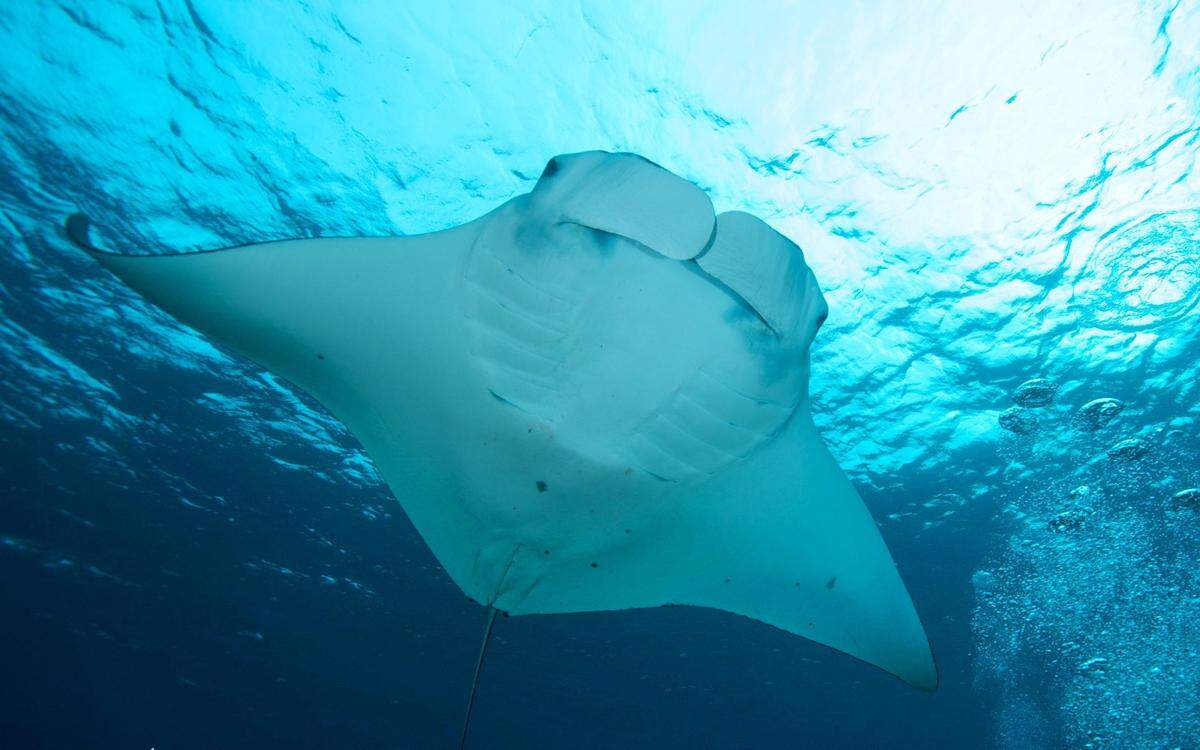
Like other ray species, Atlantic manta rays are likely at risk of extinction and known to face “major threats” such as “pollution, boat strikes, coastal fisheries, and habitat degradation,” researchers said.
The new species was identified by its DNA, mouth shape, body shape and proportions, coloring, skin texture and other subtle physical features, the study said.
The research team included Nayara Bucair, Silvia Hinojosa-Alvarez, Andrea Denise Marshall, Jessica Pate, Carlo Leopoldo Bezerra Francini, Amana Guedes Garrido, Katia Cristina Cruz Capel, Thiago Silva Loboda, Jhonatas Sirino Monteiro, Carlos Eduardo Malavasi Bruno, Claudia Francesca Vaga, Alistair Dove, Lisa Hoopes, Cameron Perry and Marcelo Kitahara.
This story was originally published July 24, 2025 at 2:26 PM.