When does Florida change to daylight saving time? What about a law to ‘lock the clock’?
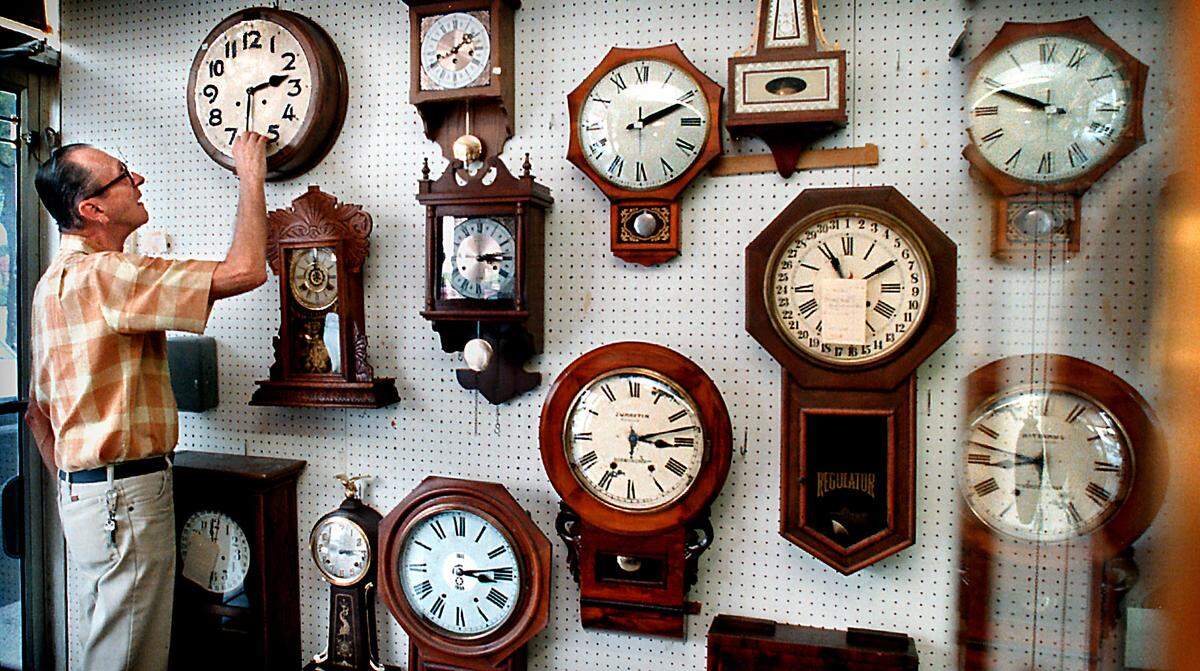
We’re about to spring ahead again. Daylight saving time in South Florida starts on March 12.
What you should know:
Changes in the morning and evening
School and commuting: When the clocks move ahead an hour, it’ll stay lighter into the evening. But for kids getting ready for school or adults commuting to work, it’ll be darker in the early morning.
Sunrise and sunset: When we move the clocks forward at 2 a.m. Sunday, March 12, sunrise in Miami will be at 7:33 a.m. and sunset will be at 7:28 p.m.
Pro tip: Move your clocks ahead an hour before going to sleep on Saturday night, March 11.
How your sleep is affected
Loss and gain: Whether you love or hate the time change, we all have one thing in common: We’ll lose an hour’s sleep this time around. The good news: We’ll get that extra hour of shut-eye right back when we fall back in November.
More time to sunbathe and less time to party?

Good and bad: Daylight saving time might be good and bad for spring breakers, many of whom will descend on South Beach the first weekend of the time change.
Sunbathing: On one hand, the extra daylight hours gives them more time to soak up the sun on the beach around Lummus Park.
Nightlife: On the other, it delays nightfall, when some of the real partying gets started at the cafes and bars on Ocean Drive.
A plan to ‘lock the clock’
Lawmaker action: Weren’t we supposed to see the back-and-forth of time go away? It’s true the issue has come up in the state Legislature and Congress.
Florida flavor: Two Florida members of Congress have continued their pursuit to “lock the clock,” on the twice-a-year time change in the Sunshine State. Through the “Sunshine State Protection Act,” which U.S. Rep, Vern Buchanan, R-Longboat Key, and Sen. Marco Rubio, R-Florida, introduced, daylight saving time would be the permanent, unchanging time. And not just for Florida, but for the nation.
Reaction: “There are enormous health and economic benefits to making daylight saving time permanent,” Buchanan said in a news release. “Florida lawmakers have already voted to make daylight saving time permanent in my home state and Congress should pass the Sunshine Protection Act to move Florida and the rest of the country to year-round daylight saving time.”
Background: Buchanan first introduced the legislation in 2018 and has, along with Rubio, reintroduced it to their respective chambers of Congress ahead of March 12, the date that clocks spring forward by one hour this year. Buchanan’s new House bill has 13 original co-sponsors. In 2018, Florida lawmakers agreed with Buchanan. The Florida Legislature passed the “Sunshine Protection Act,” but the permanent change to daylight saving time hasn’t happened. Why? Because the Uniform Time Act of 1966 dictates U.S. Congress must approve of the change for it to be enacted.
Why have we tinkered with the clock?
Saving energy: Daylight saving time is all about a desire to save energy by extending sunlight later in the day during spring and summer. A study conducted by the U.S. Department of Energy found that the four-week extension of daylight saving time in 2008 saved about 0.5% of the nation’s electricity per day, or 1.3 trillion watt-hours —which is enough to power 100,000 households for an entire year.
Safety: Studies have also shown that the extra hour of daylight has resulted in safer roads, lower crime rates and economic benefits.
Opposition: Critics, however, say more dark mornings could lead to grogginess for commuters and parents who drive their children to school, especially in the winter months.
Disruptions: Other concerns about daylight saving time included disruptions to harvesting schedules for farmers, interference with religious observances based on solar and lunar time, and potential delays in reworking computer systems programmed to switch twice a year.
What are the origins and opposition to the time change?
The start: One of America’s founding fathers, Benjamin Franklin, is often credited with the daylight saving time idea. Franklin wrote a 1784 essay about it as a way to conserve the need for lamp oil, while New Zealand entomologist George Hudson came up with the modern-day concept in 1895, so he had more daylight to look for bugs.
Wartime: But the idea didn’t gain traction among U.S. lawmakers until World War I, and then in World War II as a wartime measure. The Uniform Time Act in 1966 made the change in time an annual passage throughout the country.
School: And while proponents want to stop changing the clocks twice a year, opponents — mainly parents and teachers — argue that a permanent daylight saving time means darker mornings and increased safety risks for children heading to school, whether it’s new teen drivers on the road or students walking to a bus stop or nearby school.
This story was originally published March 3, 2023 at 12:35 PM.