What can you do about a damaged boat in Florida waters? You have some options
READ MORE
Danger in their wake
Hurricane Ian sent boats scattered everywhere: in yards, streets, toppled in the water. What can be done about the navigational and environmental disaster?
Expand All
‘The things you would see floating by.’ How Ian sent boats onto land and cars into water
Hurricane sent boats all over. How the Florida Keys and Fort Myers are dealing with it
What can you do about a damaged boat in Florida waters? You have some options
In the market to buy a used boat? What to know about fixer-uppers after Hurricane Ian
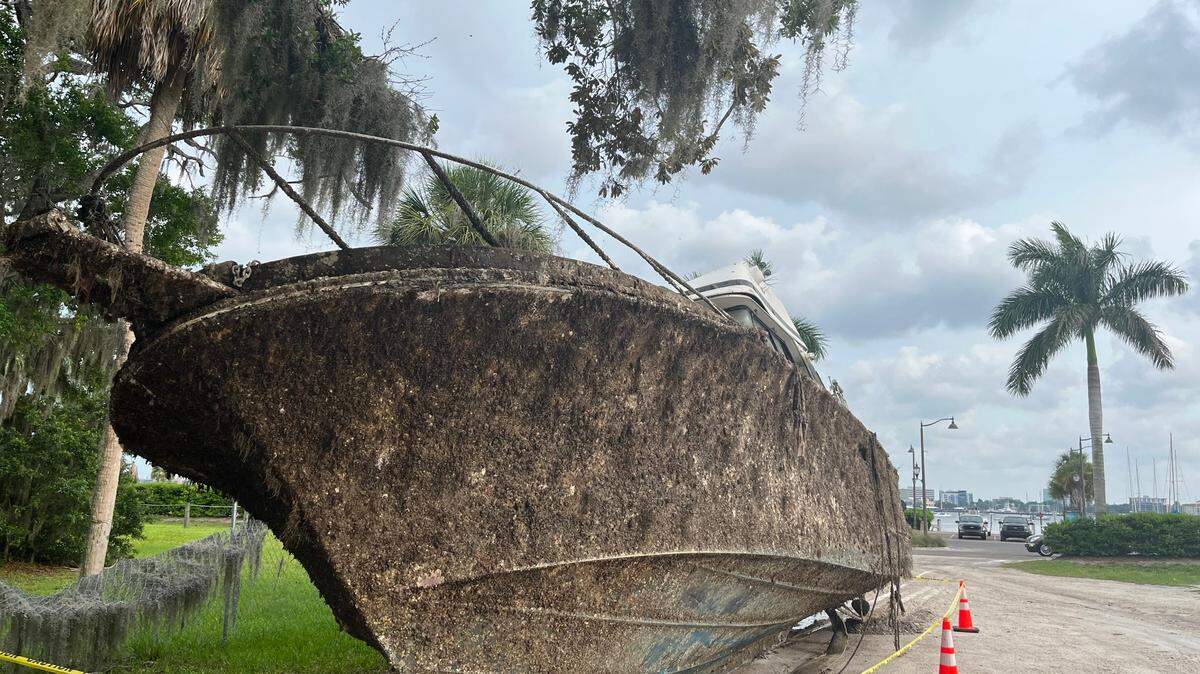
After Hurricane Ian, boats were left scattered across Florida waterways — and sometimes amid the rubble on land.
Category 4 Ian displaced thousands of boats, according to the Florida Fish and Wildlife Conservation Commission. The agency has been contacting owners and insurance companies as part of its cleanup efforts.
Here’s what to you need to know about derelict boats and the options you have to salvage them.
What is a derelict boat?
A boat is deemed derelict when it’s damaged and abandoned on public waters or on private property without the property owner’s consent, according to Florida Highway Safety and Motor Vehicles.
Abandoned and derelict vessels, which cost Florida taxpayers millions in removal and disposal costs, can pollute water, damage marine habitats and threaten boater safety.
How can you remove a derelict boat?
Floridians were given until Nov. 15 — 45 days after Ian — to either remove a derelict boat or bring it into a non-derelict condition to avoid a regular derelict vessel case, according to the FWC.
If your boat is beyond repair, you can release ownership to the state to get it removed. After you contact the FWC, a representative will explain the waiver process and begin the turnover of ownership.
You also have the option to keep the vessel. But you’ll have to turn to a private salvage company — or do it yourself if safe. As of 2013, you don’t have to request a permit to remove a derelict vessel as long as no harm is done to the environment. If there is a possibility for harm, you must seek a permit for removal or you could face fines or prosecution.
The state also has a debris cleanup program to assist Hurricane Ian survivors with the removal of displaced and abandoned titled property. You can visit IanDebrisCleanup.com to make a request for the removal of debris, such as vehicles, boats, motorcycles, trailers and ATVs.
What if I miss the deadline?
You’ll be opening a regular derelict vessel case. The good news is that FWC doesn’t plan on charging derelict boat owners with criminal violations — at least so far.
But don’t get too comfortable. The Fish and Wildlife agency may hold owners responsible for removal, destruction and disposal costs.
Also, keep in mind that Florida has no salvage laws, which could give someone who finds an abandoned boat rights of ownership. This person may have the opportunity to claim the property and apply for a title transfer.
How can you dispose of your boat?
There are ways of disposing a derelict boat that are illegal, some of which come with jail time and fines. If you intentionally dump your boat in Florida waters, you can face up to five years in prison, a $5,000 fine, community service, probation or parole and even lose registration privileges.
You can be charged with felony dumping if you sink a boat as an artificial reef without Florida Department of Environmental Protection and Corp of Army Engineers approval or discard it by letting it drift away.
It’s also illegal to pull the vessel up to a boat ramp and leave it there, moor it without upkeep, burn it in open water or give it to someone without properly transferring title and ownership.
Are there any local resources available?
▪ For Miami, Miami-Dade County Environmental Resources Management partners with the FWC and other marine law enforcement agencies to document and remove derelict vessels. To report an abandoned boat, you can call the county’s environmental complaint desk at 305-372-6955, email baywatch@miamidade.gov or use its online form.
▪ For the Keys, Monroe County Marine Resources Office partners with the FWC, the Monroe County Sheriff’s Office and other law enforcement agencies to remove derelict vessels. You can call the office at 305-289-2805. A list of local contractors is also available on the office’s website.
▪ For Bradenton, the Manatee County Marine Resources Program monitors lost and abandoned boats in county waterways. You can make a report by calling the county’s natural resources department at 941-748-4501 ext. 6008.
Where can you get more information?
You can call the FWC’s Hurricane Ian vessel hotline at 850-488-5600 for questions related to vessel removal or recovery in Florida. You can also report storm-damaged, lost or abandoned boats and initiate the waiver process by calling the hotline.
This story was originally published November 8, 2022 at 8:00 AM.