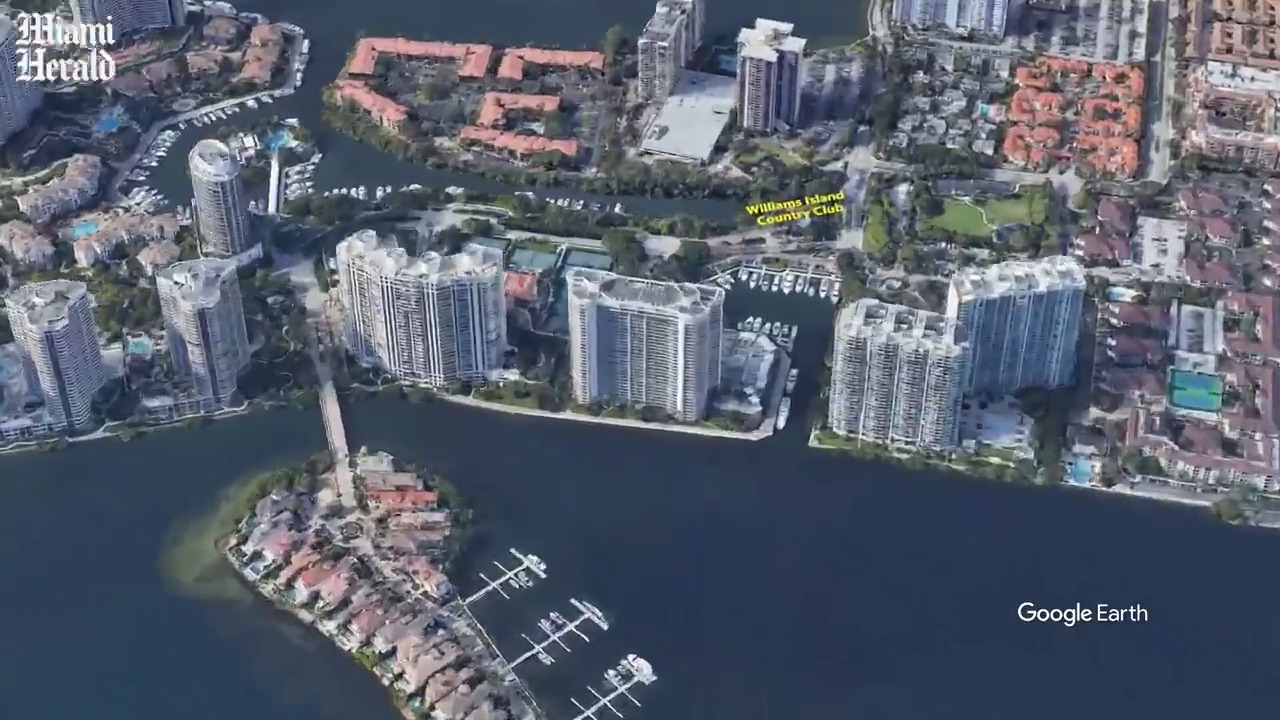
Pandora Papers leak solves riddle: the ID of Saudis behind Florida real estate shopping spree
READ MORE
Pandora Papers
Millions of leaked documents and the biggest journalism partnership in history uncover the financial secrets of world leaders as well as Miami’s rich, powerful and celebrated.
Expand All
In the shadow of Walt Disney World’s iconic palace, a Middle Eastern family with ties to royalty amassed a real estate empire.
It encompassed Kissimmee, Groveland, Orlando and Leesburg and comprised undeveloped land and two golf courses. Until very recently it also included seven apartment complexes — in Tampa, Orlando, and a suburban Orlando resort called Championsgate.
The Orlando Sentinel reported in 1998 that “members of the Saudi Arabian royal family” had been secretly buying up tracts of undeveloped land in Florida through a network of offshore companies.
But a Miami Herald investigation based on leaked documents has solved a long-running mystery surrounding these deals: Which Saudis? What is the true extent of their business empire? And how close are they to the ruling monarchs?
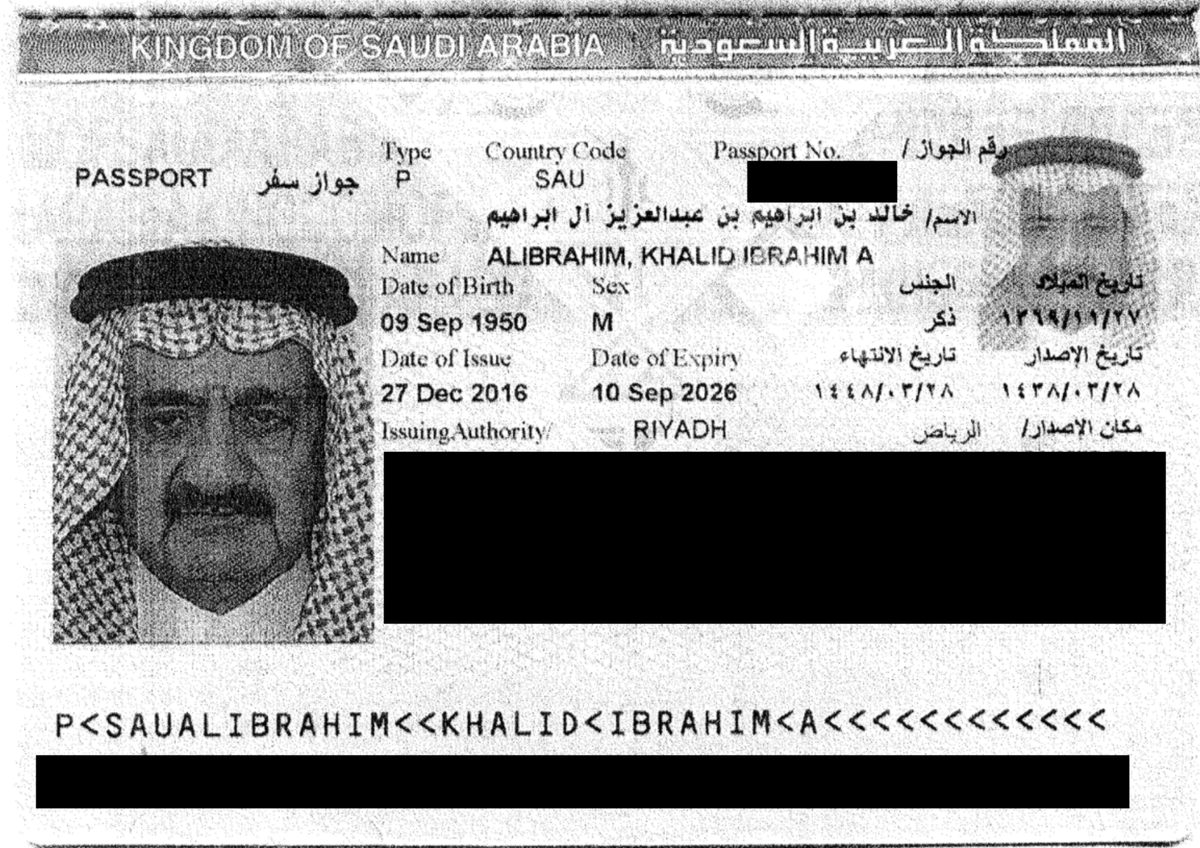
That family, the Herald found, is the Ibrahims — among the most influential families in Saudi Arabia. One member, Jawhara Al-Ibrahim was the wife of King Fahd, who ruled the country from 1982 until his death in 2005.
Their attorney in Florida: C. David Brown II, Republican fundraiser and friend of former Florida Gov. Jeb Bush.
The leaked documents show seven offshore holding companies owned by Khalid I. Al-Ibrahim with Brown as their representative. Prior press releases and news reports tie Al-Ibrahim to a few more.
Florida does not require companies doing business in the state to reveal their owners but a Herald analysis of the state’s corporation records found 75 companies whose corporate names, registered agents and mailing addresses were patterned in a way to indicate a connection with the Ibrahims. The Ibrahim name appears on only two.
Fifty-five of those firms are still active and property records the Herald examined show they hold around 95 land parcels in Lake, Osceola and Orange counties worth roughly $65 million.
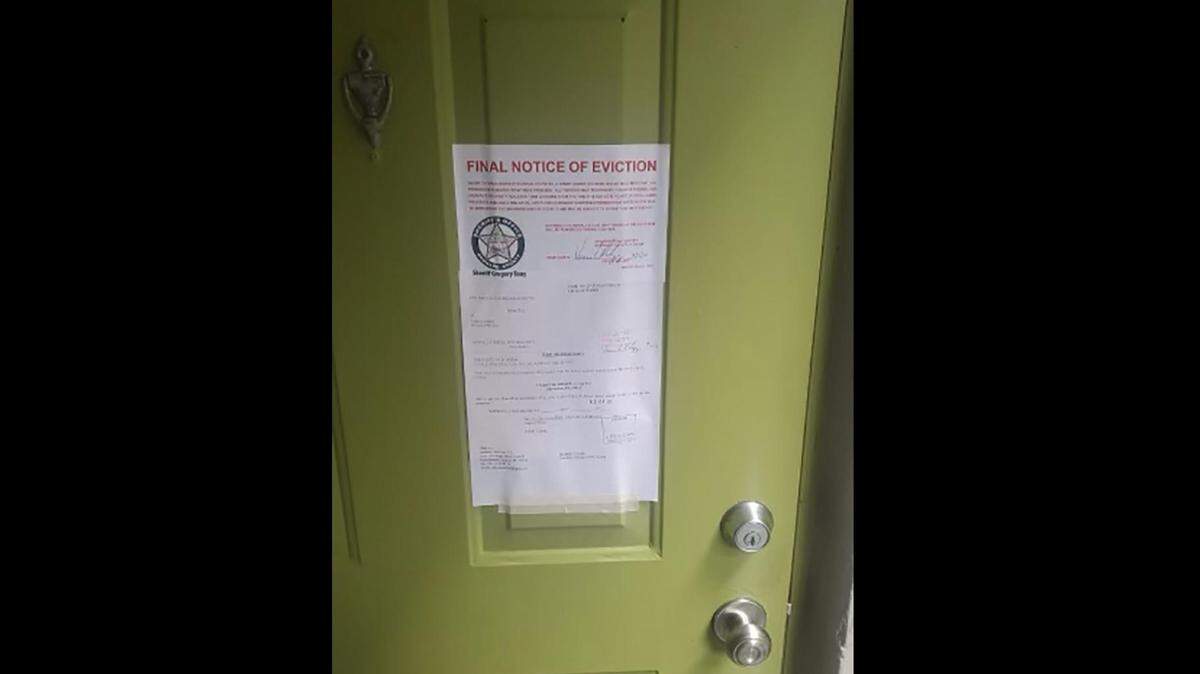
The Herald identified residents who had lived in the apartments at the time Ibrahim owned them through eviction filings dating back to 1998. All of them remembered the apartments as comfortable places — “top of the line,” one called them. Some expressed frustration when informed of the ownership records that a billionaire family did not hesitate to evict them when they had fallen on hard times.
None of the more than a dozen evictees and attorneys who are listed in the filings who spoke to the Herald had previously heard of Ibrahim.
The data from 14 offshore service providers from around the world was leaked to the International Consortium of International Journalists, which shared it with the Miami Herald and 150 other news outlets. It comprises 11.9 million records, including emails, company registries, shareholders’ certificates and invoices. The collaboration is now publishing stories under the title “Pandora Papers.”
Operating offshore companies is not illegal. It minimizes taxes and companies may have legitimate reasons to be secretive about their owners. But the 2017 Panama Papers revealed how bad actors also sometimes use these havens. That investigative series kick-started a financial reckoning that has continued in subsequent years.
After the Great Recession of 2008, it was foreign investors who lifted the state’s housing market. They readily pay in cash, often more than the market value. As the high-end market booms, developers focus on luxury condos to meet the demand of wealthy investors — sometimes from outside Florida — and lower-income families are priced out.
Jaimie Ross of the Florida Housing Coalition, an affordable housing advocacy group, said that wealthy real estate investors — from the United States and abroad — are creating a domino effect with disastrous consequences: “Floridians are priced out of home-ownership. They go into rentals and the rent keeps rising and then what happens? They become homeless.”
Florida real estate has also become a vehicle to launder illicit cash. In March this year, Republican Sen. Marco Rubio reintroduced a bill that aims to “combat illicit finance in foreign real estate investment and increase affordable housing investment.”
Powerful allies
The leaked documents examined by the Herald come from Trident Trust, a multinational financial services firm. Trident declined to comment besides saying that it is “fully committed to compliance with all applicable regulations.”
The documents showKhalid I. Al-Ibrahim, described as “brother-in-law of a deceased king” and residing at Al Maather Royal Palace in the Saudi capital of Riyadh, as the owner of seven British Virgin Islands companies.
Five of them are listed as doing business in American real estate and holding assets worth $7.5 million in total, and a sixth is described as holding unappraised and “undeveloped land in Florida” worth “a few million dollars.”
The leaked documents as well as Florida corporation records for the Ibrahim-tied companies are stacked with attorneys from Broad and Cassel (now Nelson Mullins Broad and Cassel) as officers. The law firm is among the most influential in the state.
The attorney signing off on the since-leaked documents, state company records as well as property deeds is Brown, who had been managing partner of the firm’s Orlando office and later the company’s chair. He is now also a director at CVS Health.
Brown is a friend of the Bush family and Jeb Bush appointed him as Central Florida finance chairman during his successful 1998 gubernatorial campaign. Under Gov. Bush, he served on the oversight board of the Florida Transportation Department from 1999 to 2004.
Brown and another Broad and Cassel attorney, Holly L. Collins, also later represented Ibrahim entities in a dispute with the Florida Transportation Department, after it took possession of four Ibrahim-owned land parcels for public works in 2005, court records show. The department had initially offered $550,000 for the parcels, but after a lengthy trial it forked over $2.8 million for the land.
Both attorneys also testified that they represented the firms in only a limited capacity and had no hand in any corporate decision.
A Nelson Mullins spokesperson said the transactions were “a matter of public record” and “fully compliant.” The firm declined to comment further, citing attorney-client privileges.
The Saudi embassy also declined to comment.
A checkered history
The Ibrahim family rose from obscurity when Khalid Al-Ibrahim’s sister, Jawhara, married King Fahd, then-ruler of Saudi Arabia, becoming his fourth and reputedly favorite wife. Together they had a son, Prince Abdulaziz.
Two other sisters also married into power: Maha Al-Ibrahim to Prince Abdulrahman, former deputy defense minister, and Mohdi Sheikha Al-Ibrahim to Khalid Al-Angari, who served as Saudi education minister from 1991 to 2014 and, later, ambassador to France.
Khalid Al-Ibrahim and his brother, Abdul Aziz (not the prince), acquired — through shell companies — hotels, apartment complexes, offices, shopping centers and around 1,000 boat slips in Marina del Rey, the upscale seaside community neighboring Los Angeles, the Los Angeles Times reported in 1989.
Auditors from accounting firm Price Waterhouse, while investigating the now defunct Bank of Credit and Commerce International (BCCI), also investigated Abdul Aziz’s $130 million loan as part of an inquiry into suspicious BCCI loans possibly lacking adequate documentation, the Times reported in 1991. It’s not clear how that inquiry was resolved.
The bank drew headlines that year after pleading guilty in a Tampa court to laundering the Medellin cartel’s drug money. Since then, it has been linked to financial deals for dictators Manuel Noriega and Saddam Hussein, Islamic terrorist groups and government intelligence agencies including the CIA.
Abdul Aziz reportedly spent $22.3 million in 1986 to finance “Brenda Starr” — a movie starring two-time James Bond Timothy Dalton and Brooke Shields. Abdul Aziz was a fan of Shields and had been introduced to her in Las Vegas by crooner Paul Anka a year earlier. The film bombed.
The Ibrahim family started managing Prince Abdulaziz’s investments in the early 1990s and had commenced building a real estate empire in the United States, which included a Colorado ranch and four hotels managed by Ritz-Carlton in Manhattan, Washington, Houston and Aspen. At that time, the family’s wealth was estimated at $1.2 billion.
Another brother of Khalid Al-Ibrahim, Waleed, established the Middle East Broadcasting Company in 1991. Half the profits of MBC went to King Fahd’s son and Waleed’s nephew, Prince Abdulaziz, who also steered the network’s ideological direction, according to a 2009 U.S. intelligence report published by WikiLeaks.
Six months after the second Gulf War, the programming for MBC’s al Arabiya channel raised eyebrows in the U.S. intelligence community. A classified cable filed from Abu Dhabi in September 2003 reported how the channel had been broadcasting militant propaganda videos asking Muslims to rebel against the Western backed-Iraqi government and coalition forces.
“These controversial videos and other sensational coverage are a departure from al Arabiya’s formative goal of moderate news reporting,” the cable noted.
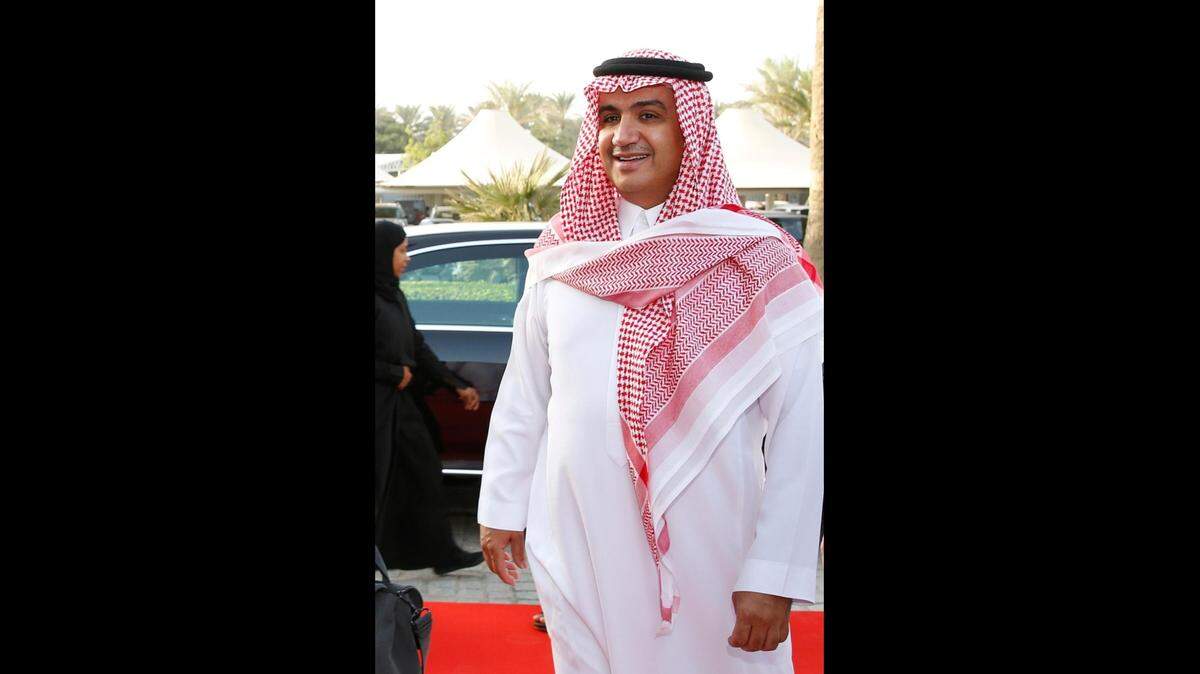
More recently, Waleed Al-Ibrahim was temporarily detained under orders of current de facto ruler Crown Prince Mohammad bin Salman as part of a 2018 corruption probe.
The empire
The Ibrahim family’s first foray into Florida real estate was in 1983 when they bought a struggling resort, Little England, near Orlando. The family saw its value appreciate.
Through the 1990s, the family went on a buying spree in the state. Currently they own two Orlando golf courses — MetroWest and Falcon’s Fire.
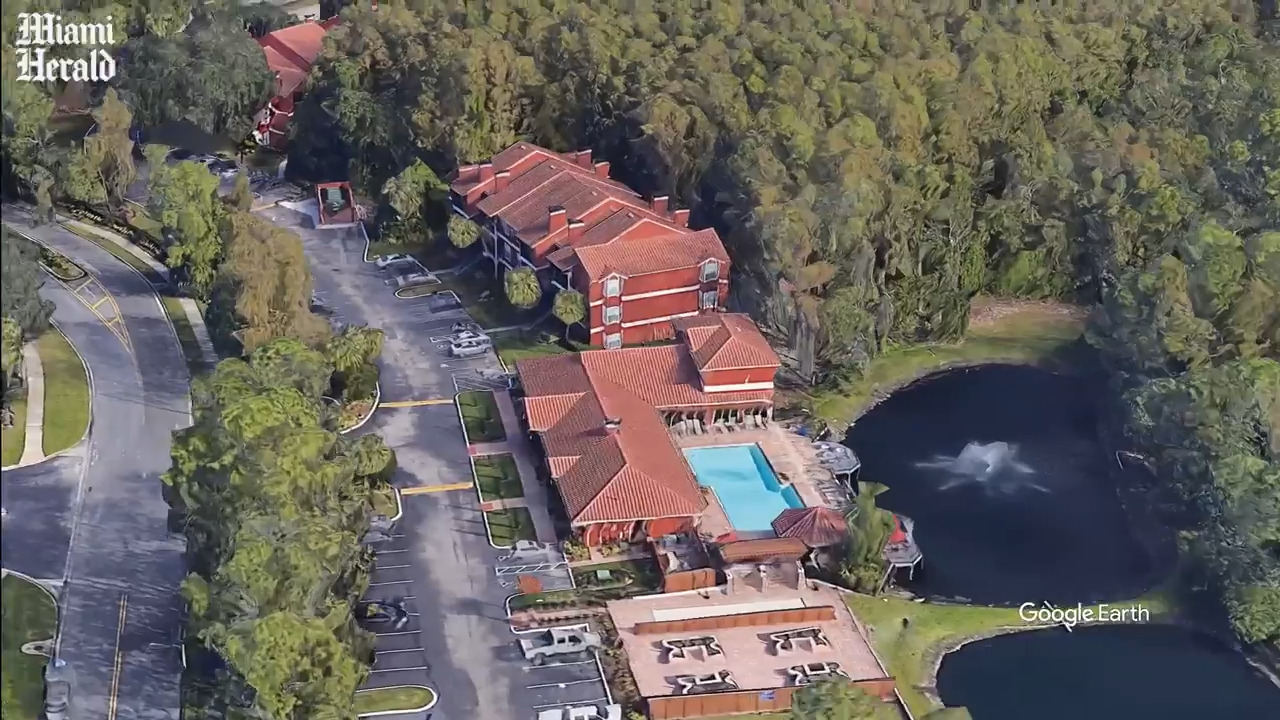
Khalid I. Al-Ibrahim bought his first apartment complexes in the early 1990s and at various times owned seven of them — Grand Reserve at Kirkman Parke, the Heritage on Millenia, Marina Landing Apartments, the Summit at Metrowest and Cypress Greens Apartments in Orlando, ChampionsGate Apartments right outside the city and the Vinings at Hunter’s Green in Tampa, the records show.
Taken together, the seven complexes cost around $126.4 million. Two decades later, when Ibrahim sold all of them, according to property records, he had made more than $211.4 million.
The Herald spoke to a dozen residents, identified through eviction filings, who had lived in the complexes when Ibrahim owned them. Public knowledge of an eviction often makes it difficult for a person to rent another place or even access credit. Many of them spoke on condition of anonymity.
They said that they liked living there. Some also said that the property managers negotiated with them about settling debts if they were late on rent.
But not all were as lucky.
Andrew Calandrino, who had been evicted from the Summit at Metrowest in 2013, said that “management was nice but uncooperative.”
“I didn’t want that mark on my rental history but they didn’t help me out at all,” said another evictee from the Heritage on Millenia who had to live out of her car and send her then-teenage daughter to stay with her mother for some time.
“For a billionaire to throw me out on the street — that’s greed, you know? No compassion.”
The Miami Herald’s Allie Pitchon and McClatchy Washington Bureau’s Deena Sabry contributed to the story.
This story was originally published October 12, 2021 at 10:29 AM.
.PNG)
.jpg)