
Florida lawmakers vote to put unprecedented tax cuts on the November ballot
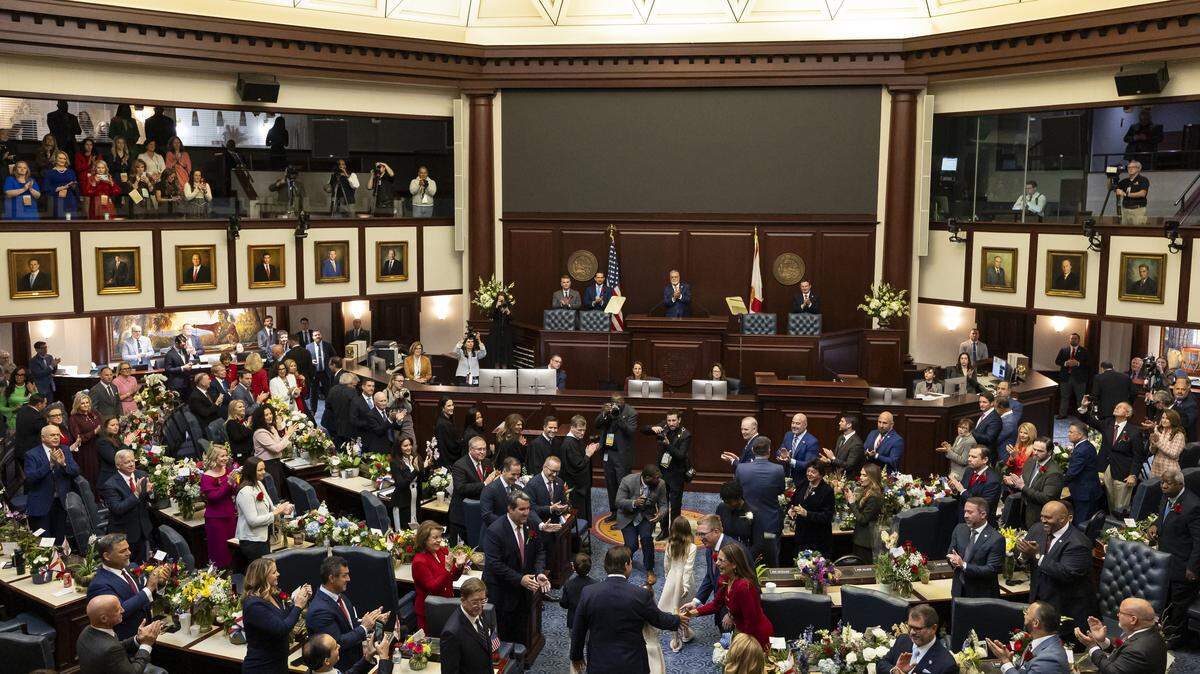
In less than 24 hours, Florida lawmakers questioned, debated and added to the November ballot what could become the most sweeping restructuring of the state’s tax system — and city and county governments — in a generation.
Now it’s up to voters.
Legislators voted largely along party lines Tuesday to approve a constitutional amendment proposed by Gov. Ron DeSantis that would raise the state’s homestead exemption to $250,000. It will save millions of Floridians thousands of dollars on their property taxes in 2028, if voters approve it in November.
The rushed process — DeSantis’ plan was introduced less than a week ago, giving lawmakers no time to analyze its effects — now leaves plenty of questions and kicks off a five-month campaign to persuade voters which way to vote.
City managers this week warned that parks, summer camps and other non-essential local services will be on the chopping block if it passes. Firefighters said their budgets will be slashed. Anti-tax advocates warn it will force local governments to raise assessments and fees, shifting the tax burden to others.
Rep. Toby Overdorf, the Palm City Republican who sponsored the amendment in the House, didn’t downplay the amendment’s potential effects. He said Tuesday that cities that rely heavily on property taxes could have to make “hard choices,” such as giving up their police departments to local sheriffs or dissolving their cities entirely.
“These are real decisions that we all have to make on a day-to-day basis,” Overdorf said.
If approved by 60% of Florida voters, the proposed constitutional amendment “Save Our Homes from Excessive Property Taxes” would:
- Raise the $50,000 homestead exemption on primary residences to $150,000 in 2027 and $250,000 in 2028
- Increase the homestead exemption by the Consumer Price Index starting in 2028
- Prohibit people who move to Florida after Dec. 31 from receiving the tax benefit for five years
- Cap annual assessment increases on non-homestead property, such as corporations and second homes, from the current 10% to 5%
DeSantis has been talking about eliminating property taxes for more than a year, pointing to ballooning tax rolls thanks to soaring home values. In many cities and counties, those rolls have outpaced population growth and inflation.
He also touted that his proposed amendment would create a state trust fund to help local communities weather the shortfall.
But lawmakers on Monday balked at his plan, amending it to clarify that Floridians with homestead exemptions would still have to pay property taxes that go to schools. That reduces the amount that Floridians would save.
And they stripped mention of the trust fund from the amendment, saying that it was misleading because there is no promise that future legislatures will assign any money to it.
A spokesperson for DeSantis did not respond to an email requesting comment about the changes on Tuesday.
Republican lawmakers acknowledged this week that the rushed process left them uncomfortable. DeSantis ordered them into a special session this week just after they passed a state budget, raising the specter that he will veto projects in their districts if they go against him.
House Speaker Daniel Perez, a Miami Republican, blamed DeSantis for the short timeline. He noted that the House passed a proposed amendment during this year’s legislative session that would have eliminated all property taxes except those on schools.
“It wasn’t held to high regard by the governor, for lack of a better term,” he said of their plan. “But we would have had this conversation a long time ago, for as long as anyone wanted to.”
But ultimately Republicans said they were allowing voters to decide.
“This is the hardest vote I’ve had to take because there are so many things that we still don’t know,” said Sen. Corey Simon, a Tallahassee Republican. “But we’re gonna give the voters a chance to at least opine before we destroy their opportunity to at least speak on it.”
Three Senate Democrats — St. Petersburg’s Darryl Rouson, West Palm Beach’s Mack Bernard and Miramar’s Barbara Sharief — joined him in voting for it.
“Voters want a choice, and ultimately they want a say in how things go for them and their future,” Sharief said.
Other Democrats argued that the plan does nothing for renters and noted that Republicans were ignoring high homeowners insurance rates, which are causing financial stress to more people. They also argued that they should wait for the Taxation and Budget Reform Commission to do the job when it meets for the first time in two decades next year.
“This is a cost shift: taxes, it’s fees, it’s taxes on your food, on your fuel,” said Rep. Robin Bartleman, a Weston Democrat. “You are going to pay for these services somehow.”
There was no time to wait, Overdorf said.
“We can’t afford this. We can’t afford the continued rise over and over and over again,” he said. “The time for reform is now.”
Herald/Times Tallahassee Bureau staff writer Romy Ellenbogen contributed to this report.
This story was originally published June 2, 2026 at 2:10 PM.