
Black Democrats express disappointment with the party’s South Florida outreach
As a member of the Miami-Dade Democratic Executive Committee, Miami Gardens resident SarDeborah Wright knew months before Election Day that she would be voting for Kamala Harris for president.
But Wright, 67, had also grown frustrated with the way the national party ran its operations in Florida this election cycle, saying she believes it wasted time trying to persuade Hispanic Republicans to vote for Democrats rather than focusing on mobilizing Black supporters like her.
“They’re not going to switch parties,” Wright told the Miami Herald. “They keep putting a lot of money into going into areas of known Hispanic Republicans. They need to be putting more of their money into their base.”
Wright said she is one of many Black voters in South Florida who believe the Democratic National Committee could have done more to support local efforts to help Harris become the next U.S. president, especially in regards to initiatives in the Black community. Instead, Donald Trump clinched a commanding victory against Harris in Florida and defeated the vice president in all seven swing states, picking up increased support from Hispanics and, to a lesser degree, Black voters. About 58% of Hispanic and Latino voters in Florida went for Trump, compared to 47% in 2020, according to exit polls. Trump also made inroads with Black voters, earning 15% of the Black vote in Florida, up five percentage points since 2020.
In Miami-Dade County, Trump helped Republicans win races up and down the ballot, from the U.S. Senate all the way to countywide offices. And precinct data shows Trump made gains even in predominantly Black cities like Miami Gardens and North Miami.
Wright thinks the Democratic Party was misguided in not pouring more resources into South Florida. She believes many Black voters feel like the Democratic Party takes them for granted and that the feeling has led to disenchantment and voter apathy.
“Once we realized after the election we don’t see them again, [many of us] stopped voting,” she said.
On Monday, Nov. 4, as early voting totals showed Republicans with the lead in Florida, state Sen. Shevrin Jones, chairman of the Miami-Dade Democratic Party and a member of the Democratic National Committee, told the Herald that he believed the national party has done better under the leadership of DNC chairman Jaime Harrison but still continues to miss the mark with Black voters because it waits to connect with them at the end of an election cycle.
“I think traditionally the Black community has been left out of the conversation when it comes to year-round engagement,” said Jones, who is Black. “We did change that engagement [but] could be doing a better job in engaging the Black community and understanding that the Black community is not a monolith.”
The week before Election Day, Jones said he met with a group of local Black pastors who were livid about not being included in local organizing efforts. He committed to meeting with them post-election to discuss how they can be better included ahead of future elections.
“I’m down to brainstorm and talk with anyone about how we can engage Black people moving forward,” he said.
Some Democrats point to lack of unity in the party
Fort Lauderdale resident Elizabeth Judd attended August’s Democratic National Convention in Chicago and said she prepared to return to South Florida with renewed energy. Judd, 83, has been a delegate for the 24th Congressional District of Florida for more than 25 years and has attended four national conventions since 2008. She only skipped 2020 because of the pandemic.
“This was the best of all of them,” she said. “Compared to the three I had gone to before, this was exhilarating.”
But upon her return, Judd said the unity among Democrats that she saw in Chicago had not surfaced in South Florida.
Judd said she believes the Democratic effort to get Harris in office was not unified among local groups. She said that while the Harris-Walz campaign, the Miami-Dade Democratic Executive Committee and Miami-Dade Mayor Daniella Levine Cava — a Democrat who was reelected in the August primary — all had local offices, in her opinion, they did not work closely enough together even though they were focused on the same goal.
“We’re all working to get Democrats [in office], but we’re not working together,” she said. “We’re not coordinating together. The goal is the same, but we’re not doing it together.”
Jones, the chairman of the Miami-Dade Democratic Party, said that he believed local Democratic leaders had worked from their respective spaces to support Harris’ bid for election as much as their resources allowed.
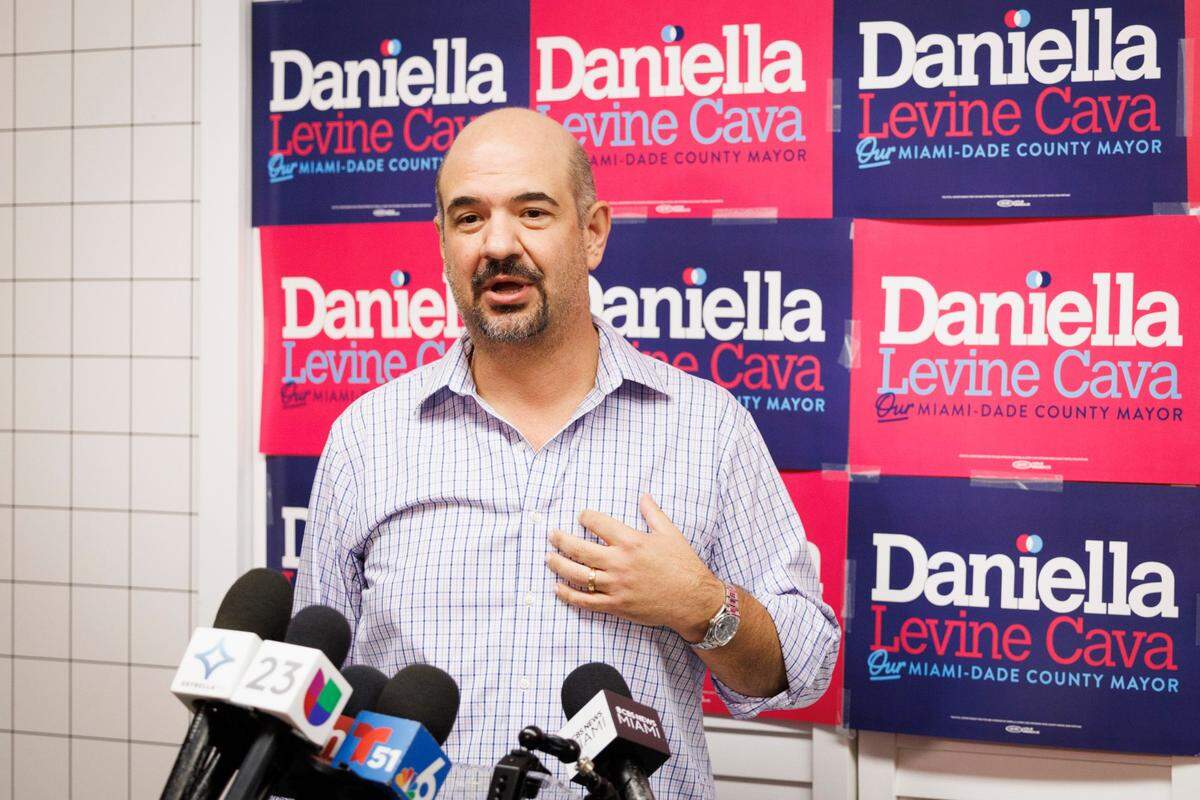
Christian Ulvert, Levine Cava’s senior political adviser and campaign director, said the mayor opened her first campaign office in April in Miami Gardens, a majority Black city, in partnership with the Florida Democratic Party and the Miami-Dade Democratic Party.
“From there, the Mayor’s political operation continued to invest and build on behalf of Democrats in Miami-Dade, especially in the Black community – opening the mayor’s next field office in May of 2024 in Liberty City and a third in North Miami in July, while also building a diverse and inclusive campaign leadership and staff team reflective of Miami-Dade County and its residents,” he said in a statement.
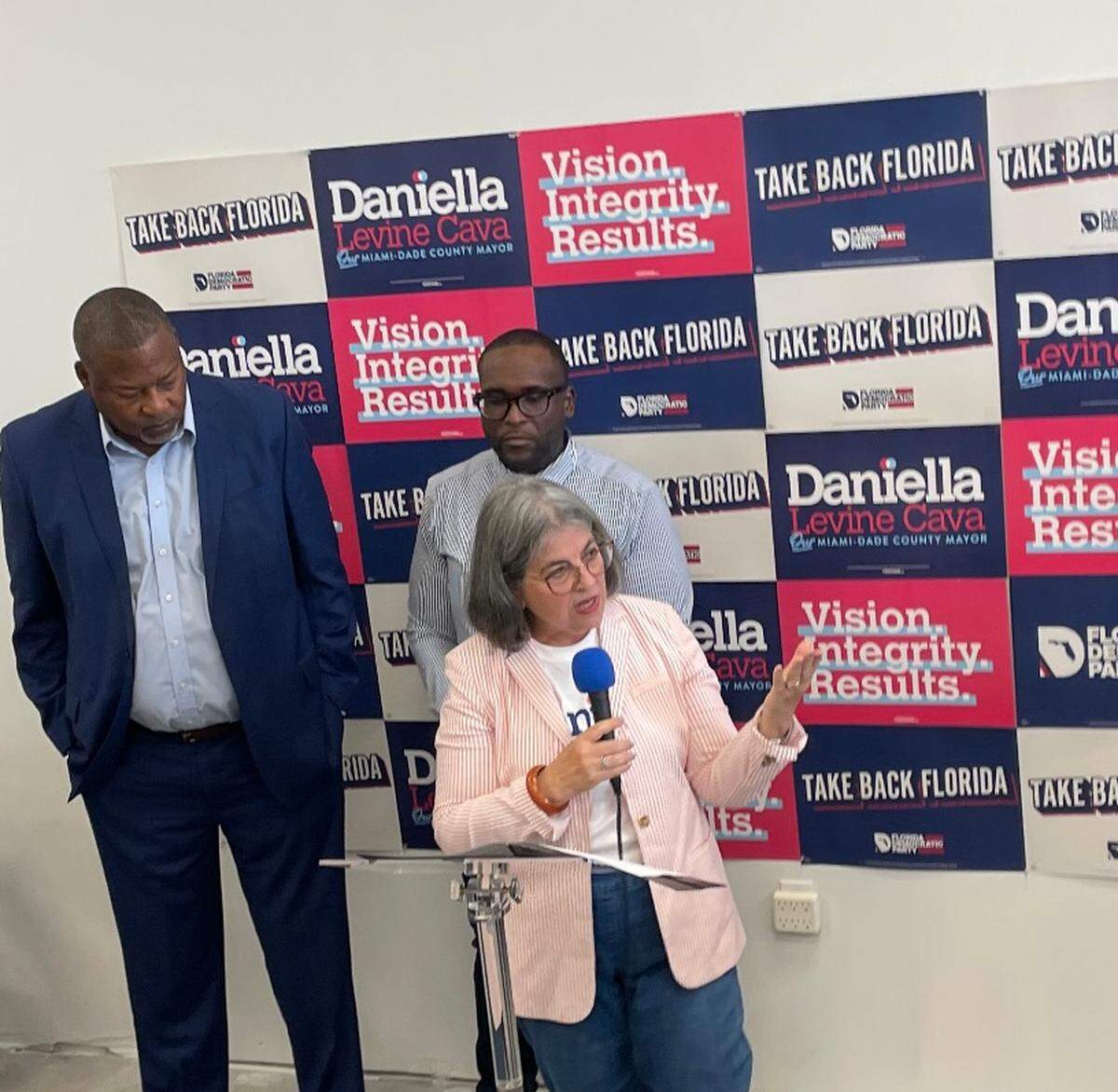
Nevertheless, some Black Democrats felt snubbed this year by Levine Cava’s endorsements.
In the Democratic primary for Miami-Dade sheriff, she endorsed James Reyes, her Hispanic head of public safety, over the other candidates, including John Barrow, a Black county police major. Barrow said he sought Levine Cava’s endorsement before Reyes entered the race but didn’t get it. Reyes won the Democratic primary but lost in the general election to the Republican candidate Rosie Cordero-Stutz.
Levine Cava didn’t endorse in the primary for elections supervisor, but Ulvert, her campaign director, signed on with the Hispanic winner of the August contest, elections lawyer and former Republican state Rep. J.C. Planas. The Black candidate in the three-person Democratic primary, political consultant Willis Howard, finished second and went on to endorse the Republican in the Nov. 5 general election, state Rep. Alina Garcia. Garcia won with nearly 56% of the vote.
“Miami-Dade Dems and Mayor Cava have only themselves to blame,” Howard said in a text message to the Herald late last month. There is “no real enthusiasm from the Black communities to show up.”
Levine Cava did endorse Marisol Zenteno, the Democratic candidate for property appraiser, who is both Black and Hispanic.
Ulvert said Levine Cava’s opening of an office in Miami Gardens and support from Black political leaders like Jones and County Commissioner Oliver Gilbert, the most recent chair of the board, “make clear the Mayor’s continued investment in and commitment to the Black constituency and our entire Miami-Dade community.” He also named several staffers she’d hired specifically to do campaign outreach in the Black and Haitian communities.
“As her decisive victory in the August primary election clearly shows, Mayor Daniella Levine Cava has built an incredible, people-powered operation unlike Miami-Dade County has seen before,” he said.
Black electorate feeling ‘neglected and ignored’
Tensions within the party in Florida could be seen as early as April when President Joe Biden came to Tampa for an event. Stanley Campbell, a Black Navy veteran who at the time was one of the Democratic candidates for the U.S. Senate seat held by Republican Rick Scott, thought it would be an opportunity to connect with a fellow Democrat on a national stage.
But while his opponent and eventual Democratic nominee Debbie Mucarsel-Powell, a Latina candidate, was given an opportunity to speak at the same podium as Biden, the president did not recognize Campbell at all.
Campbell, 69, saw it as a glaring example of how the Democratic Party is disconnected from Florida’s Black political community.
“When you can put Spanish people against Black people because you know at the end of the day, we’ll all get on the same page, that becomes a problem. The Democratic Party in the state of Florida is [broken],” he said.
Like Judd, Campbell said Black Miami political voices receive little support from the Democratic National Committee and believes the separation between local Democratic communities is problematic, something he said he noticed on the campaign trail.
“I come off running a statewide election,” Campbell said. “I’ve seen the biggest [contingent] of Black business people and Black politicos and have seen how both have been neglected and ignored.”
Campbell lives in Palm City and is a native of Liberty City. Supporting Miami’s Black community is a top priority for him. He believes the disconnect in Democratic political efforts is also noticeable in the way Levine Cava makes decisions. He pointed to her support for putting a large-scale garbage incinerator at a site near Miramar, a Broward County city with a large Black population, as an example.
“The mayor [has] strong support in the Black community but doesn’t do anything for it,” he said. “She could be a great politician, but when you put your [waste] system next to Black people in Broward, that’s how poorly we’ll be treated. We won’t be treated like that anymore.”
Democrat activist Leslie Wimes has been in South Florida since 1996 and said that, in her view, Democratic leaders have always sidelined Black voters while at the same time depending on their votes.
“They want to reach out to mythical white working-class voters or a sector of Hispanic voters that will never vote for them,” said Wimes, 57. “A certain group will always vote for the party, and it’s like Charlie Brown and Lucy with the football.”
Before the results were tallied in 2016, Wimes believed that Democratic nominee Hillary Rodham Clinton would lose the presidential election because the Democratic National Committee took the Black community for granted. She said she was not surprised when the loss happened.
Following this year’s election, Wimes said she was disappointed with the outcome but once again was not surprised. At the same time, she didn’t believe Harris would lose as badly as she did. Wimes said she anticipated some Republican women would vote for Harris; instead, it appears some Democratic women, especially white women, voted for Trump, she said.
“I thought Republican women would cross over, [but] in the end, it was Democratic women that crossed over,” she said.
Jones said the Democratic Party needs to recenter and adjust. In the coming weeks, he will meet with Black pastors across Florida. He took solace in the energy of Democratic supporters who want to persevere past their defeat.
“The glimmer of hope is people who are ready to get back to work,” he said. “People are dusting themselves off from what happened, and they’re making it clear that it’s back to work.”
Miami Herald reporter Douglas Hanks contributed to this story.
This story was originally published November 22, 2024 at 5:00 AM.
%20Cropped.jpg)