Miami-Dade will soon pick a site for new trash incinerator. Miramar opposes the top pick
With Miami-Dade County commissioners soon expected to decide on where to put a new trash incinerator, the mayor and other officials in the city of Miramar voiced grave concerns about one potential site that sits near Broward County’s border, going as far as threatening legal action.
“Our message is simple: Miramar says ‘no’ to the incinerator,” Miramar Mayor Wayne Messam said at a Wednesday morning press conference. “We’re taking action, and we are consulting experts and preparing to challenge the proposal in every way necessary and possible. We will not be bullied into accepting a flawed project. We are ready for a fight and determined to win.”
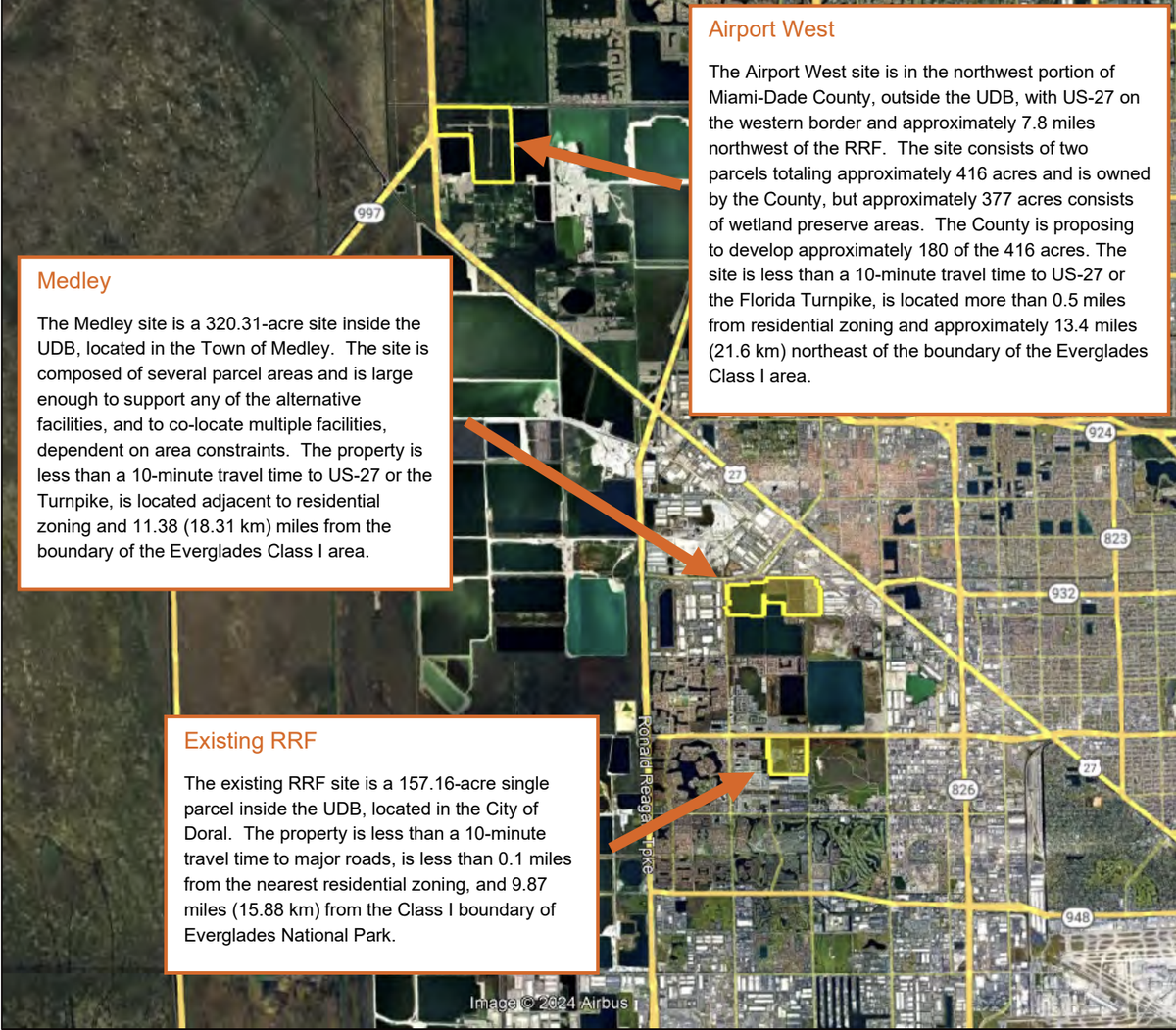
The city began fighting the proposal after it was announced that the defunct Opa-locka Airport West near the Broward/Miami-Dade county line was a potential option.
Miami-Dade’s previous trash incinerator in Doral caught fire in February 2023, and the Miami-Dade County Commission has since been exploring other sites. The Doral incinerator processed half of Miami-Dade County’s trash and was equipped to burn 1 million tons of it per year.
The county has long been expected to vote on a proposal for the incinerator site at a September meeting, although the item is not listed on next Wednesday’s commission agenda.
Miami-Dade County has proposed three sites where it could potentially build the next incinerator: the former Opa-locka Airport West site, an industrial area in Medley and back in Doral.
In April, the county released a study conducted by the consulting firm Arcadis that determined the Airport West location had the lowest potential risk. Overall, the study found that each of the locations had a low risk and did not present a risk to surrounding communities.
Messam has been a vocal opponent of the incinerator potentially coming to Opa-locka West, fearing that it could lead to health issues for his residents and others in south Broward County. Miramar Vice Mayor and Broward Commissioner-elect Alexandra Davis echoed Messam’s sentiments, voicing concern for vulnerable residents such as children and seniors.
“The proposed incinerator less than a mile from Miramar is a threat to our community, particularly our cherished senior population, our children and our local businesses,” she said. “Our seniors, who have contributed so much to building this community, deserve to enjoy their golden years in a clean and healthy environment.”
Miramar Commissioner Maxwell Chambers, who lost his son to complications of asthma, noted that his daughters also have breathing issues and urged Miami-Dade County Mayor Daniella Levine-Cava to consider other locations outside of the defunct airport.
“I trust that she understands the nature of this facility close to our family,” he said. “I’m relying on Miami-Dade County to be a good government and look elsewhere and not right here in Miramar.”
In recent months, the city has been mounting a six-figure campaign against the Opa-locka West site and sending letters to various cities in Broward County urging them to oppose efforts to bring the incinerator to the decommissioned airport and contribute monetarily to the fight.
As of June, the city had invested over $300,000 to fight the move but expected additional costs to hire experts to conduct and write assessments on the potential surface water, health, and ecological and air quality impacts of having an incinerator nearby.
Michael Goldstein, an environmental lawyer representing the city, said Wednesday that the city is prepared to move forward with a lawsuit if it comes to that. “If the county elects to approve the Opa-locka airport site as the site for the incinerator … the city will file a host of lawsuits that will roll out over a period of time,” he said, saying that other nonprofit groups and environmental activist organizations would join Miramar in its fight to prevent the incinerator from being built nearby.
At the news conference, city officials were joined by members of the NAACP Miami-Dade Branch and Florida Rising, as well as Democratic state Rep. Robin Bartleman.
“What you’re doing is putting not only my community at risk, but our most precious, valuable environmental asset, the Florida Everglades,” Bartleman said. “We all saw the destruction and the harm by the fire in Doral, and we know what can happen if it goes wrong.”
Bartleman said this year alone, the state legislature had allocated $850 million toward preserving the Everglades. “Why would we put all of our work at risk? Miami-Dade County, please, listen to the environmentalists,” she said.
Annastacia Robinson, a Broward County organizer with the nonprofit Florida Rising, noted that Miami-Dade had twice put an incinerator in communities where people of color live, citing Old Smokey in West Coconut Grove, which consisted of a predominantly Black community, and the incinerator in Doral, which has a predominantly Latino population. Miramar’s population is 46% Black and 36% Hispanic or Latino, according to the U.S. Census Bureau.
“Now, Miami-Dade’s government is seeking to repeat history and historic harm on either their residents or the city of Miramar, another predominantly black and Latino community,” she said. “No community should suffer from the endangered toxic outlets of [a] trash incinerator that could end up being the nation’s largest.”
This story was originally published August 28, 2024 at 11:31 AM.