
Did Florida lawmakers clean up a condo-hotel mess, or create ‘dictatorships’ for developers?
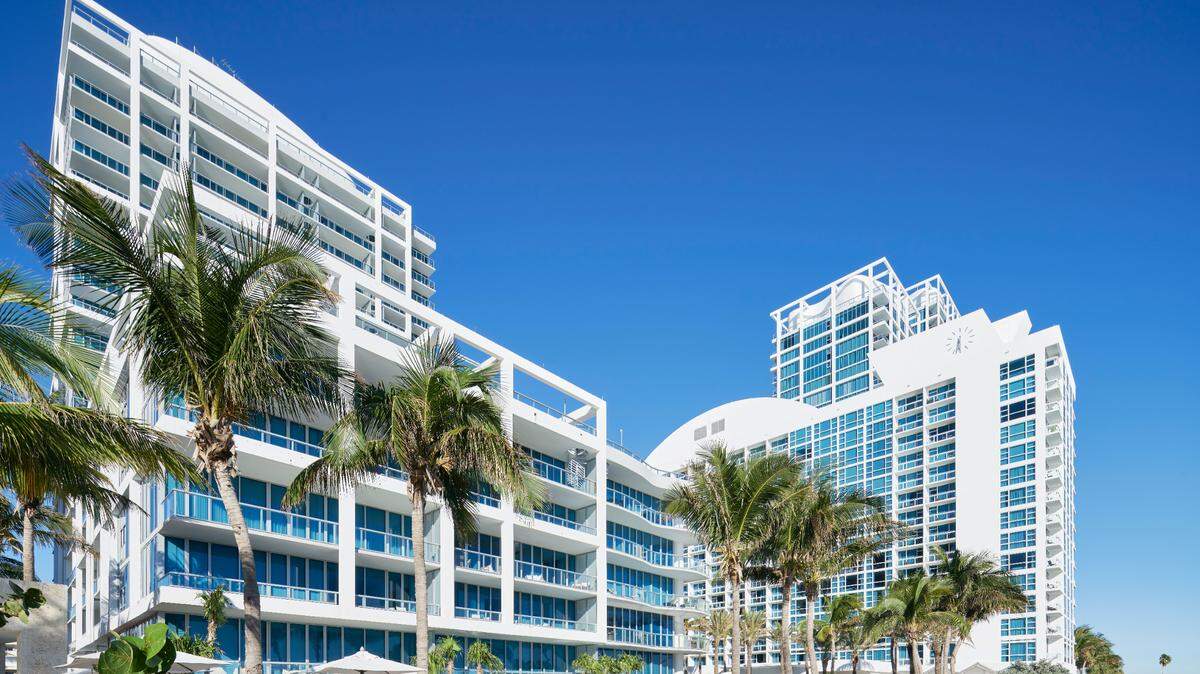
A courtroom fight over a luxury Miami Beach condo and hotel complex spilled into Florida’s Capitol this year, where lawmakers gave hoteliers and developers the upper hand in disputes with residents over common areas in so-called hotel-condos — and potentially undercut a key reform put in place after the collapse of the Champlain Towers in Surfside.
Due to a late amendment, a sprawling, 154-page condo-law bill that unanimously passed the House and Senate states that condominium residents in mixed-use buildings only own what has been given to them upfront in contracts drafted by developers. That often includes only the units themselves, meaning residents living in condo-hotels could be forced to pay pricey maintenance fees and assessments levied by commercial operators for things like elevators, lobbies and pools, but without any say over the size of the bill, how their money is spent or how the assets are managed.
The bill, sponsored by Miami state Rep. Vicki Lopez, “deprives unit owners of their democratic mini-societies and puts them at the mercy of dictatorships run by hotels and developers,” Stevan Pardo, an attorney for condo associations at Miami Beach’s Carillon complex, wrote in April to the governor.
The change — effective retroactively — would apply to all condo owners in mixed-use buildings, which are becoming increasingly popular as retirees look to settle down in buildings run like resorts by prominent hotel brands.
But it was born out of a years-long lawsuit between the residents and the owner of the hotel and spa in the Carillon, with a consultant for the Carillon Hotel and its merchant-bank affiliate Z Capital helping to craft the legislation. The Carillon Hotel was recently hit with a $16.3 million judgment that it is appealing over fees and assessments, and continues to fight with condo owners in court over whether their condo associations have any say over common areas, including the operations of the spa and hotel.
“Importantly, without this clarification of the law, those of us that represent developers of these projects are very concerned that the hotel industry will no longer be willing to operate hotels within these mixed-use structures in Florida,” Mark Grant, the consultant and real estate partner for the Fort Lauderdale firm Greenspoon Marder, told Gov. Ron DeSantis in his own letter.
Grant told the Herald/Times that neither the Carillon Hotel nor Z Capital had input on the bill language. He said he did not discuss the language with these entities, but he did discuss it with the main attorney on their case.
DeSantis has not yet said whether he will sign the legislation, which has not yet been sent to his desk.
HOW THE BILL AFFECTS THE THE CARILLON FIGHT
Though the owners of condos and businesses around Florida have increasingly clashed over ownership and oversight of shared property in mixed-use condo towers, the Carillon case has been held up as a watershed moment for developers and hoteliers.
A January 2023 ruling in the case held that the Carillon hotel and developer were taking from residents property that should be owned by everyone through a contract called the master declaration.
Attorneys for developers say the ruling created a new precedent that unnerved developers looking to build new flagship hotels in mixed-use buildings and spawned new lawsuits over similar issues from Riviera Beach to Fort Lauderdale to South Beach.
“If hotels would not be able to control what these buildings look like, they would stop going into the buildings. And this is the way the downtowns are being developed now, with these multi-use buildings,” Grant, the consultant for Carillon Hotel and Z Capital, said in an interview with the Herald/Times. “And if we couldn’t attract the high-end hotels into those buildings, it would be very bad for the economy.”
In response, a group of attorneys led by Grant began to draft bill language to “clarify” the law, according to the bill, in their favor. The group began with developer and title underwriter attorneys and eventually expanded to include condo association attorneys.
“It was my idea to propose this legislation and then I got a team together of very, very prominent lawyers who worked on this together,” Grant said in an interview with the Herald/Times.
Eventually, their language was taken from a different bill and tacked onto Lopez’s, though it could influence scores of condo buildings and change the trajectory of lawsuits around South Florida.
Grant said that the January judgment he and his colleagues were seeking to override was inherently wrong because it broke with longstanding precedent. But he thought the judge, Michael Hanzman, ruled the way he did because he was so influenced by a different case he presided over — the collapse of the Champlain Towers in 2021.
Hanzman told the Herald/Times he was unable to comment. But Grant said he spoke with Hanzman about the issue over lunch after the judge retired.
“So, while he was writing the opinion on Carillon, he had just finished doing the Champlain Tower wrap up and he didn’t want to allow the hotel operator to decide when the structural portions of the building were going to be repaired,” said Grant. “He wanted the condominium association to be able to do that.”
Grant added about Hanzman: “He felt that the condominium association would be better able to make sure that the building was structurally sound.”
After the passage of HB 1021, that is unlikely to happen. Grant contends the hotel operator will make sure the building is well maintained.
HOW THE BILL AFFECTS A KEY SURFSIDE REFORM
By allowing hotel developers to claim all property except for the condominium units themselves through contracts known as master declarations, lawmakers have potentially allowed developers to exempt themselves from the state’s structural integrity reserve study.
The study is one of two main reforms lawmakers passed after the collapse of the Champlain Towers. It works in coordination with the other key reform, the milestone inspection.
The milestone inspection is an engineering inspection that is required for all condominium buildings, including mixed-use developments, every 25 to 30 years. It identifies the problems for that building.
Every 10 years after the building’s creation, condominium associations must have the structural integrity reserve study done — a visual inspection that also uses information from the milestone report — to identify how much crucial infrastructure components will cost to repair and how much associations need to save for those repairs.
Those crucial infrastructure components include: the roof, load-bearing walls, fire protection systems, plumbing, electrical systems, waterproofing and exterior painting, windows and exterior doors and other items that will cost $10,000 or more to maintain or replace.
But commercial spaces are carved out from reserving money for those repairs. And some attorneys told the Herald/Times that in mixed-use buildings where the hotel developer owns everything except for the condominium units themselves, those complexes may also be carved out from the study itself.
Roberto Blanch, a condo association attorney for Siegfried Rivera in Miami, believes that declaration documents will dictate whether the reserve study is required for a condominium located in a mixed-use building. When advising a condo association on what parts of a building for which to get the study done, he would see what exactly is defined in the documents as part of the condominium property and then cross reference that with the specific requirements for the structural integrity reserve study as defined in statute. He’d advise them to get the study done for only those components of the building.
“What if they have zero responsibility for the group of items listed in the statutes for which a structural integrity study is to be prepared? In that hypothetical, I would tell my client, ‘Look, you don’t have to do that because you are only responsible to fund reserves for those portions of the building you are obligated to maintain,’” said Blanch.
And what if in that scenario, his client, the condo association, told the hotel developer they needed to get the structural integrity reserve study?
“The hotel owner might say, ‘Wait a minute, I’m not obligated by statute to get the report,’” Blanch said.
Eugene Stearns, one of the attorneys for the condo associations and unit owners in Carillon, said something similar when asked, if in a situation where the hotel developer owned everything except for the building’s condo units, whether the building would be required to undergo a reserve study.
“I think not the way the amendment is written,” said Stearns by email, referring to the late-added language Lopez tacked on to HB 1021 on Feb. 21. “Because the new amendment would allow the most vulnerable (along with all other) common property, like pools on top of parking garages near the ocean, to be held by the developer forever — no one will be required to inspect or provide adequate reserves for property to maintain and stabilize that property.”
Lopez, the sponsor of HB 1021, disagrees that mixed-use condominium buildings would be excluded from the required structural integrity reserve studies after the passage of her bill.
“All condo buildings, including mixed-use condos, three stories and above will be required to complete a structural integrity reserve study by 12/31/24,” Lopez said by text message on Friday. “For me, the safety of condo buildings is of the utmost importance as is the structural integrity reserve study, which ensures the buildings will have the reserves to maintain the structural integrity of those buildings.”
“Given the conflicting views, I feel compelled to bring more clarity to this issue in my condo bill next year,” Lopez said. She added that she had no intention of requiring businesses like hotel developers to have reserves for repairs for infrastructure under their control because they “almost always” have “the money from revenues generated by their operations to make the repairs when needed.”
WHAT CONDO OWNERS GET IN HB 1021
While condominium unit owners may not be able to control much in the buildings in which they live after the passage of HB 1021, they will still be required to pay for their portion of the shared facilities maintenance in those buildings.
Under the bill, this arrangement will be clearer to owners before they buy their condos through a disclosure summary. And exactly how much of these costs for which they are responsible will be clearly defined. They’ll also be able to audit the books to make sure they aren’t being overcharged.
If they are overcharged, they’ll be able to use these audits to sue the hotel developer over a breach of contract, similar to what the Carillon residents did to win their $16.3 million judgment.
“But what they can’t do is they can’t claim ownership of property that is not theirs,” said Brian Dervishi, the main attorney for the hotel and its affiliate, Z Capital, in Carillon.
Michael Gelfand, a condo association attorney who worked on an early draft for the bill and who has clients potentially affected by it, said condo association attorneys were in a tough spot advocating for wealthy Floridians who now potentially have less control over their shared facilities under the bill.
“The problem I keep hearing from the developer interests is that ‘these folks don’t need help, the guy who buys a $10 million condo unit on Miami Beach is going into it eyes wide open,’” recounted Gelfand.
And regarding whether Gelfand thought a comprehensive structural integrity reserves study would be done in a building where a hotel developer controlled everything but the units?
“Yes, fingers crossed,” said Gelfand. “Because the condominium association is still going to have to pay for a significant portion of that maintenance. And rather than assessing unit owners a huge amount all at once, they will want to have reserves each year.”
Gelfand added: “And if they do not want to pay for that assessment, they will want to have the work delayed. And that’s how we end back where we were with the Champlain Towers collapse.”
This story was originally published May 14, 2024 at 5:30 AM.