Florida program to aid brain-damaged kids often told families no. It’s promising to change.
For decades, Florida’s program for children born with severe brain damage told parents seeking therapy and medicine for their kids to get it from Florida’s healthcare safety net for poor people.
And only then, provided Medicaid said no, and all appeals failed — a bureaucratic gauntlet that could take months — will we consider helping you, the Birth-Related Neurological Injury Compensation Association told families.
That policy — a bottomless source of anger and frustration for parents — appears to be ending.
The revamped board of Florida’s compensation program for children with birth injuries, often called NICA, unveiled new rules Thursday that, if approved at a later meeting, would address parents’ complaints that the program placed NICA’s financial interests ahead of the welfare of frail and disabled children.
An investigative series called Birth & Betrayal, published by the Miami Herald and the nonprofit newsroom ProPublica this past spring, spurred a legislative overhaul of the program. The series described how NICA had amassed $1.5 billion in assets — now almost $1.7 billion — while routinely denying requests for medical equipment, supplies, medication and nursing care to struggling families.
Many of the changes unveiled Thursday go further than what the Florida Legislature authorized and already have been codified in a rewritten draft of the program’s manual for families. Families get to review the document before its expected adoption.
Among the proposals is the appointment of an ombudsman to represent the interests of families in the program, and a new rule that reverses the program’s decades-long reliance on Medicaid, the long-troubled public insurer for impoverished Floridians.
The Medicaid change would be a stunning reversal in policy, one that NICA administrators had strenuously fought as recently as this year’s lawmaking session, which ended in April. The move will cost NICA millions of dollars in medical care that Medicaid had previously covered.
“That particular provision will most likely impair NICA,” the program’s executive director, Kenney Shipley, told a legislative committee at the time. The Medicaid change was removed from the legislation.
In a 2008 deposition, Shipley testified that if Medicaid were to stop covering care for NICA participants it “would make NICA insolvent.”
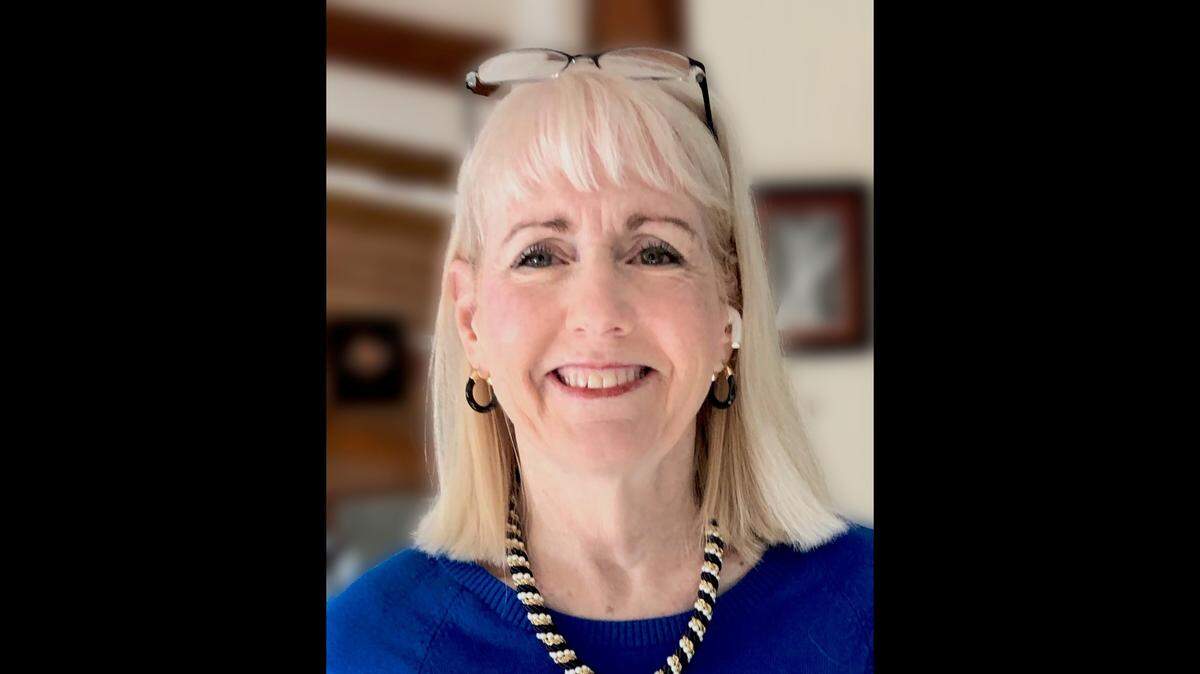
Neither NICA nor the Agency for Health Care Administration (AHCA), which administers Medicaid in Florida, would provide figures for how much Medicaid has spent over the years on children enrolled in NICA. But an agency analysis in 2020 casts doubt on Shipley’s dire prediction.
Agency records for the period from January 2009 through Sept. 20, 2017, show AHCA paid around $35.8 million to provide care through Medicaid for 122 people with NICA coverage. That equates to less than $5 million per year.
But Shipley’s tenure at the helm also is about to end: On Sept. 15, the day before NICA’s newly revamped board had its first meeting, Shipley announced her resignation, which was to fully take effect in January. Thursday, however, the board voted to negotiate a work agreement with her proposed interim replacement.
Board Chairman Jim DeBeaugrine recommended the appointment of Melissa Jaacks, who recently navigated the Florida Coalition Against Domestic Violence through a tumultuous transition after the Miami Herald revealed that her predecessor received a salary of $761,650 from the nonprofit.
Jaacks will lead NICA for about six months until a permanent director can be found.
Unlike Shipley, who had been an insurance adjuster, Jaacks has held leadership roles in state and federal child welfare and human service agencies. Among other positions, Jaacks had been the chief of staff for the U.S. Administration for Children and Families during the Obama administration.
.jpeg "Jim-DeBeaugrine (2).jpeg")
One reform was suggested by a NICA parent added to the board in recent weeks as part of the program’s legislative overhaul.
Renee Oliver, whose son, Ian, has been in NICA for 13 years, was appointed to the board in August. She asked that the program hire an ombudsman to represent the interests of about 220 children currently enrolled in the program. The board agreed to discuss the proposal at an upcoming meeting, after members had time to consider it.
When asked whether the board could appoint an ombudsman without legislative approval, one of the program’s lawyers, Stephen Ecenia, said “it wouldn’t be a formal position if it was not recognized by the Legislature.” But he added: “I see no impediment to doing so.”
NICA was created in 1988 to shield obstetricians from medical malpractice premiums that doctors considered too burdensome. Under the law, parents of children born with certain types of brain injuries may not sue their doctor or hospital for malpractice.
In exchange, the law promises the families of such children a lifetime of “medically necessary” and “reasonable” healthcare through NICA.
Lawmakers had considered requiring NICA to appoint an ombudsman to advocate for families, many of whom had complained that administrators appeared to be more concerned about the fund’s bottom line than the health and welfare of children. But the provision was eliminated from the final bill, which was signed into law by Gov. Ron DeSantis in June.
Then, earlier this month, an audit performed by the Office of Insurance Regulation, an arm of the Florida Cabinet, recommended the appointment of a parents’ advocate.
Such an advocate would “provide participant families with an avenue to voice concerns and to formally resolve conflicts,” the audit said.
Like the new board’s first meeting last month, Thursday’s meeting, held virtually to protect medically complex children and their caregivers from the pandemic, was heavily attended. As many as 60 people were logged in to the meeting, many of them parents. Some of the parents’ screens included children, or pictures of disabled children, in bed or in wheelchairs.
As he had at last month’s meeting, the board’s chairman sought to reassure family members that the program’s primary goal was to protect the health of children in its care — even as a program auditor reported that the fund had grown by more than $200 million last year alone.
“We are all very mindful of the fact that this [program] is about a lot more than numbers,” the chairman, Jim DeBeaugrine, said.
Much of Thursday’s discussion concerned a proposed revision of the program’s Benefits Handbook, a detailed outline of the healthcare, equipment and services that are covered by the plan. Board members agreed to post the revised handbook on NICA’s website so that parents and other interested parties can comment.
Many of the revisions simply document the provisions of the recent overhaul of the program by the Florida Legislature, including an increase in the one-time parental award from $100,000 to $250,000 retroactive to all current participants; a boost to the death benefit from $10,000 to $50,000; and an expansion of the program’s home modification subsidy from $30,000 to $100,000.
The Medicaid revision would discontinue NICA’s practice of holding itself out as the “payer of last resort” for medical care that also is covered by the joint state and federal insurer for needy and disabled Floridians.
Based largely on income, about 125 of NICA’s clients, some of whom now are adults, also qualify for Medicaid. Under NICA’s rules, though not state law, those families were required to seek reimbursement first from the taxpayer-funded safety net, then NICA last. Families covered by private insurance also were required to seek payment from their private insurer first.
The Medicaid provision was an onerous requirement, several families told the Herald, because Medicaid often made parents jump through numerous hoops to get care, while NICA would then repeat the process.
In explaining the change, the new handbook draft states: “Where a participating child is also enrolled in Medicaid, NICA will treat itself as primary to Medicaid in paying the participating child’s designated medical expenses that are covered by both programs.” This would be the case only for Medicaid-covered expenses incurred after the legislation was signed in June.
The proposed policy change, the proposal says, “does not waive” NICA’s position in a pending class-action lawsuit in which the program is defending itself in federal court against a whistleblower complaint that alleges NICA is violating federal law by making Medicaid shoulder the costs of millions of dollars in reimbursement.
Ecenia, the NICA lawyer, told board members the program had begun discussions with administrators at the state’s Medicaid agency, AHCA, to “coordinate” the change.
The latter portion of Thursday’s board meeting gave way to a kind of open mic for parents with children in the program, as well as parents whose children are deceased. Many of the latter group of parents are angry that the retroactive $150,000 added award excluded them.
Nearly a dozen parents spoke. One of them was Jorge Rodriguez, who said his child had only recently been accepted into NICA. He had read the recent Office of Insurance Regulation audit of the program, and was surprised to learn that administrators often would determine whether to reimburse claims based on what they read in internet searches.
Caseworkers, he said, shouldn’t be “basing decisions on Dr. Google.” He said “there needs to be a standard operating procedure for making a decision on requests families make.”
_fitted.jpeg "Vera 1 (3)_fitted.jpeg")
Jackie Amorim, whose daughter Vera Sophia Haggenmiller was born in April 2018, implored the new board to conduct a nationwide search — with input from family members — for the next executive director. “A lot of people who work for NICA do not have experience with children as disabled as our children,” Amorim said.
“We would really like to see a director who really loves children like ours.”
“NICA could be a world of good for our families,” Amorim said, “but, instead, we are on our hands and knees begging.” Even after lawmakers voted unanimously to reform the program, she added, parents still must beg for help. “It gets so exhausting.”
“It may seem like a small thing to you, but to us it’s like life or death who the director is.”
Ashley Hammer, whose 19-year-old son, Brennan, is a NICA recipient, also invoked the state audit, telling board members the report’s findings confirmed what family members have been crying for decades.
“The OIR audit made 15 separate findings,” Hammer said. “In my line of work, 15 findings would have found multiple people with immediate terminations...These findings are items I have been complaining about, and drawn attention to, without any change, for years.” Hammer works for an investment firm.
Among other things, the audit faulted NICA for making arbitrary decisions on requests from parents for aid, and then discouraging families from appealing denials.
“It seems there are no checks and balances,” Hammer said. “Claims are paid as Kenney [Shipley] feels, based on if she likes your family or not.”
Shipley did not respond to the criticism during the meeting. In the letter announcing her resignation last month she said: “I feel grateful and honored to have been able to serve the very special families I have worked with over the years.”
Looking directly at her computer’s camera, and speaking to the other parents observing the meeting, Hammer implored the moms and dads to contact the state’s chief financial officer, Jimmy Patronis, who has helped shepherd many of the recent reforms as head of the only state agency with oversight of NICA.
“Parents,” she said, “he needs to hear from us. He needs to know our struggles. Reach out to him.”
This story was originally published October 28, 2021 at 9:05 PM.