Florida lawmakers send lifeline to parents of children with brain injuries
After a dramatic and emotional 72 hours in Tallahassee, Florida lawmakers late Thursday approved a sweeping overhaul of the state’s controversial compensation program for catastrophically brain-damaged newborns, agreeing to a package of reforms meant to improve the lives of struggling families.
The legislation revamping the Birth-Related Neurological Injury Compensation Association, or NICA, delivers new benefits and protections for 215 families in the program, including mental health services, representation on the board of directors and retroactive compensation of $150,000.
The bill now goes to the desk of Gov. Ron DeSantis. If he signs the legislation, the new provisions will take effect immediately.
The overhaul legislation coalesced quickly after a series of stories by the Miami Herald and the investigative non-profit ProPublica, called Birth & Betrayal.
The week’s drama heralds a new reality for hundreds of families scattered throughout the state, most of whom have never met each other. As lawmakers debated ways to make them whole, NICA parents emerged from the shadows.
They testified at committee hearings. They took to their keyboards and cellphones. They lobbied their lawmakers and posted on Twitter to shame and praise legislators.
Parents said they felt empowered by the sudden friendships they had made over the past few weeks. Some parents had told the Miami Herald they had asked NICA administrators to help them form a community to share their frustrations and successes — only to be rebuffed. The program cited privacy concerns as the reason for keeping parents apart.
Approved unanimously by both chambers of the Legislature, the final version of the bill transformed dramatically over the waning days of the annual lawmaking session. Parents stuck to their computer screens watching the debates.
Among other provisions, the bill requires NICA administrators to provide $10,000 annually for mental health care to the immediate families of program members. It raises from $30,000 to $100,000 a stipend for families to make their homes handicap-accessible. The bill increases the program’s one-time parental “award” from $100,000 to $250,000, and hikes the death benefit — a payment to cover a child’s final expenses — from $10,000 to $50,000.
The increase in the one-time award is not just for future claims but was made retroactive to benefit all parents with children currently in the program. The death benefit is retroactive for all parents whose children died since the program’s inception.
Florida lawmakers created NICA in 1988 when obstetricians said they were being driven from the state by the spiraling cost of malpractice insurance. NICA was the solution: a self-sustaining fund, fed by annual premiums paid by doctors and hospitals, that would pay a fixed amount — plus a promise of medical care — to parents whose children suffered brain damage due to oxygen deprivation at birth.
In exchange for the NICA coverage, parents were precluded from suing their doctor or hospital. Some parents, however, said NICA denied or slow-walked requests for health care for fragile children while preventing parents from holding doctors and hospitals accountable.
In addition to increasing benefits, the legislation sent to the governor reforms how the program is governed, adding two new seats to a board of directors that now includes only doctors, hospital administrators and insurance industry insiders. The revamped board will include the parent of a NICA child and an advocate for children with disabilities. The bill also requires NICA managers to submit conflict-of-interest disclosures and board members to abide by the state’s ethics code.
However, the amendment also failed to restore language that spelled out specific expenses the program must cover, including diapers and baby formula, and that created a position for an ombudsman to advocate for families.
Rep. Traci Koster, who sponsored the House bill, addressed NICA families directly in her closing statements adopting the Senate amendments.
“I know you have all been watching. I know it has been an incredibly emotional 48 hours,” Koster said, adding that the bill increases accountability and transparency for NICA. “This is a big step in the right direction and this is legislation all of us are very proud of.”
As she watched a live stream of a final hearing for the bill in the Florida House on Thursday night, Ashley Huffman of Jupiter said she could barely believe the 180-degree turn by representatives who just the day before had voted 112-2 for a much leaner version.
“My heart, it was beating so hard in my chest,” said Huffman, whose son Malcolm, 6, is covered by NICA. “I was scared to get optimistic. I was so cautious to get encouraged. I was just frozen until toward the end and all of a sudden you realize what’s happening. It’s a relief.
“I started crying immediately because it feels like everyone, people have empathy, you know, and the good win sometimes. I’m just so grateful.”
Patricia Parrish, whose 23-year-old daughter, Delaina, is covered by NICA, said the Legislature’s actions gave her hope that “our voices can be heard.”
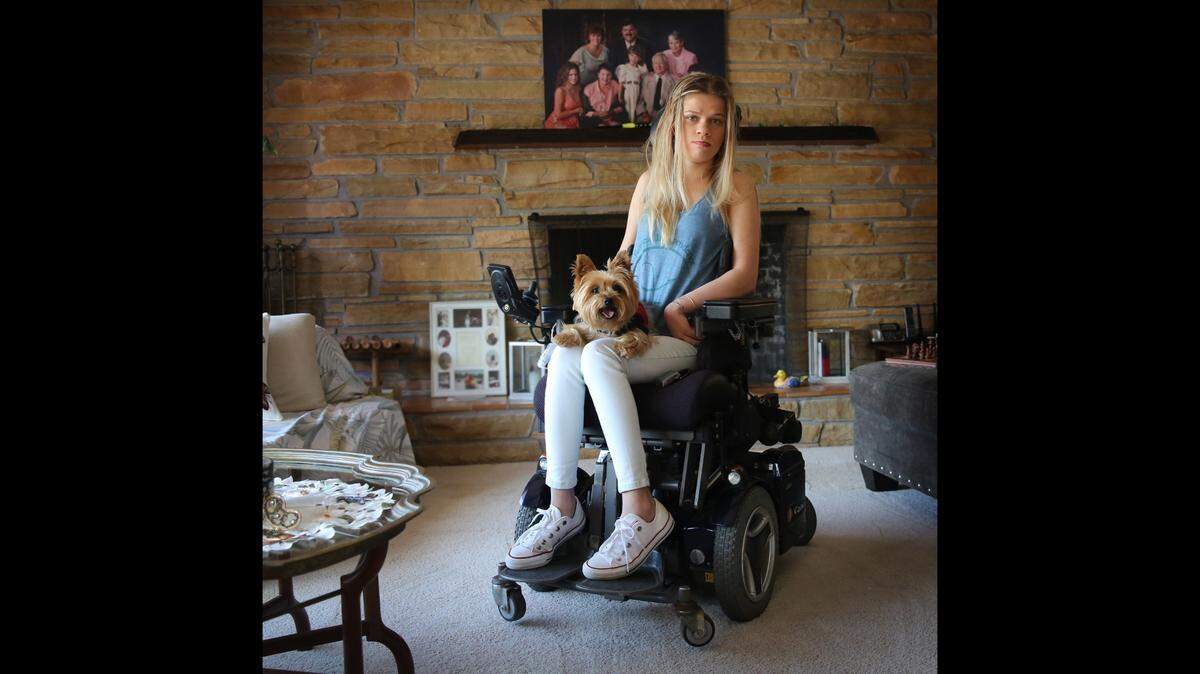
Parrish and her husband, Jesse, asked administrators and board members in 2017 to make the program responsive to families’ needs. “We have been a NICA family for nearly 20 years,” she said, “and many of the actions taken [by lawmakers] were those I presented to the NICA board three years ago — to deaf ears.
“Tomorrow, and our future mornings, will be a little brighter thanks to this legislative passage,” Parrish added.
Delaina Parrish is a rarity among NICA children: she astounded doctors who believed her 11 minutes without oxygen during delivery would impair her intellect. Though she retains significant physical disabilities, Delaina Parrish graduated from the University of Florida, runs a consulting business, and advocates for people with special needs.
“This bill passage opens doors of hope, relief and transparency for so many families and their children like me,” she wrote, using a device that translates the gaze of her eyes into words and sentences. “Where there was total darkness, now there is a glimpse of light — [and] I see a bright future for myself, with the support I need to live fearlessly.”
Charity Butler of Panama City, whose 6-year-old son, Grit, entered the program in 2015, said many parents spent the past 36 hours calling and emailing legislators and provided first-hand accounts of their needs and recommendations for improving NICA.
“We just worked tirelessly,” Butler said. “Some of us stayed up all night long leaving messages for every representative in the House, not wanting to be obnoxious in any way but trying to make sure they had all the information to be able to vote appropriately.
“It seems like the last 48 hours, that has made the difference. I think they want to do the right thing by NICA families. And 48 hours ago, I don’t think they had all the information they needed to understand the full situation.”
The strategy worked. Rep. Anna Eskamani, an Orlando Democrat, said she heard from many families even though she was not one of the bill’s sponsors.
“My inbox has been flooded with messages from families,” Eskamani said on the House floor.
Rep. Allison Tant, a Tallahassee Democrat who cares for a disabled child, directly addressed Koster, the House sponsor, before the bill was taken to a vote:
“The world of a family dealing with disabilities is rife with trauma, fear, desperation and unrelenting stress,” she said. “It is a rare and precious thing for anyone to willingly walk into this world without being forced into it. Thank you for not throwing up your hands.”
NICA came under fire earlier this month when the Herald and ProPublica began publishing its stories describing the frustration of families seeking assistance from the program. NICA has amassed nearly $1.5 billion in assets while families — many of whom had no choice but to enter the program, which forecloses any opportunity to pursue a malpractice lawsuit — claim they are being “nickel-and-dimed” when they seek care and treatment for their severely disabled children.
Lawmakers vowed to reform NICA. The state’s top financial regulator, Chief Financial Officer Jimmy Patronis, promised to “do some good on behalf of these families,” and initiated an inspection and audit by his agency. Florida House Speaker Chris Sprowls, a Palm Harbor Republican, said on Twitter that his chamber would begin an investigation “into whether NICA has lost sight of its statutory mission.”
A version of the NICA legislation, which included only an increase to the $100,000 parental award, was filed before the legislative session began. NICA administrators initiated the bill after the Herald began asking questions and submitting requests for information under the state’s public records law.
After the series began, lawmakers expanded the legislation, and, earlier this week, the bill’s Senate sponsor, Zephyrhills Republican Danny Burgess, shepherded an amendment that secured immediate help for families that complained to lawmakers they had to fight constantly for medication, equipment, therapy and other services.
But on Wednesday, Koster, a Republican from Tampa, stripped from the legislation many of the benefits meant to help families currently in the program, including mental health care, dental benefits and an ombudsman for families who have disputes with administrators.
What followed was a hectic 48 hours in which Burgess maneuvered to restore many of the lost benefits — and then get them approved in the House. That happened late Thursday, ending with a standing ovation for Koster for joining the effort.
One of the bill’s sponsors, the Democrats’ top leader in the Senate, Lauren Book, said Thursday night she was elated that “we were able to get this over the finish line.”
“This process can be messy and complicated,” said Book, from Plantation, “but at the end of the day we were able to make a difference in the lives of these families.”
A previous version of this article incorrectly stated that the final bill removed language requiring NICA to act “in a manner that promotes and protects the health and best interests of children.” That language remains in the bill sent to the governor.
This story was originally published April 29, 2021 at 9:57 PM.