House votes to use ‘any means’ to get domestic violence coalition CEO to talk
After trying and failing to get the former head of the Florida domestic violence coalition to submit to questions, the Florida House of Representatives took the extraordinary step Thursday and voted to use “any means” to subpoena Tiffany Carr and give her one week to appear.
What does “any means” mean?
“When I say by all means possible, I really mean every means possible,’’ said Rep. Tom Leek, a Republican attorney from Ormond Beach and chairman of the House Public Integrity and Ethics Committee.
The committee is investigating allegations that Carr, her staff and members of the board of directors conspired to inflate her salary and defraud the state by paying her more than $7.5 million over three years.
Carr, 51, resigned last fall from the Florida Coalition Against Domestic Violence but then signed a contract to serve as its consultant. Carr has refused to respond to requests for comment and appear before the House for questioning.
On Wednesday, the Department of Children and Families and the Florida Attorney General launched two legal actions against the coalition, Carr and members of the FCADV board of directors alleging they conspired to defraud the state to pad Carr’s compensation package, demanding that millions in taxpayer money be repaid and freezing the assets of FCADV.
“Our investigation, however, is not complete,’’ Leek said Thursday to the House, whose subpoena power ends on March 13, when the annual legislative session ends.
“We still don’t know why or how this was allowed to happen,’’ he said. “The committee is continuing to collect and review documents, including documents we are receiving from DCF regarding the possible co-conspirators inside the department prior to 2013.”
Leek said the House has previously attempted to serve Carr “at the business address where she is listed as a registered agent but that service was refused.” It has also tried to reach her at her homes in Tallahassee and North Carolina but was unsuccessful.
Leek said that in a court case, if a witness was evading attempts to be subpoenaed, the state could go to a judge who could authorize law enforcement to step in. But, because the House’s investigation has little historic precedence and does not involve a court, House Speaker José Oliva asked the full House to authorize him to take additional action.
“The important thing is you want to make sure the person has notice, so that they have the opportunity to defend themselves. It’s all about due process,’’ Leek explained.
Leek said the options allowed by law include reaching Carr through social media, through television, emailing her attorney and, if needed, getting the sheriff of Macon County in the North Carolina community of Cashiers where she lives, “to go in.”
This week, after the Miami Herald attempted to reach Carr at her North Carolina mountain home in Cashiers, the House hired a process server to serve her with the subpoena there, Leek said.
“Her home in North Carolina, where she is believed to be staying, is in a gated community and guard [gates] have refused access of the process servers,’’ he said.
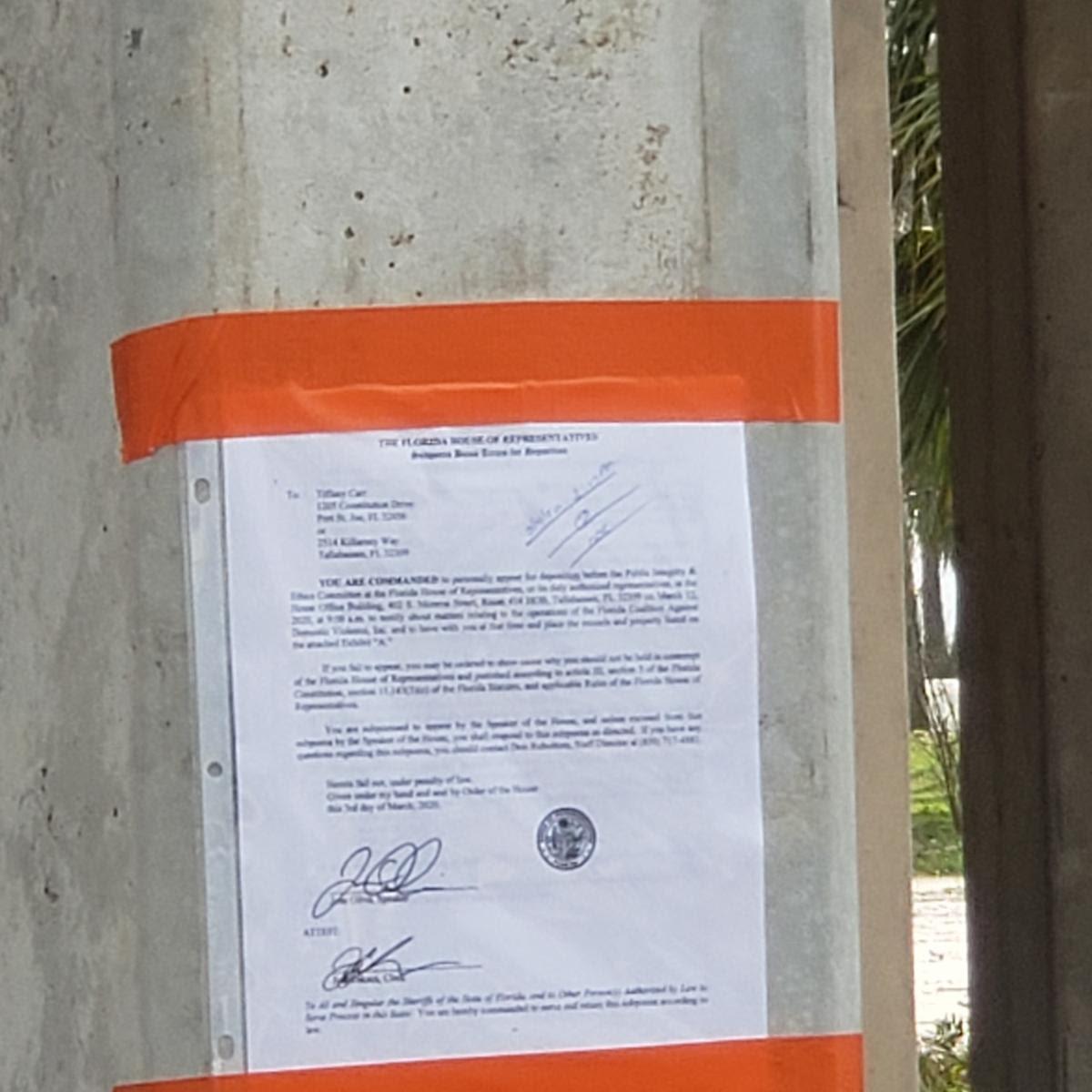
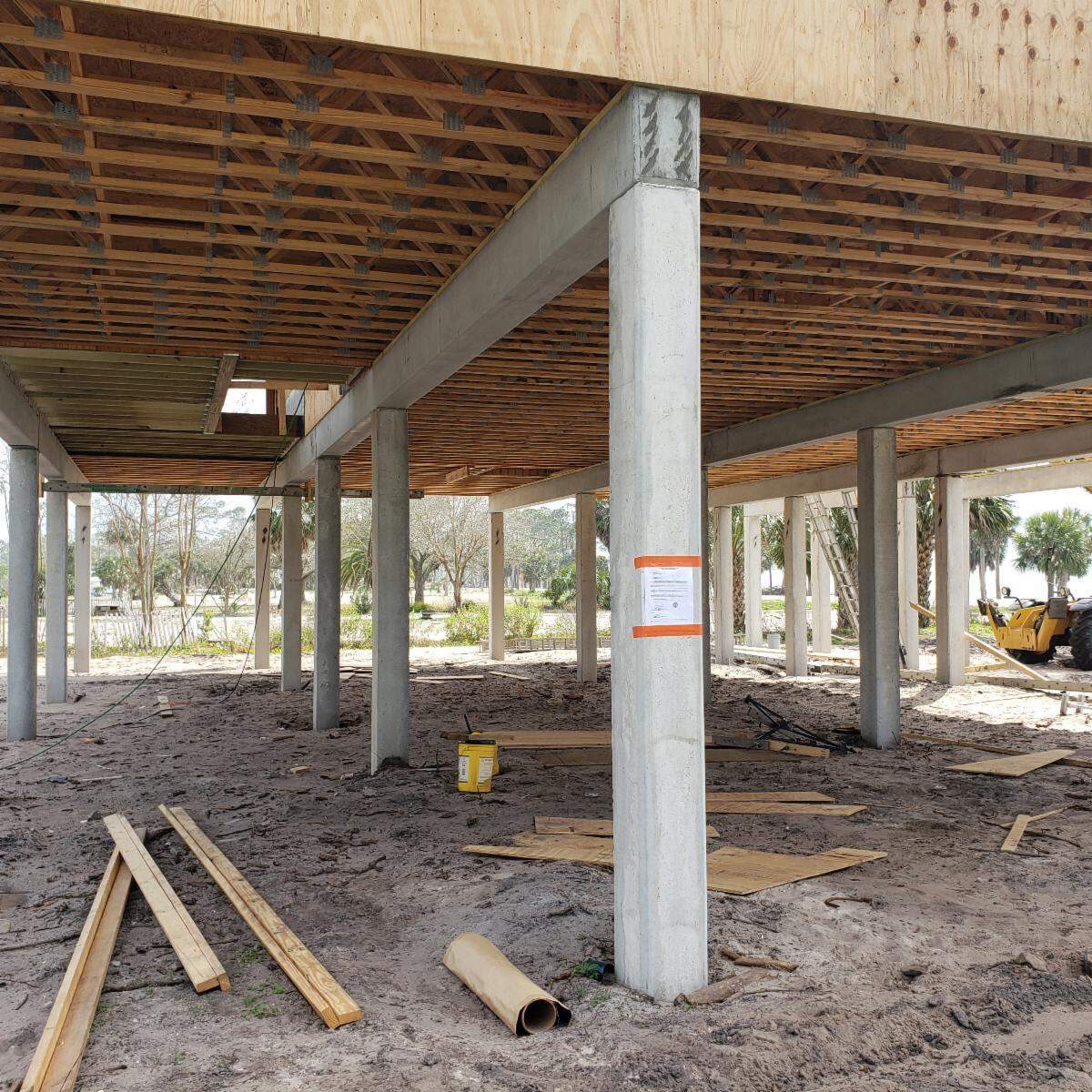
This week, the House posted a subpoena to a piling on Carr’s beachfront home, now under reconstruction in Port St. Joe after being damaged by Hurricane Michael.
If Carr refuses to respond by the March 12 deadline, she will be held in contempt, and the House may impose a monetary fine or take other actions.
“Technically the House could jail somebody,’’ Leek explained. “Obviously, we’re not set up to do that.”
He said there is legal precedent that allows the state to use social media as a means of providing legal notice and cited a Wikipedia case in which someone was served a subpoena using Twitter.
“We’re not going to do that,” Leek said, adding. “It is hard to argue in this day and age that she doesn’t know what’s going on.”
This story was originally published March 5, 2020 at 2:47 PM.