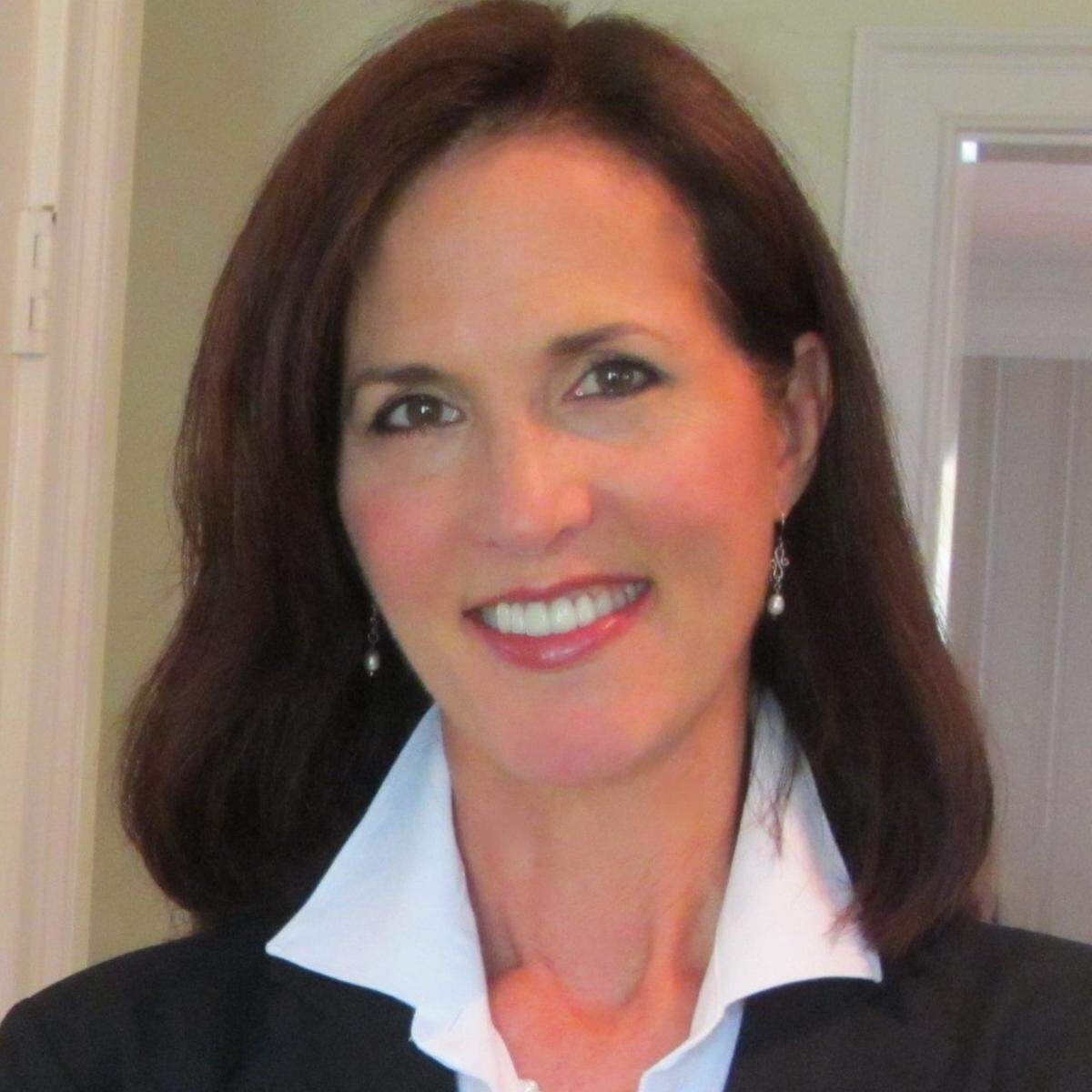
State takes two legal shots at embattled nonprofit and ex-CEO to recover cash, records
The state of Florida launched two legal actions Wednesday against the Florida Coalition Against Domestic Violence, its board of directors and three current and former executives, alleging they conspired to defraud the state to pad the compensation package of former CEO Tiffany Carr, and demanding that millions in taxpayer money be repaid.
The double-barreled shot from Gov. Ron DeSantis and Attorney General Ashley Moody comes as Carr and FCADV are under investigation by the Florida House of Representatives, the governor’s chief inspector general, and Moody over revelations that the coalition allowed Carr to pad her paid time off and cash it in for more than $4 million.
“I am disgusted at the mismanagement and greedy misuse of public funds that were meant to assist victims of domestic violence,” Moody said. “The damage caused will take time to repair.”
DeSantis’ lawsuit, filed in the Second Judicial Circuit, accuses Carr, the coalition and the board of breach of its contract with the Department of Children and Families, “breach of implied duty of good faith,” and breach of fiduciary duty. In addition, Carr is being sued for fraudulent concealment, fraudulent misrepresentation, negligent misrepresentation and civil conspiracy.
“The coalition’s deliberate abuse of state dollars, inexcusable lack of transparency and calculated breach of public trust is untenable,’’ DeSantis said in a statement. “We will continue with our efforts to ensure those involved are held accountable for their actions, while also ensuring that survivors are being provided with proper care and support.”
DCF asked for more than $30,000 in damages, and any other relief the court decides for each of the 42 allegations.
Saying her goal was “to preserve assets and claw back any funds that were misappropriated,” Moody asked a court to recover as much of the money as possible used on executive compensation and collect evidence for use in future investigations.
Moody’s complaint, also filed in the Second Judicial Circuit Wednesday, seeks to recover all or part of the estimated $7.5 million paid to Carr over the past three years, as well as dissolve the coalition and reorganize it.
Although the governor’s lawsuit alleges the coalition violated federal law, it seeks a civil resolution and is not a criminal complaint, and neither is Moody’s.
Moody acknowledged that more charges may be forthcoming, saying: “All options on further action remain on the table.” She said state and federal entities are “reviewing interactions” with the coalition for potential future litigation.
“Miss Tiffany Carr should be very worried,” Moody said. “This wasn’t just money put into assets. It also went to the federal government, to the IRS. Florida taxpayer money.”
Lawyers with the Florida House want to question Carr, but say they can’t subpoena her because she is currently out of state.
The Herald/Times found her $2 million mountain home in the Blue Ridge mountains of North Carolina, where two vehicles sat in the driveway and a Florida State University flag waved in the breeze.
Moody’s office also asks the court to appoint a receiver who would assume authority over the coalition and also take control of all money, accounts, property and assets. That likely includes Carr’s North Carolina homes, Moody told reporters.
When Carr’s attorney in Tallahassee, Chris Kise, was served the subpoena by DeSantis’ inspector general, Kise declined it, claiming his client had no dealings with the Florida Coalition Against Domestic Violence Foundation, said Rep. Tom Leek, R-Ormond Beach, chair of the House Public Integrity and Ethics Committee.
But Moody’s complaint says Carr was listed as the only member of the FCADV foundation on its most recent Form 990 filing with the IRS, covering fiscal year 2017-18.
Moody’s office said Carr will be served with a summons and complaint “wherever she may be.”
FCADV’s role
Since 2003, the coalition has managed about $52 million annually as the single state clearinghouse for 42 domestic violence centers that received funding, training and advocacy from FCADV.
During that time, evidence shows, a small group of members of the board, appointed by Carr, operated as the compensation committee and allowed Carr to claim she had a brain tumor, while she padded her compensation and produced no evidence of a medical condition.
Carr “repeatedly misrepresented executive compensation, and suppressed the truth of same by failing to accurately disclose the trust compensation as required by the contracts [with DCF],” the DCF complaint filed by the governor’s office claims.
The suit claims that FCADV violated its contractual obligations with the state by failing to notify DCF when it was being sued, failing to provide and maintain adequate financial records, failing to comply with inspections and reviews using federal funds for lobbying — a violation of federal law — and violating state Sunshine laws.
Although Carr is the focus of most of the blame, the board of directors is accused of being deeply complicit in the scheme as are Chief Operating Officer Sandra Barnett and Chief Financial Officer Patricia Duarte.
Board members testified they were either ignorant of the compensation plan, failed to ask questions or were deceived by Carr and her staff.
“This funding was provided for the public purpose of coordinating and administering statewide activities related to the prevention of domestic violence, not for the FCADV board to award exorbitant salaries, bonuses, and PTO, to Ms. Carr, in exchange for personal gain,’’ the DCF complaint said.
“FCADV’s refusal to provide complete and accurate documentation and accounting, as requested by the OIG, perpetuated, facilitated, and advanced the breaches of contract, breaches of implied duties, and unjust enrichment that allowed Ms. Carr to live lavishly at the expense of domestic violence survivors, their children and centers across the state,’’ it said.
Enabling Carr’s actions
DCF alleges that because of Barnett’s falsely stating “where she and FCADV were distributing all DCF funds,” the agency “continued to increase the amount of state and federal monies flowing to FCADV.”
“Ms. Barnett should have known the representations were false,’’ the complaint alleges. “Ms. Barnett should have known Ms. Carr’s reported compensation did not match her actual compensation.”
After over a year of demanding documents, the complaint says DCF made a final request in November 2019, but the agency’s lawyer, Karen Walker, continued to “dissuade DCF from further investigation” by “arguing in bold typeface” that: “No bonuses have ever been paid out of any state or federal funds.”
The complaint notes that in fact most of the coalition’s funds came from taxpayer dollars and the coalition never disclosed “any of the exorbitant PTO cash payouts.”
Once the documents were released to DCF that indicated the depth of the deception in February, Walker resigned as lawyer for the coalition on Feb. 12.
DCF Secretary Chad Poppell said Wednesday the stalemate over documents finally ended after the House threatened subpoenas against the board members and staff in early February.
The deception alleged in the governor’s complaint names Barnett and Duarte, for providing “false and incomplete documents.”
The state alleged executives misrepresented how they were distributing DCF funds, and conspired with one another and with board members to conceal and misrepresent to the state how dollars were spent — funds used to pay Carr an exorbitant salary, bonuses and massive paid time off compensation.
It also alleges the executives filed inaccurate Form 990s to the IRS and failed to accurately represent Carr’s compensation in documents provided to the state inspector general’s investigation.
The issues with the 990s came up during the Florida House’s investigation, in which lawmakers questioned the authenticity of memos that included IRS data.
In three 990s, board chair Melody Keeth claimed to have reviewed in 2016 documents that didn’t exist until 2017, one of them more than a year after she claims to have signed and dated her memo.
“This funding was provided for the public purpose of coordinating and administering statewide activities related to the prevention of domestic violence, not for the FCADV board to award exorbitant salaries, bonuses, and PTO, to Ms. Carr, in exchange for personal gain,’’ the DCF complaint said.
“FCADV’s refusal to provide complete and accurate documentation and accounting, as requested by the OIG, perpetuated, facilitated, and advanced the breaches of contract, breaches of implied duties, and unjust enrichment that allowed Ms. Carr to live lavishly at the expense of domestic violence survivors, their children and centers across the state,’’ it said.
The directors being sued by the state are: Lorna Taylor from Tampa, Penny Morrill from Dade City, Sheryl Schwab of Bartow, Theresa Beachy of Gainesville, Donna Fagan of Lake City, Shandra Fernandez-Kvam (previously Riffey) of Tampa, Angela Diaz-Vidaillet of Miami, Laurel Lynch of Bradenton and Keeth of Palm Bay.
The attorney general’s complaint largely focused on the paid time off compensation Carr received. While the PTO payouts were initially charged to the “private” category in FCADV’s accounts per Carr’s direction, private donors were not to be notified of this apparent use of their gifts because the payouts would later be charged to different, non-private accounts containing state funds passed down through DCF.
“The accounting shell game underscored that the PTO payouts came from public funds,” Moody’s complaint read. It also called Carr’s compensation a “waste of corporate assets.”
This is likely to be the first in a series of claims against Carr, other FCADV executives and the board as federal and state prosecutors continue to build a case against them, said Daniel Ravicher, professor of law at the University of Miami and an expert on nonprofits.
The civil complaint “is a way to get more evidence that can be shared with criminal authorities,’’ he said Wednesday, and it will also allow the state to recover financial losses, legal fees and any penalties.
DCF to take control
In response to the salary scandal, the Legislature swiftly passed a bill that DeSantis signed on Feb. 27 that ends the coalition’s role as the sole source for allocating the money and puts DCF in charge. The bill went into effect immediately.
The day after the bill was signed, DCF put out a request for interested parties who would be interested in bidding for the contract.
In a letter to the 42 domestic violence centers, DCF Secretary Poppell outlined the progression of the pay scandal, and noted that for over a year, DCF’s requests for financial documents were refused. He assured the centers that uninterrupted care for domestic violence survivors and families is a top priority.
Poppell said Wednesday DCF workers are taking a close look at the coalition to ensure dollars are still going to the domestic violence centers, and have supported the 65 existing coalition employees as they make the transition to working under DCF control “with no service interruption.”
“For the last three days we’ve been on the ground at the domestic violence coalition, assuming operational control,” Poppell said at the press conference.
He added that it’s not DCF’s intention to keep domestic violence services “in house” permanently.
Earlier in the week, Poppell sent domestic violence victims a separate note and said that continued services and support will be a focus through the transition.
In an email obtained by the Miami Herald, the coalition’s chief operating officer, Sandra Barnett told employees that they are expected to work “side-by-side” with DCF, whose staff would be observing them in the weeks to come.
“[DCF] may provide an opportunity for continued employment at the end of the transition period,” Barnett wrote.
Employees have not yet been told whether they would be keeping their jobs.
Poppell acknowledged that the morale among employees has many concerned, “but we’re working through that.”
Oversight of the coalition’s finances has been the responsibility of DCF but the agency only started investigating Carr’s compensation after the Miami Herald revealed in 2018 that Carr’s reported salary was $761,000.
Rep. Juan Fernandez-Barquin, a Miami-Dade Republican who sponsored the legislation, thanked the Miami Herald at the press conference for its reporting to expose Carr’s inflated compensation. Moody also credited the paper.
“Unfortunately, overall, no one won, not even Tiffany Carr,’’ Fernandez-Barquin said. “The victims of domestic violence lost. The state lost, and it was her greed that put us in this posture. ... What she has done absolutely shocks the conscience.”
Depositions released
This week, the House Public Integrity and Ethics Committee released additional documents that reveal more evidence about the extent to which Carr and her deputies were engaged in manipulating personnel files to allow her to pad her paid time off and cash it in for what appears to be about $4.9 million in compensation that exceeded her salary.
In a closed-door deposition with House of Representative lawyers, a former chair of the FCADV board alleges that documents relating to Carr’s compensation were significantly altered after she agreed to a plan to give Carr her added bonus.
Laurel Lynch, CEO of Bradenton-based HOPE Family Services Inc., told attorneys for the House committee that when she asked if the coalition could afford the bonuses and lucrative compensation packages, Carr and the chief financial officer of FCADV, Patricia Duarte, said it was being paid with private funds.
“I asked directly, again, ‘Can we afford this, is this private money?’ ’’ Lynch recalled. “And I was told yes. We were talking specifically about her compensation package.”
However, she acknowledged, this claim was never put in writing, and she never asked for it.
Memos to Carr’s personnel file show that a small group of board members, operating as the compensation committee, sanctioned a compensation package but provided no explanation for how it was to be paid.
Instead, the agency submitted the expense to DCF as its “paid time off” pool that, Carr’s former deputies said in testimony last week, was funded with extra grant money.
Lynch and two other board chairs also talked in depositions about how dues were assessed for each of the 42 domestic violence centers. Lynch said that the coalition originally intended to use the money to pay for a lobbyist because, as a 501(c)3, the coalition was barred from using taxpayer funds to pay for lobbying.
The coalition first hired Jack Cory, a veteran lobbyist, Lynch said, and “it was just dues for lobbyists.”
Cory told the Herald/Times that he did not agree with Carr’s approach with legislators because she was “often disrespectful.” He said he did not work with Carr long and did attend board meetings.
Cory said he watched as Carr “was picking and choosing board members, telling them ‘you’ll get more allocations’ ” for their service.
“Some of the board members don’t have clean hands,’’ he said.
Lynch said during her deposition that she did not know how much paid time off Carr cashed in, and how sick Carr really was. But the board members also testified under oath that they never verified if Carr really used paid time off for her illness as they repeatedly allowed her to exchange it for cash.
More to come
Rep. Jackie Toledo, R-Tampa, who is on the House committee investigating the coalition, applauded the state’s legal action but said she also expects there to be criminal charges.
“It sends a clear message to anyone receiving state funds to use our tax dollars wisely,” she said. “I think that in the future there’s going to be more accountability and more transparency and we’re going to be looking at everything that we fund.”
Toledo also said this scandal has taught her that lawmakers can’t take oversight for granted.
“What was shocking to me was that the agencies weren’t doing their part in monitoring [or] auditing each receiver of tax dollars. I think as legislators we just assumed that was happening.”
Herald/Times Tallahassee Bureau staff writers Emily L. Mahoney and Lawrence Mower contributed to this report.
This story was originally published March 4, 2020 at 1:19 PM.