Domestic violence coalition execs say CEO padded paid time off with unused grant money
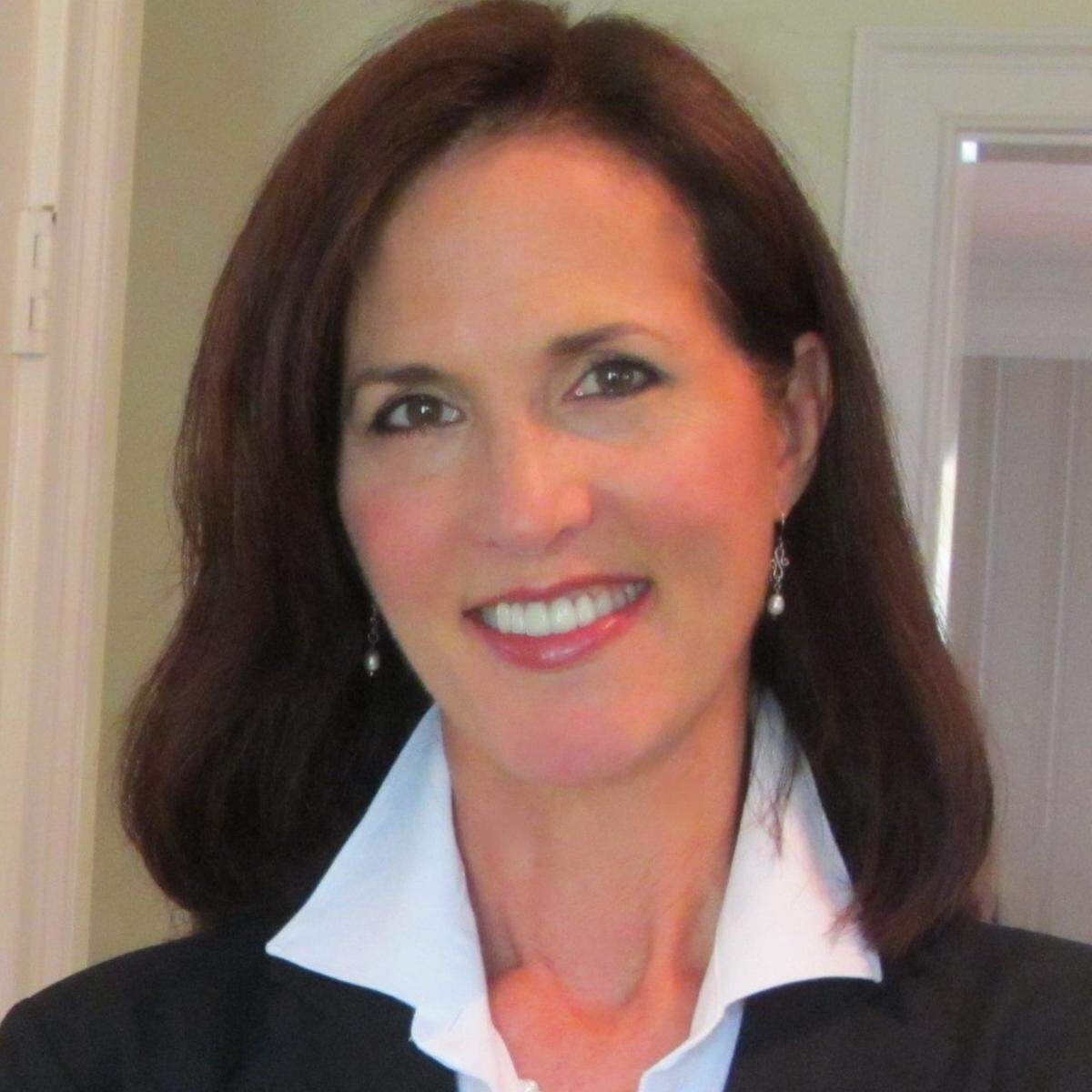
In a stunning admission to lawmakers Thursday, two top officials at the Florida Coalition Against Domestic Violence testified that former CEO Tiffany Carr directed them to take unused grant money intended for victims services to pad her paid time off account — which she would cash in for more than $4 million for her personal use.
Did they think there was anything wrong with that?
It was “not OK,’’ said Sandra Barnett, chief operating officer, who also admitted she did nothing about it.
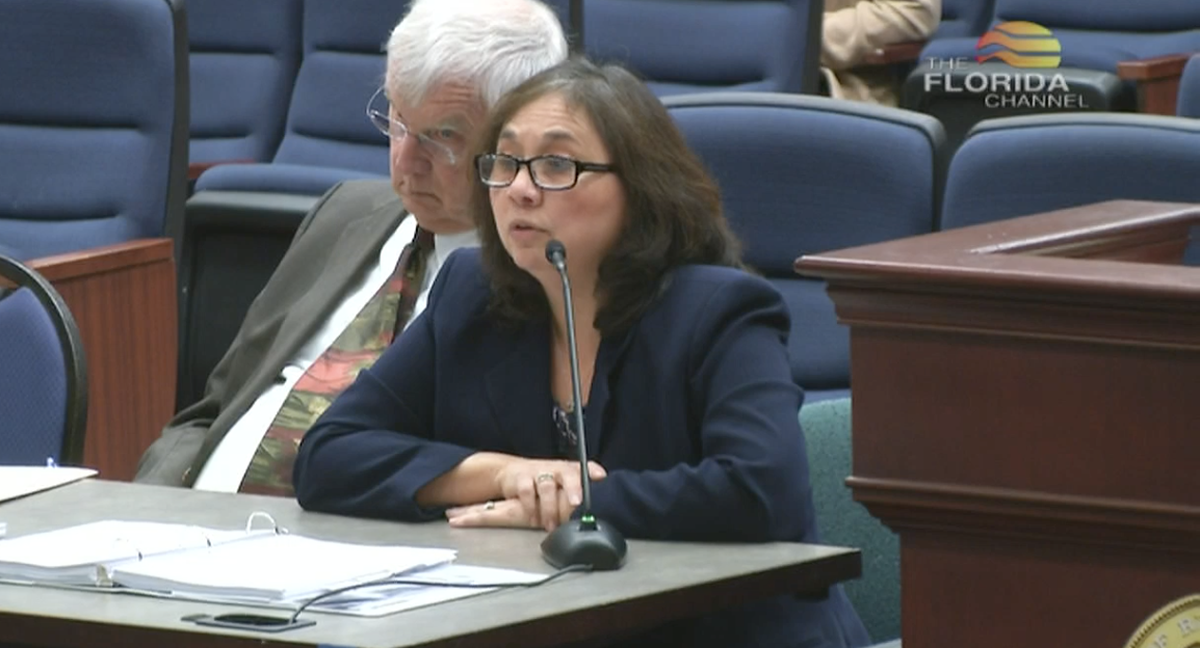
Patricia Duarte, the chief financial officer responsible for oversight of $52 million in state and federal funds, was asked if “just following orders” was “a defense to a crime of fraud?”
Duarte had repeatedly said that “it was not her decision” and “not her place” to interfere with orders from Carr to shift grant money into the payroll account. After conferring with her attorney, who was by her side, she said: “I will not answer that.”
The revelation came amid an investigation by the House Public Integrity and Ethics Committee into the coalition and its former CEO’s salary of $7.5 million over three years, including more than $4 million from a scheme that allowed Carr, Duarte and Barnett to accumulate inflated amounts of paid time off and cash it in. The House subpoenaed 14 current and former board members and coalition executives, three of whom came before the committee Monday.
Rep. Tom Leek, the Ormond Beach attorney who chairs the committee, said after the hearing that Duarte and Barnett contradicted much of the information they heard from board members earlier in the week.
“It appears to me that the employees, along with Ms. Carr, worked collectively to cheat the system,” Leek said. “Their statements are inconsistent, and so it always makes you wonder if there is criminality.”
The probe was prompted after the Miami Herald revealed in 2018 that Carr reported to the IRS a $761,000 annual salary and the FCADV refused to cooperate with a subsequent state audit.
The House investigation is the most public of four ongoing inquiries into Carr and the coalition. Gov. Ron DeSantis has assigned his inspector general to determine if any crimes were committed by the coalition and its board of directors because of the compensation scheme. The inspectors general of the Florida Department of Children and Families and Florida Attorney General are also investigating. Federal investigators have also launched a probe.
As the House committee hearing was underway, DeSantis signed a bill that severs the special relationship FCADV had as the sole contractor for domestic violence funds.
Blind loyalty
The testimony of the two women who reported only to Carr provided the clearest view yet into a tight circle of loyalty demanded and rewarded by the former CEO. Carr, 51, resigned in November for “health reasons” but returned as a consultant until January, when the House started demanding she turn over documents.
Duarte repeatedly deflected responsibility over any compensation matters and suggested it was Carr alone who made all decisions. Such decisions included who is responsible for oversight and day-to-day operations, signing of checks and clarification over which coalition records could be considered public versus private.
When the inspector general for the Department of Children and Families was seeking documents from the agency, Duarte said it was Carr who decided what to turn over.
“We were taking direction from Ms. Carr about what records were going to be produced,’’ she said.
When Carr told Duarte she was going to liquidate $3 million — of the more than $4 million of paid time off awarded to her by the executive committee — Duarte acknowledged she thought it was excessive but asked no questions.
“Did it ever occur to you that when you were writing $3 million of PTO checks: ‘Boy, this is a lot of money for an organization that is supposed to be taking care of domestic violence victims?’ ” asked Rep. Randy Fine, R-Palm Bay.
Duarte responded: “It is a lot of money, but if that was given to her, it was not my choice, and that was what was given to her.”
Even after Carr resigned in November, Duarte continued to follow Carr’s orders.
Carr asked Duarte to pack three boxes of documents that included her personnel files — and the files for Duarte and Barnett — and send them to Carr’s home in North Carolina. Duarte agreed. No questions asked.
Duarte told the committee that she often simply couldn’t say no to Carr. When Carr offered to double Duarte’s salary and give her additional paid days off, “I said. ‘This is too much,’ once, and she said that was her decision,’’ Duarte told the committee.
Barnett appeared before the House committee last month, claiming she knew very little about the inner workings of the coalition. Barnett has been COO since 2010.
Both Duarte and Barnett, however, were rewarded for not contradicting Carr. Each had statements included in their annual evaluations that commended them for “unyielding loyalty to the coalition and the CEO” and for refusing to disclose “unnecessary” information to auditors and the media.
When asked whether Carr was a “controlling CEO,” Barnett paused and said, she “is heavily involved.”
The allegiance to Carr continued even after an interim CEO was appointed.
When interim CEO Denise Grimsley, a former state senator, asked for copies of documents relating to Carr’s compensation scheme, Duarte said she called board of trustees chair Melody Keeth, who told her “we are going to control the media.”
Duarte and Barnett didn’t question Carr when it came to her time away from work, either, they said. They, like board members called to testify before them, trusted that Carr was sick and needed time away to recover from her illness.
Barnett said she never saw any documentation related to Carr’s illness aside from a document from the Mayo Clinic in her personnel file. Neither did Duarte.
Leek and other lawmakers also have questions about whether Carr’s illness is real, or serious.
“It seems odd to me that someone would publicly announce such a serious illness as a brain tumor, which is what I understand she announced, and then there appears to be no record of a brain tumor in the [human resources] file and no one ever recalls her taking time off,’’ Leek said. “No one ever recalls taking her to the doctor. It doesn’t seem to match with what she was telling people.”
Paid time off
In her testimony, Duarte outlined some of the control Carr had over her compensation.
At the end of the year, Duarte and Carr would review how much money was not spent by programs and centers contracted with the coalition.
Carr would then decide each February how much in available funds would be sent to centers “for basic needs,” Duarte said.
“If there was money available, we would review it and Ms. Carr would request that money,” she added.
Duarte said no one ever asked her where Carr’s funding was coming from.
Leek said the testimony revealed “that what Ms. Carr would do is she would go at the end of the year and see how much money was left and then bonus herself up accordingly.’’
He added that it was “coincidental that the large grants to PTO to Ms. Carr coincided with large pay raises to the key management and large PTO grants, too.”
When pressed, Barnett was asked if she believed anything the coalition did was unethical.
“I believe the allocation of PTO outside of a proportionate allocation is not OK,’’ she said.
If Barnett had any interest in doing anything about that unethical activity, she didn’t act. Legislators noticed.
Rep. Margaret Good, a Sarasota Democrat, pressed Barnett on the “unearned” money that was supposed to be paid back to the Department of Children and Families.
“It’s clear there was an ethical violation based on the testimony we heard today,” Good said after the hearing. “If I weren’t sitting here, I would think it’s unbelievable. It’s shocking to think that the money supposed to be used for survivors is being used to fund exorbitant compensation of Ms. Carr.”
Three of the subpoenaed board members questioned Monday testified that they thought the hundreds of paid days they awarded to Carr were hundreds of hours, not days. Carr’s contract with FCADV includes no mention of paid time off given in hours, but consistently refers to “days” allowed and accrued. Her most recent contract, signed in 2018, is the first one that included a clause allowing Carr to cash in or use the time off.
Duarte said that when she received a memo where Carr clarified that her paid time off should be in days, not hours, she questioned it.
“Were you surprised by the amount of PTO Ms. Carr was receiving?” Rep. Jennifer Sullivan, R-Mount Dora, asked.
“Yes,” Duarte said.
After the hearing, Leek said that although the House has been unable to serve Carr with a subpoena because she is living in North Carolina, he expects she will be compelled to appear before the committee, the governor’s inspector general or law enforcement.
“When you’re talking about millions and millions and millions of dollars, it’s hard to get your arms around how many people could have been helped had that money been used,’’ he said.
Leek said the committee will continue meeting and working on building a new oversight framework for whatever replaces FCADV. But until then, he said he is confident “DCF will be able to administer the money.”
Mary Ellen Klas can be reached at meklas@miamiherald.com or @MaryEllenKlas.
Samantha J. Gross can be reached at sgross@miamiherald.com or @samanthajgross.
This story was originally published February 27, 2020 at 6:01 PM.