Nursing home where 12 died after Irma wins again in court fight over death records
READ MORE
The Rehabilitation Center at Hollywood Hills tragedy
Three days after tropical storm force sustained winds and hurricane strength gusts from the edge of 2017’s Hurricane Irma knocked out power at The Rehabilitation Center at Hollywood Hills, residents began dying in stifling heat. The death toll reached 12.
Expand All
The state cannot substantially redact or charge substantial fees for death certificates requested by a Broward County nursing home where several died after Hurricane Irma, a Leon County circuit judge ruled Tuesday.
The Rehabilitation Center at Hollywood Hills, which has been embroiled in legal disputes since a dozen residents died there after the storm knocked out power to its air conditioning, had requested death records across the state for Sept. 9 through Sept. 16 — a weeklong period that included Irma.
A judge had ruled in April that they were entitled to the records, but the state Department of Health tried to charge nearly $6,000 for a redacted version of the records. The facility asked a judge last month to hold the agency in contempt for not making the records available, calling the fees "illegal" and alleging that the agency was "intentionally refusing to comply with this court’s mandate."
Judge Terry Lewis concurred with the nursing home Tuesday that the agency’s intent to redact the records and charge thousands for the review amounted to an unlawful delay, rejecting the state’s arguments that the redactions and fees were required under the state’s public records law.
.JPG "IMG_0102095236.JPG_3_1_GL2S5JHJ_L71314825 (1).JPG")
The dispute centered on two statutes that govern the release of death certificates: one specific to requests for vital statistics and the other broadly applicable to public records. Michael Williams, an attorney for the department, said the agency was required to redact several fields from the requested death certificates as protected health information under Chapter 119.
But attorneys for the Rehabilitation Center at Hollywood Hills pointed to a different statute, specific to death certificates, that specified only redacting the cause of death from the public. Timothy Elliott, a lawyer for the nursing home, objected in particular to redacting the residences of the deceased, saying that information was necessary to determine which people had been in nursing homes or other long-term care facilities when they died.
“That’s critical,” he told Lewis in court. “Without that, the records are useless.”
Lewis agreed, noting that the public records law the department cited “is even more geared toward the public having access.” He also rejected the state’s argument it needed to charge $5,907 in review and redaction fees.
“I don’t see why it should be necessary to redact information that’s made available through 382 [the death records statute] just because it’s under 119,” he said.
When the facility initially sued for the records in January, the state health department said the sheer size of the request meant it was governed by state law dealing with “vital records or data.” It said the nursing home’s request didn’t meet legal standards for releasing such information.
But Lewis, who heard the case then, deemed the data public record. On Tuesday, he also ruled that the nursing home’s lawyers were entitled to fees and costs for suing to obtain access to the records, though the exact amount has yet to be determined.
It was unclear if the state Department of Health intended to appeal the decision Tuesday. Spokesman Devin Galetta said the agency is reviewing the ruling.
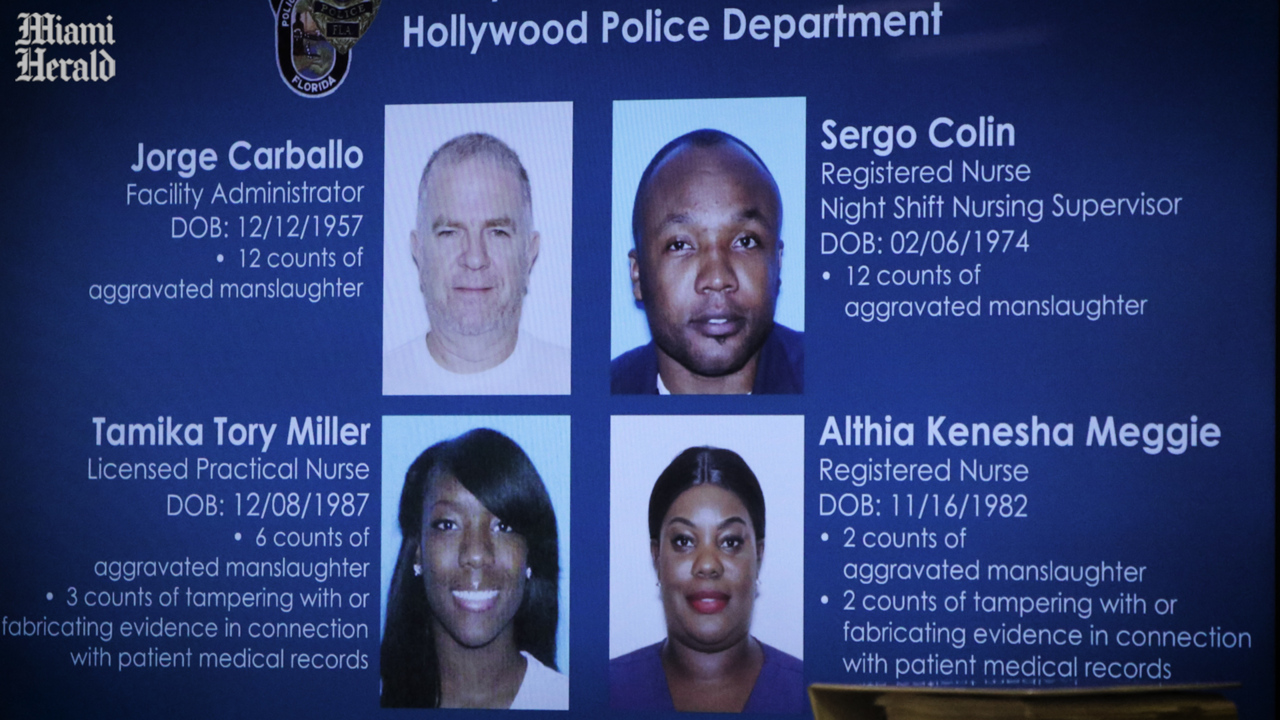
The ruling is a win for the nursing home, which is still involved in legal battles over issues including the state's decision to revoke its license after the post-Irma deaths. Authorities are looking at 12 of those in connection with problems at the facility, as part of an ongoing homicide investigation.
The facility’s lead lawyer, Geoffrey Smith, said they plan to analyze the data once it is released to see how many other deaths occurred at nursing homes across the state: “The data will be part of the overall evidence that’s available of what happened with this natural disaster.”
“The facts are the majority of the deaths that were cited by the state are deaths that any other time would be considered a naturally occurring death,” Smith said. “But because it occurred at this nursing home on this day, it was related to somehow the facility was doing something improper and not taking proper care of the residents, which is just an awful misunderstanding, an awful lie.”
This story was originally published June 12, 2018 at 5:27 PM with the headline "Nursing home where 12 died after Irma wins again in court fight over death records."