
Florida Influencers: Teacher pay ranks as top education issue of 2018
READ MORE
The Florida Influencers Series
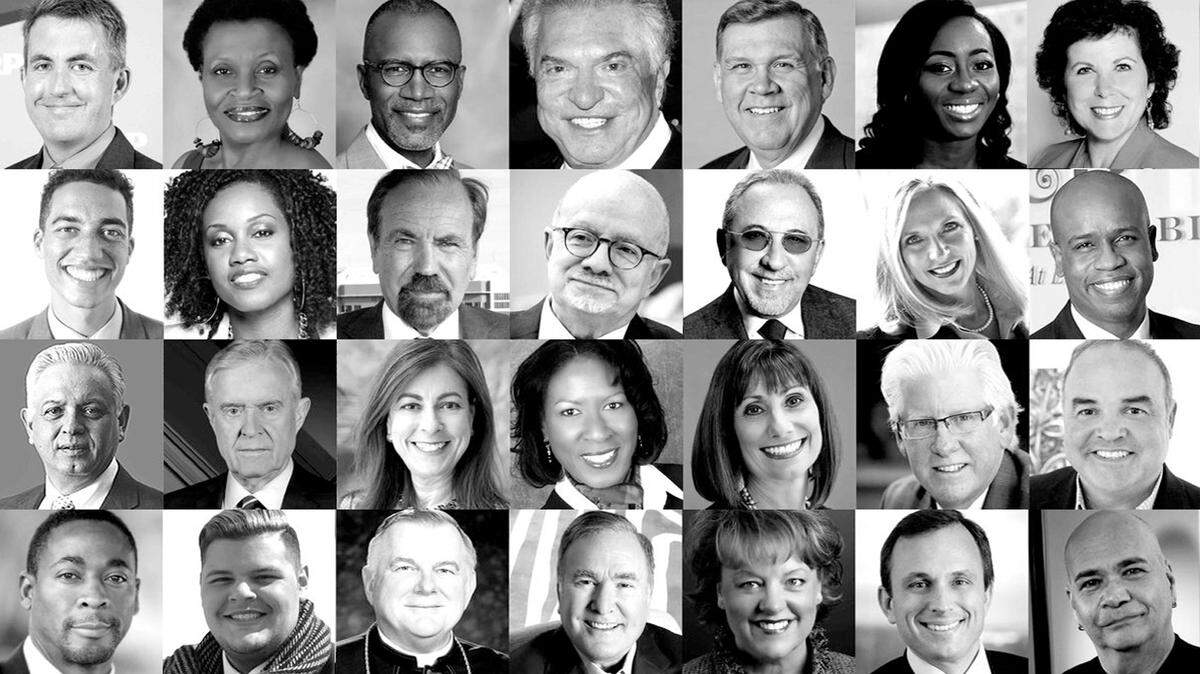
This election year, the Miami Herald, the Bradenton Herald and El Nuevo Herald are driving a conversation on the important issues facing our state. We’ve assembled a panel of 50 influential Floridians to offer their views.
Expand All
.jpg)
Raising salaries for the tens of thousands of K-12 public school teachers across Florida is the most pressing education issue political candidates running for office in 2018 should focus on.
That’s according to the latest survey of the Florida Influencers — a group of 50 of the state’s leading voices in the political, business, academic and faith communities. Asked by the Miami Herald, Bradenton Herald and el Nuevo Herald to rank six education issues by order of importance, nearly six-in-10 of the Influencers put improving teacher pay at the top, while another quarter of respondents rated it second.
The Influencers argued higher salaries would encourage more people to become teachers and current teachers to remain in the field, resulting in better outcomes for Florida students.
“For too long, our state has occupied the bottom of the table in prioritizing the importance of this profession,” said Marlon Hill, a partner at the law firm Hamilton, Miller & Birthisel. “Like any other company or organization, your first goal as a leader is to take care of your employees through a starting salary reflective [of] their value, investments in their professional development, and creating an employment environment that nurtures innovation, creativity and a quality of life.”
According to the National Center for Education Statistics, the salary for the average public school teacher in Florida in 2016-2017 was around $49,000, nearly $10,000 below the the national average.
Ahead of the 2018 elections, the Florida Education Association is pushing candidates for state office to pledge to boost teacher salaries to the national average over the next five years. So far, 20 Democrats have signed on, including four who are running for governor. Last week, the Miami-Dade County School Board voted in favor of developing language for a referendum on the November ballot that would raise property taxes to fund teacher salary increases. And Manatee County voters approved a similar measure in March.
The Influencers, who ranked economic inequality and education as the most important issues facing Florida this campaign season, offered some some additional solutions.
State College of Florida president Carol Probstfeld suggested that installing a year-round school schedule could provide teachers with a more consistent salary. Mike Fernandez, the chairman of MBF Healthcare Partners, floated the idea of making a portion of the teachers’ salary incentive-based. And Bill Talbert, the president of the Greater Miami Convention and Visitors Bureau, said public-private partnerships could help generate new sources of revenue.
“A broader use of technology, combined with greater engagement from private sector businesses … can help identify solutions for further cost savings and new sources of funding,” Talbert said.
Aside from teacher pay, 17 percent of the Influencers surveyed said reducing class size was the top education concern in Florida. The issues of charter schools and standardized tests only took a combined 12 percent of the first-place votes.
Readers, however, had a different view. Of those who participated via the “Your Voice” online tool, 33 percent said improving school safety was the most important education issue, while 31 percent pointed to teacher pay. Just 14 percent of Influencers chose school safety as their top concern.
Notably, there was split among Florida readers. Among el Nuevo Herald readers, 45 percent said safety was their foremost education-related concern, compared to 23 percent who said teacher pay. However, among Miami Herald and Bradenton Herald readers, 43 percent said teacher pay was their top education priority, while just 13 percent said school safety.
“Both issues must be prioritized by the legislature,” said Miami Dade College president Eduardo Padrón. “Elected officials must acknowledge the inarguable link between high-quality education and teacher pay, and must also focus on establishing safety measures that ensure our schools are places where students feel safe, supported and motivated.”
In the wake of the mass shooting at Marjory Stoneman Douglas High School in Parkland earlier this year, the debate has focused on policies like gun control and placing resource officers in schools. Beyond that, Ken Lawson, the president and CEO of Visit Florida, said ensuring students feel like they are part of the local community will help keep schools safe.
“Further developing the social compact connection could help these children feel part of something greater than themselves and not engage in violence,” Lawson said.
Throughout the election cycle, The Influencers Series will track how well the Influencers think candidates running for office throughout Florida are focusing on policy issues important to voters. This week, about one-third of the Influencers said the candidates were addressing the issues “somewhat well” (up from 20 percent two weeks ago), while 28 percent said it was “too early to say” (down from 37 percent).
Twenty-six percent said the candidates were addressing issues “slightly well,” 9 percent said “not at all” well and 5 percent said fairly well. As was the case with the last survey, none of the Influencers thought the candidates were doing “very well” discussing the most pressing policy issues facing the state. The Florida primaries take place August 28.
This is the second of a series of surveys the Miami Herald will conduct with 50 Influencers through the November elections to help focus media and candidate discussion around the policy issues of most importance to Floridians. Look for the next report in two weeks when Influencers will talk about solutions to Florida’s infrastructure problems. Share your thoughts and questions about the state’s important policy challenges and solutions here.
For more reaction from our Influencers on education issues, look for their quotes on Wednesday’s Opinion page.
George Haj contributed reporting.
This story was originally published July 2, 2018 at 5:00 AM.