‘A resource desert.’ Democrats running for Florida House tackle overlooked District 117
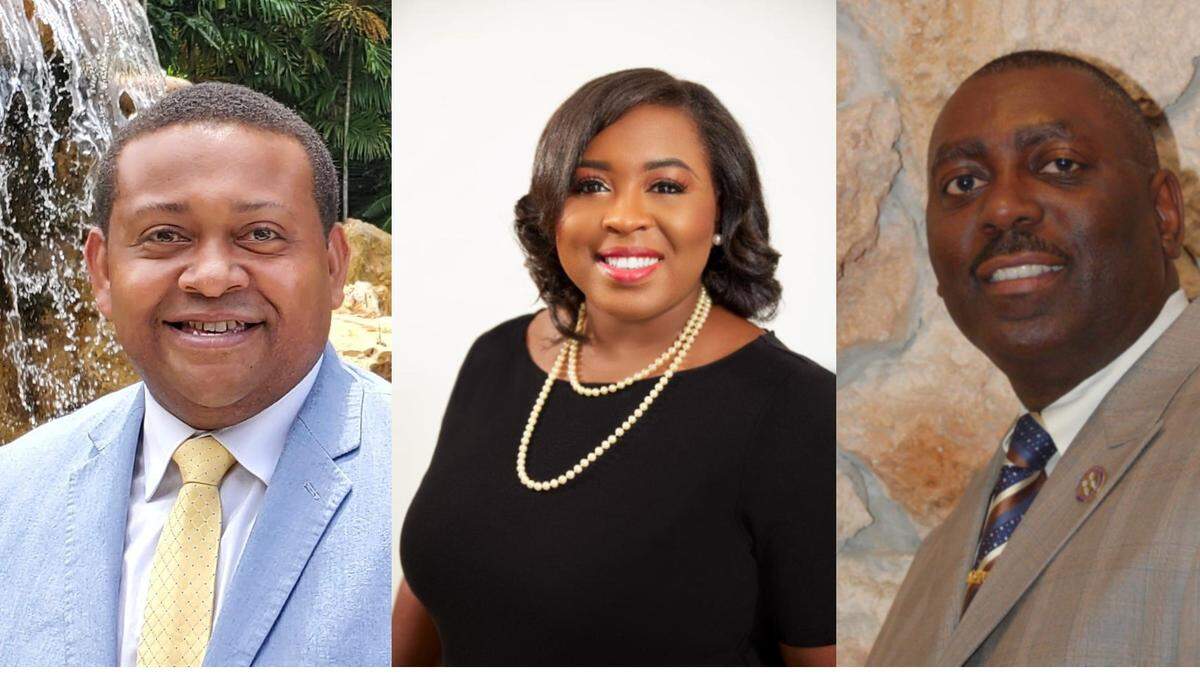
Three Democrats are running to represent Florida’s House District 117, an open South Miami-Dade County seat with no Republicans in the race that will be decided in the Aug. 18 primary.
An entrepreneur, an educator and a former political aide are vying to replace House Minority Leader Kionne McGhee in the majority-Black district that includes parts of Naranja, Goulds, Richmond Heights, Homestead and Florida City.
McGhee, a Democrat who has held the seat since redistricting in 2012 — the once-a-decade political process of redrawing legislative districts — ran unopposed in 2016 and 2018. He’s now running for Miami-Dade County Commissioner in District 9, which overlaps with parts of House District 117.
All three candidates — Kevin Chambliss, Harold Ford and Jessica Laguerre Hylton —agreed in interviews that the district has been overlooked by county and state officials when it comes to infrastructure and economic development. They also agreed on the importance of addressing criminal justice reform and tackling missed opportunities to curb community spread during the coronavirus pandemic.
Where they differ, though, is how they think they can fix the issues that come from HD 117’s stretched-out geography in southern Miami-Dade, which includes parts of Miami-Dade Ccounty’s poorest ZIP code, one of the state’s hardest hit areas for COVID-19.
To Chambliss, the area amounts to a “resource desert,” and has been “overhoused and underdeveloped.” To really get access to the kinds of lifestyle in the rest of the county, residents have to drive somewhere else.
He said he believes this is partly because housing developers have gotten priority over businesses and industries that could bring better paying jobs to this region of Miami-Dade.
“What started happening in the last decade is a lot of jobs came … but they were minimum wage jobs,” the former government aide said. “I literally had an elected official tell me, ‘Yeah, I’m bringing all of these jobs. … It’s a good second job to somebody.’ “
Originally from Mississippi, Chambliss, 39, has worked for a bipartisan mix of members of Congress, including Joe Garcia, Carlos Curbelo, Donna Shalala and Debbie Mucarsel-Powell. He’s lived in the district for the past decade, serving as a community liaison on issues ranging from gun violence to agriculture.
“I was the first person they talked to. When they told their story or whatever their issue was, I heard it,” said Chambliss, who started out as a field organizer for Garcia in South Miami-Dade.
For Laguerre Hylton, born and raised in Richmond Heights, crime and gentrification are equally urgent issues that stem from sporadic development.
“We have ridiculous crime rates in Florida City,” said Laguerre Hylton, 31. “But what people don’t [see] is that we have gentrification crime rate. We have a crime rate that is as a result of being pushed out of Coconut Grove, being pushed out of Liberty City, being pushed out of Overtown. … Nobody addressed any of those things.”
A former teacher and president of Princess Training, a nonprofit organization she founded that mentors young Black girls and lets them form their own businesses, she said she had to push herself to run for office.
“I have always been one of those behind the scenes, that I don’t need to be up front to lead, that I just support whoever’s in office,” said Laguerre Hylton. “But it wasn’t working.”
She said she has not seen South Miami-Dade flourish as much as she would like. Home to three of Miami-Dade’s historically Black neighborhoods, the district’s rates of Black homeownership are still lagging, Laguerre Hylton said.
Laguerre Hylton, who would be the first Black woman to represent 117 if elected, says she supports “responsible development,” which she said would include legislation to battle gentrification and encourage local entrepreneurship.
The third candidate in the race for District 117, Ford, is also focused on bringing business opportunities to the county’s southern end.
“There’s been a number of opportunities that we’ve lost because our focus is primarily just housing and not focusing really putting those things in the economic engine,” said Ford, 53. “A lot of these issues haven’t changed. We still have the same issue with transportation and the busway.”
A minister, special needs educator and a community activist with the NAACP’s South Miami-Dade branch, Ford has lived in the district most of his life and is running for the state House post for a second time, after an unsuccessful primary bid in 2012. He said he’ll focus on criminal justice reform, job creation and improving the quality of distance learning, among other issues.
Like Laguerre Hylton, he said he believes schools should not restart in the fall as long as Florida’s COVID-19 cases continue to climb. He’d also like to see better accountability and oversight over the federal Payment Protection Program, so that small businesses get priority.
“How do you have CEOs who get millions of dollars a year but they have nothing reserved?” Ford said. “They have investors. The taxpayers should not be their investment company.”
All the candidates agreed that the state had missed important opportunities to reverse the pandemic’s spread, including mandating masks.
Laguerre Hylton said she believed that the county should be more lenient toward businesses who want to use sidewalk space to keep their businesses open. Ford said he believes representatives should find ways to help businesses that can offer work-from-home options.
Chambliss said he believes the state should have prioritized testing early on to develop better contact tracing.
But even in the midst of a pandemic, he said, the other issues — such as crime — don’t go away.
“When COVID first hit, the City of Miami was bragging that ‘Oh, we went the whole week without any violent murders.’ We were having shootings every other night in south Dade at the same time,” Chambliss said. “Nobody knew about it.”