DeSantis sidelines longtime ally after UF feud to appease top donor
With his final year in office ticking away and no clear offramp in sight, Gov. Ron DeSantis this past week made a revealing decision: backing one of his top donors in a proxy battle with one of his earliest political allies.
Rather than reappointing former House Speaker Jose Oliva to another term on the State University System of Florida’s Board of Governors, DeSantis cut him loose — ending the tenure of a Miami Republican who had been one of the first champions of the governor’s conservative overhaul of higher education.
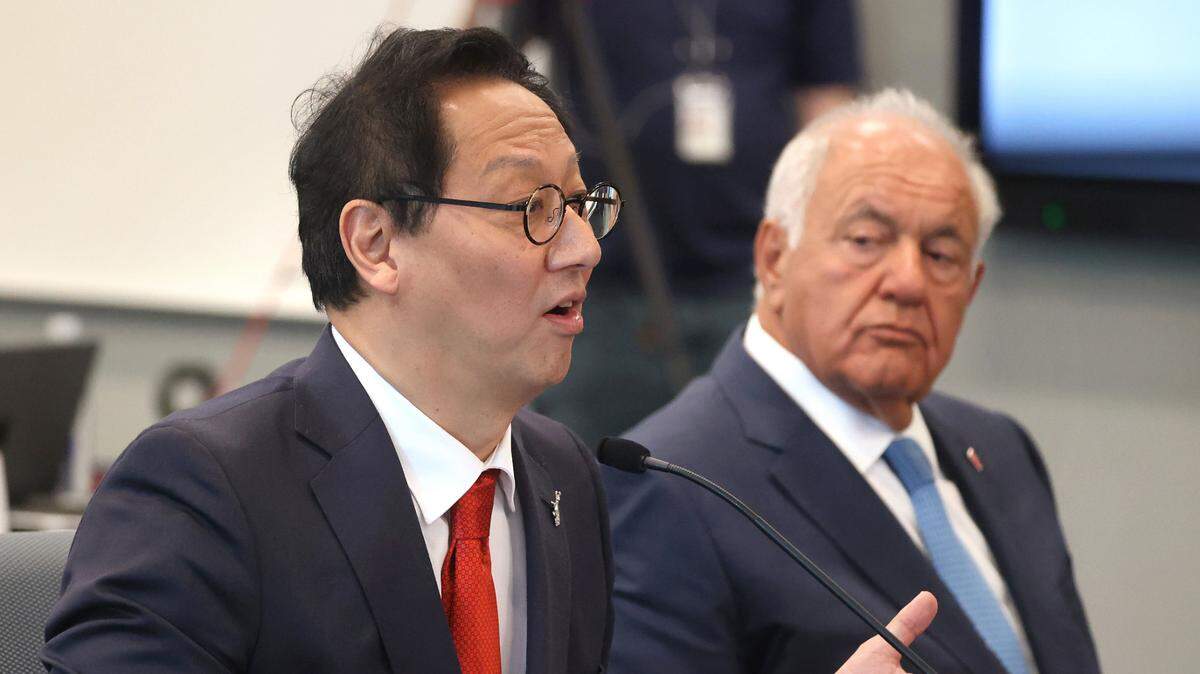
Oliva’s term expired on Jan. 6, and he wanted to stay on the board, according to four state officials familiar with his thinking. But his very public clash with Mori Hosseini — a wealthy Ormond Beach homebuilder, prolific DeSantis donor and the chairman of University of Florida’s Board of Trustees — turned Oliva from one of the governor’s staunchest supporters into a political liability.
The decision underscores how much DeSantis needs Hosseini, a GOP heavyweight who has long supported two things: the governor’s career and UF, the state’s most prestigious academic institution and a pillar of the two mens’ envisioned legacies. Hosseini, who has chaired UF’s board since 2018, is widely viewed by Florida Republicans as the most influential figure at the university — a man some describe as its de facto president.
That influence collided with politics last summer during the bruising fight over UF’s presidency.
Hosseini’s handpicked candidate, Santa Ono, drew furious conservative backlash over his past support for diversity, equity and inclusion when he led University of Michigan, despite efforts to recast himself as a break from left-wing orthodoxy. Oliva and a majority of the university system’s board ultimately blocked the hire — a rebuke that enraged Hosseini and splintered Florida’s conservative higher-ed establishment.
After the dust-up, the chairman wanted Oliva — along with other Ono opponents — gone in return, and DeSantis acquiesced, according to seven state officials and UF administrators. The governor persuaded Hosseini to remain atop UF’s board, the sources said, offering assurances that system-level board members who opposed his nominee would be sidelined from leadership.
Details about Hosseini and DeSantis’ conversation were first reported by The Chronicle of Higher Education. Hosseini, the governor’s office and a UF spokesperson did not respond to questions about DeSantis’ recent board appointments and whether they had to do with fallout from the Ono vote.
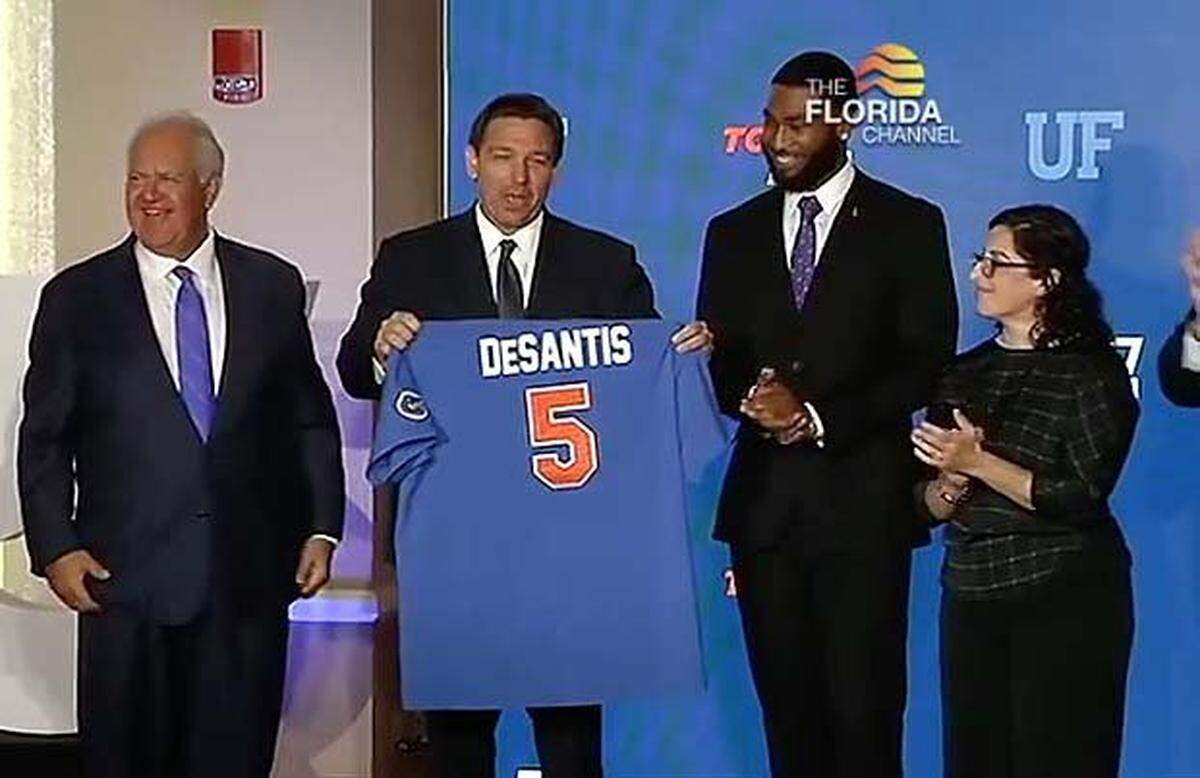
Republicans close to the matter told the Herald/Times that despite Hosseini’s desire for Ono to be voted in as president, DeSantis didn’t lobby board members on it one way or another, sending mixed signals as to what his true preference was.
The trouble came after Ono was defeated and Hosseini wanted revenge.
“I know Mori was ticked off at DeSantis,” said Pensacola state Rep. Alex Andrade, reflecting a common perception among colleagues in Tallahassee. “And it seems like DeSantis realized he still needed him in his corner.”
Given how close Oliva and DeSantis were seen to be, the move has reinforced a growing perception among Florida Republicans that the governor discards even the staunchest loyalists once they are no longer useful. Oliva is now viewed as the latest in a line of pushed-aside allies that includes current White House Chief of Staff Susie Wiles, Lt. Gov. Jay Collins and Paul Renner, another former House Speaker now running for governor.
Five GOP insiders familiar with DeSantis’ thinking said the governor was frustrated with what had become an unusually public and personal power struggle inside an appointed body that traditionally operates in harmony. DeSantis wanted a reset, the sources said — a slate of members who could cement his legacy upon Florida’s universities, align with new leadership and move past the Ono ordeal without reopening old wounds.
Complicating matters further, Oliva made one last stand against DeSantis before his term expired: nominating then-Vice Chairman Alan Levine to lead the Board of Governors, even as the governor was actively urging his appointees to reelect sitting Chairman Brian Lamb, who supported Ono. Levine, now chair with the board’s unanimous backing, had initially defended Ono publicly but ended up voting to block his confirmation.
Eight state officials and academic leaders familiar with the board’s thinking said opposition to Ono was fueled in part by concerns that he would be overly malleable — a leader inclined to defer to Hosseini’s rankings-driven agenda for UF. The episode deepened longstanding resentment among board members who chafe at Hosseini’s well-documented stranglehold over UF and his proximity to the governor.
A Republican consultant close to Oliva, David Custin, said, “Leaders of appointed bodies such as the Board of Governors serve at the pleasure of the governor. They do not serve at the pleasure of anyone else by proxy.”
How did Oliva feel about not being reappointed? “He didn’t shed a tear,” Custin said.

To Oliva’s allies and confidants, his ouster was the predictable consequence of refusing to bend.
Publicly, Oliva has expressed disappointment — but not bitterness — over the outcome. In a Jan. 13 social media post responding to questions about his loyalty to the governor, Oliva said, “My fealty has always been for conservative governing, not for personal benefit.” He said DeSantis “has governed as a conservative and so he has had and will have my support on when those ideals are aligned.”
People familiar with the situation told the Herald/Times Oliva was trying to tell DeSantis that he was still on his team, just not on Hosseini’s. Oliva declined the Herald/Times’ request to comment.
For DeSantis, the calculation was blunt. With his presidential bid behind him, his final legislative session getting off to a rocky start and no clear post-gubernatorial path taking shape, Hosseini offers DeSantis something few others still can: access, prestige and a soft landing beyond the governor’s mansion.
Oliva’s ouster was not the only rupture involving a former House speaker and Hosseini.
Paul Renner, another early DeSantis ally, resigned from the Board of Governors earlier this month.
DeSantis had appointed Renner to the board in January 2025, shortly after Hosseini rejected Renner’s interest in the UF presidency, souring their relationship. Renner later played a central role in opposing Hosseini’s pick — Ono — compiling research and aggressively questioning the candidate when the Board of Governors considered his confirmation.
Renner informed DeSantis weeks later that he planned to run for governor. DeSantis has opposed the bid, saying a few hours after Renner’s announcement that his decision was “ill-advised.”
Renner resigned from the Board of Governors on Jan. 8, following a meeting with the governor. In a statement, Renner said his decision to leave the board was related to his campaign to succeed DeSantis, which he said would have required him to step down once he qualified in June to run for the position. Renner said he resigned months prior to the qualifying deadline to give the Senate time to confirm DeSantis’ replacement pick.
“My meeting with the Governor was simply a matter of courtesy,” Renner said. “Given the trust he placed in me with this appointment and our shared work on the future of higher education, resigning by email alone would have been too impersonal.”
On Wednesday, DeSantis credited Renner with passing “meaningful reforms,” but said he still had to make the case for becoming Florida’s new governor.
This story was originally published January 17, 2026 at 11:57 AM.