The Epstein files: What is public, and what is still secret?
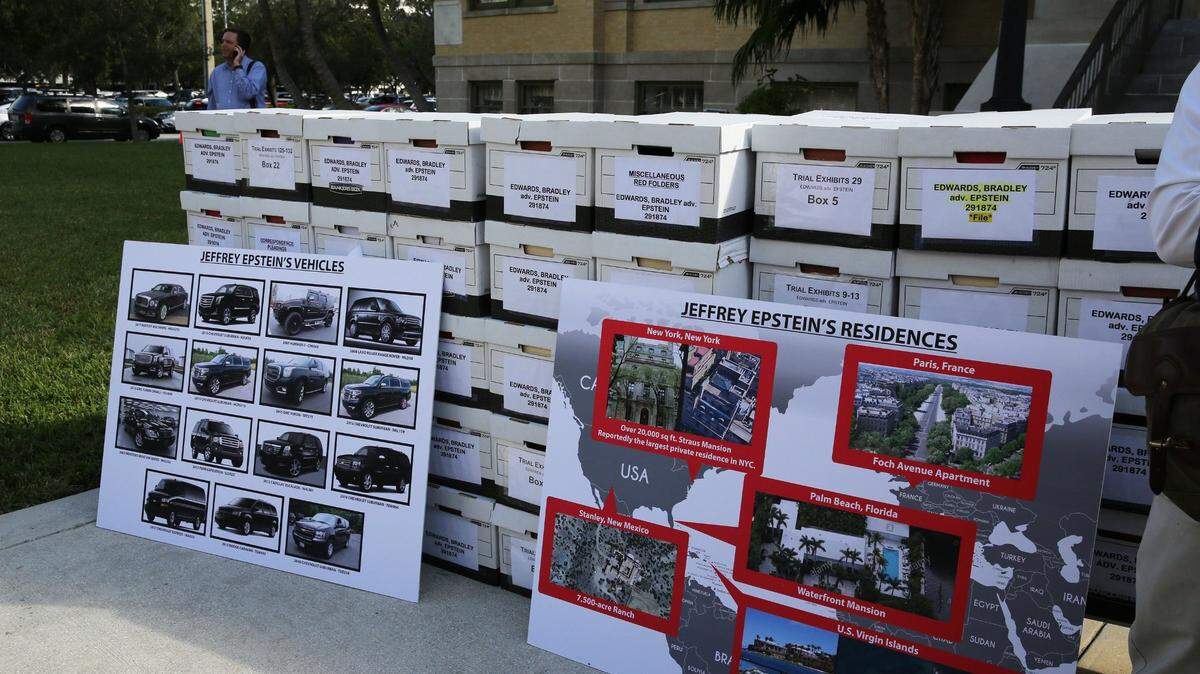
Opening up two decades of government files related to sex trafficker Jeffrey Epstein isn’t going to be as simple as inserting them into three-ring binders or putting them on the internet.
After hyping the release of Epstein documents as “breaking news” on Fox News, U.S. Attorney General Pam Bondi on Thursday distributed binders filled with material to a group of conservative social media pundits. But the big reveal, designed to promote President Donald Trump’s new culture of transparency, fell flat.
When the group opened the binders, they discovered 200 pages of dated material, most of which had long ago been made public. To make matters worse, some of the material was overly redacted — the same material had already been available on the internet in unredacted form.
Bondi, a former prosecutor and Florida attorney general, said she had been misled by the FBI into believing she had all the documents. She then accused federal agents of withholding thousands of pages, and ordered the agency to turn over the rest by Friday morning. But the 8 a.m. deadline came and went without any word on the files.
FBI sources told the Miami Herald Friday that they worried releasing the documents without a careful review — one that would likely take weeks or months — would jeopardize the hard-won 2021 conviction of Epstein accomplice Ghislaine Maxwell. Maxwell is appealing her conviction and 20-year sentence for child sex trafficking.
Sources also said that the files are voluminous. There are 22 files containing over 500 pages in the FBI vault, a portal on the FBI’s website accessible to the public. The bulk of those 11,000-plus pages are heavily redacted, and Justice Department prosecutors have fought their release for years. While Bondi pointed fingers at the FBI in New York, many more files exist in other jurisdictions. One critical source of evidence against Epstein was in the discovery for a Florida civil case brought by Epstein’s victims against the FBI in 2008. That case spanned a decade and included tens of thousands of pages of material that sheds light on how federal prosecutors mishandled that early case. Not all the FBI documents connected to that case — or the federal criminal case — in Florida have been made public.
“Going through those files would be an enormous, enormous effort. They contain the names of victims, witnesses and other personal information,” said Paul Pelletier, a former federal prosecutor now in private practice. “There was tons of discovery in the New York case alone. There’s no prosecutor in their right mind who would be able to corral all the evidence in the Epstein case over 20 years in a week and be able to release it carefully and accurately.”
Dan Novack, a New York-based media attorney for the website Radar Online, has been fighting the Justice Department for eight years to unredact the FBI’s Vault files. Eight years ago, government lawyers argued the redactions were necessary to protect Epstein’s privacy. But after his death in 2019, they now argue that making the documents public would give Maxwell more ammunition for her appeal.
Epstein, who had homes around the country, sexually abused girls and young women as far back as 1993. In 2005, he was accused of luring high school girls, some as young as 14, to his Palm Beach mansion to give him massages and instead sexually assaulted them. A multimillionaire, Epstein managed to hire a dream team of lawyers who successfully pressured the Justice Department to give him a soft plea deal in 2008. He served 13 months in the county jail and was released to prey on other victims.
He was rearrested by the U.S. Attorney for the Southern District of New York in 2019. He died awaiting trial on new sex trafficking charges. His death was ruled a suicide. The cover-up of his crimes and the lack of accountability has fueled conspiracy theories for years, leading to calls for transparency — and the release of long sealed files.
“It’s outrageous. As they say, justice delayed is justice denied. The public should see these records to see who failed them,” Novack said. “How are we supposed to avoid mistakes like this if we can’t learn from the past?”
Novack and others who have followed the case for years don’t expect the files to contain illicit secrets or the names of Epstein’s clients. But they do suspect it could reveal why the FBI and Department of Justice failed to prosecute Epstein to begin with — and later, why they continued to let him travel on his private plane without monitoring, even though he was a convicted sex offender.
So where are the files and what do they contain? What has already been made public and what remains sealed?
READ THE MIAMI HERALD SERIES: PERVERSION OF JUSTICE
What we already know:
▪ Epstein’s state prosecution: Files related to the Palm Beach police and Palm Beach state attorney’s investigation into Epstein are public and available on the Palm Beach State Attorney’s Office website: https://sa15.org/public-records/
▪ Epstein’s contact list: Often referred to as Epstein’s “Black Book,” this list has inaccurately been described as a “client list” when in fact it is actually a phone directory.
It features contacts for a number of wealthy and famous people, like Donald Trump and Prince Andrew, while others on the list claim they never met Epstein. Ghislaine Maxwell compiled, updated, copied and distributed countless versions of the directory for use by Epstein and members of his household, as it also includes contacts for landscapers, Epstein’s doctors and numbers for local hospitals and restaurants. The list was first published in 2015 by the website Gawker with phone numbers redacted. It has since been published hundreds of times, and versions of it sometimes come up for auction on Ebay.
▪ Epstein’s flight logs: Epstein pilots kept flight logs for several planes Epstein owned over the years.
Some of the logs were turned over as part of discovery in an early civil lawsuit filed against Epstein by one of his victims. Additional logs by the same pilot were also part of the case prosecutors built in 2020 against Maxwell. But the logs are difficult to decipher in some places and passengers are often listed by their initials or by first name. The recorded flight logs are all over the map, traversing the country as well as overseas; they are not just flights to his private island. At times the passengers included families and their children. This isolated portion of Epstein’s flight logs has been published multiple times, and there’s no indication there are others that have been kept secret.
What is still secret?
▪ Epstein’s computers, part 1: When Palm Beach police executed a search at Epstein’s Palm Beach home in 2005, they found wires dangling from computer monitors indicating that some of them had been removed in advance of police. Those that remained contained no information of value to the case. It was later learned that Epstein’s lawyers had possession of his computers. While they are mentioned in federal documents, there is no indication that the FBI was ever able to get their hands on them. All the items, including photos, videos and computers, seized during the 2005 search were returned to Epstein after he pleaded guilty to minor sex charges in 2008.
▪ Epstein’s computers, part 2: FBI agents raided Epstein’s Manhattan mansion in 2019 and seized computers, but it is still not known what was contained on the devices — or even if the FBI examined them. A search was also conducted of Epstein US Virgin Islands property, but it occurred weeks after his arrest. Sources on the island told the Herald in 2019 that Epstein’s employees removed boxes of computers and video equipment before the FBI search was conducted.
▪ The FBI’s Vault: The FBI releases files on it’s website in a portal it calls its “vault.” As a result of litigation by the website Radar Online, the FBI released tens of thousands of pages from 2007 to 2008. However the bulk of those documents have been blacked out. The lawyers for Radar online are still litigating the redactions, and the case now is being reviewed by New York’s Second Circuit Court of Appeals.
▪ The Ghislaine Maxwell Prosecution: Handled by prosecutors with the Southern District of New York, the case files are thought to include hundreds of pages of evidence. Thus far, the FBI and SDNY have denied the Herald’s and other media outlets’ FOIA requests for the material.
▪ Video cameras: Epstein kept video cameras in most of his residences. Contrary to rumors, Epstein’s brother claims these cameras were used solely for security purposes — not to spy on people. However, several of Epstein’s victims claimed that Epstein filmed sexual encounters to use as blackmail against famous figures. No one, however, has actually said they’ve seen any videos.
▪ The “Client List”: There is no evidence that Epstein kept a client list. None of his employees, his victims or people in his orbit have mentioned a list of people who were involved in his sex trafficking operation.
▪ U.S. Marshals Service records: Federal marshals were charged with inspecting Epstein’s plane when it arrived from overseas. A special form was used to record the names of his passengers upon arrival at airports in New York and the USVI. The Marshals service, which is under the umbrella of the Department of Homeland Security, released some of these forms pursuant to a FOIA request by the Herald in 2019, but other than Epstein’s name, the forms were completely redacted.
▪ FAA records: The Federal Aviation Administration keeps records of where planes fly. The FAA has released some, but not all, of the information it has on Epstein’s planes. Epstein owned several different planes during his lifetime and the records could help corroborate other evidence about Epstein’s personal and business exploits.
▪ The USVI evidence: the former attorney general for the U.S. Virgin Islands filed a civil racketeering lawsuit against Epstein’s estate after the financier’s death, alleging that he used his USVI business as a shell company to conduct his illegal activities, including child sex trafficking at his island home. The case was settled out of court and the evidence has never been made public.
▪ Federal Grand Jury evidence: At least two federal grand juries were convened over the years to hear Epstein testimony and/or evidence. Little is known about what was presented, as grand jury cases are held in secret.
▪ Epstein’s death investigation: Neither Epstein’s autopsy nor the report of the investigation into his death has ever been made public. Among the outstanding questions is: Were the inmates in the cells next to him or near him ever interviewed?
▪ Epstein’s finances and his business relationships: Many questions remain about how Epstein made his fortune. It’s not clear whether the FBI ever investigated Epstein’s banking and business affairs, particularly his dealings with other wealthy men who have been accused of having sex with some of his victims.
This story was originally published February 28, 2025 at 6:58 PM.