New species of dinosaur found in Argentina may be one of world’s oldest. See it
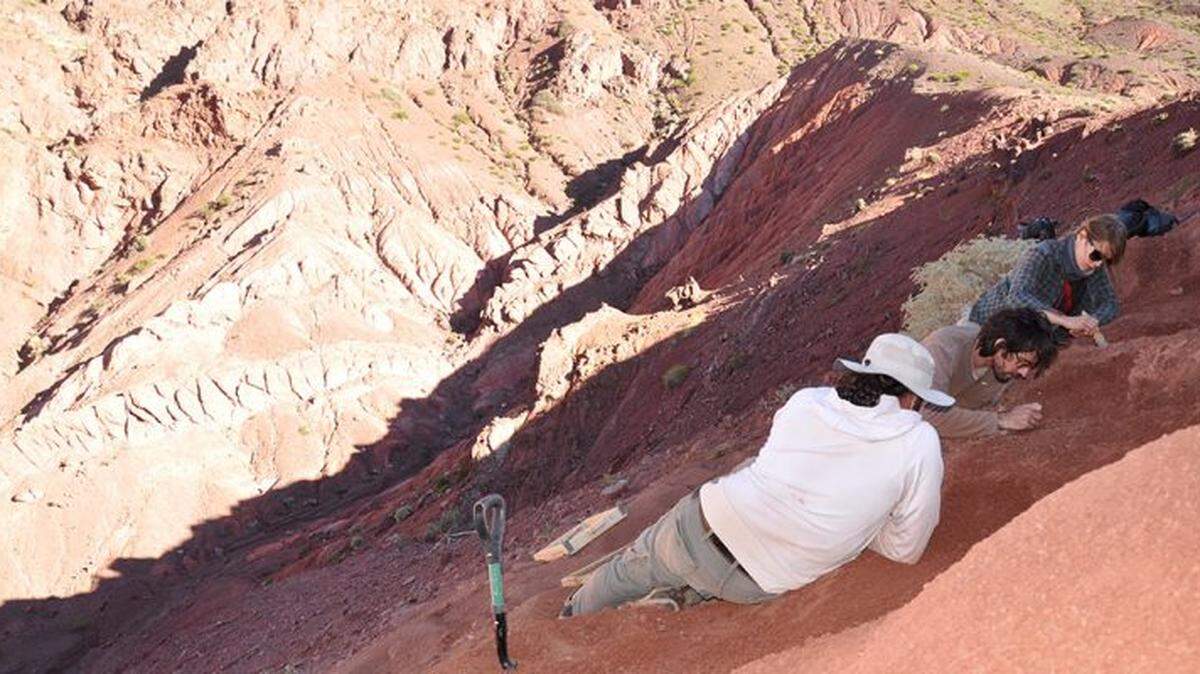
The Quebrada de Santo Domingo in Argentina is a harsh environment.
Situated high in the Andes, the area is nearly inhospitable with winds whipping through the mountains and temperatures plummeting.
But millions of years before it became the ravine seen today, it was a home for diverse life — including dinosaurs.
Paleontologists working in the Santo Domingo Ravine have now uncovered another dinosaur species new to science , and its exceptional age may make it one of the oldest dinosaurs ever found.
At about 9,800 feet above sea level, researchers found “the almost complete — and practically articulated — skeleton of a long-necked dinosaur that lived approximately 230 million years ago,” according to an Oct. 15 news release from the National Council for Scientific and Technical Research (CONICET).
The discovery was published Oct. 15 in the peer-reviewed scientific journal Nature.
“The team responsible for the discovery of (the new species) was also part of the first expeditions to this region in the west of La Rioja province, which until then remained virtually unexplored, and during which the presence of Triassic fossils began to be revealed,” CONICET said.
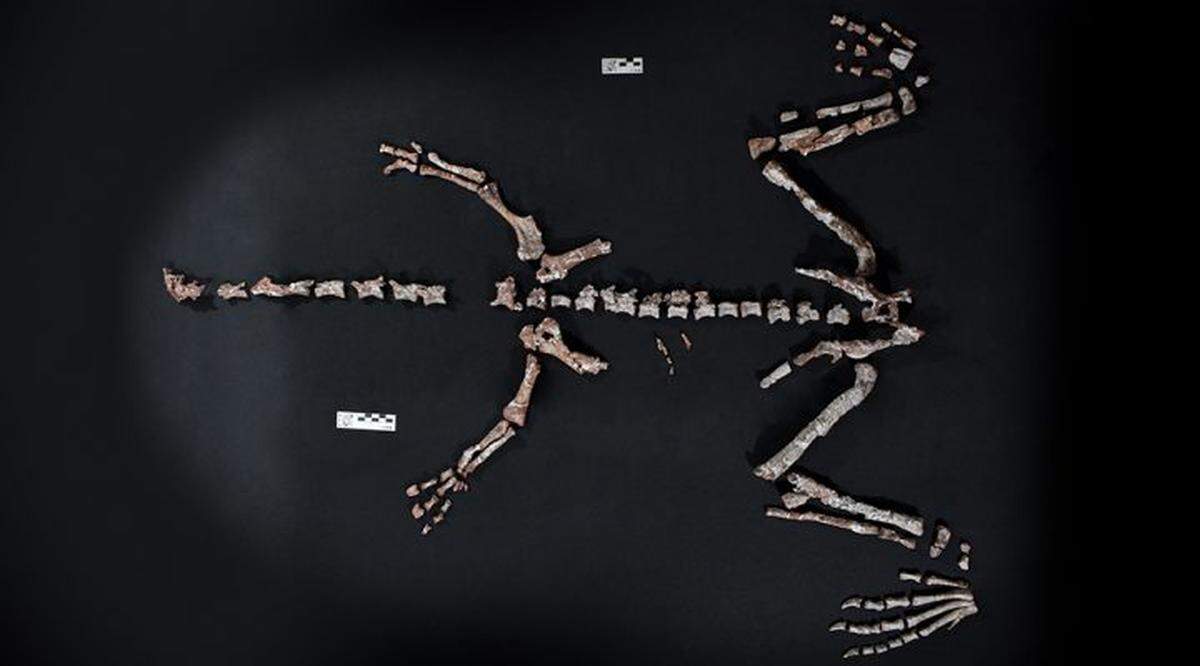
The fossils include a significant portion of the vertebrae as well as some bones from the front legs, back legs, hands and feet, according to the study.
“We estimate a length of approximately (6.5 feet) and about (40 pounds) for an adult individual, almost double that of other close relatives found in Argentina,” study author Malena Juarez said in the release.
The dinosaur was identified as a species of primitive sauropodomorph, a group of long-necked herbivorous dinosaurs.
“(The new species) is novel because it exhibits two key features: a considerably longer neck and a larger size than most of its contemporaries,” study author Martín Hechenleitner said in the release. “These aspects confirm a very early and synchronous appearance of both characteristics, which were fundamental to the evolutionary history of sauropodomorphs.”
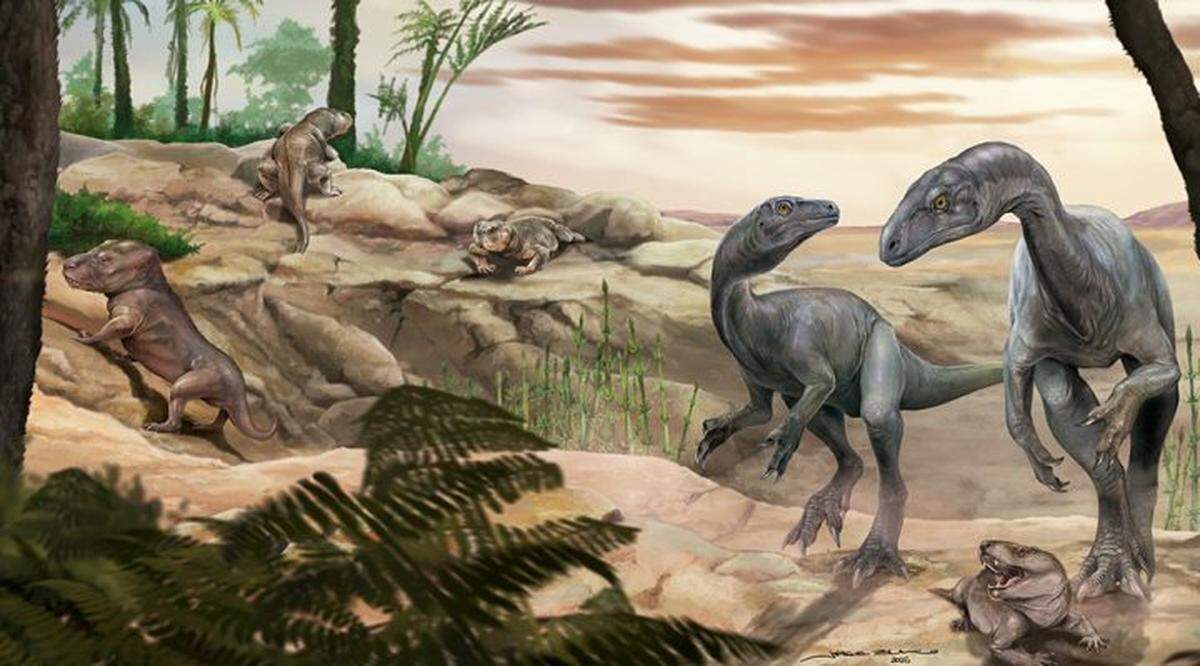
The new species was named Huayracursor jaguensis, representing both a new species as well as a new genus, or group of species with shared physical and evolutionary traits.
“Huayra” is the Quechua word for wind, and cursor means “runner” in Latin, according to the study. Jaguensis represents the Jagüé village, not far from where the fossil was found.
Together, the species is now known as the Jagüé windrunner.
“We estimate that Huayracursor must have been between 230 and 225 million years old, making it one of the oldest dinosaurs in the world,” study author Agustín Martinelli said in the release. “It’s rare in life that one can say that totally new sites have been discovered, with fauna that are extraordinary in their preservation and abundance.”
The dinosaur existed during the Late Triassic period, known for the first real appearances of dinosaurs and the early ancestors of mammals, CONICET said.
The Quebrada de Santo Domingo is in the La Rioja province of northwestern Argentina.
The research team includes Juarez, Hechenleitner, Martinelli, Sebastián Rocher, Lucas E. Fiorelli, Jeremías R. A. Taborda and Julia B. Desojo.