Pink-bellied creature — with camouflage — is new cave-dwelling species in China
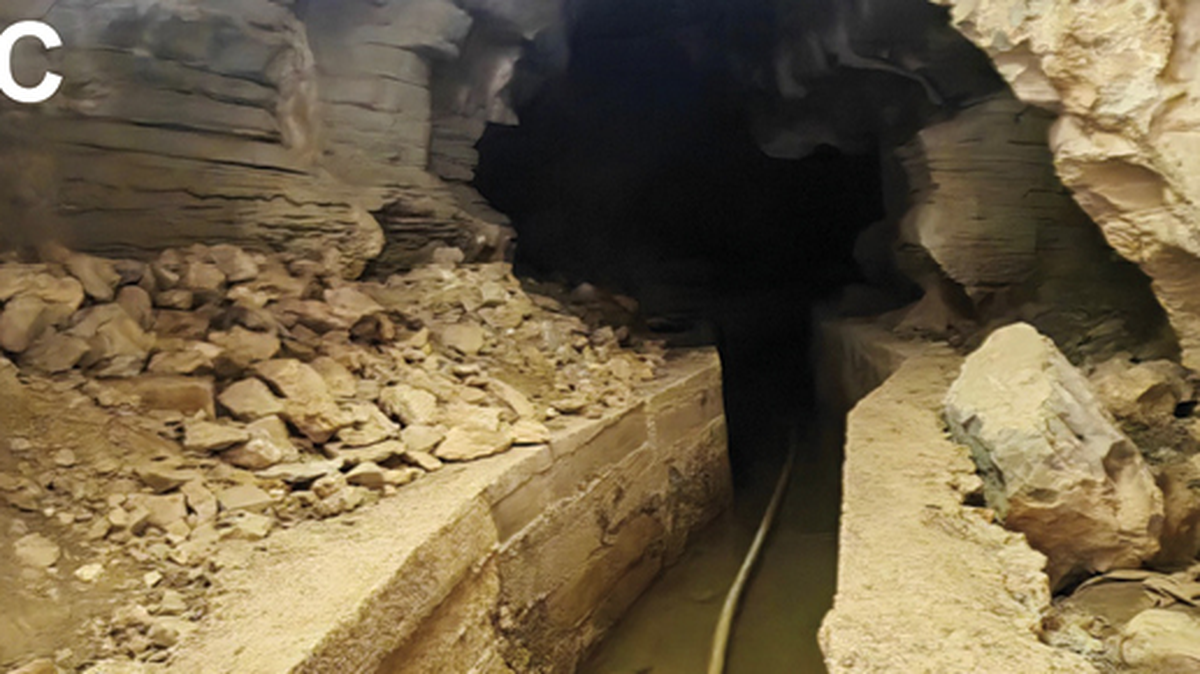
When rain falls in southern China, it creates crevices, caverns and caves in the soft rock landscape.
Karst formations, a porous rock, stick out as jagged protrusions in between lush forest and provide plenty of places for small creatures to hide.
In May, researchers studying cave diversity ventured into the karst plateaus in Xiuwen and Jinsha counties to look for undescribed animals, according to a study published Oct. 1 in the peer-reviewed journal Zoosystematics and Evolution.
As dusk fell, small frogs were found near the mouths of caves as water flowed from their rocky openings, researchers said.
The creatures belong to a species new to science.
The frogs are about 1.5 inches long from head to butt, and females are larger than the males, according to the study.
They have “slender” fingers ending with webbed back feet and thick toe pads.
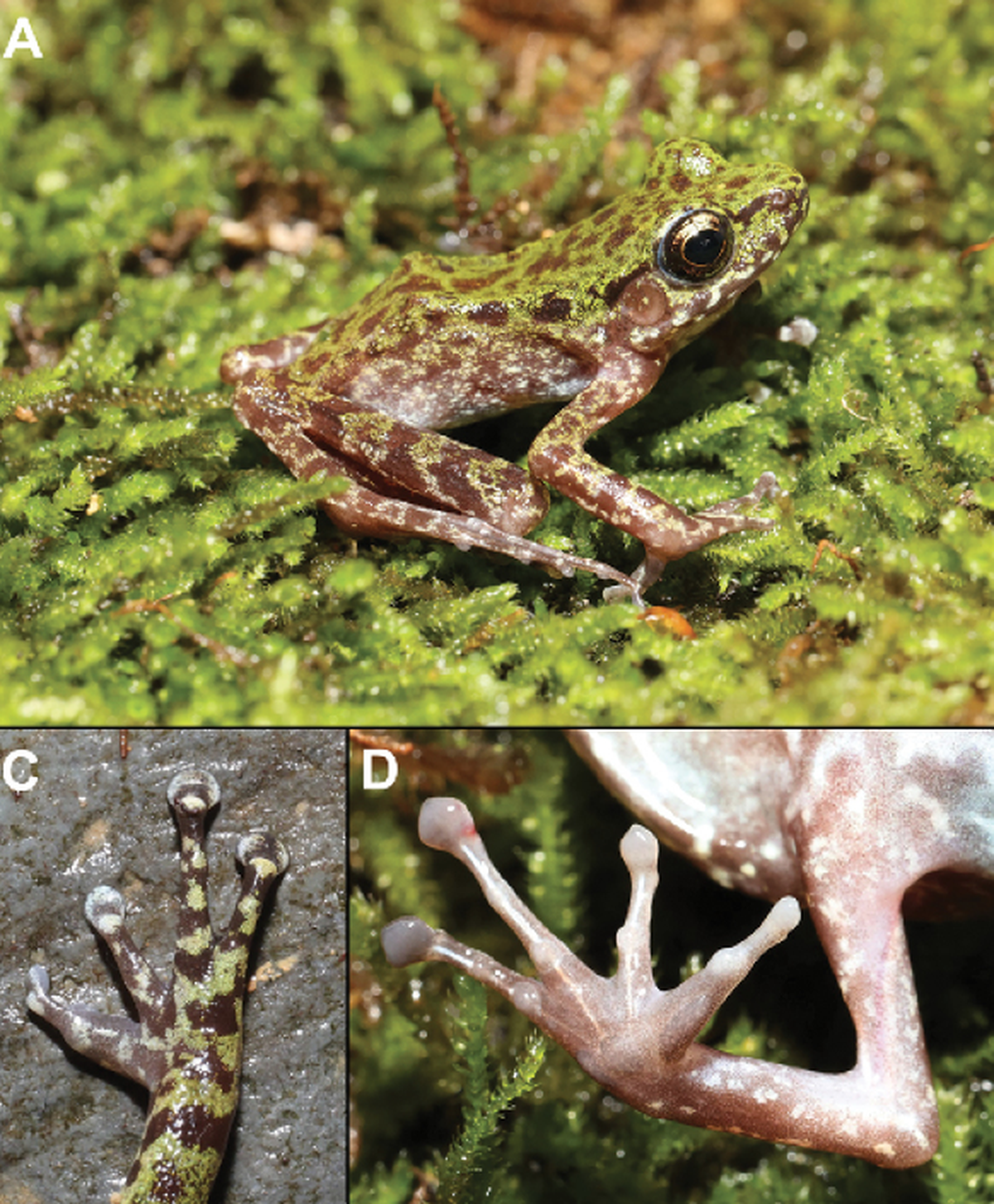
The head, back, legs and feet of the frog are “grass-green with irregular brown mottling,” researchers said. The frogs have black eyes with “golden speckles” and a whitish throat, chest and belly with “pink.”
The bottom of the limbs are also pink with brown bands on the upper skin, according to the study.
The frog’s features make it perfectly adapted to the karst caves.
“Dorsal green coloration with irregular brown mottling provides camouflage in moss-covered, dimly lit cave entrances; expanded digital discs enhance grip on wet limestone substrates; and fully webbed feet facilitate locomotion in aquatic cave channels,” researchers said.
The species was named Odorrana feii, or Fei’s odorous frog, according to the study.
Fei Lang was a “renowned Chinese herpetological taxonomist who made significant contributions to the study of the genus Odorrana,” researchers said.
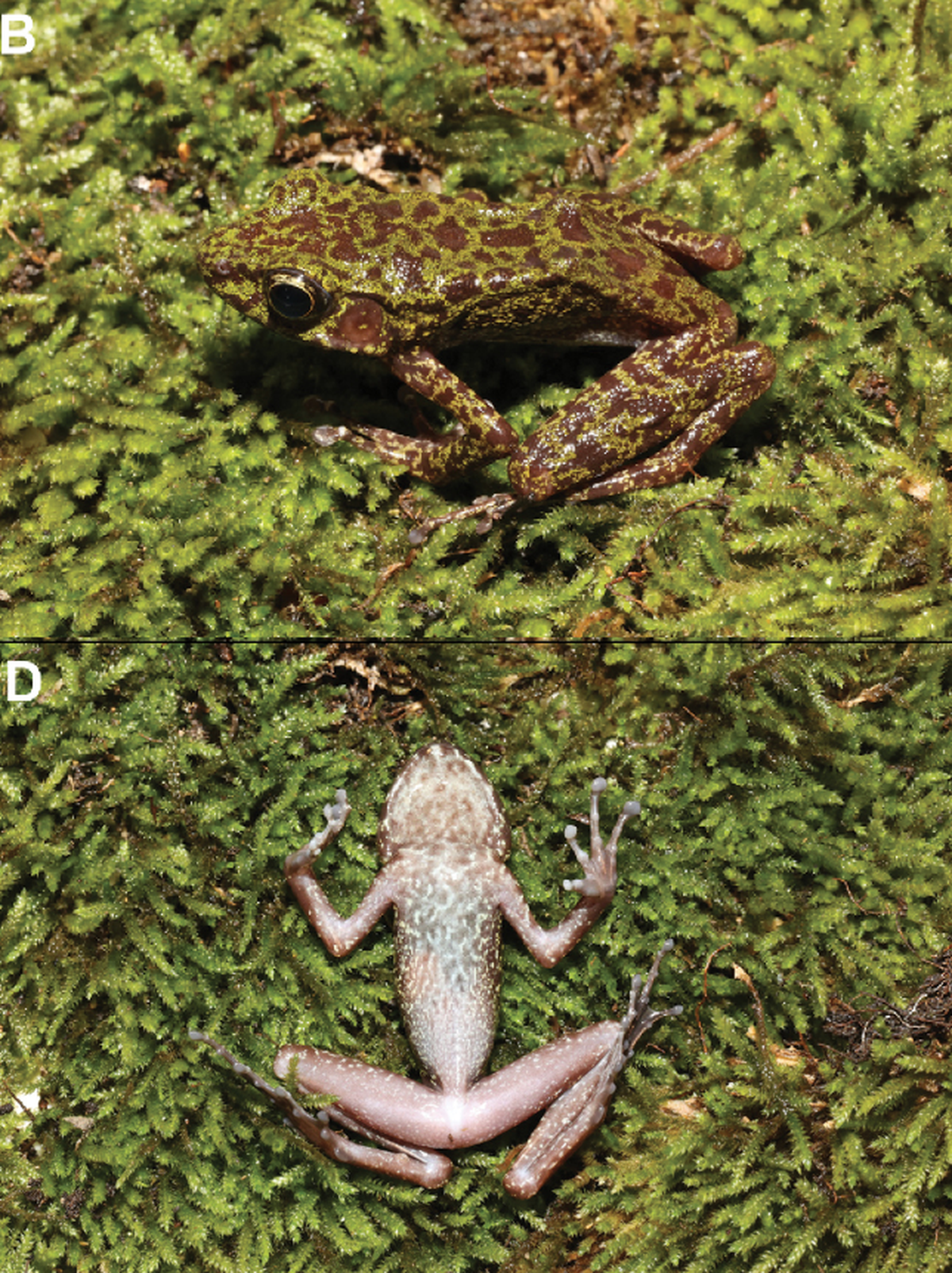
Males of the new species lack vocal sacs, an elastic skin pouch commonly used as amplifying chambers for mating calls, which may be a product of their environment, according to the study.
The frogs likely have “reduced reliance on acoustic communication” because they live in the “echoic cave environments,” where sound travels much easier, researchers said.
Two populations of Odorrana feii were found approximately 3 miles apart but separated by the large Yachi River, according to the study.
“It is therefore hypothesized that the species may be distributed throughout this region characterized by well-developed karst caves,” researchers said. “Both caves inhabited by the populations have water flowing out to the exterior. Individuals of this species are observed at the cave entrances at dusk.”
Xiuwen and Jinsha counties are in Guizhou province in south-central China.
The research team includes Shize Li, Lang Mu, Jiahao Jing, Jing Liu, Yanlin Cheng and Bin Wang.