‘Life-sized’ desert carvings may have been ancient ‘road signs’ to find water
Tens of thousands of years ago, there was water in the Nefud Desert of modern-day Saudi Arabia.
The pools were seasonal and scattered across the arid landscape, allowing humans that called the region home to expand their known distribution.
But in the middle of the sand dunes and rocks, how were these people supposed to tell oasis from mirage?
They left “road signs.”
In 2022, archaeologists discovered a rock art site with 18 “life-sized” engravings of desert animals such as camels and ibex on sandstone outcrops, according to a study published Sept. 30 in the peer-reviewed journal Nature Communications.
This discovery would lead researchers to a total of 176 engravings, including 130 reaching sizes rivaling real life, in three unexplored areas, according to a Sept. 30 news release from Griffith University.
The engravings were dated between 12,800 and 11,400 years old, a period that aligns with the geological record showing when “ephemeral, and probably seasonal, lakes” reappeared in the desert, according to the study.
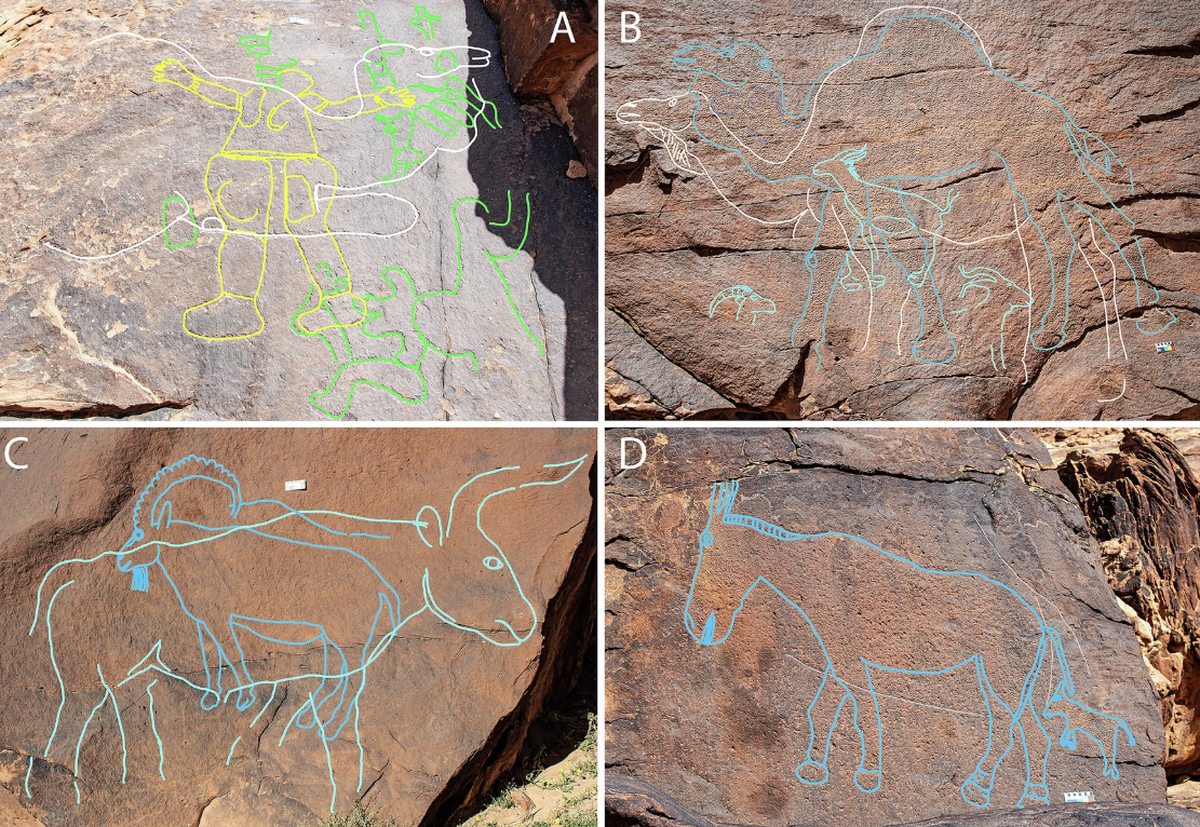
The engravings include 90 camels, 17 ibex (a wild mountain goat), 15 equids (an animal from the horse family), 7 gazelles and 1 aurochs (a now-extinct cow), according to the study.
“The depictions span multiple engraving phases, with images often overlapping on rock surfaces,” researchers said. “Sometimes this was done to update an existing representation or to depict a different animal species.”
There were four phases: two earlier phases depicting small figures of women or large human figures drawn from the front, and the later phases showing the depiction of animals that start more realistic before becoming more “cartoonish” over time, according to the study.
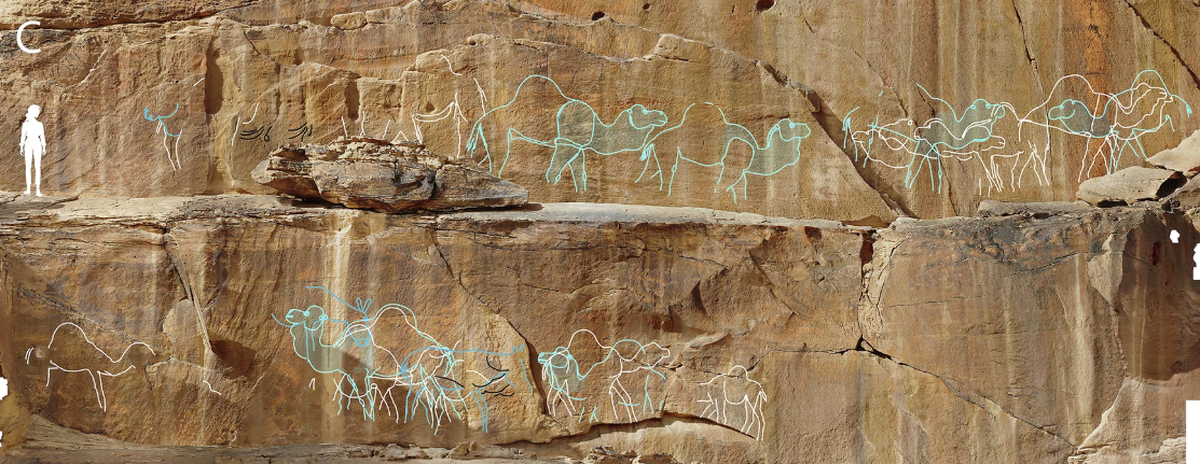
The rocks also had a “thick coating of dark rock varnish” that would have made the engravings stand out on the stone face, researchers said.
“The appearance of multiple life-sized animal engravings is impressive today. Freshly engraved against the varnish, the images would have had considerable visual impact. The durability of the images may have facilitated the remembrance of meaning and symbolism across generations of people using these sites,” researchers said. “The large naturalistic engravings, therefore, align with the definition of monumentality, which references great size and effort, but also longevity and remembrance within a community.”
But why were they created?
They likely weren’t just art but rather “statements of presence, access and cultural identity,” study author Maria Guagnin said in the release.
“The rock art marks water sources and movement routes, possibly signifying territorial rights and intergenerational memory,” study author Ceri Shipton said in the release.
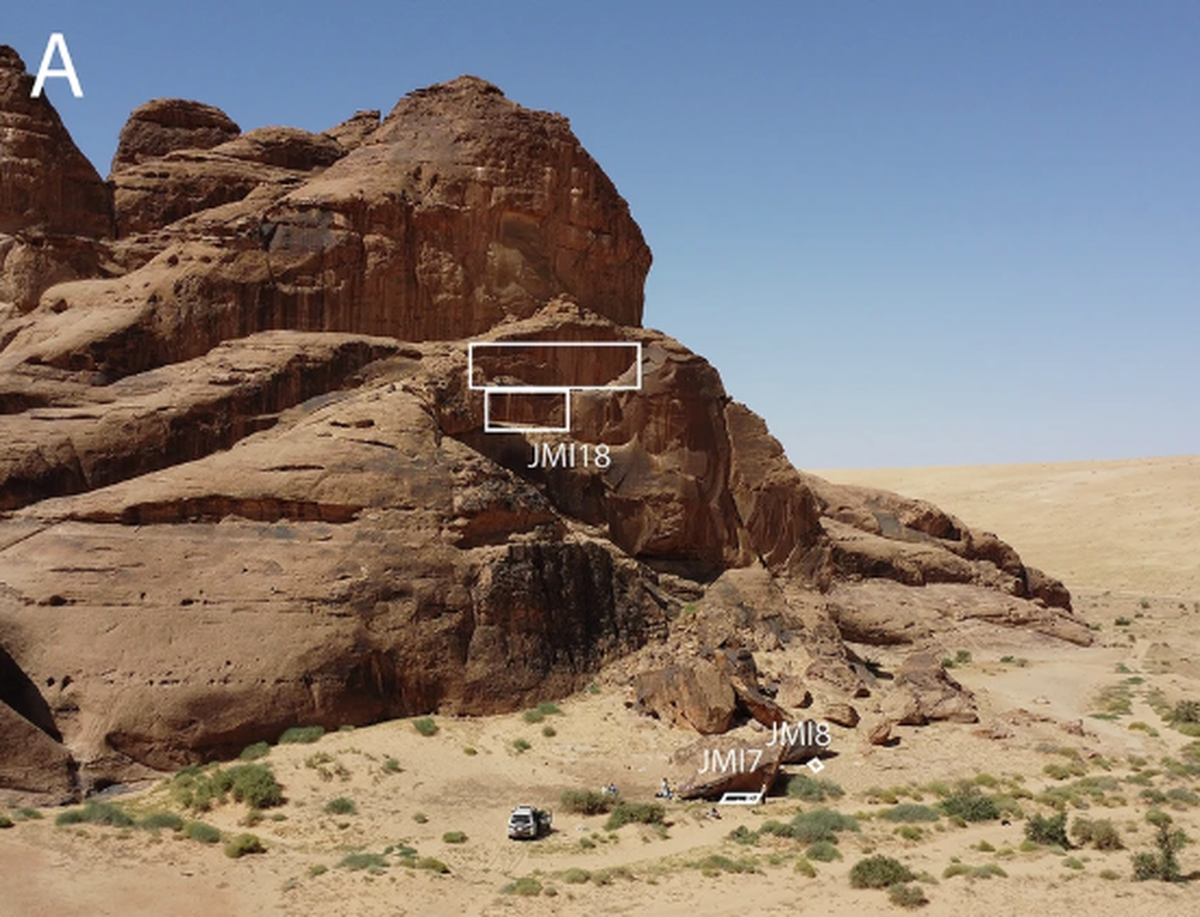
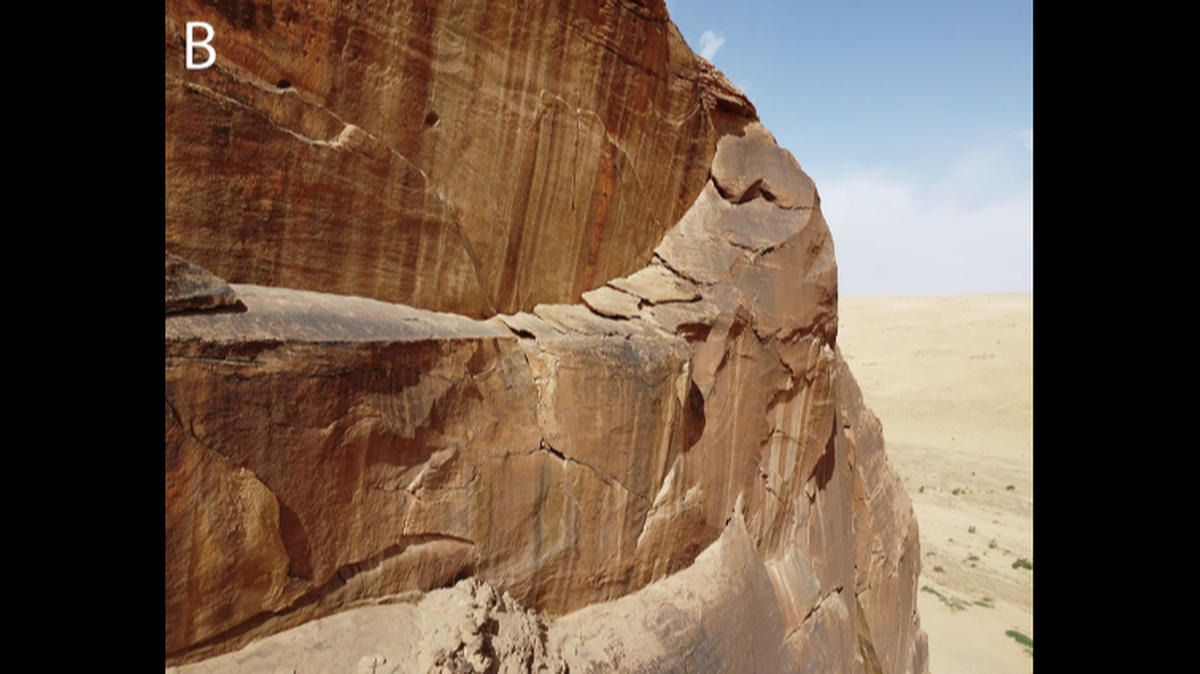
Previously discovered engraving sites were hidden in rock crevices, researchers said, but the new findings were out on “towering cliff faces,” at times more than 120 feet high in “commanding locations.”
This would have not only required time and taking on risk but also underscored how important the images may have been, particularly if they helped the wanderer find water in the desert, researchers said.
“This unique form of symbolic expression belongs to a distinct cultural identity adapted to life in a challenging, arid environment,” study author Faisal Al-Jibreen said in the release.
The Nefud Desert is in northwestern Saudi Arabia.
The research team includes Guagnin, Shipton, Al-Jibreen, Giacomo Losi, Amir Kalifi, Simon J. Armitage, Finn Stileman, Mathew Stewart, Fahad Al-Tamimi, Paul S. Breeze, Frans van Buchem, Nick Drake, Mohammed Al-Shamry, Ahmed Al-Shammari, Jaber Al-Wadani, Abdullah M. Alsharekh and Michael Petraglia.