Ancient stone in Germany holds oldest blue pigment in Europe. ‘Ground-breaking’
The seas of the Caribbean, Cookie Monster and the Facebook logo all have one thing in common — a bright blue color.
From the coating of M&Ms to the threads of jeans, the color blue has been used widely in products, fabric and paint around the world for centuries.
But there was once a time that the only blue you would see came from the sky or the ocean.
When Homo sapiens and Neanderthals began to develop pigments for the first time, they stuck with colors they could create from their natural environment, including black and red-yellow that could be created from naturally occurring minerals.
Prehistoric blue has only been documented one time on a human-like figurine found at a site in Siberia and dating back 19,000 years — until now.
In a “ground-breaking” study, researchers have identified a “vivid blue mineral pigment azurite” on a 13,000-year-old stone in Germany, according to a Sept. 29 news release from Aarhus University.
The date makes the pigment the oldest blue coloring ever discovered in Europe, according to the university.
A stone artifact was found at the German archaeological site Mühlheim-Dietesheim sometime between 1976 and 1980 and the site’s age was confirmed during a dig in 2023, according to a study published Sept. 29 in the peer-reviewed journal Antiquity.
“The site itself is located close to a historical fishing and fording area and may represent a bridgehead for small human groups moving along and across the River Main,” researchers said.
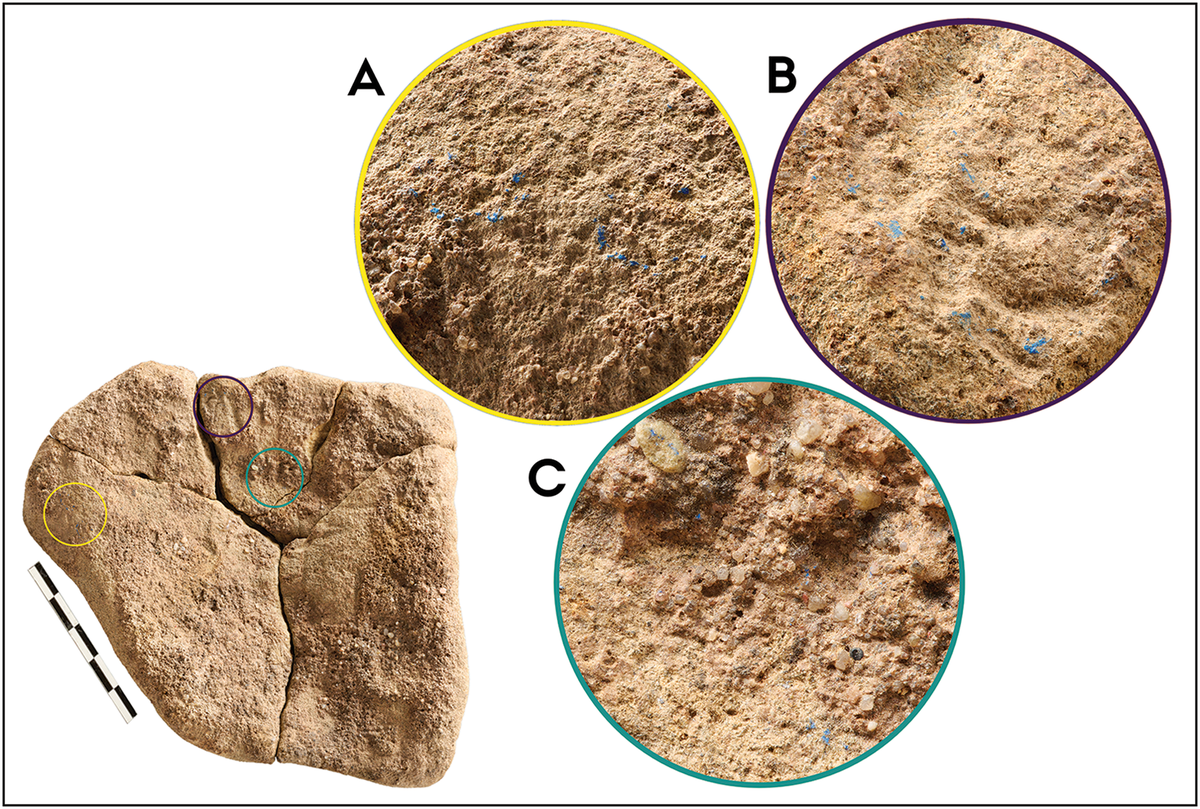
The stone is naturally concave and “bowl-like,” according to the study, leading researchers to originally believe it could have been used as a kind of open oil lamp.
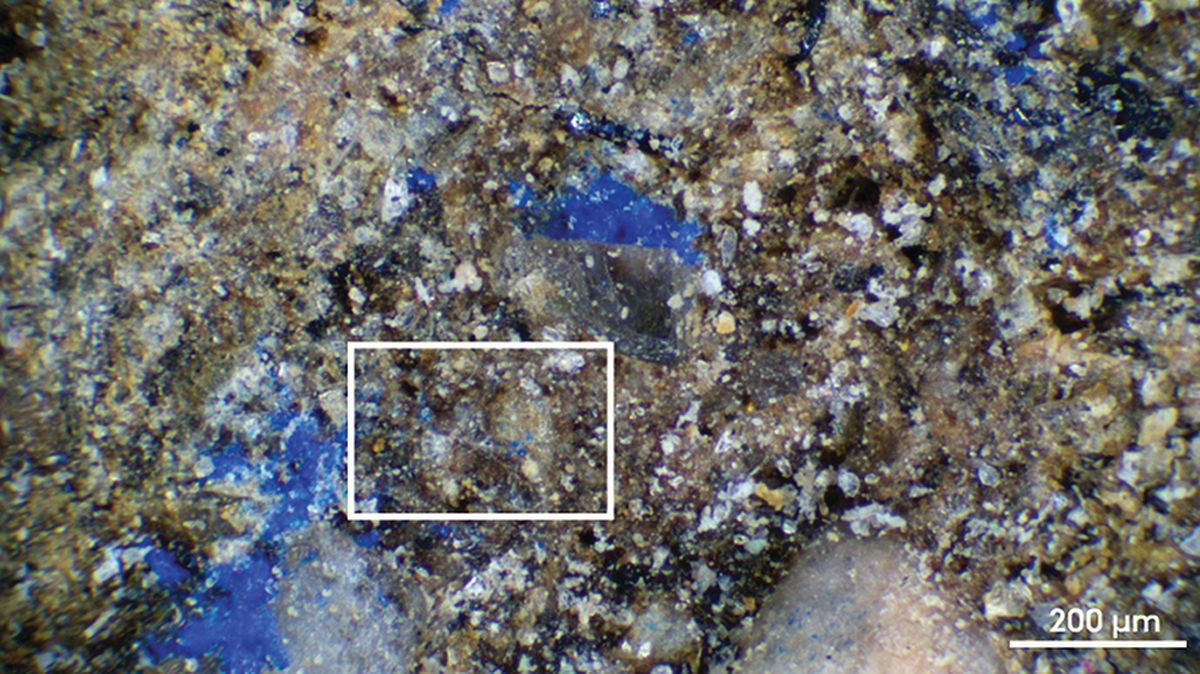
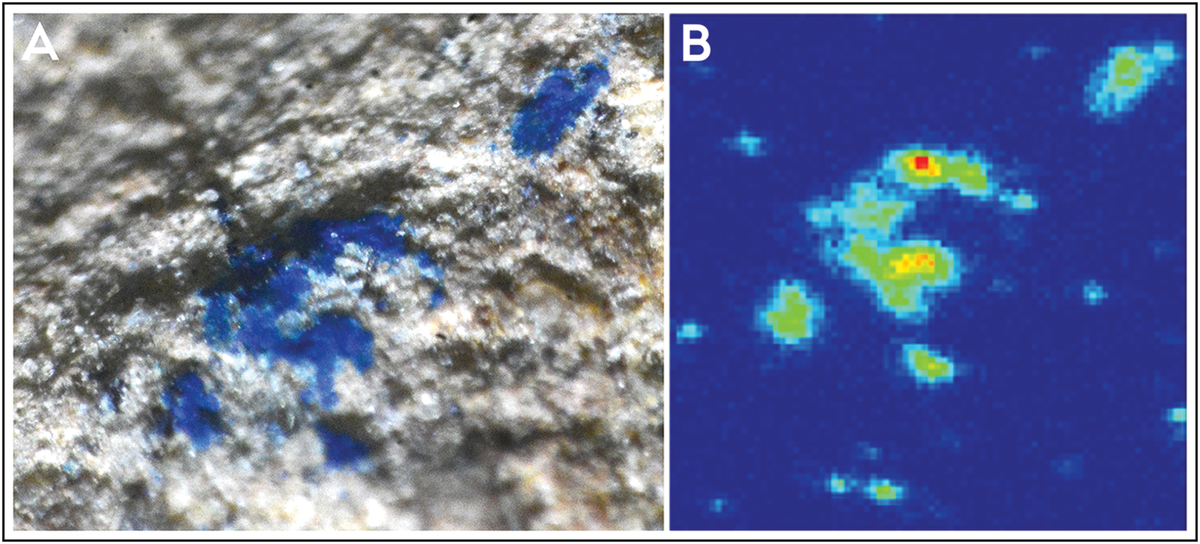
However, when the chemical makeup of the stone was analyzed, researchers found azurite speckled across the surface and the “elemental composition of the blue residue,” according to the study.
Azurite is a mineral made from copper carbonate that has been oxidized in and around copper deposits, according to gemstones.com. The mineral can range from light to dark blue, but the darker colors are more saturated and common.
The closest known azurite deposit to the archaeological site is about 12 miles southeast, following the River Main, according to the study.
“The presence of the azurite on the stone artefact may tentatively be assumed to have occurred due to pigment processing activities, with the stone possibly being used to support grinding activities to process the azurite into a powder, as a surface to mix the azurite with binding materials to create a paint or to contain an azurite paint mixture,” according to the study.
Ochre, another mineral used to make an orange-red pigment, has also been found at the site, suggesting pigments were created there, researchers said.
“This challenges what we thought we knew about Palaeolithic pigment use,” study author Izzy Wisher said in the release. “The presence of azurite shows that Palaeolithic people had a deep knowledge of mineral pigments and could access a much broader colour palette than we previously thought — and they may have been selective in the way they used certain colors.”
Blue colors haven’t been found in art from this era, researchers said in the release, so it is more likely that the pigment was used for dyeing fabric or for body decoration, both of which wouldn’t leave much, if any, archaeological trace.
Due to the deposit’s proximity to the site, the blue pigment may have also been widely used, not completely absent like archaeologists previously believed, according to the study.
Mühlheim-Dietesheim is in central Germany.
The research team includes Wisher, Thomas Birch, Rasmus Andreasen, Elyse Canosa, Sara Norrehed, Solenn Reguer, Quentin Lemasson, Ester Oras, Kristiina Johanson, Tim Kinnaird, Thomas Birndorfer, Jesper Borre Pedersen, James Scott, Christof Pearce and Felix Riede.