‘Crab-eating’ creature caught in fisher’s nets in Vietnam for first time. See it
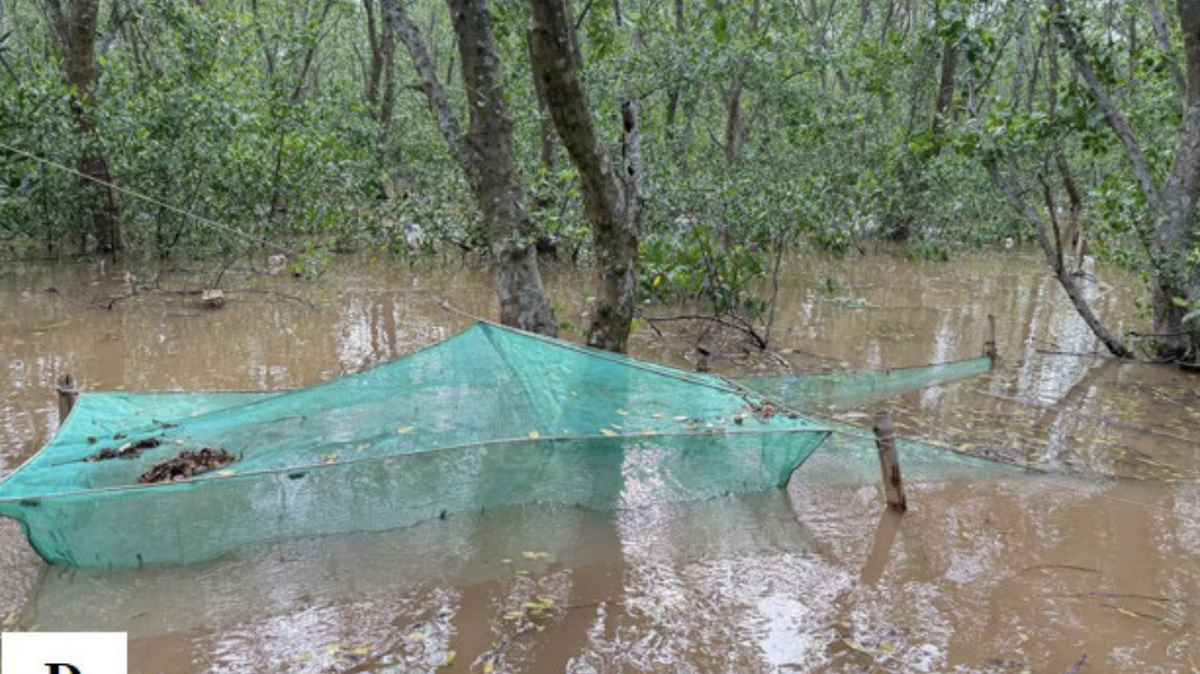
In the northern Vietnam province of Thanh Hoa, fishers venture out into the mangrove forests to set their traps.
The fishers use fyke nets strung between mangrove trees to catch wild shrimp and fish that swim through the channels of the forest during high tide.
But in March, when the fishers checked their nets for their catch, there was a new creature stuck in the mesh material.
Four crab-eating frogs, Fejervarya moodiei, were identified among the catch — a first-time record for the province.
F. moodiei is “a large-bodied frog species commonly associated with brackish and coastal habitats, particularly mangrove ecosystems,” according to a study published Sept. 24 in the peer-reviewed journal Check List.
The species has been found in the coastal regions of eastern India, the Andaman Islands, Bangladesh, Cambodia, Thailand, Myanmar, China and the Philippines, according to the study.
There were a few records in Vietnam, according to the study, but none in the Thanh Hoa province before March.
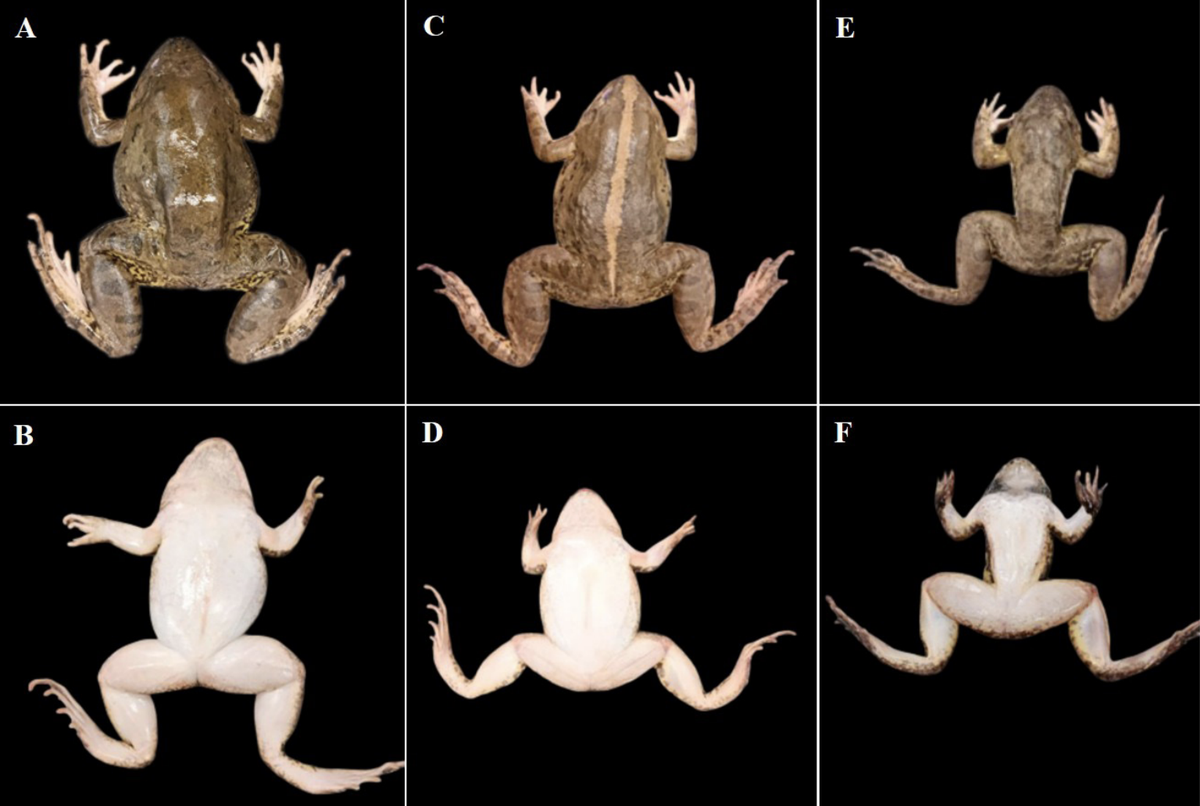
The frogs are “large” in size, with a body length of up to 3.5 inches long in females and 2.5 inches in males, researchers said.
“The head is large and triangular, but shorter than wide in females and longer than wide in adult males,” according to the study.
They have “long and robust” arms and “short” fingers free of webbing with bluntly rounded fingertips, researchers said.
The back of their bodies are brown with irregular dark spots and a “brown streak” between the eyes, according to the study. Their bellies are cream-white, their pectoral glands white and their vocal sacs black.
Females have larger bodies than males, but in these four frogs caught in Thanh Hoa, they are overall larger than frogs of the same species found in other regions, according to the study.
Crab-eating frogs earn their names for their adventurous diet, taking on crab prey despite their relatively small size, according to the University of Texas. To live in both fresh and salt water, they have less permeable skin than other frog species and produce more urine.
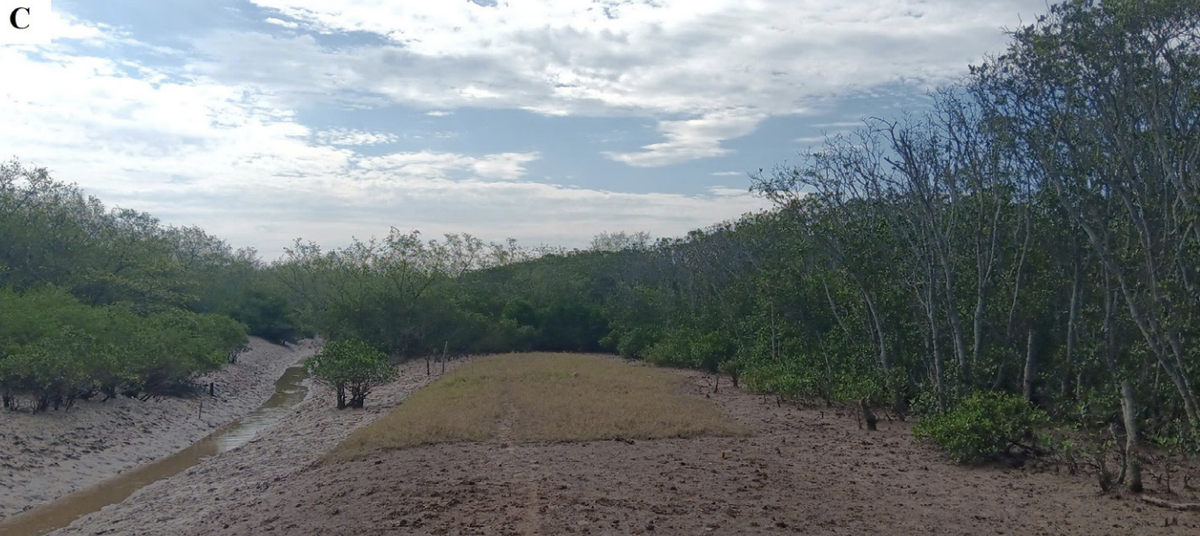
The frogs were found at night, and according to the local fishermen they can be easily spotted “during low tide, when individuals are found on muddy substrates, beneath exposed mangrove roots, or near temporary tidal pools,” according to the study.
As the tide cycles, and the water rises, the frogs head for higher ground on the low branches of the mangroves, researchers said.
The frogs are well-adapted to this brackish, both fresh and salt water, environment, so it wasn’t surprising to see the frogs in the nets, researchers said.
However, the nets can be dangerous.
“Although not a target species, individuals of F. moodiei caught in the fyke nets are often either retained for local consumption or discarded,” researchers said. “Frogs entering the nets often sustain injuries while attempting to escape, particularly to the snout and digits.”
Two of the crab-eating frogs found in this region had injuries, and the repeated stress on the animals can prove fatal, researchers said.
“The present study provides the first confirmed record of F. moodiei from Thanh Hoa Province, thereby extending the known distribution range of this species in northern Vietnam,” according to the study.
The research team includes Dau Quang Vinh, Do Thi Hai and Hoang Ngoc Thao, with special thanks to Hong Duc University biology students who assisted the field surveys.