Green-eyed river creature — with ‘sunny’ body — found in Brazil. See new species
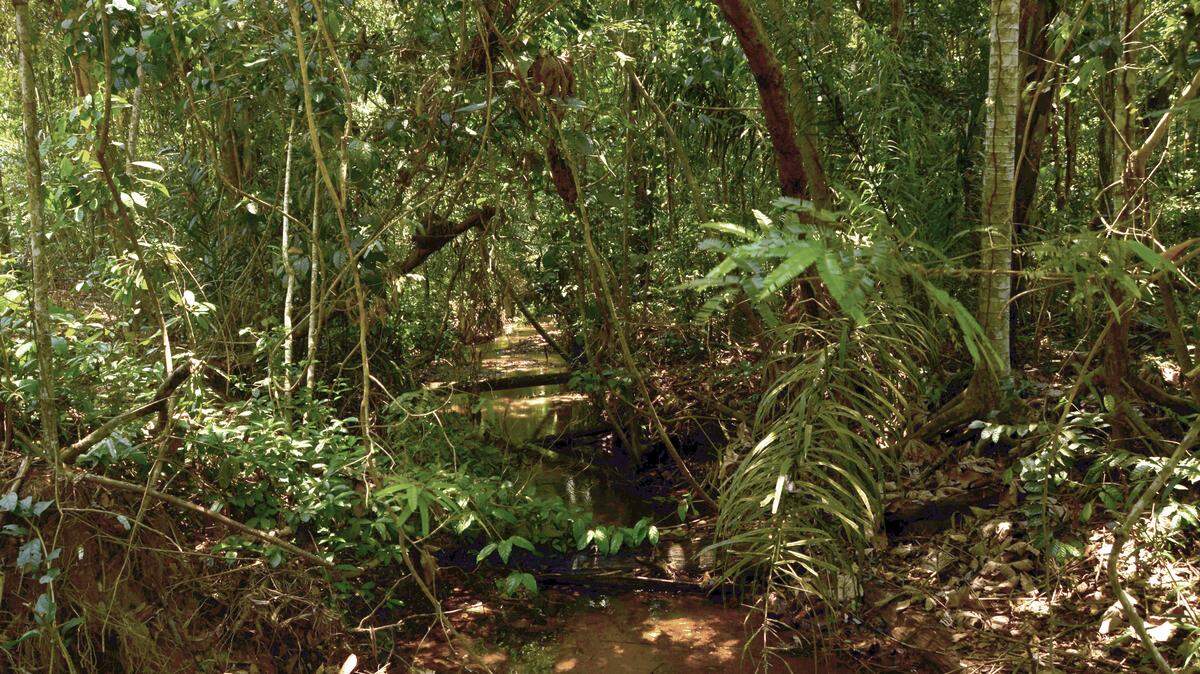
Across 2.3 million square miles, the Amazon River Basin is the largest drainage basin in the world.
Countless streams, rivers and creeks flow from the rainforest to a central river, eventually leading to the coast of Brazil and the Atlantic Ocean.
It is a biodiversity hotspot with millions of creatures calling the basin home. It’s also a place where new species are waiting to be discovered.
During recent ichthyological, or fish, surveys in “underexplored regions” of the basin near Pará, Brazil, researchers discovered a small fish that didn’t look like a species they had seen before, according to an Sept. 8 study published in the peer-reviewed journal Neotropical Ichthyology.
The fish was found in the headwaters of the Curuá River and the Teles Pires River, which both drain to the Serra do Cachimbo, an “ancient geological formation,” according to the study.
Researchers caught the holotype, or primary specimen used to describe the species, from a part of the river that was crossing a dirt road, according to the study.
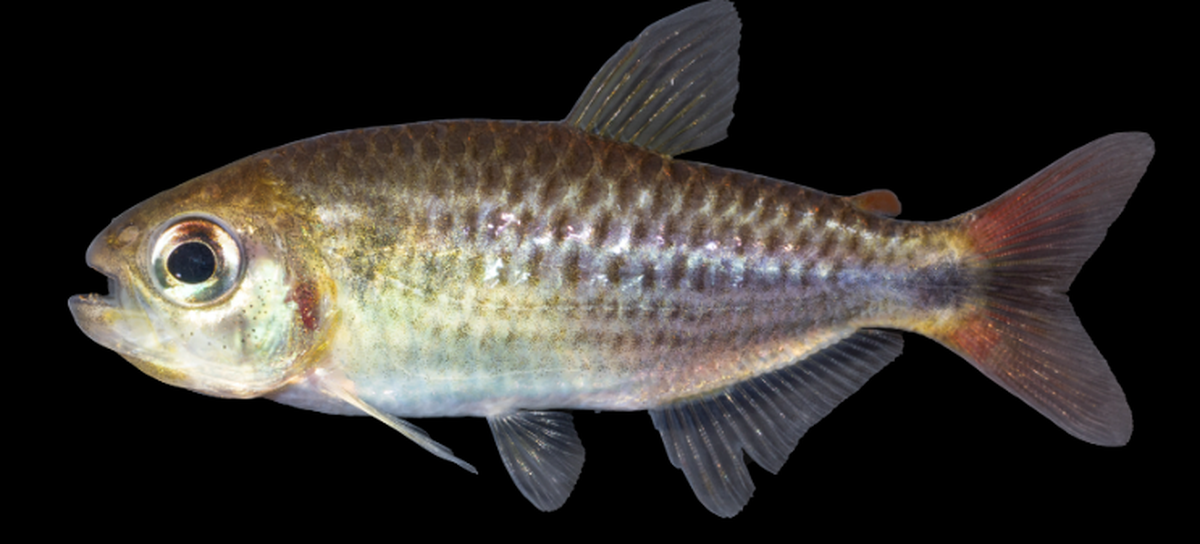
The new species has a “compressed (and) moderately elongated” body, according to the study, and a mouth filled with teeth.
The back of the fish’s head and body is “golden yellow” with the bottom half of its body pale in comparison, researchers said.
The back fins have orange, yellow and reddish coloration, and the fish’s eyes are partially green, according to the study.
The new species was named Moenkhausia solaris.
“The specific epithet solaris comes from Latin, meaning sunning or pertaining to the sun. In allusion to the bright gold color of the body and red color of the adipose (fin) and caudal fin present in live specimens,” researchers said.
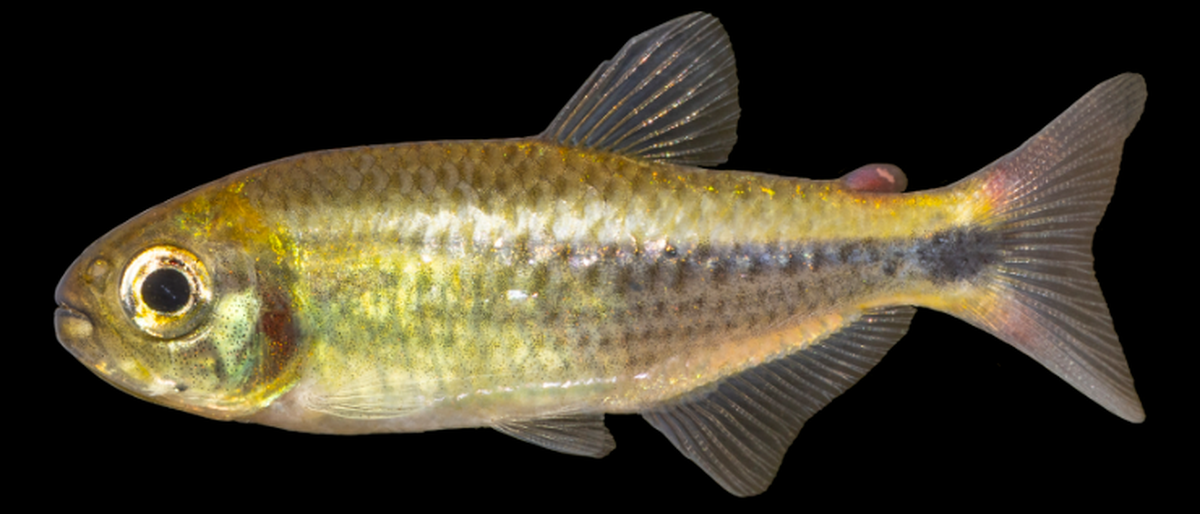
Moenkhausia is a group of “diverse” and “small-sized” characiform fish, or ray-finned fish. It is known for its size as well as its “vivid coloration” and is found throughout rivers in South America, according to the study.
The sunny ray-finned fish stands out from other known species because of its coloration both across its scales as well as on its fins, researchers said.
The Pará state is in north-central Brazil.
The research team includes José Igor da Silva, Yasmim de Santana and Manoela Maria Ferreira Marinho.