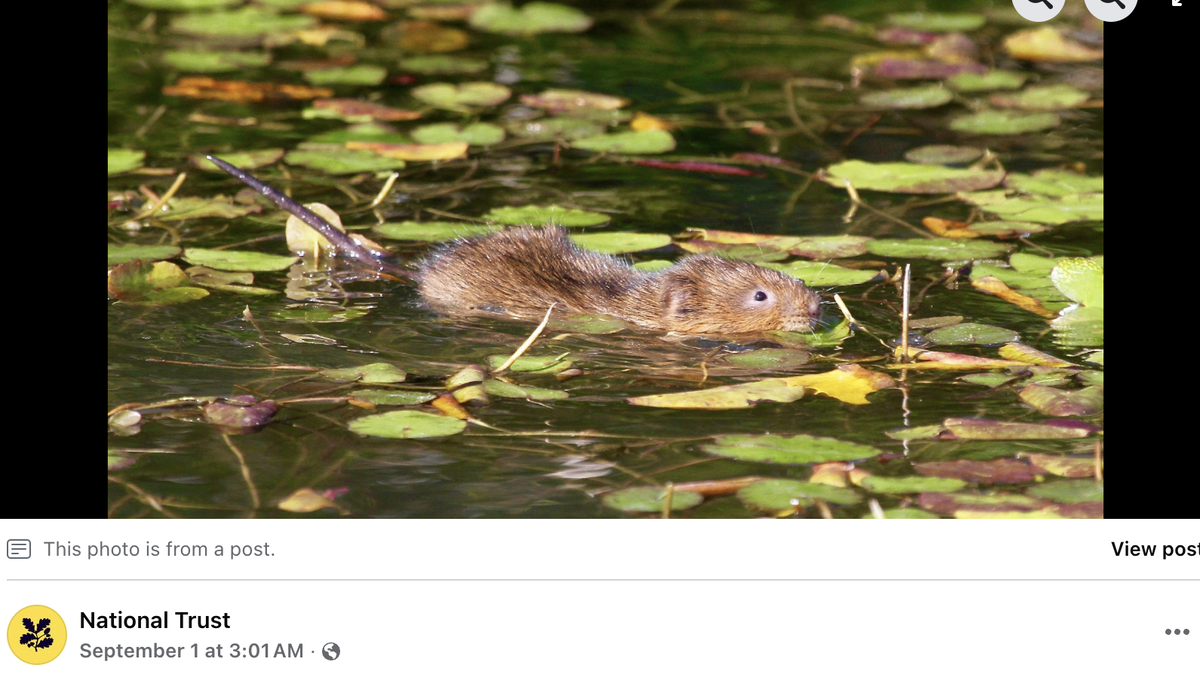
Tiny swimmers return to UK countryside for first time in 20 years. Watch them
When many think of extinction, they imagine the massive events that wiped out the dinosaurs or the somber image of a polar bear standing on a shrinking chunk of ice.
But small-level extinction events are happening around the world every day, as some of the world’s smaller creatures feel the impact of a dominant human race.
Hundreds of species are going “locally extinct,” meaning they still exist in the wild, but they have completely disappeared from their historic habitat and range.
Unlike the dinosaurs, however, researchers and wildlife officials are working to slow down or even stop these extinctions — and sometimes bring animals back from the brink.
Now, a rewilding project led by the South East Rivers Trust in the United Kingdom has released 150 water voles back to their native river system after they were declared locally extinct more than 20 years ago, according to a July news release and Sept. 1 Facebook posts from the South East Rivers Trust, the National Trust London and South East and the National Trust.
Fifty of these small mammals were released on July 30, according to the trusts, and videos from other releases in the region captured their speedy acclimation back to their natural environment.
“Water voles — familiar to many as Ratty from The Wind in the Willows — are the UK’s fastest-declining mammal, lost from 94% of their former range,” the South East Rivers Trust said. “Their return to the Hogsmill is not only a symbol of hope, but a practical step in restoring river ecosystems and enhancing local biodiversity.”
The voles were released across six sites along the catchment in Surrey, Sussex and Hampshire England, most recently in the River Wey, according to the National Trust’s Facebook post.
This is just the beginning of the project. In the next two years, wildlife officials hope to expand the population to about 390 square miles of land in southern England.
The voles were bred in captivity and then placed into pens to head to the river banks, the video shows.
The pens were covered by grass and leaves in the shade for a few days while the voles were fed before their release into the wild, according to the video.
“A few lucky water voles got to dive straight into the river,” the National Trust London and South East said.
Water voles look similar to rats, but they live along rivers and streams as well as in marshes and wetlands, according to The Wildlife Trusts.
“The water vole has chestnut-brown fur, a blunt, rounded nose, small ears and a furry tail,” The Wildlife Trusts said. “It is much bigger than other vole species. Scotland’s water voles often appear darker, with many having a black coat.”