‘Stocky’ creature — hidden in fallen leaves — is new species in Malaysia. See it
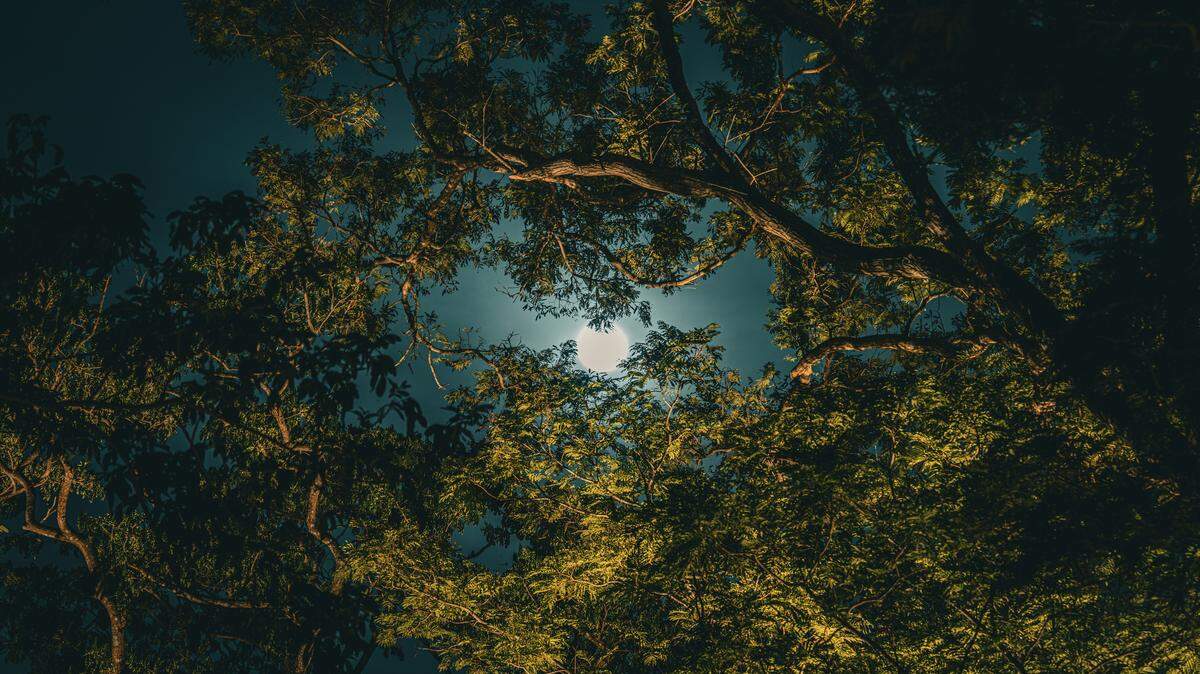
More than a decade ago in Crocker Range Park on the island of Borneo, researchers set up rows of plastic flags.
The rows marked transects to help guide the researchers as they walked through the forest under the cover of darkness, on the hunt for frogs.
Over the course of three years from 2003 to 2006, researchers walked these lines frequently, hoping to make a discovery about the amphibians that call the forest home.
Then, they spotted a “small” frog hidden in the leaf litter.
The frog is called Kalophrynus minutus — and it’s a new species.
Crocker Range Park is “one of the largest areas of relatively undisturbed rain forest in Borneo,” in the section of the island controlled by Malaysia, according to a study published Sept. 3 in the peer-reviewed Biodiversity Data Journal.
“Previous samplings of frogs in the CRP have been carried out at relatively low elevations or at unspecified elevations,” researchers said. “The aim of our group was to carry out an inventory of the amphibians at specified low and high elevations. As has been shown at other sites in Borneo, repeated sampling of frogs reveals the presence of species not encountered during initial sampling.”
The new species was found at elevations about 3,900 feet above sea level, according to the study, in what is described as “lower montane tropical forest.”
The frogs live on the ground on the “soft soil of the forest floor” or slightly buried in fallen leaves, researchers said.
“Due to its diminutive size and leaf litter coloration, the species can be challenging to detect,” researchers said.
The frogs are the smallest in their genus, earning their scientific name “minutus,” according to the study.
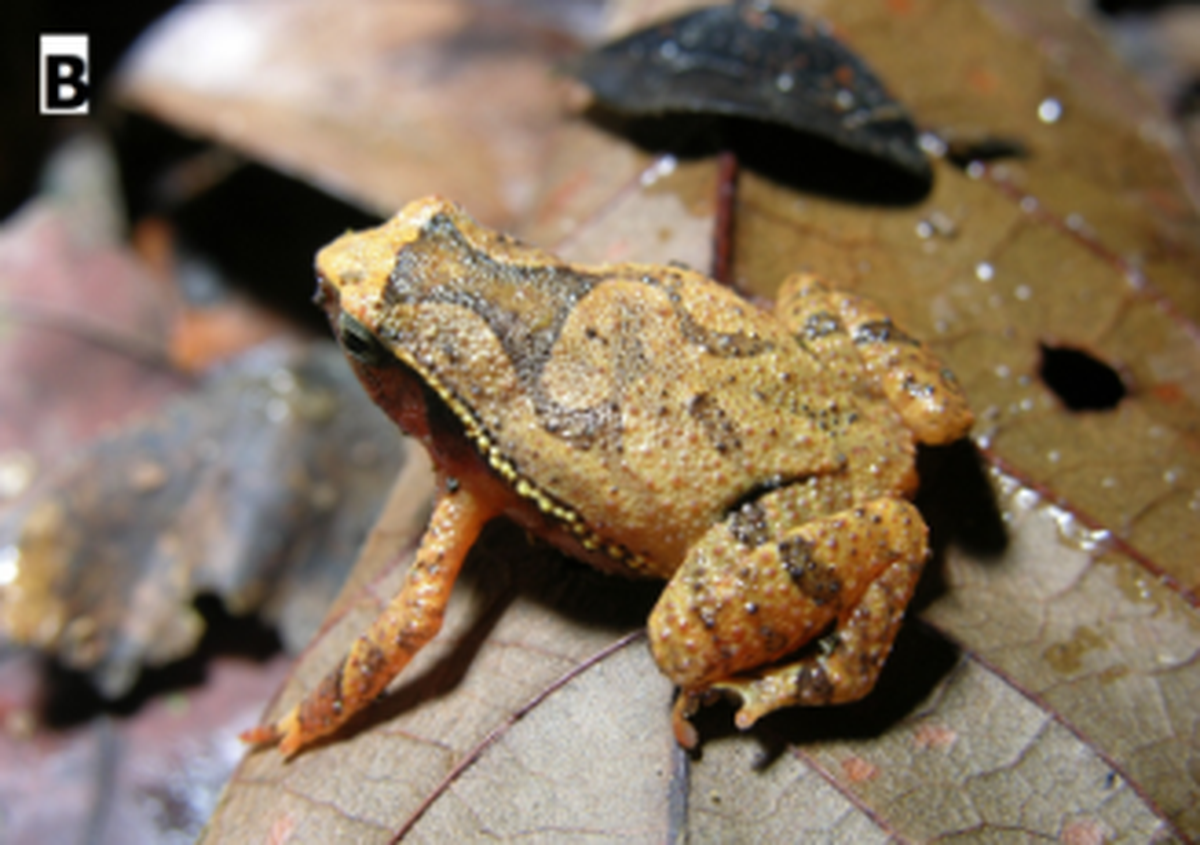
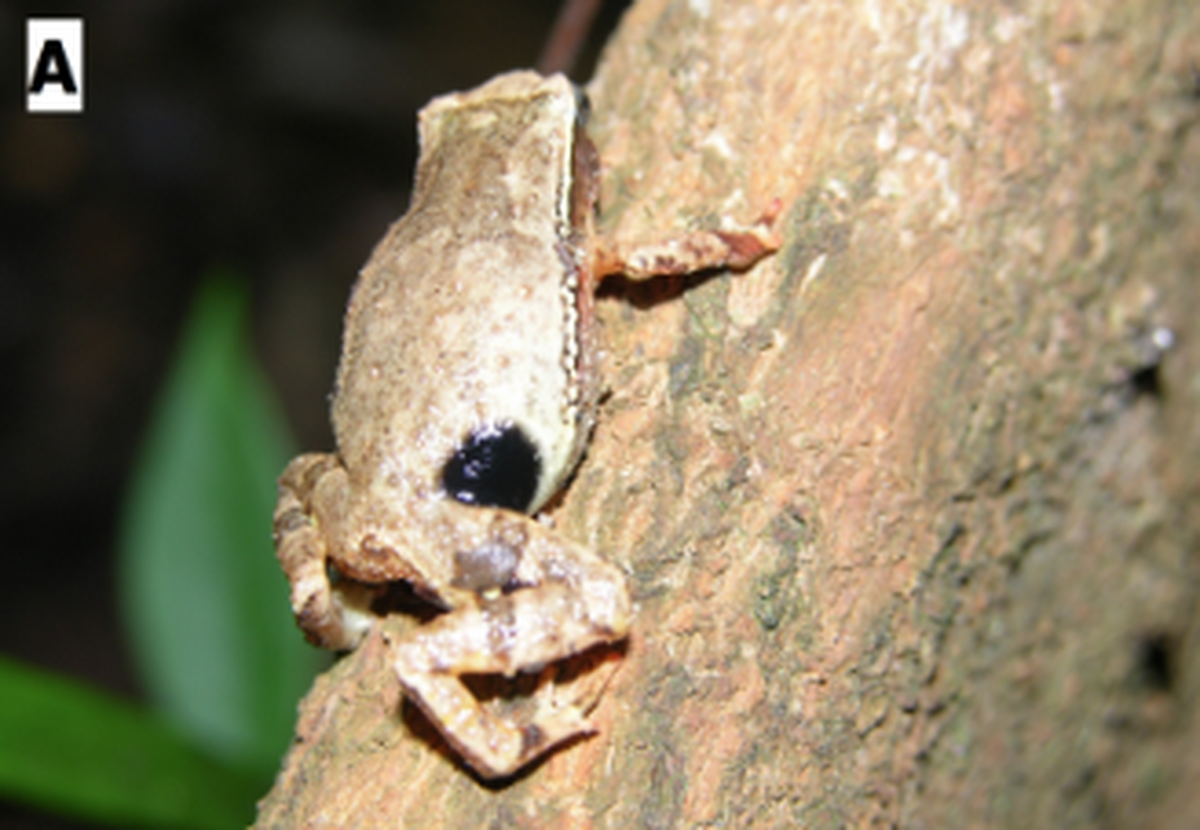
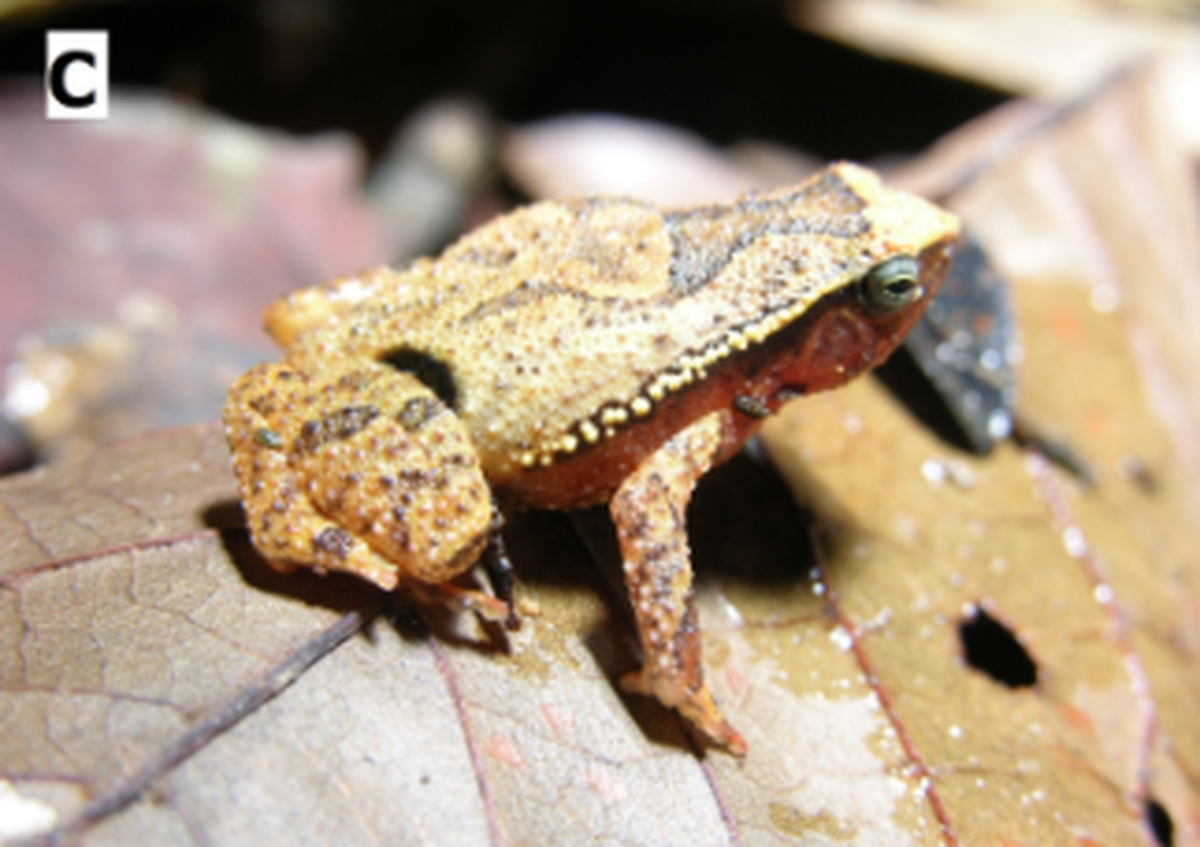
K. minutus is “small” and “stocky” with males measuring just 0.8 inches long and females a bit larger at 0.9 inches long, according to the study.
Their heads are wider than they are long, and their fingers are narrow with larger rounded tips, researchers said. The bases of the fingers are connected by a “fleshy web.”
The frogs’ “upper body (is) tan to beige depending on lighting of (the) environment,” while their “underside” is lighter in color, according to the study.
A darker patch on their backs looks almost like the outline of a frog with its back legs splayed across the animal’s back, photos show.
Researchers included a checklist of all the frog species found during their three-year study, but the K. minutus was the only species that had not been previously identified.
A total of 40 species were added to the list of frogs in the park, according to the study, bringing the total number to 63 different species.
“Each new survey in CRP discovers additions to the known fauna, which makes it likely we have not yet reached the full count of frogs for this park,” researchers said. “It is not possible to say now how many species of frogs may actually occur in the CRP, but surely there are many more than previously thought.”
The park is in northern Borneo, in the western reaches of Malaysia.
The research team includes Paul Imbun, Tan Fui Lian, Maklarin Lakim and Luiza Majuakim.