2,000-year-old tombs — filled with elaborate items — unearthed in China. See them
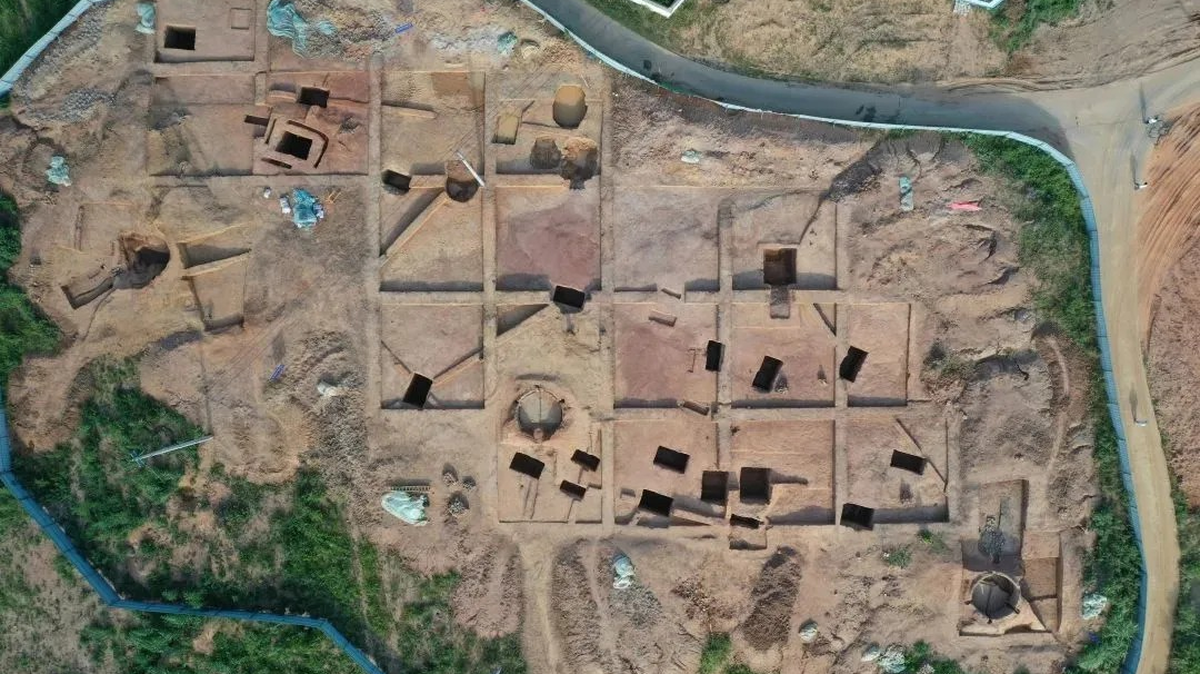
On a small hill on the south side of a Chinese national highway, archaeologists working ahead of a development project discovered dozens of ancient tombs — with items still inside.
Between April and December 2024, research teams unearthed a total of 75 tombs from four ancient time periods, according to a June 6 news release from the Anhui Provincial Institute of Cultural Relics and Archaeology, Qianshan Cultural Relics Protection Center and the Qianshan Museum.
The majority of the tombs date to the Warring States Period and Han Dynasty, both around 2,000 years ago, but there were a few tombs from the Six and Song dynasties, from 300 A.D. and 960 A.D., respectively, according to the release.
Most of the tombs suffered considerable disturbances from robbers over the centuries, researchers said, but a few key items still remained.
In total, more than 300 relics ranging from pottery to lacquered wood to jade were unearthed from the tombs, according to the release.
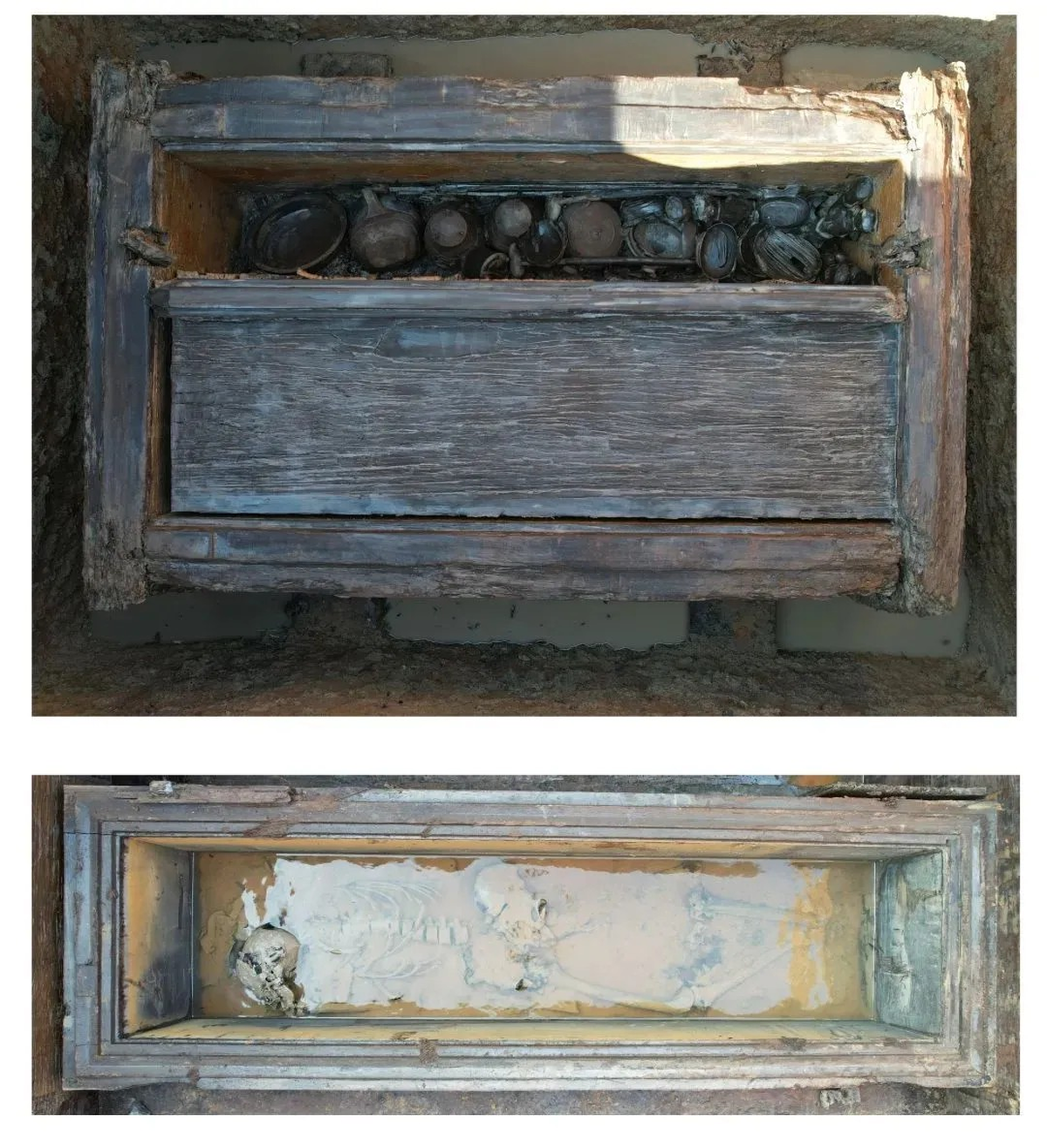
There were 37 tombs dating from the Warring States Period, all of which were rectangular in shape and built without passages, researchers said.
Some of the tombs had just one coffin, while others held multiple burials in the same chambers. The coffin chambers and covers were built out of wood, some of which survived the centuries.
The tombs with intact coffins also held preserved grave goods, researchers said.
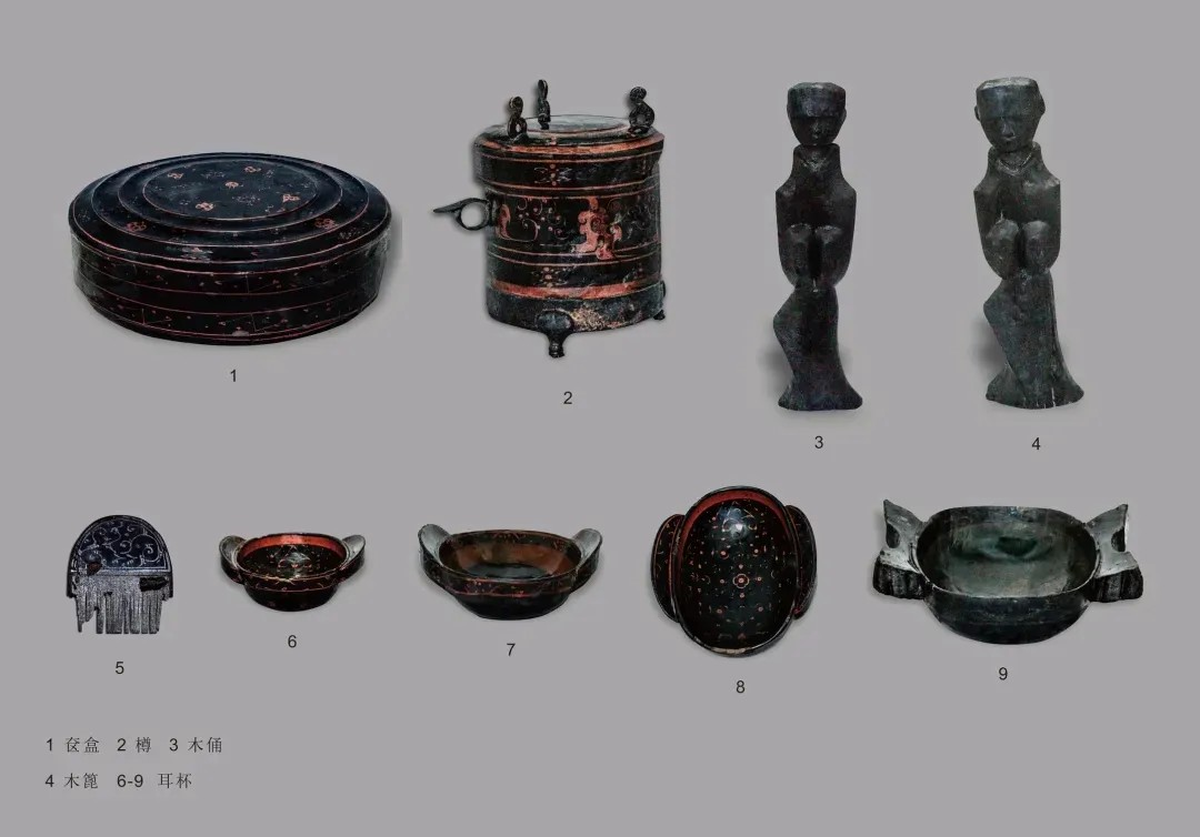
They were rich with copper, utensils, jade, lacquered wood and pottery that were placed inside compartments of the coffins. Utensils ranged from copper pots to wooden figurines and wood ear cups, according to the release.
Warring States Period tombs without coffins had fewer goods, researchers said, primarily including pottery, pots, boxes, jars and plates.
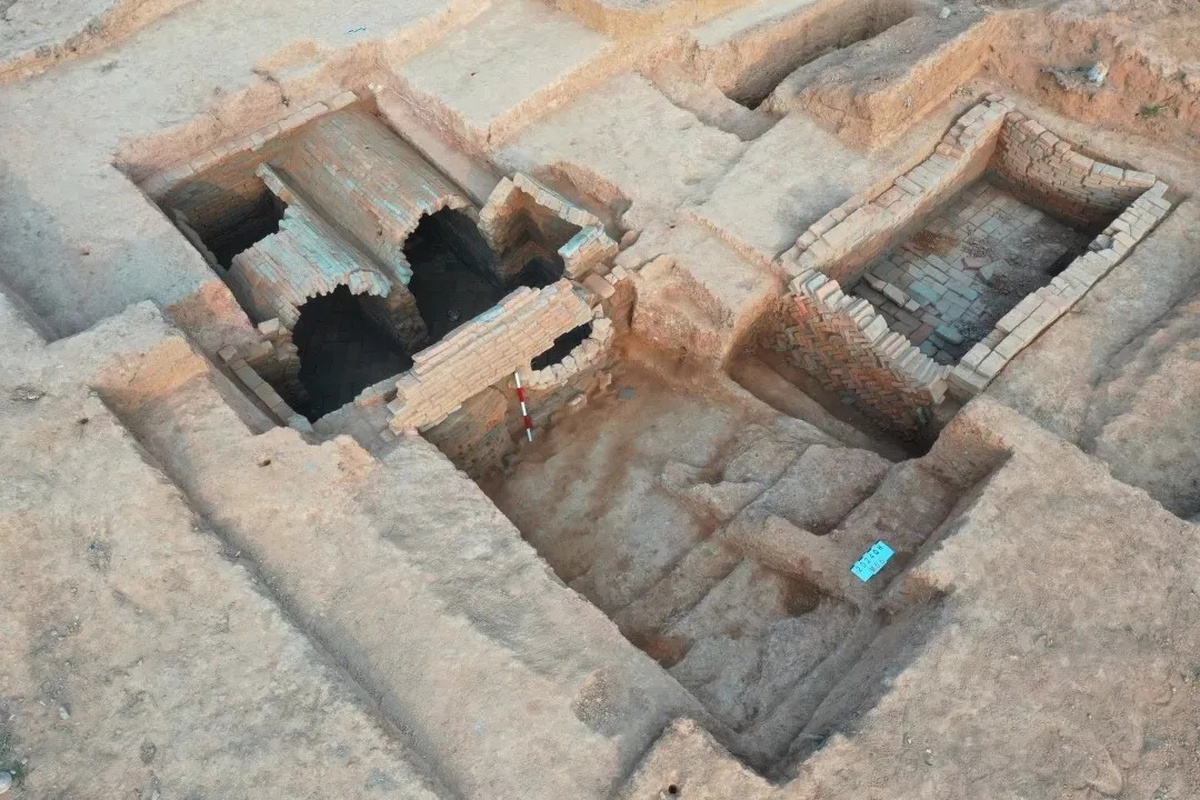
Another 36 tombs date from the Han Dynasty, including both vertical pit tombs and brick chamber tombs, researchers said.
Two dozen of the Han tombs are pit tombs, with decayed coffins and burial objects like pots, kettles, bowls and stoves, according to the release.
A small number of copper, iron and jade pieces were found within the earth mounds, including bronze mirrors, bronze belt hooks, bronze swords, jade swords, jade sword pendants and iron knives, researchers said.
There are 12 brick chamber tombs, a different style of burial, some with multiple chambers and items like pots, stoves, bronze mirrors, iron swords and a window-shaped opening between two chambers researchers called a “crossing fairy bridge.”
Archaeologists were also surprised to accidentally discover four brick and tile kiln sites from the Song Dynasty, created in the shape of a long spoon, according to the release.
With the kilns were inscribed bricks that show this site was likely used to make official bricks for a prefecture at the time, researchers said.
The site was uncovered in Qianshan, in the eastern Chinese province of Anhui.
Google Translate and ChatGPT, an AI chatbot, were used to translate the news release from the Anhui Provincial Institute of Cultural Relics and Archaeology, Qianshan Cultural Relics Protection Center and the Qianshan Museum.