2,300-year-old Celtic weapons unearthed in acidic graves in France. See them
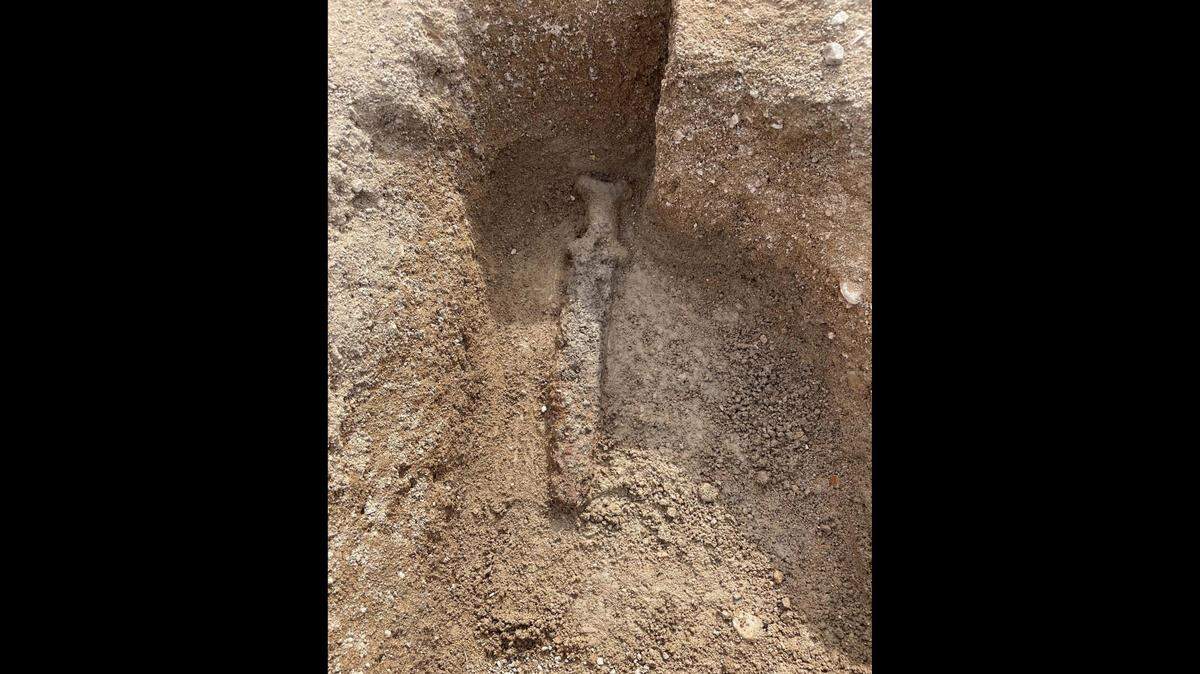
In central France, construction for a business park revealed an ancient site in 2022.
More than 100 graves were found in an area of about 7,000 square feet, a necropolis comparable in size to those found in Champagne or Burgundy, according to an April 15 news release from the French National Institute for Preventive Archaeological Research.
The site dates back to the Celtic period over 2,300 years ago, archaeologists said, but while the graves remain, the bodies they once held do not.
The soil is acidic, slowing eating away at the bones over the centuries and leaving nothing organic behind, according to the release.
But that doesn’t mean the graves were empty.
Archaeologists have now excavated the necropolis and studied the artifacts found within, ranging from pottery to rare weapons, according to the release.
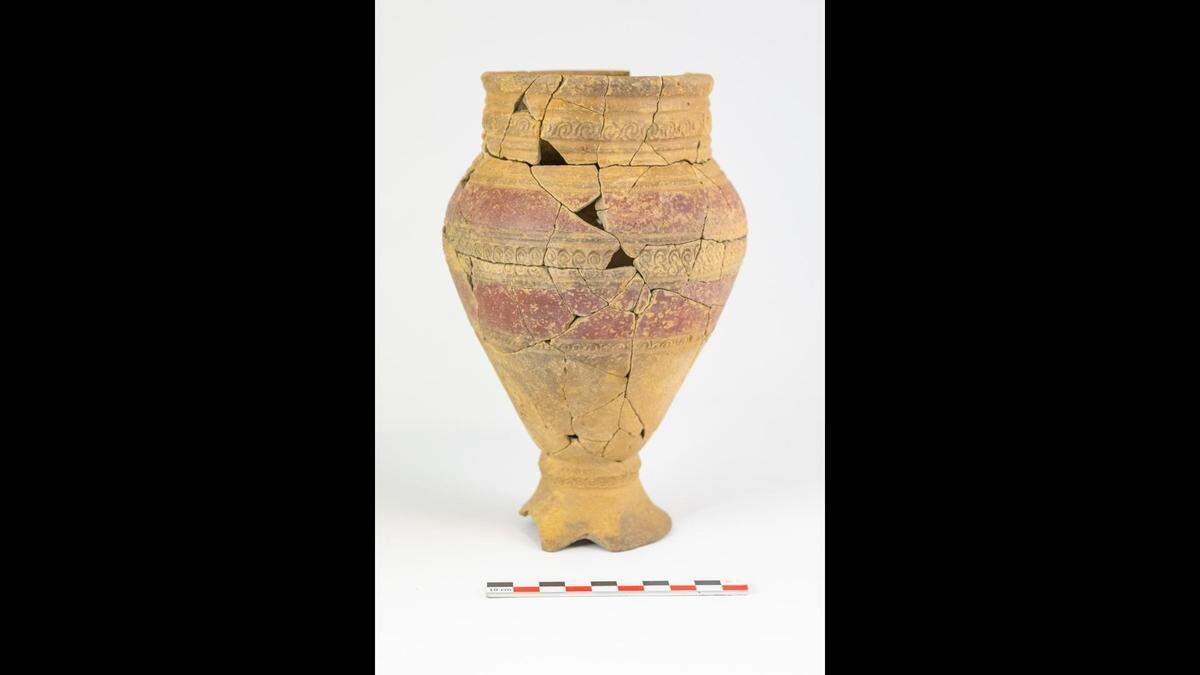
One cremation was discovered, archaeologists said, and was accompanied by a precious vase that was covered in both punched motifs and painted bands.
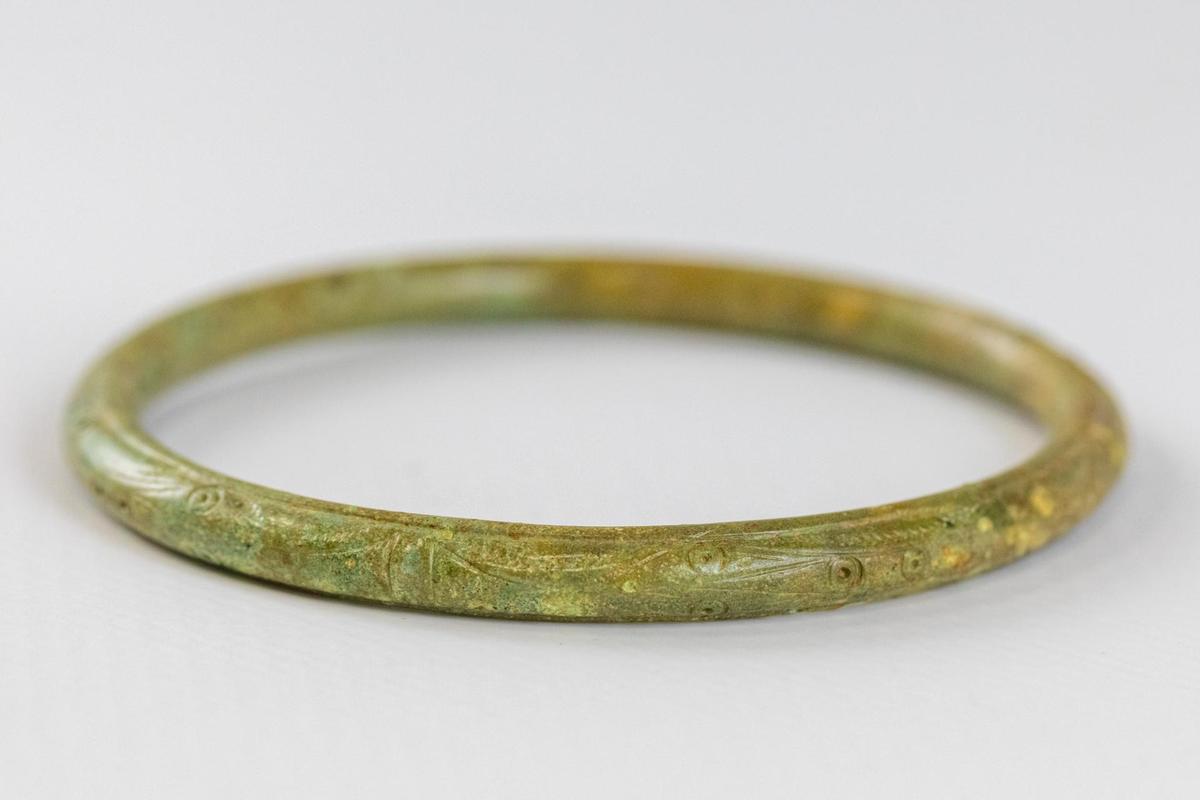
Half of the graves still held metal ornaments, according to the release.
The majority of goods were bracelets, either on their own or in pairs, archaeologists said. Some were made of simple coiled copper alloy rods, but others were decorated and more elaborate.
Some of the bracelets are closed rings or rings with hidden clasps where one end fits into the hollow center of the other end, archaeologists said.
Researchers also uncovered 18 fibulas, or brooches, that were significantly damaged in the field and needed to be preserved and reconstructed, according to the release.
One was decorated with silver leaf and motifs.
The bracelets were dated to the end of the fourth century or beginning of the third century B.C., archaeologists said.
What stood out to researchers the most, however, was a set of swords found in two graves.
Both swords were still in their scabbards, one of which was called the most spectacular find in the necropolis, according to the release.
One sword is shorter, intended to be worn at the waist, and was made of copper alloy and covered with decorative works, archaeologists said.
The sword has a pointed blade and was made with an iron antennae and copper spheres, according to the release. The sword has inlays with images of a crescent moon and circle, designs that were popular during the beginning of the fourth century B.C.
The second sword is longer and was found with the suspension rings that would have been worn around the waist to hold the scabbard, archaeologists said.
The second sword is missing the intricate decoration found on the first, but shreds of fabric still remain on the piece, possibly from the clothes of the person buried with it, or from a shroud or case. The size also dates the sword to the fourth century B.C., according to the release.
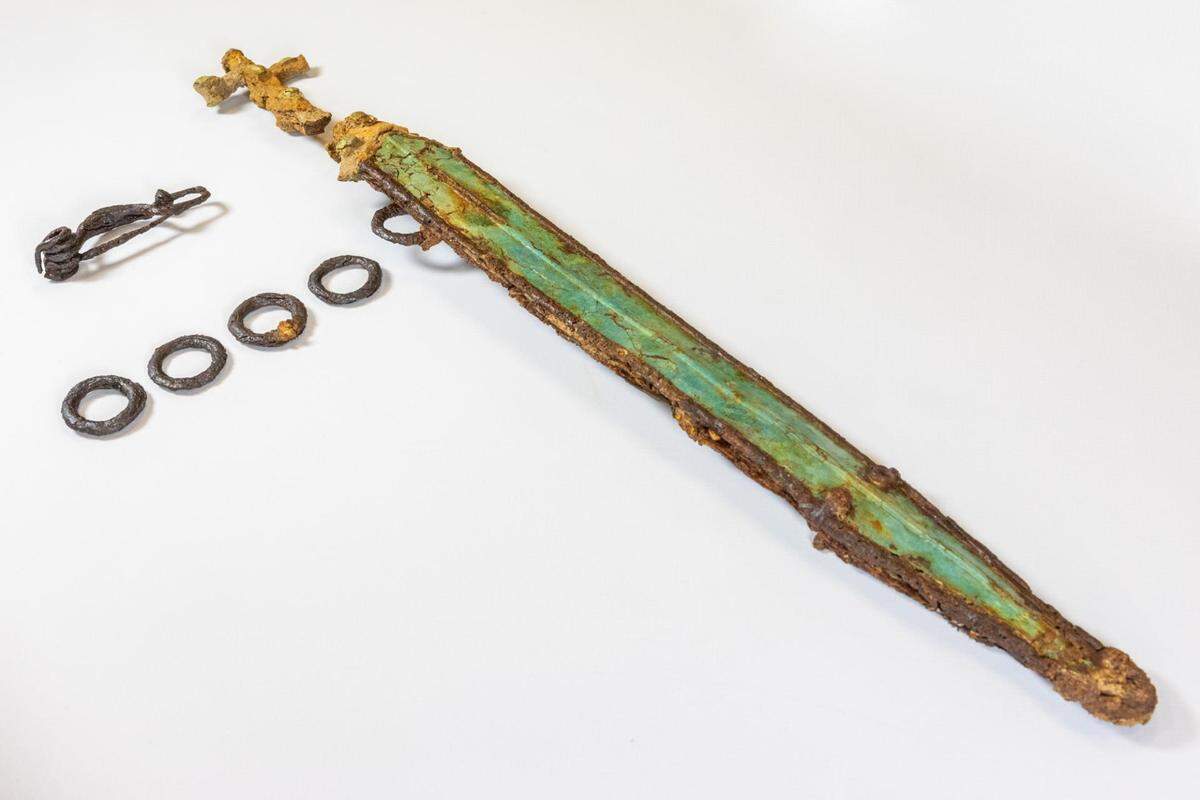
Archaeologists said the metal ornaments were all well-made, and the swords are a rare find with few equivalents ever found in Europe.
The necropolis was found in Creuzier-le-Neuf, in central France, about a 220-mile drive south from Paris.
Google Translate was used to translate the news release from the French National Institute for Preventive Archaeological Research.