Ancient military tomb — with ceiling of murals — discovered in China. See inside
At the beginning of the 13th century, infamous leader Genghis Khan united the Mongols under a common goal — invading the Chinese empire.
The land fell to the Mongols in an era that would later be named the Yuan Dynasty, and the conquerors established centralized bureaucracy, trade, taxation and a capital.
In 2024, archaeologists working at a construction site for a plaza development project unearthed 51 ancient tombs dating to the Tang, Jin and Yuan dynasties, according to an April 10 news release from the Shanxi Provincial Institute of Archaeology and the Linfen Cultural Relics and Archaeology Station.
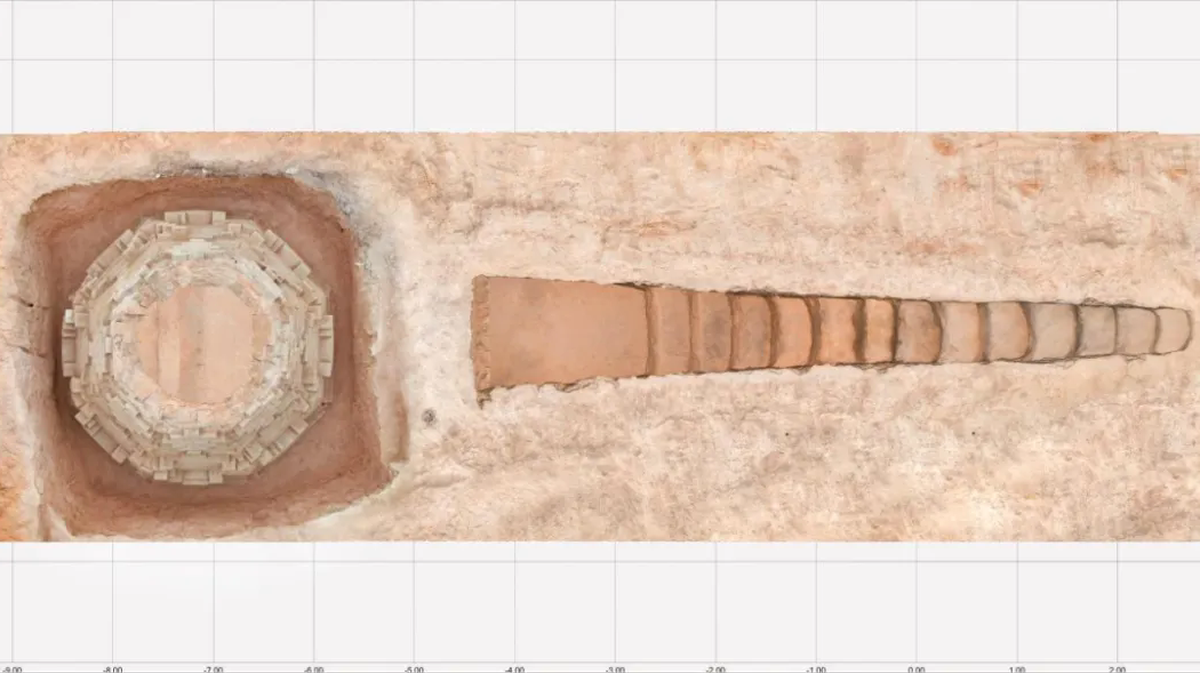
One tomb was not like the others, and was made of carved bricks creating a circular dome at the bottom of a long stairwell, archaeologists said. This tomb was from the Yuan Dynasty, or the age of the Mongols.
The entrance to the tomb is about 24 feet long and made up of 13 steps carved directly into the earth, according to the release.
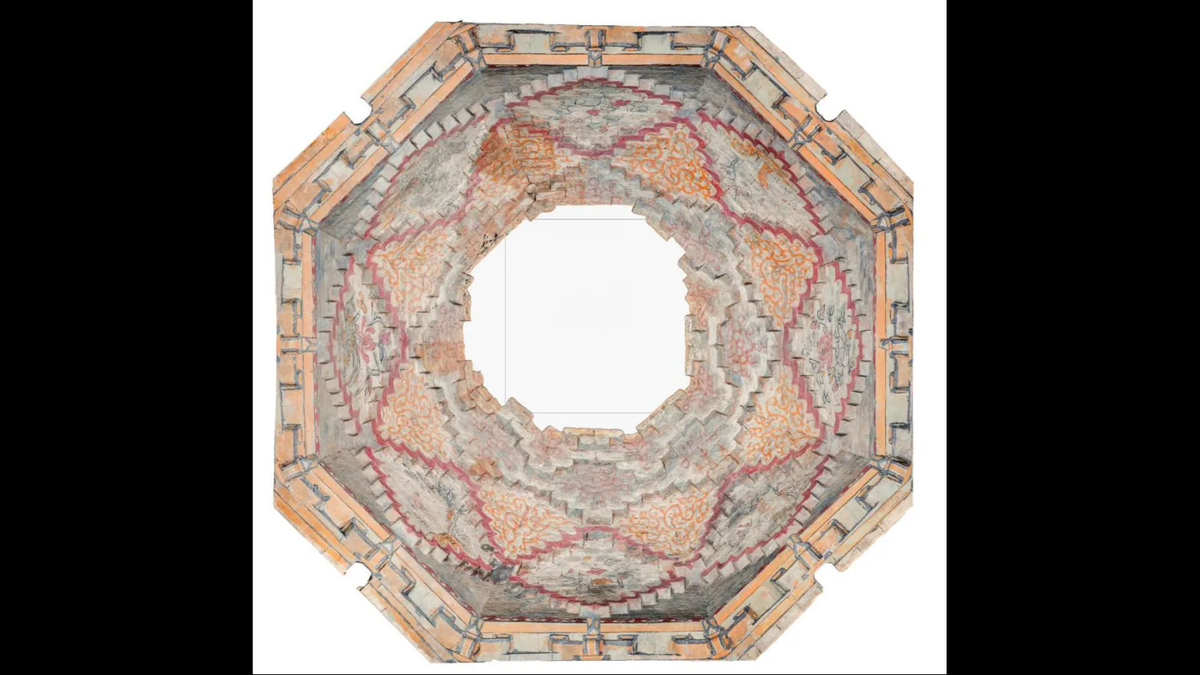
The top of the domed tomb was damaged, archaeologists said, but the main structure remains intact.
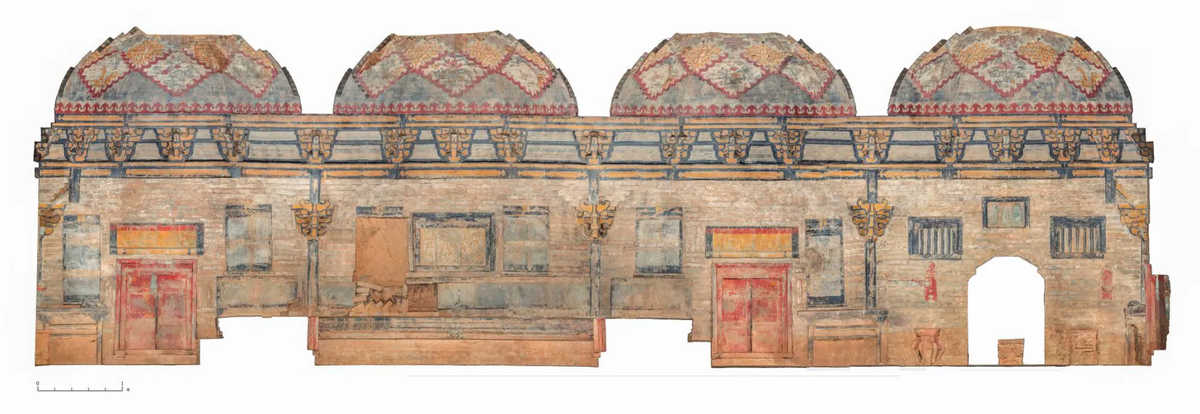
The tomb itself is wood-like in structure but constructed with blue bricks, archaeologists said.
Its interior has four walls that arch toward the ceiling and are covered in painted murals, according to the release.
Painted pillars separate each section of wall and include painted architectural pieces, photos show.
The lower level of the murals include doors and windows, as well as artwork and ink scroll paintings. There is a bamboo bird picture and a carved, rectangular table on the south side of the tomb, according to the release.
The room looks as if it were decorated in real life, archaeologists said, including curtains painted above a door. Items decorated the table, and archaeologists found carvings of washstands, basins and lamp stands and lattice patterns near the windows.
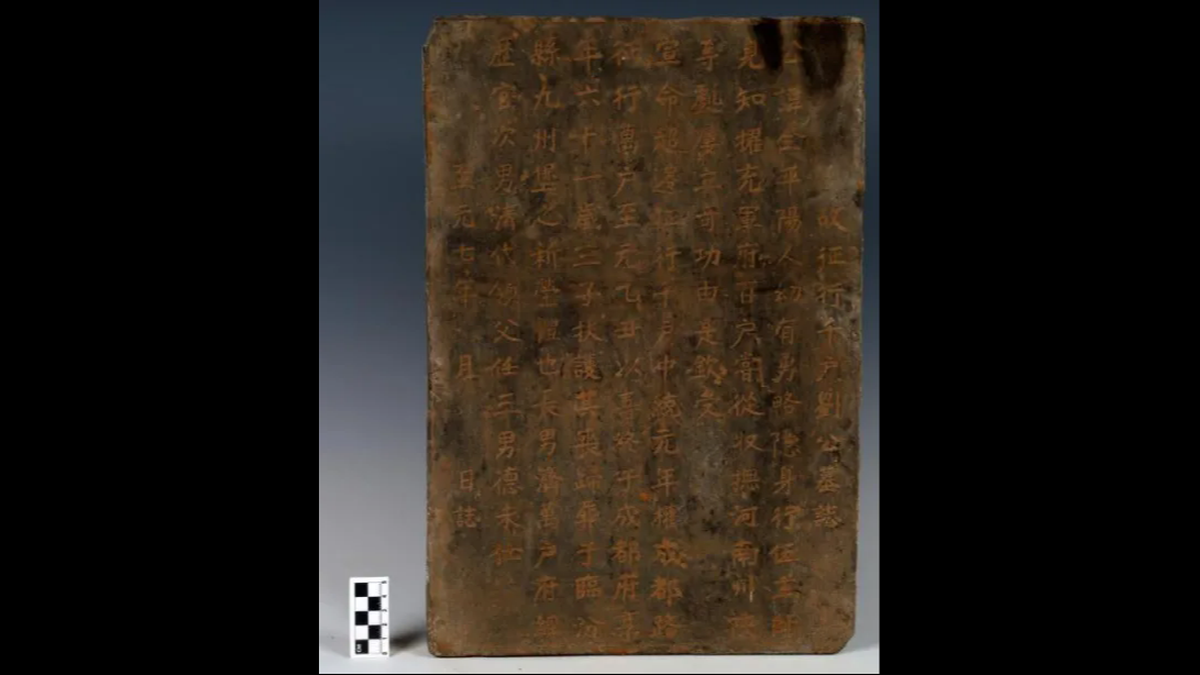
Human remains that had been burned were also found inside the tomb, along with grave goods like a black-glazed porcelain basin, a white porcelain cup, a bronze mirror, a jade hairpin, a wooden comb and an epitaph, or tombstone.
The tombstone has ten lines of inscriptions and identified the man laid to rest inside the tomb, according to the release.
The tomb belongs to Lieutenant Liu, the inscription says, and he was described as brave and resourceful during his time as a commander in the army.
Liu died at the age of 61 and was buried by his three sons, including two of his sons who went on to their own leadership roles, archaeologists said.
The inscription says the commander was buried in 1270, five years after his death in 1265, according to the release.
The site was found in Linfen, a city in east-central China.
Google Translate was used to translate the news release from the Shanxi Provincial Institute of Archaeology and the Linfen Cultural Relics and Archaeology Station.