Historical errors in ancient king’s love letter stumped researchers — until now
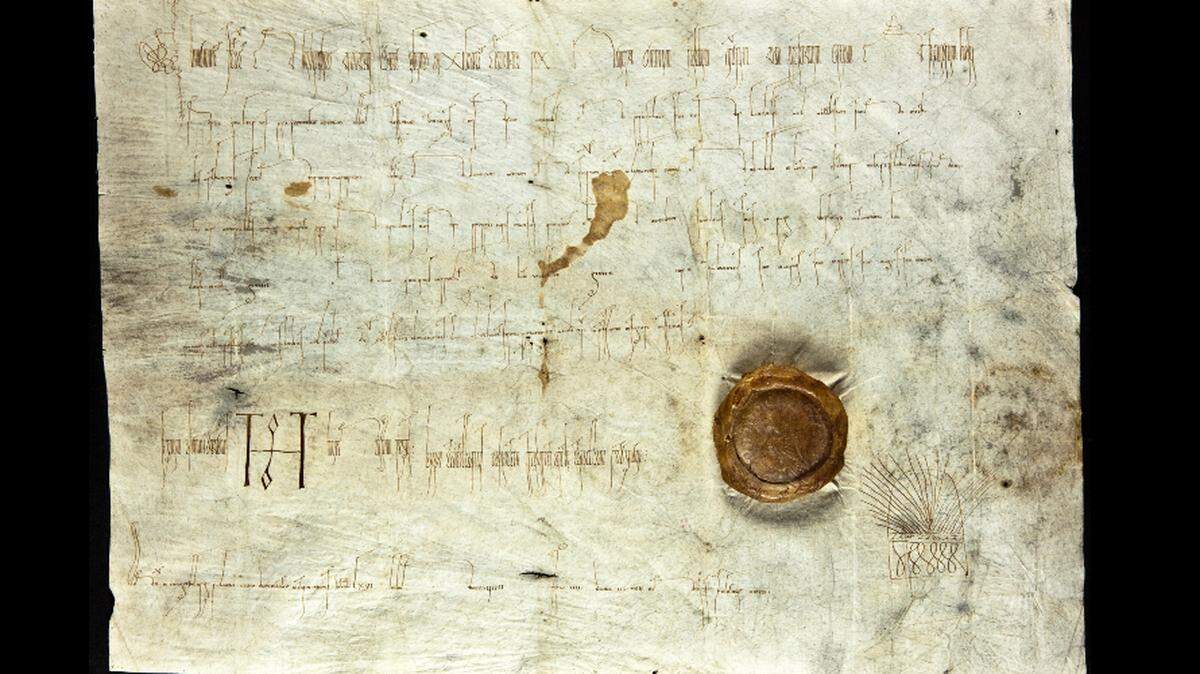
From “Romeo and Juliet” to “The Notebook,” letters have been part of famous love stories.
But intense proclamations of love through the written word aren’t reserved for fiction.
Historians studying a letter written by King Otto I of Germany to his wife Queen Edith have believed the piece was written in 942 A.D. for more than a century, according to a Nov. 25 news release from the University of Exeter in the U.K.
The letter was dated, but what the king wrote didn’t align with historical facts at the time, historians said.
Now, one historian believes these weren’t mistakes at all — but were part of a tribute from a grieving husband.
‘Salvation of the Soul’
King Otto wrote about donating his estate to the church for the “salvation of the soul” of Edith; however, Edith was still alive at the time, according to the release. He also dedicated the donation to the “well-being of his son,” an odd turn of phrase that differentiated this part of his family from a lineage created when he remarried that would go on to create the Holy Roman Empire.
The letter was also signed as “King,” even though Otto would have had the title of emperor when the letter was written, historians said.
These discrepancies convinced many researchers that the letter was a forgery, according to the release. The letter had a written date of 966, but it was redated to 942 after examination by Prussian scholar Theodor Sickel, historians said.
“Dating documents in the Middle Ages presents challenges to historians because they were not yet done according to the Gregorian calendar as is widely used today,” Levi Roach, professor at the University of Exeter and expert in Western European history during the Middle Ages, said in the release. “When I began to examine this piece, I had a ‘Eureka moment’ because within minutes, it was clear that modern scholars had misdated it, and it was, in effect, a tribute to the king’s late wife and their surviving son.”
Roach has been studying more than 540 of Otto I’s documents, including the mysterious letter, to understand his rule better, according to the release.
The pieces, all with a written date of 966, would have been drafted by a royal notary during Otto’s time as ruler, meaning they were likely all written by the same person. Roach noticed typographical and punctuation marks that were consistent across multiple pieces with the same date.
The marks also appeared on pieces dated to 950 — four years after Queen Edith died.
‘Love that lasted through the ages’
“It is by no means a standard royal document,” Roach said. “The passage on the salvation of souls, with its strong emphasis on caring for the ruler’s first wife and their son Liudolf, is clearly out of the ordinary and was already noticed by 20th century historians, who thought that it might hint at some form of undocumented crisis or illness, such as Edith suffering a miscarriage.”
Now with the correct time stamp, clearly after Edith’s death, Roach said it is more likely that the then-emperor wrote the letter for his wife as a symbol of a continuing love.
Edith and Otto married in 929 or 930 to create an alliance between two kingdoms, historians said. Later, Otto succeeded the throne and Edith was named queen, but she died just a decade later, according to the release.
Otto later remarried and was with his second wife for a longer period of time, having more children and changing the line of succession, historians said. But, at the time of his death, Otto chose to be buried with his first love, Edith, at Magdeburg Cathedral, a medieval gothic construction.
“First and foremost, this redating deepens our understanding of this important but difficult to interpret document, which can now be counted among a series issued after 946 for the eternal memory of Edith,” Roach said. “Above all, it provides further insight into the relationship between Otto and Edith. Although they were married for a much shorter period than Otto was with his second wife, it is next to Edith that he would be buried. This was clearly a love that lasted through the ages.”
Magdeburg Cathedral sits in Magdeburg, in central Germany, about a 100-mile drive southwest from Berlin.