Researchers reconstruct 8,400-year-old cooking trays — then make ‘focaccia’-like bread
As families gather around the dinner table for one of the largest feasts of the year, kitchen counters are littered with pie tins, casserole dishes and baking sheets.
Humans have been baking for millennia, and now, reconstructions of ancient baking trays suggests the families in Mesopotamia may have been making some of the same things on our plates today.
Archaeologists recently analyzed fragments of large, oval bowls previously found in the Fertile Crescent, an area between major rivers spanning several modern-day countries in the Middle East. The bowls had shallow walls and were made from coarse clay, according to a study published Nov. 5 in the peer-reviewed journal Scientific Reports and a Nov. 25 news release from the Autonomous University of Barcelona.
The bowls were up to 8,400 years old, dating to the late Neolithic period, and previous studies found they could sustain high temperatures for long periods of time, suggesting they were used for baking and cooking, researchers said.
They are called “husking trays,” according to the study, and because of their resiliency, researchers can now use the trays to try to learn more about the culinary practices at the beginning of civilization.
Evidence of baking
Archaeologists studied 13 husking tray shards collected from the northwestern region of Mesopotamia, dating from about 6400 to 5900 B.C., according to the study.
The pieces were covered in intentional “rough impressions,” researchers said. The grooves would allow food, like bread, to come off the tray easier after it was baked, previous research found.
Archaeologists analyzed the wear on the fragments through “macro-wear” as well as minerals and chemicals left behind on the surface through “micro-wear,” according to the study.
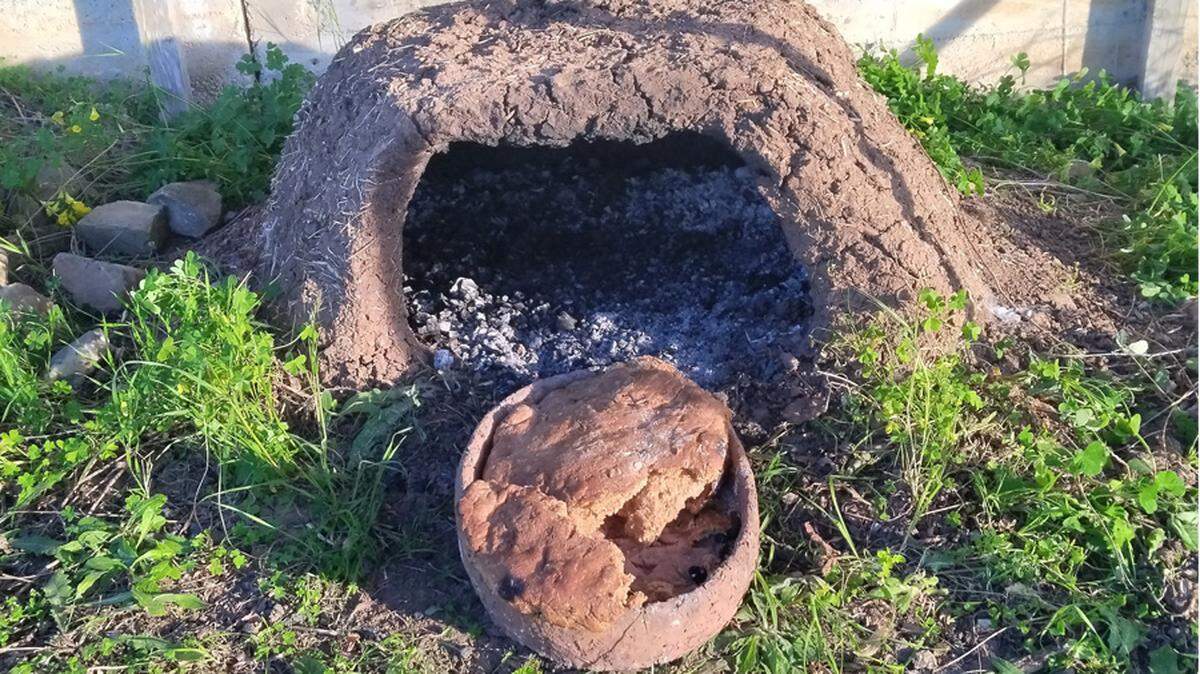
These were compared to the marks and evidence left behind when researchers tried to replicate the baking, creating husking tray replicas and making dough. The analysis not only confirmed how the trays were used, but also what was baked on them.
“In particular, the analysis of phytoliths (silica residues from plants) suggests that cereals such as wheat or barley, reduced to flour, were processed in these trays,” researchers said. “Furthermore, the analysis of organic residues indicates that some of the trays were used to cook foods containing animal-derived ingredients, such as animal fat, and in one case, plant-based seasonings.”
Researchers found the trays reached a temperature high enough for baking and similar to temperatures reached using domed ovens from the same era, according to the release.
Not only could the archaeologists show large amounts of bread were likely baked on the shards, but some of them were similar to focaccia.
“Our study offers a vivid picture of communities using the cereals they cultivated to prepare breads and ‘focaccias’ enriched with various ingredients and consumed in groups,” study author Sergio Taranto said. “The use of the husking trays we identified leads us to consider that this late Neolithic culinary tradition developed over approximately six centuries and was practiced in a wide area of the Near East.”
Origins of focaccia
Focaccia, the traditionally Italian precursor to pizza, is considered one of the country’s oldest breads, according to Britannica.
The flattened loaves are baked with olive oil, herbs, cheese and other ingredients and were first attributed to the Etruscans, a civilization that thrived around the sixth century B.C. and later influenced the Romans, according to Britannica.
The new analysis suggests that while it may not be “traditional” focaccia, flat bread cooked with oil from animals or plants was baked centuries before it became a staple in Italy.
The study team included researchers from the Autonomous University of Barcelona, the University La Sapienza, the Milà i Fontanals Institution and the University of Lyon.
The research team includes Taranto, Adrià Breu Barcons, Marta Portillo, Marie Le Miere, Anna Bach Gomèz, Miquel Molist and Cristina Lemorini.