Experts discover hidden medical detail in Michelangelo’s ‘The Flood’ painting. See it
Warning: This story contains imagery that includes an artistic depiction of nudity.
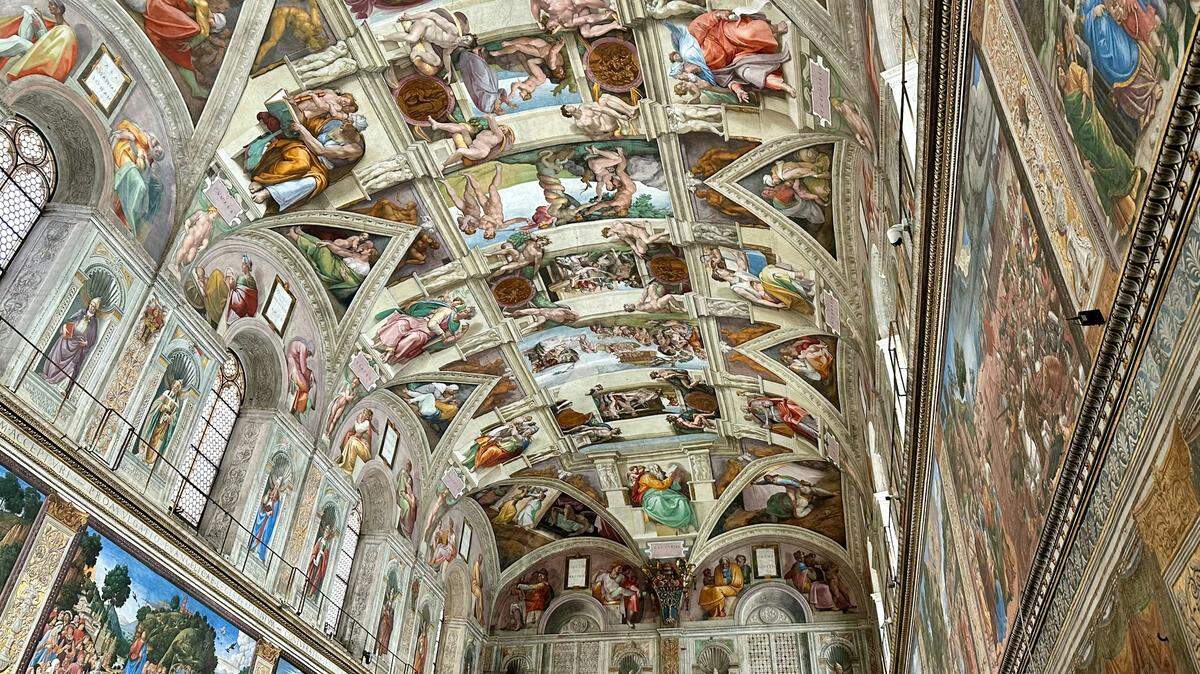
The frescoes of the Sistine Chapel, painted on the ceiling and walls in the Pope’s official residence in Vatican City, may be one of the most extraordinary feats in art history.
Intricate figures tell the story of the Book of Genesis, the first book of the Hebrew Bible and the Christian Old Testament, filled with stories of the beginning of creation.
Famed artist Michelangelo Buonarroti began work on the daunting project in 1508 by order of Pope Julius II, intending to only paint the 12 Apostles. Instead, four years later, more than 300 figures were spread across the expansive ceiling and vault.
Now, experts have discovered Michelangelo’s attention to anatomical detail may have captured centuries-old cases of breast cancer.
“In the second span of the vault, the first pictorial scene was ‘The Flood’ where the artist painted a group of individuals that are fleeing from the rising water. On the left side of the fresco, an almost naked young adult woman is depicted. She wears only a blue headscarf, indicating her married status, and a blue cloak,” researchers said in a study published Oct. 18 in the peer-reviewed journal The Breast.
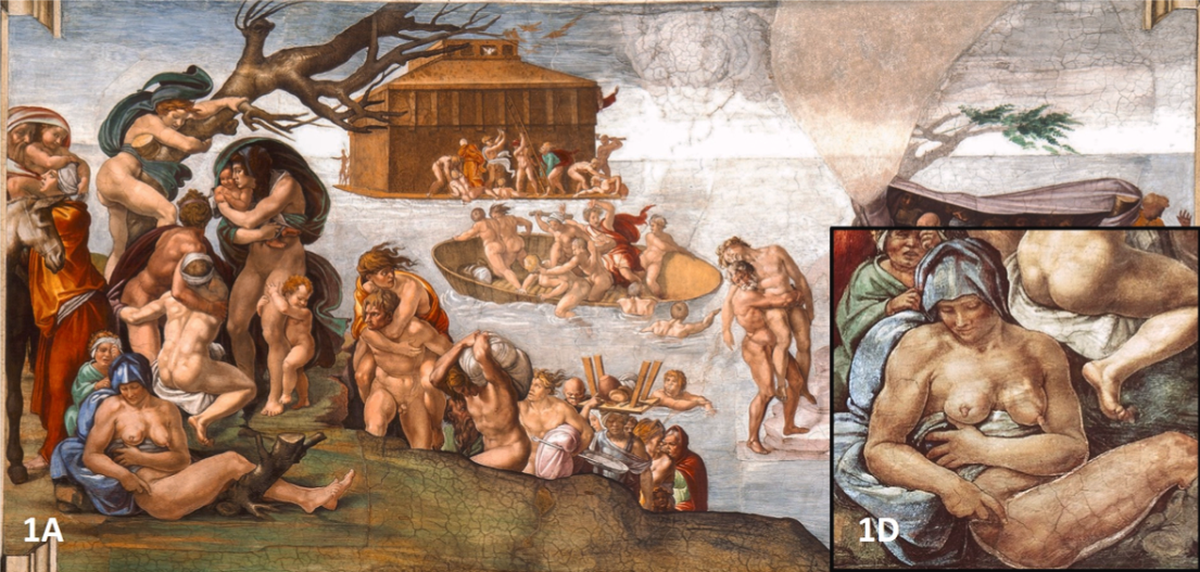
A team of art historians and medical professionals used the “Guidelines for Iconodiagnosis” to take a closer look at the woman’s breast anatomy, according to the study.
Iconodiagnosis is a process developed to study medical conditions in historical art, providing physical symptoms and anatomical details for centuries-old conditions and diseases that may be hard to study.
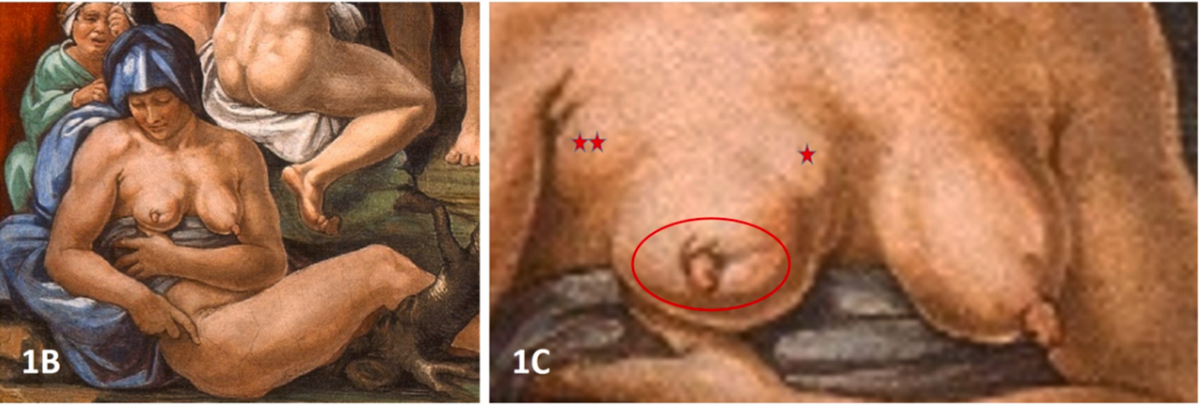
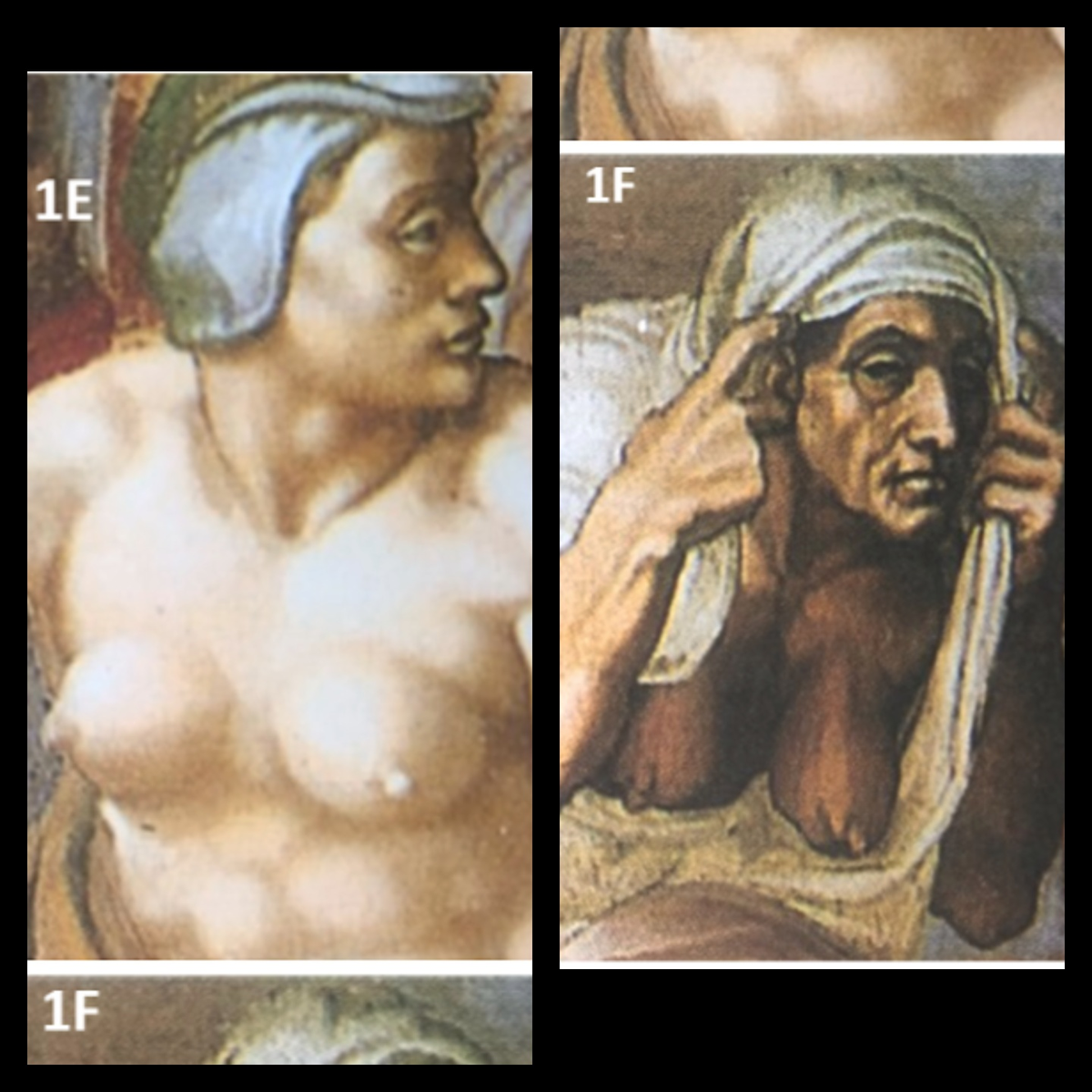
“Careful observation indicated that (the blue-cloaked woman’s) left breast shows age or breastfeeding-associated ptosis (drooping) with a prominent nipple and smooth contours,” researchers said. “The contrast with the right breast is evident. Although slightly elevated by her right arm, there is a significantly retracted and deformed nipple.”
The area around the nipple is painted as “retracted” and “eroded,” and the skin above the nipple is “deeply indented,” according to the study.
The upper side of the breast has a bulge suggesting a lump beneath the skin, and another bulge is painted on the underside of the breast, researchers said.
“Some might argue that the woman depicted is quite young for a diagnosis of (breast cancer), given that today 85% of patients with this disease are over 50,” according to the study. “However, applying modern data to the Renaissance period is not entirely accurate, as the average life expectancy was around 35 years, which could have influenced the presentation and characteristics of cancer at that time.”
Experts ruled out other conditions like tuberculosis and chronic inflammatory diseases that can present in the breasts, as well as trauma that may change the shape of the nipple and surrounding tissue.
Instead, researchers believe the artistic choice was not only intentional but may also give health experts more evidence to the origins of the breast cancer-causing BRCA1 genetic mutation.
“The result of our observation indicates that Michelangelo had knowledge of healthy breasts of different sizes and morphologies and adapted them to the biblical feminine personages,” researchers said. “Reproduction of pathologic breast conditions with a specific symbolism or theological meaning was (purposely) represented by the artist.”
Michelangelo was born near Florence and began assisting in autopsies at the age of 17 to better understand anatomy, according to the study. He may have seen breast cancer in this setting.
Just a few miles away in Tuscany, a genetic mutation 1,800 years ago gave rise to the BRCA1 mutation, which accounts for 5-10% of all breast cancer cases, including those who develop the cancer at a much younger age, researchers said.
Michelangelo may also depict breast cancer in his sculptures, including The Night, which was created 14 years after the completion of the Sistine Chapel and depicts an idealized “adult mature woman who becomes the symbol for (eternal) sleep, death, darkness (and) memory loss,” researchers said.
In her case, a breast with deformities represents breast cancer as fate, not a form of punishment like that of the Jews in the Book of Genesis, according to the study.
In the case of the blue-cloaked woman in “The Flood,” Michelangelo’s choice to paint the woman with breast cancer “is linked to the concept of the impermanence of life and has the significance of punishment,” researchers said.
The woman is also pointing toward the ground from the side where her breast is exposed, possibly in reference to Genesis 3:19: “for dust you are and to dust you will return,” according to the study.
“Both her incurable illness and the gesture are inseparable and illustrate mortality due to punishment,” researchers said. “Death (and being aware of the end) is the final consequence of Adam’s sin. In accordance with this verse from the Bible, the cropped tree under the legs (of the woman) could remind us of the tree of knowledge.”
The dichotomy between beauty and disfiguration is a metaphor Michelangelo brought to his work from Neoplatonism, researchers said, in which beauty represents immortality and illness represents “spiritual abyss.”
“Michelangelo’s individuals are painfully aware of their destiny rather than being petrified by the danger that hovers over them,” according to the study.
The Sistine Chapel resides in the Apostolic Palace in Vatican City, located within Rome, Italy.
The study’s authors include Andreas G. Nerlich, Johann C. Dewaal, Antonio Perciaccante, Laura Cortesi, Serena Di Cosimo, Judith Wimmer, Simon T. Donell and Raffaella Bianucci.