Skeleton found in Belgium cemetery came from 5 bodies — thousands of years apart
Decades ago, archaeologists in a Belgian town near the French border discovered a large, ancient cemetery.
Positioned along a river outside a Gallo-Roman town, the site held 76 cremation burials and one buried body, according to a study published Oct. 23 in the peer-reviewed journal Antiquity.
The cremated remains were dated to the Roman period, between the second and third centuries A.D., researchers said, and it was assumed the bones were from the same era.
The skeleton was buried in an odd position for the Romans, but a bone pin from the Roman period found near the skull seemed to confirm the researchers’ suspicions, according to the study.
Now, new analysis of the bones has found that not only are they much older than previously believed, but also the bones belong to more than one person.
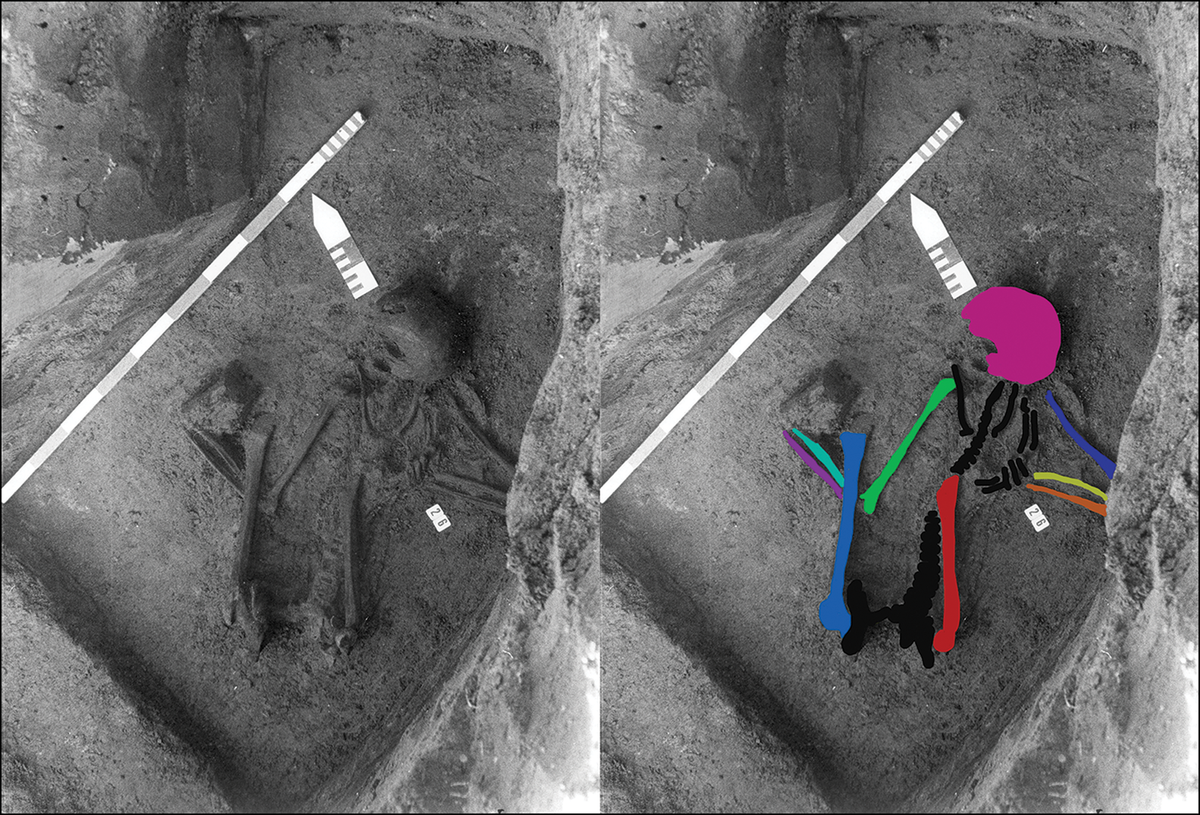
“The presence of five adult first right metatarsals (a foot bone) and two non-adult first proximal foot phalanges (another foot bone) in different stages of development suggest that bones from at least seven individuals were included in the burial,” according to the study.
Some of these bones were scattered around the main body, researchers said, so the long bones of the body, like femurs (leg bones) and the skull were DNA tested.
The results showed the main bones of the body came from at least five individuals, according to the study.
The bones were also radiocarbon dated, a process that measures the level of carbon decay to date organic material. Researchers found the bones were thousands of years older than the Romans, dating to the late Neolithic period, according to the study.
“Although all date broadly to the late Neolithic, the time intervals for some elements do not overlap,” researchers said. “The high variability present suggests that the individuals lived and died during at least three different periods.”
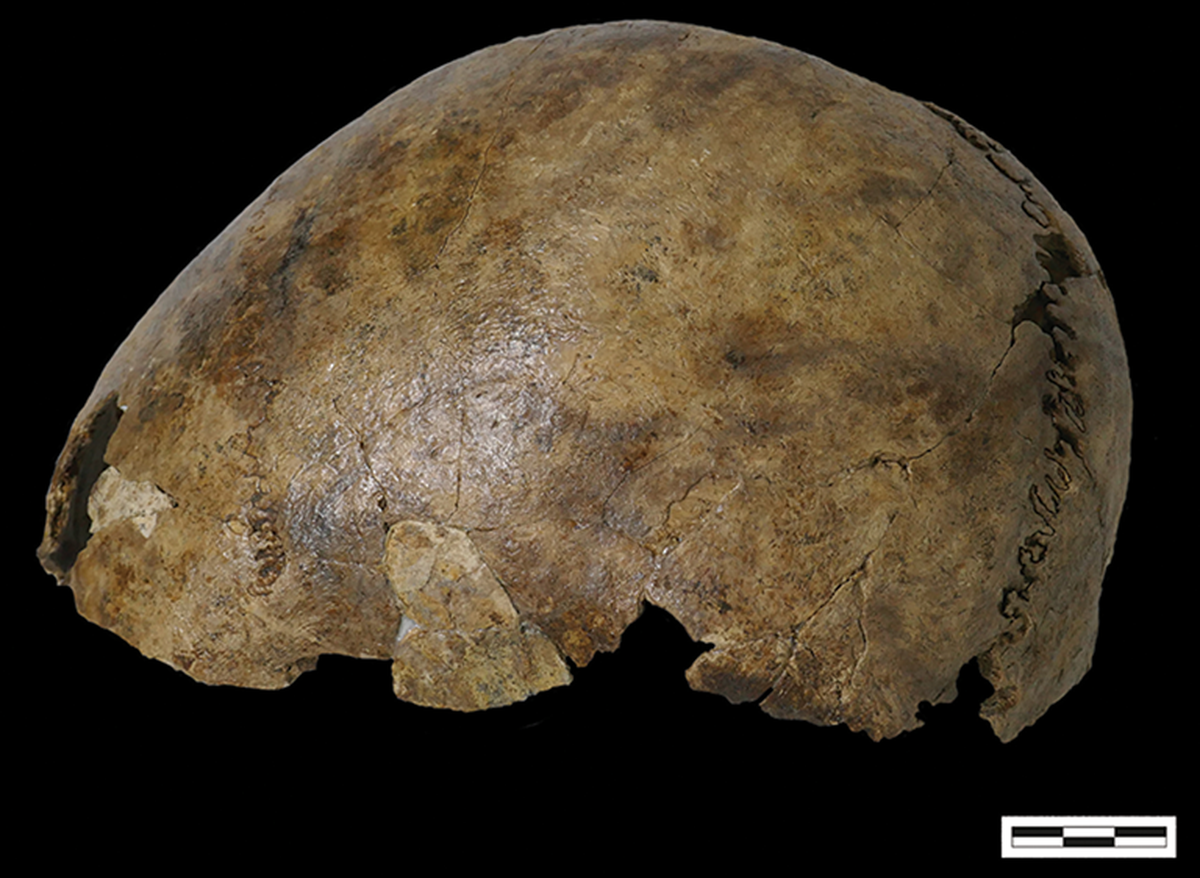
The skull, however, was an exception.
Like the rest of the cemetery, the cranium dated to the Gallo-Roman period, suggesting that it was added later to the burial, researchers said.
The burial is called a “composite inhumation,” a practice in which a group will build a skeleton for social purposes from the bodies of multiple individuals. The practice has been observed in communities from the Paleolithic to the Romans, including examples in Scotland and Egypt, according to the study.
“One possibility is that the composite inhumation was disturbed during the internment of cremations during the Gallo-Roman period. Either there was originally no cranium and the Roman community that discovered the burial added one to complete the ‘individual,’ or they replaced the existing Neolithic-date cranium with a Roman-period one,” researchers said.
Alternatively, researchers said it was possible the entire skeleton was created during the Roman period using older bones that had been discovered.
“If so, to our knowledge, this would be the first Roman grave in which a new ‘individual’ was assembled from prehistoric and Roman bones,” according to the study.
Based on the position of the body, the first scenario is more likely as it was not a common burial formation used by the Romans, researchers said, and therefore the composite skeleton took 2,500 years to complete.
“Whether the Neolithic bones were obtained from burials at Pommerœul or from more distant mortuary contexts, and whether the assembly of the bones occurred in the Late Neolithic or in the Roman period, the presence of the ‘individual’ was clearly intentional,” researchers said. “The Gallo-Roman contribution of a cranium to the composite individual is certain but the motivation remains obscure; perhaps this community was inspired by superstition or felt the need to connect with an individual who had occupied the area before themselves.”
Pommerœul is in western Belgium near the northeastern border of France.
The research team includes Barbara Veselka, David Reich, Giacomo Capuzzo, Inigo Olalde, Kimberly Callan, Fatma Zalzala, Eveline Altena, Quentin Goffette, Harald Ringbauer, Henk van der Velde, Caroline Polet, Michel Toussaint, Christophe Snoeck and Laureline Cattelain.