1,400-year-old burial — holding married couple — found in China. See inside the tomb

During the beginning stages of a construction project in Qingzhou, China, archaeologists discovered the remains of an ancient cemetery.
From the surface, the burials may only appear as a few stones, but as the researchers dug deeper into the soil, the large tombs were revealed.
Three brick chamber tombs from the Tang Dynasty and one brick carving tomb from the Song Dynasty were discovered, according to an Aug. 7 news release from the Shandong Underwater Archaeology Research Center.
The Tang Dynasty lasted from the year 618 to 907, according to Britannica, and was followed by a short gap before the Song Dynasty began in 960 and lasted until 1279.
Burials during this era were marked by large tombs, complete with a passage leading down to the tomb’s entrance, according to the release.
The tombs were square with rounded corners or circular, officials said, and the bottom of the space was built into a concave coffin bed using bricks.
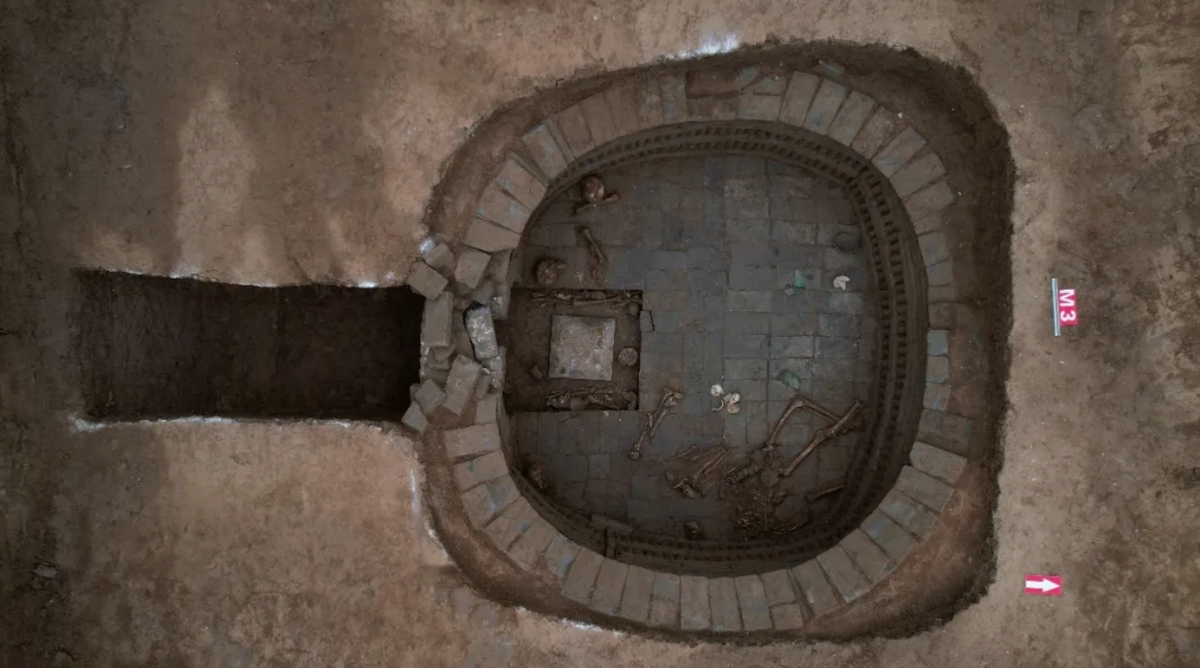
The three Tang tombs were damaged and artifacts had been moved, according to the release. Archaeologists found white glazed pots, brown glazed bowls, porcelain, tower-shaped jars, tripod bowls, bronze mirrors, bronze ornaments, copper coins and one epitaph, or tombstone.
At the second Tang tomb, a stele (another type of tomb marker) had been broken and eroded, but an inscription could still be read on its surface, officials said. The stele marked the grave of a man named Shao Gong, who once held a position of power. He was 70 years old when he died and he was buried in October, according to the release.
At the third tomb, an epitaph found in the pit between the tomb’s corridor and its chamber was decorated with a geometric pattern and engraved with flowers and leaves, officials said. There are 12 zodiac patterns on the sides of the stone, and the image of a human body with an animal head wearing a robe with wide sleeves.
The script on the stone also identified the bodies inside, according to the release. Lady Zhao Gong was laid to rest at the age of 55 with her husband, Mr. Zhao Gong who had died previously, officials said.
The Song Dynasty tomb was built later, and the construction was slightly different, according to the release.
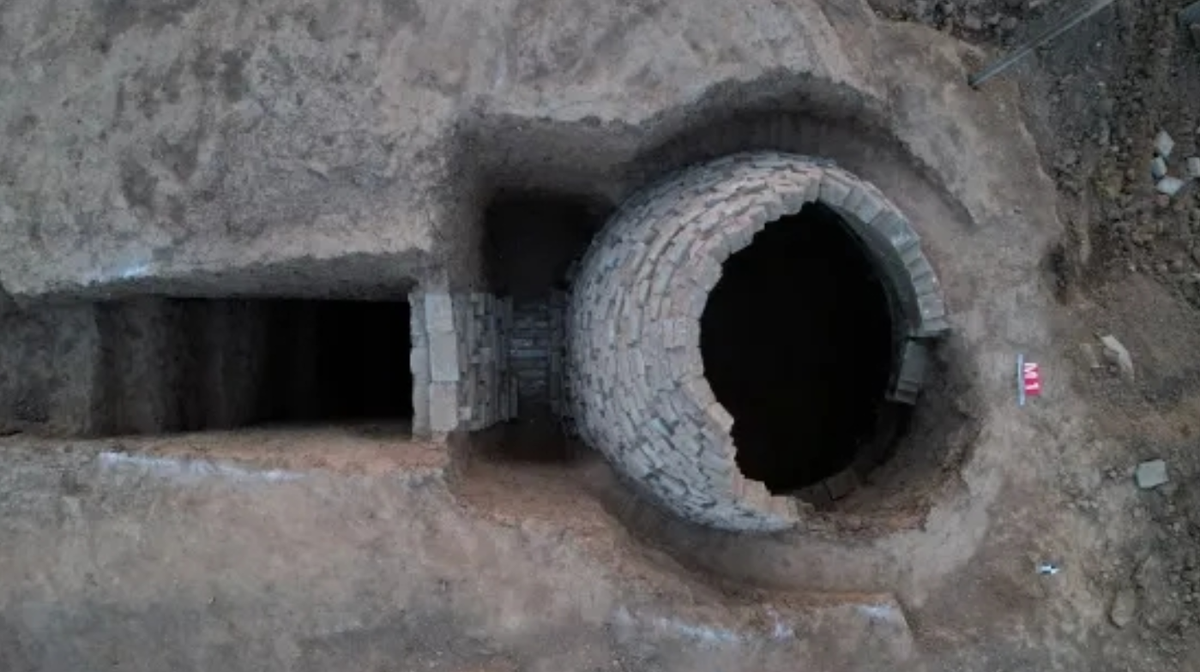
Built with a domed top, the stones were placed to mimic a wood-like structure, according to the release.
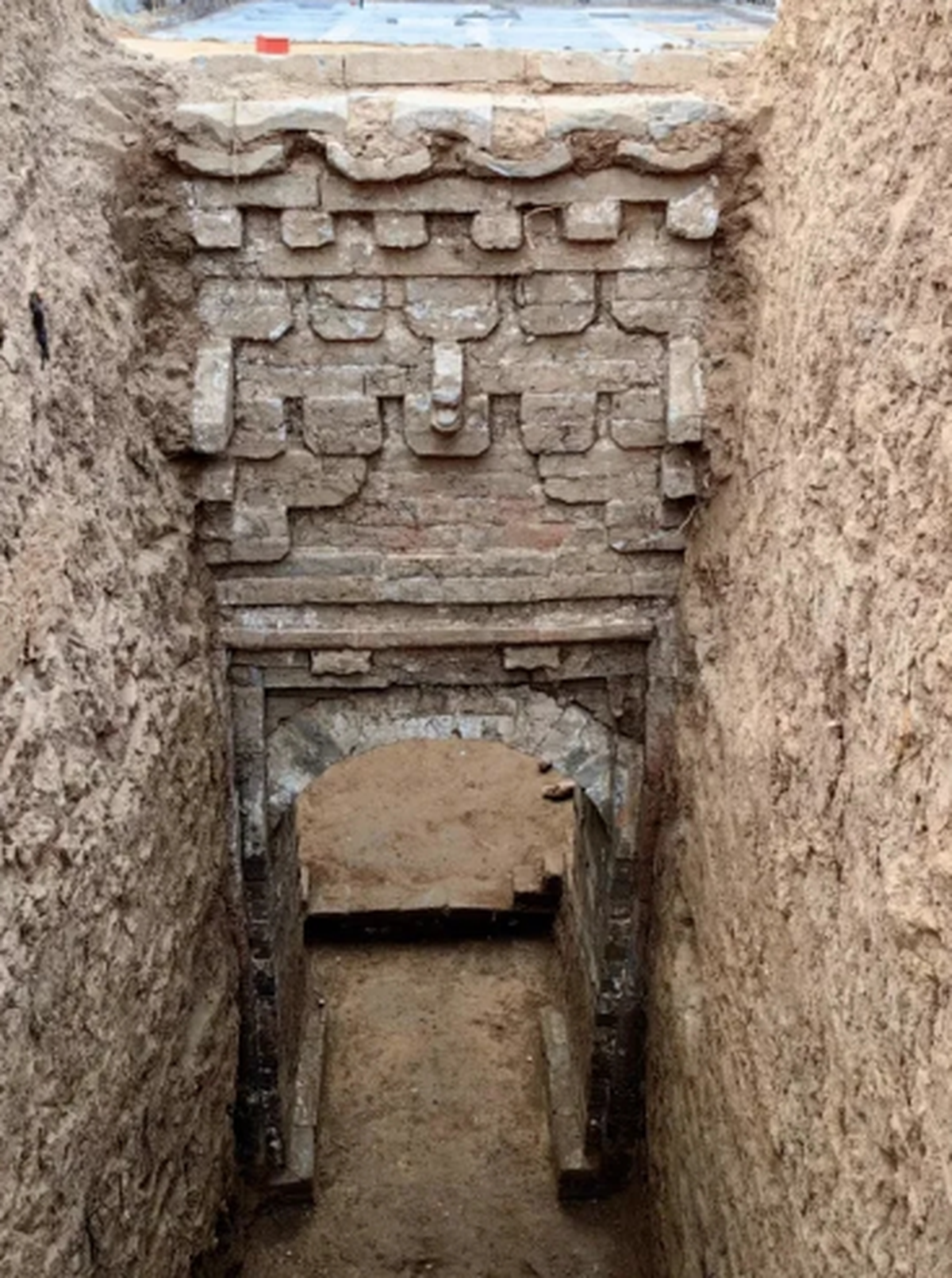
A large gatehouse door has layers of brick and stone in different shapes to appear like it is the front of a wooden home, officials said. There were once red and black murals painted onto the gatehouse, but they were not preserved.
Inside the tomb was also painted, according to the release. At one time paintings lined the walls, but over time they disappeared, leaving only sporadic white and red coloration.
In this tomb, the coffin bed is made from soil instead of bricks, and the concave portion of the bed has blue bricks connecting it to the corridor leading to the surface, officials said.
Qingzhou is in central Shandong Province on the eastern coast of China.
Baidu Translate was used to translate the news release from the Shandong Underwater Archaeology Research Center.