12,000-year-old markings found on stone in Turkey may be oldest solar calendar. See it
For as long as humans have existed, they’ve looked up at the stars.
Whether searching for prophecy or navigational guidance, humans have assigned meaning to stars’ location and illumination in the night sky.
Martin Sweatman, from the school of engineering at the University of Edinburgh, said humans have been observing stars for more than 50,000 years, and later communities were known to “encode astronomical data in their megalithic monuments,” according to a study published July 24 in the journal Time and Mind.
“For example, one of the most famous ancient megalithic sites of all, Stonehenge, is thought to be arranged to celebrate either the summer or winter solstice or both,” Sweatman said. “Recent work suggests it also encodes a solar calendar.”
Now, through analysis of ancient stone pillars discovered in modern-day Turkey, Sweatman believes he may have identified the oldest solar calendar ever found — a series of V-shaped lines.
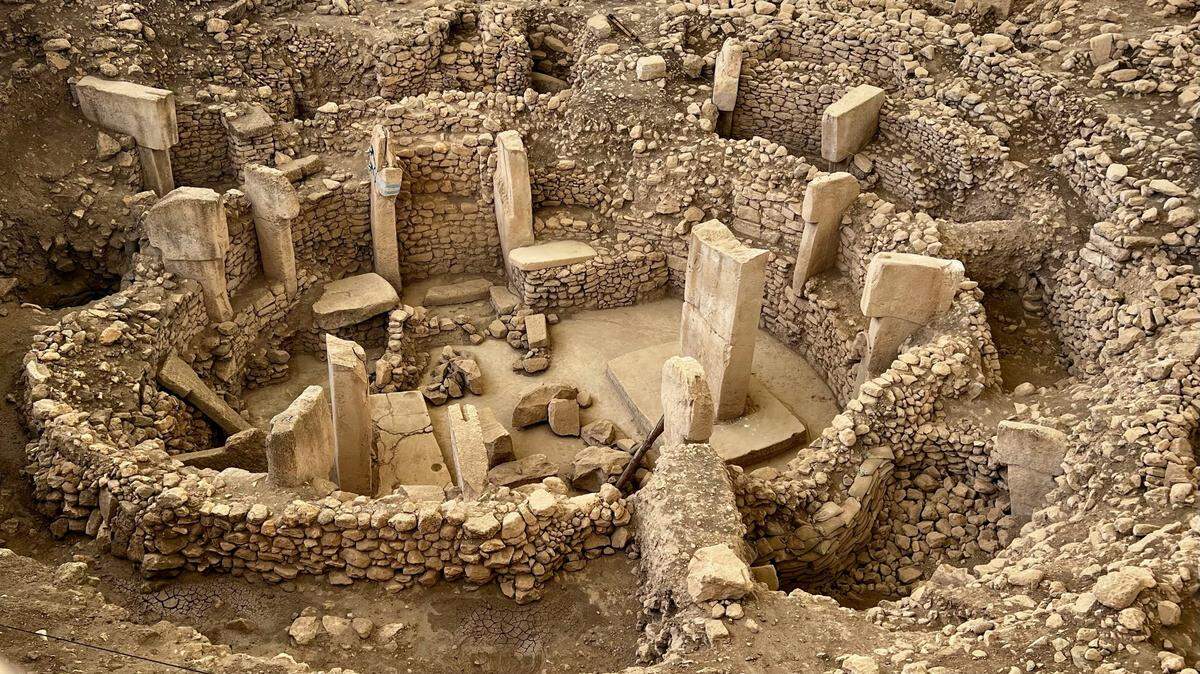
Göbekli Tepe is an archaeological site in southern Turkey that became famous for architecture with large, stone enclosures, Sweatman said.
Large, T-shaped pillars are arranged in circular patterns with two “twin” pillars at their center, a nod to sky-deity mythology, according to the study.
The pillars are covered in artistic carvings, Sweatman said, one of which was identified as a Younger Dryas impact event, a global catastrophe around 10,800 B.C. that sent the world into a miniature ice age and extinction event.
Another pillar showed the Taurid meteor stream, believed to be what caused the catastrophe, according to the study.
“If this interpretation is correct, it has profound consequences,” Sweatman said. “Partly, this is because it implies that astronomical knowledge was far in advance of what is generally assumed for this time.”
To better understand the culture’s relationship with time, Sweatman set out to decode one of the site’s iconic pillars: Pillar 43.
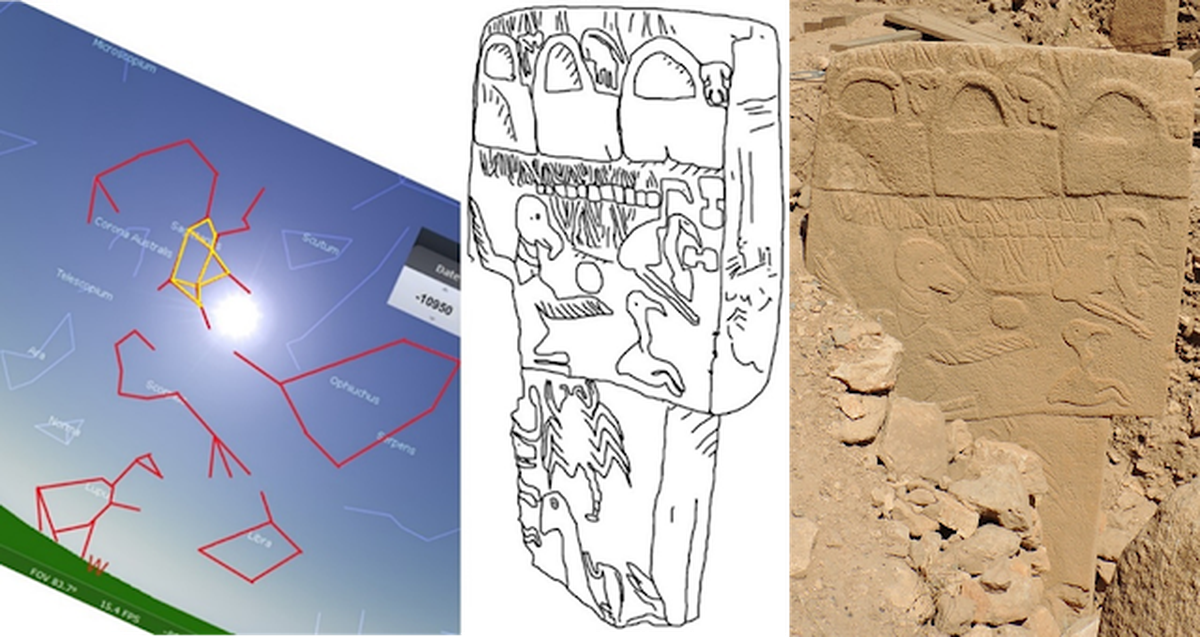
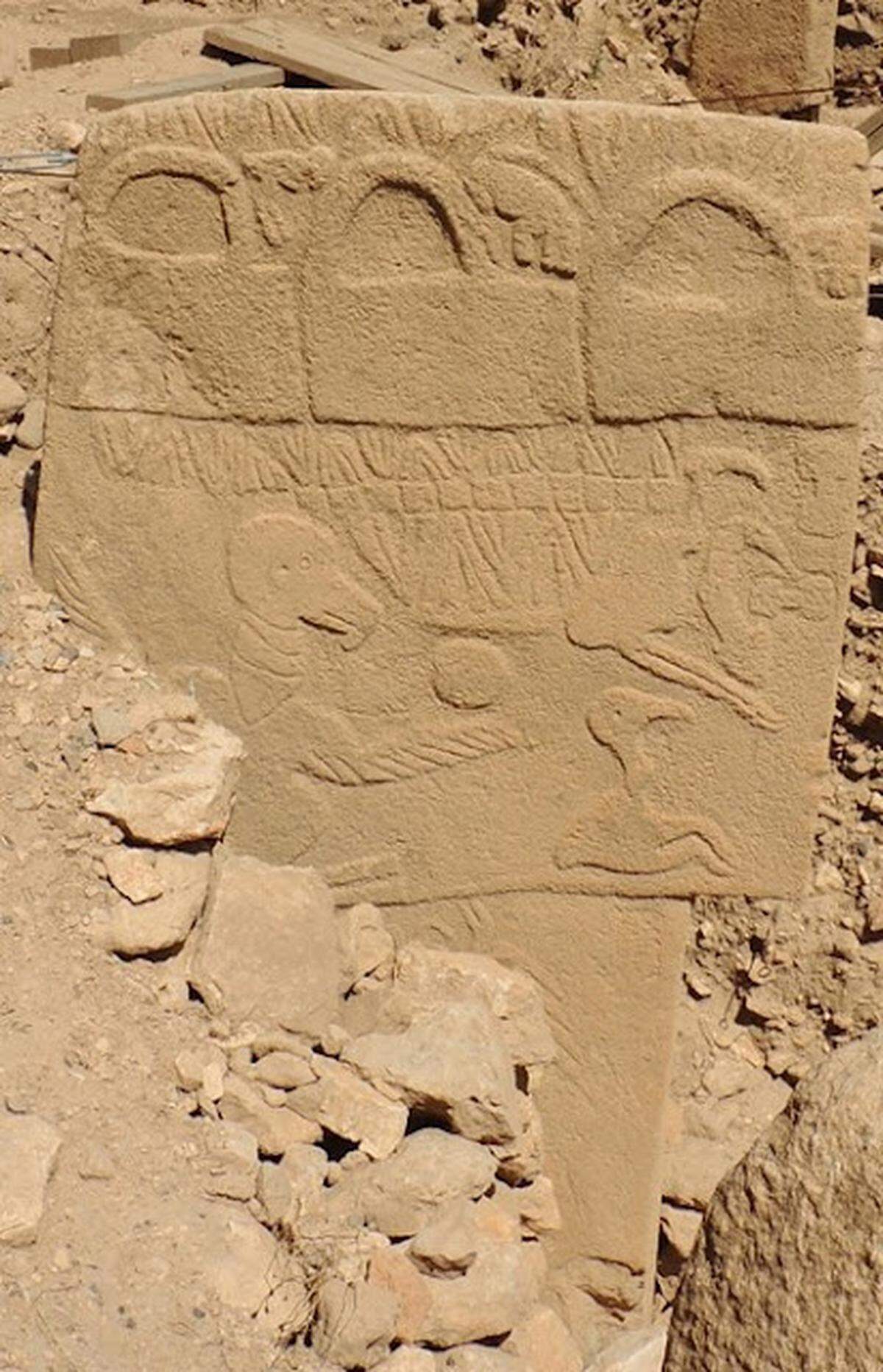
“Pillar 43 is split into two sections by rows of V-symbols and small box-symbols,” Sweatman said. “The lower, main portion has a circular disc symbol supported above the wing of a bird of prey. Below this bird is a scorpion symbol. If the circular disc represents the sun, as expected, then the animal symbols probably represent constellations. In particular, the scorpion reminds us of the Greek Scorpius constellation. Its position relative to a circular disc clearly points to an astronomical interpretation.”
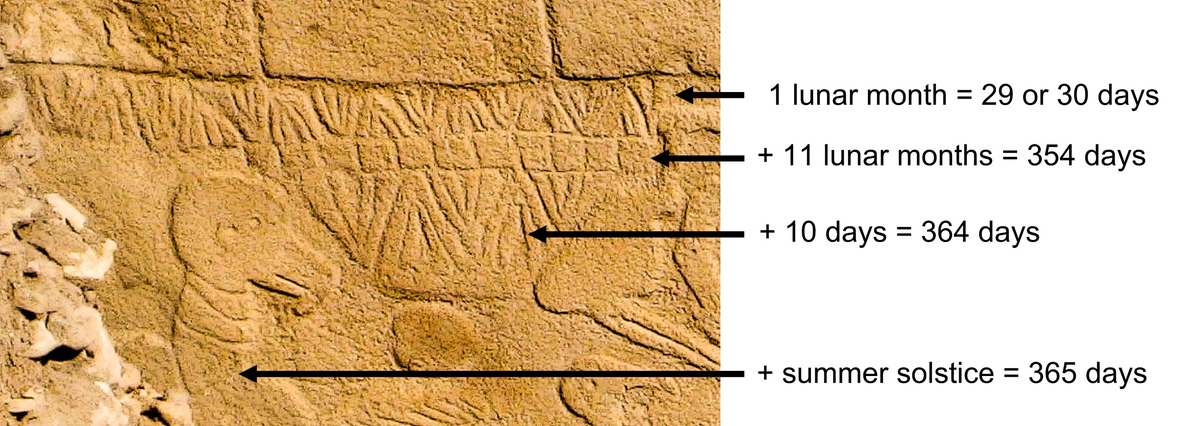
Then Sweatman started to count the rows of V-shaped lines.
The top row had 29 or 30, the second row had 11, the third row had 10 and there was one additional set of Vs further down the stone, according to the study.
If our understanding of days and months (as calculated by days and nights around the sun) is applied, then the first line is 29 or 30 days, about one month. The second line is 11 lunar months, or 354 days. The third line is an additional 10 days, bringing the total count to 364. Then, the final set of V-shaped lines are one more day, bringing the total days depicted on the stone to 365.
The final additional day would represent the solstice, Sweatman said, meaning this collection of lines is not just decorative, but a calendar based on the sun.
Sweatman said the carvings may have been drawn to record the day the meteor shower hit the Earth, something that would have changed life itself.
It also shows an extreme degree of precision, Sweatman said, something not seen in other cultural relics for millennia.
“This event might have triggered civilization by initiation of a new religion and by motivating developments in agriculture to cope with the cold climate,” Sweatman said in an Aug. 6 news release from the University of Edinburgh. “Possibly, their attempts to record what they saw are the first steps towards the development of writing millennia later.”
Göbekli Tepe is in southern Turkey, outside the city of Şanlıurfa, and just north of the border with Syria.