
Families with autistic children banned from adopting dogs from Canadian rescue group
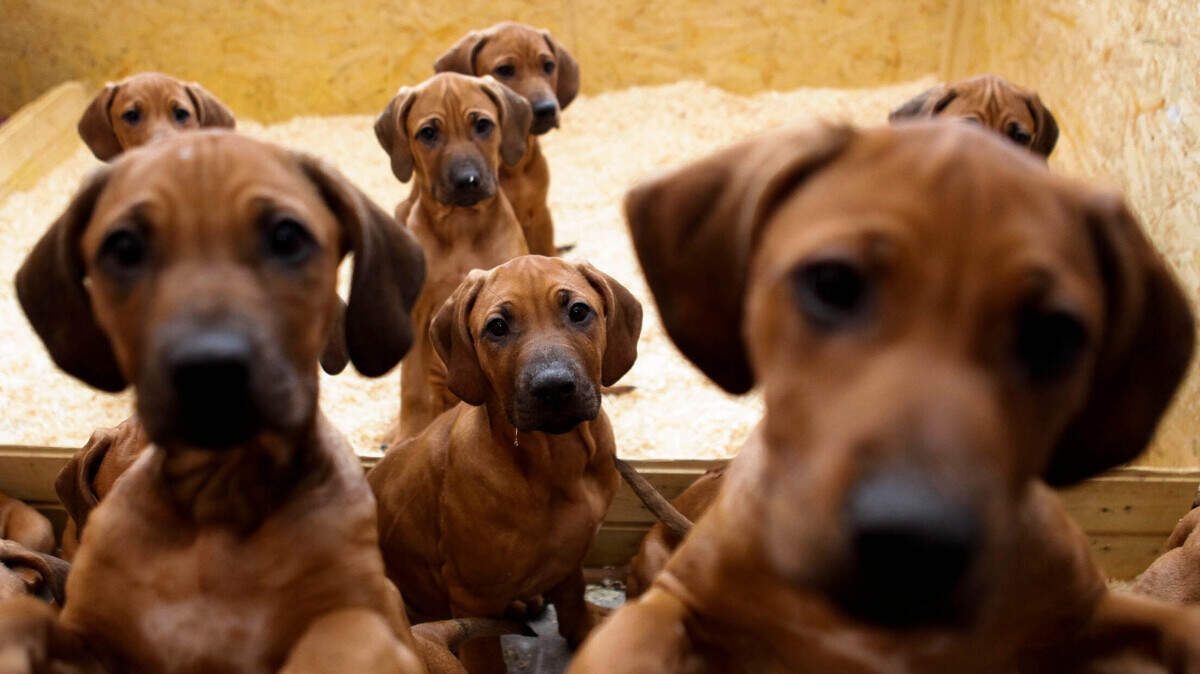
If a family with an autistic child wants to adopt a dog in Ontario, Canada, one rescue group will reject them.
This has been Kismutt Dog Rescue’s policy for approximately 10 years, according to a post on the organization’s Facebook page written by the owner. The rescue is located in Kintore.
“NO dog will be adopted into homes with Autistic children,” it said on March 22.
However, the rescue group told McClatchy News it will adopt dogs to “people with a whole host of disabilities,” such as individuals who are blind, deaf, have Down syndrome, Parkinson Disease, Alzheimer’s Disease and more.
The group’s policy has disappointed one couple who has a 9-year-old autistic son named Henry in Ontario, CBC reported. They reached out to Kismutt Dog Rescue asking if the group could meet their son in person.
“I got an email back later, just basically saying, ‘Sorry, I hope you understand, but I don’t think based on your son’s autism that it would be a good fit,’” Erin Doan told the outlet.
The rescue owner’s lengthy Facebook post addressed “Mama Bears” and also Doan by sharing two stories about how the group adopted dogs to two separate autistic children and why it resulted in the policy.
Two alleged instances, one in 2008 or 2009 and another in 2012, were detailed in which two autistic children became violent with the dogs adopted from the rescue, according to the post.
“I was sick about it. To this day, I relive it in my mind,” the owner wrote, adding that “after the second incident with the second dog, I made a policy.”
“Some may (criticize) my policy, but I just will not take a chance with another dog. Erin Doan, my rescue dogs are deserving of SAFE, loving forever homes. That’s my job. If you don’t like it, too bad,” the post said near the end.
“Just because a parent of an Autistic child thinks their child is perfect.....don’t ALL Mom’s think their children are perfect?”
Autism spectrum disorder is considered “a neurological and developmental disorder that affects how people interact with others, communicate, learn, and behave” and “there is wide variation in the type and severity of symptoms people experience,” according to the National Institute of Mental Health.
The rescue group wrote in a subsequent post on March 24 that it has received backlash, death threats and hate mail since CBC published the article sharing Doan’s experience.
“We have to be very careful placing dogs with children,” the rescue told McClatchy News.
“If a dog were to retaliate and bite or (attack) a child, that would be horrible and all over the news, wouldn’t it? We have to consider both the dog and the child.”
Meanwhile, Autism Society Ontario denounced the rescue’s policy and called it a “discriminatory ban against autistic children and families.”
The Facebook post added that one rescue volunteer is a teacher who claimed “99% of her Autistic students have outbursts and can be aggressive and violent.”
Autism Society Ontario wrote it is “deeply troubled by Kismutt’s reliance on dangerously incorrect information” cited.
“The post also disturbingly stereotypes “99%” of autistic children as violent, a statement that blatantly overlooks basic science, which states that the risk of violent (behavior) in autistic people is no higher than it is among the general population and that violent (behavior) in autistic people is not a factor of autism, but is due to other diagnoses existing alongside autism,” the organization said.
Autism Society Ontario communications specialist Michael Cnudde, who said he’s on the autism spectrum, told McClatchy News that the organization is calling on the rescue to “rescind its ban.”
“More to the point, this is ableism, discrimination against people with disabilities such as autism,” he said.
“Moreover, people with disabilities, such as those on the autism spectrum, are more likely to be victims of violence and discrimination, than they are to be perpetrators.”
In a statement to McClatchy News, a spokesperson for a legal clinic in Ontario that specializes in disability rights law said Kismutt Dog Rescue’s policy “appears on its face to be blatantly discriminatory and unlawful.”
“It is differential treatment that is the result of ableist stereotypes that explicitly excludes children with autism from the Rescue’s services,” said Ilinca Stefan, a staff lawyer from ARCH Disability Law Centre.
“Ontario’s Human Rights Code says that persons with disabilities have the right to be free from discrimination in the provision of services. This means that the Rescue has a legal obligation to provide services without discrimination in accordance with the Code.”
In 2019, Purdue University began research analyzing service dogs’ influence on children diagnosed with autism spectrum disorder.
“The specific goal of this project is to quantify the therapeutic effects of service dogs on children with ASD and their caregivers,” a statement said.
Additionally, one study published in the National Library of Medicine that surveyed 70 parents of children diagnosed with autism spectrum disorder and had pet dogs found that “pet ownership may be associated with increased social skills” for the children.
Pet dogs “can have a positive impact on children with autism,” Healthline reported and shared additional research.
“Thousands of people on the autism spectrum in Ontario continue to benefit from having pets. A pet can provide an additional source of stability, comfort, and love in the life of an autistic person,” Cnudde said.
The rescue told McClatchy News that “our dogs are adopted out strictly as pets.”
“They are not trained service dogs. This is in our contract at time of adoption and has been in our contract for 22 years.”
When asked whether the rescue believes that children with autism should only be placed with service dogs as opposed to pets, it said that “the majority of our dogs come from traumatizing (backgrounds).”
“Therefore, we have to be extra cautious where we place our dogs for the safety of the child and the dog.”
Cnudde noted how “autism is a spectrum, so each autistic person will have distinct characteristics. No two are the same.
“So to adopt a blanket ban based on an outdated stereotype that all people with autism are the same and are violent is an insult not only to those people on the spectrum but also to their families and supporters.”
He added that Autism Ontario is “willing to work with Kismutt Dog Rescue and provide them with resources so that everyone can enjoy pet ownership.”
The rescue’s entire Facebook post is below:
This story was originally published March 31, 2022 at 2:01 PM.
.jpg)