Time running out for trapped survivors as Venezuela quake toll reaches 1,430
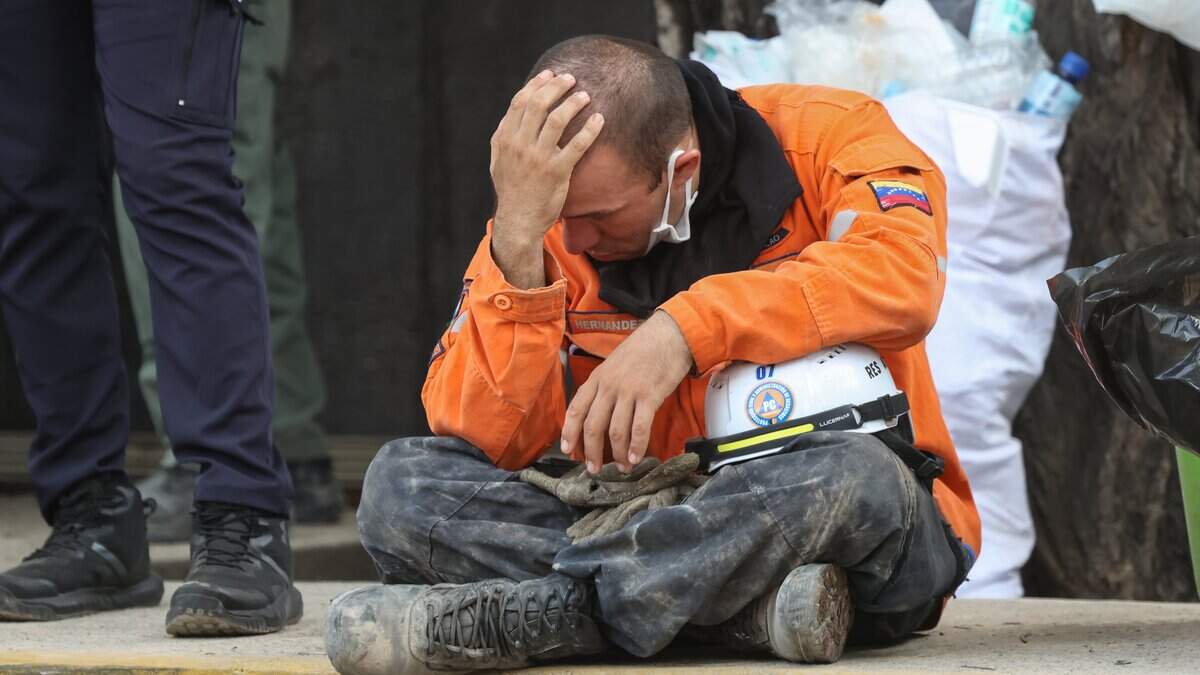
With aftershocks still rattling shattered neighborhoods and thousands sleeping outdoors, Venezuela’s earthquake catastrophe worsened Saturday as the official death toll climbed to at least 1,430.
Authorities said 3,238 people have been injured, while 3,142 displaced families are being housed in temporary shelters across the seven hardest-hit states, according to figures released Saturday by National Assembly President Jorge Rodríguez.
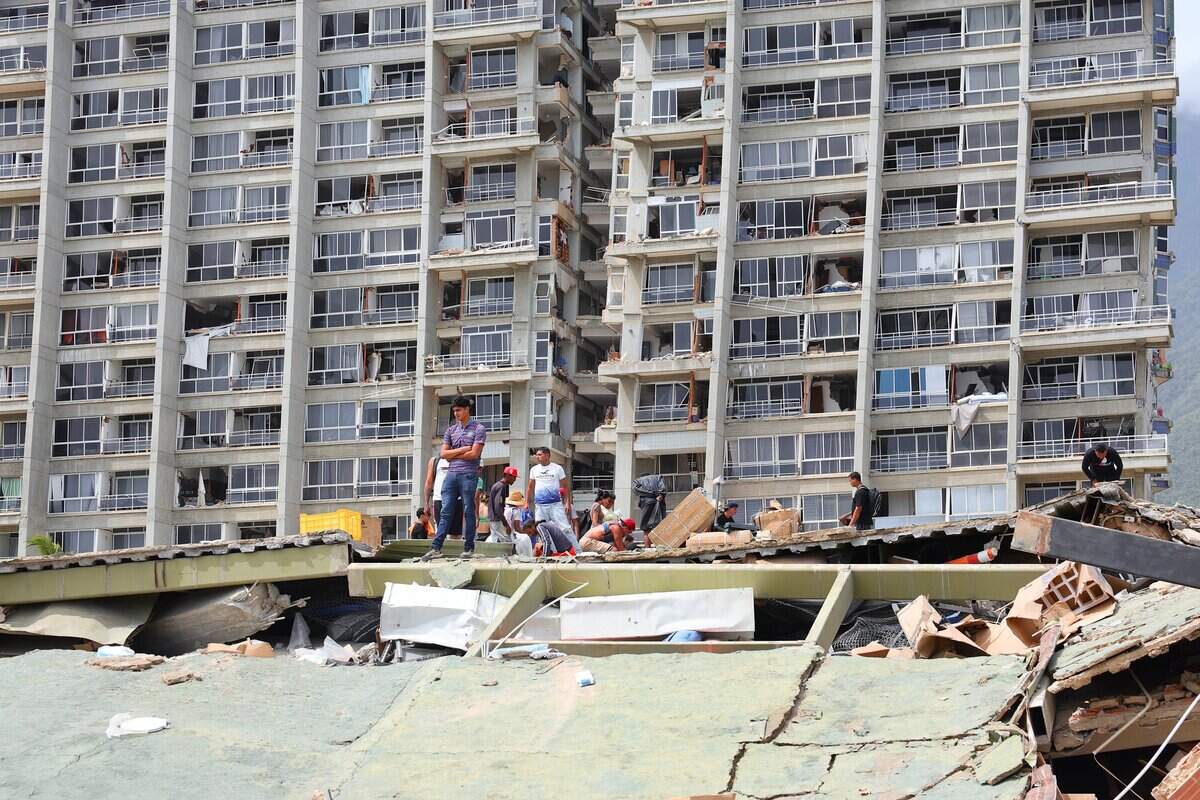
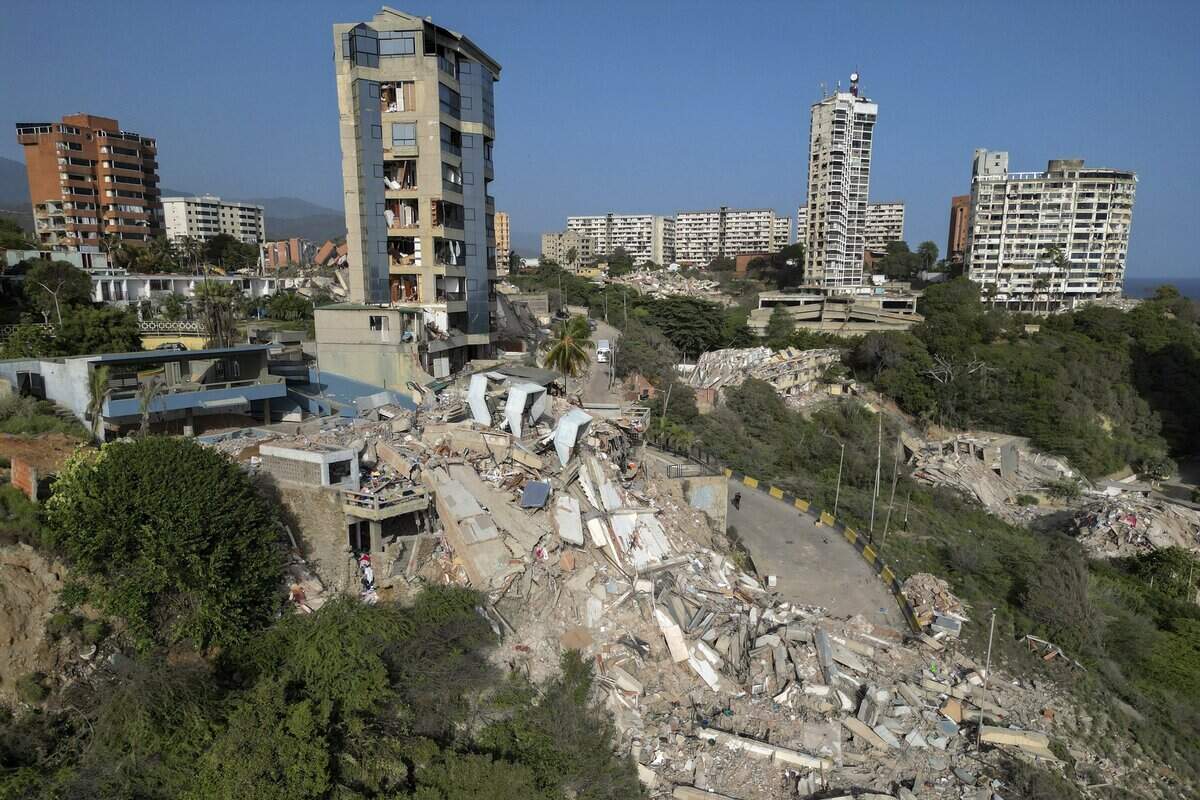
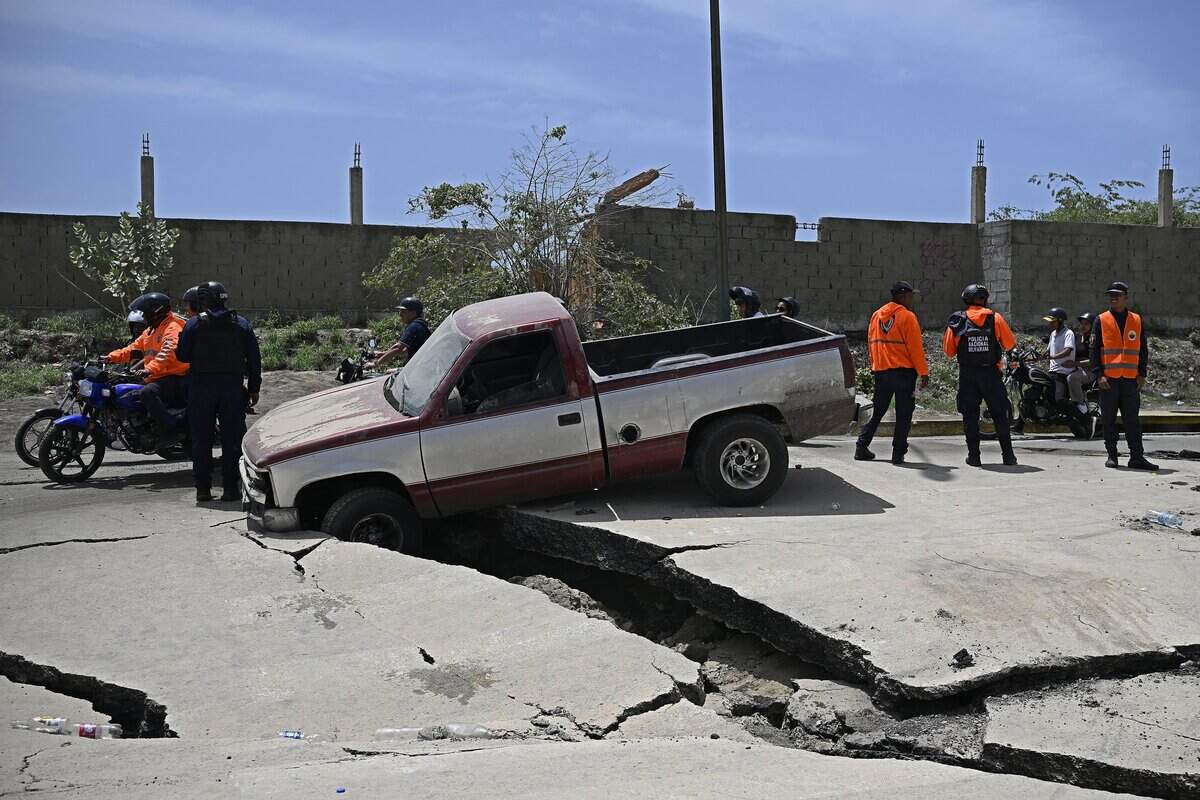
The latest figures mark another sharp increase in casualties, underscoring the catastrophic scale of the disaster triggered by the twin earthquakes of 7.2 and 7.5 magnitude, which struck Wednesday just 39 seconds apart, devastating large parts of Caracas, La Guaira and surrounding central states.
Rodríguez said the country has now recorded 430 aftershocks, a sign of the enormous tectonic energy released by the seismic events and a factor that continues to complicate rescue operations.
“These earthquakes and their aftershocks have shown devastating and lethal power,” Rodríguez said during a televised briefing Saturday.
The continued seismic activity has heightened fears among residents, many of whom remain unwilling to return to homes that might have suffered structural damage.
Across La Guaira, the coastal state hardest-hit by the disaster, and in parts of Caracas, thousands of residents are spending nights outdoors in plazas, parks, sports courts and improvised encampments, sleeping on mattresses, blankets and folding chairs.
The displacement has left many facing the trauma of survival and the loss of everything they owned.
“My building is uninhabitable, and now I have nothing,” Suhayl Sarquiz, 50, told Reuters. “It’s just me and my son, and I have no family in the country.”
Sarquiz also recently lost her job.
Rodríguez acknowledged that many remain too frightened to return home even after inspections declared some buildings safe.
He acknowledged that many remain too frightened to return home even after inspections declared some buildings safe.
“We’ve seen people naturally afraid to go back to their homes even when those homes have been declared habitable,” he said.
Authorities are expanding shelters to provide displaced residents with food, sanitation, showers and temporary rest areas even for those choosing not to sleep inside official shelters.
As the humanitarian crisis deepens, the international relief effort has continued to expand, with South Florida playing an increasingly central role in the U.S.-led response.
READ MORE: Miami becomes crucial part of U.S. effort to help quake-hit Venezuela
American officials have described Miami as a key command and logistics hub for aid flowing into Venezuela, with warehouses across South Florida consolidating food, medicine, medical supplies and emergency equipment bound for disaster zones.
The region’s large Venezuelan diaspora has also mobilized rapidly. Churches, community groups and nonprofit organizations across Miami-Dade and Broward counties have launched donation drives and volunteer efforts to collect urgently needed supplies for survivors.
The United States has already deployed nearly 250 specialized civilian rescuers, including members of Miami-Dade County and Miami urban search-and-rescue teams, alongside elite units from California and Virginia.
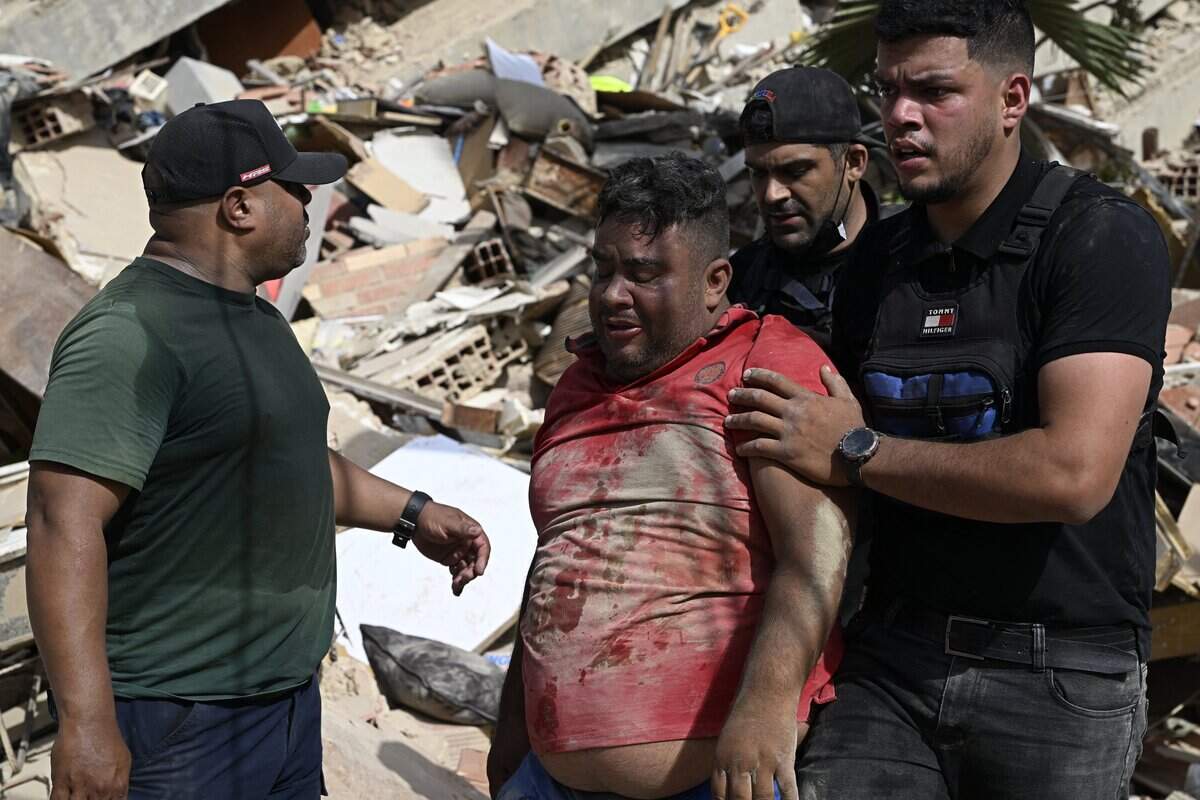
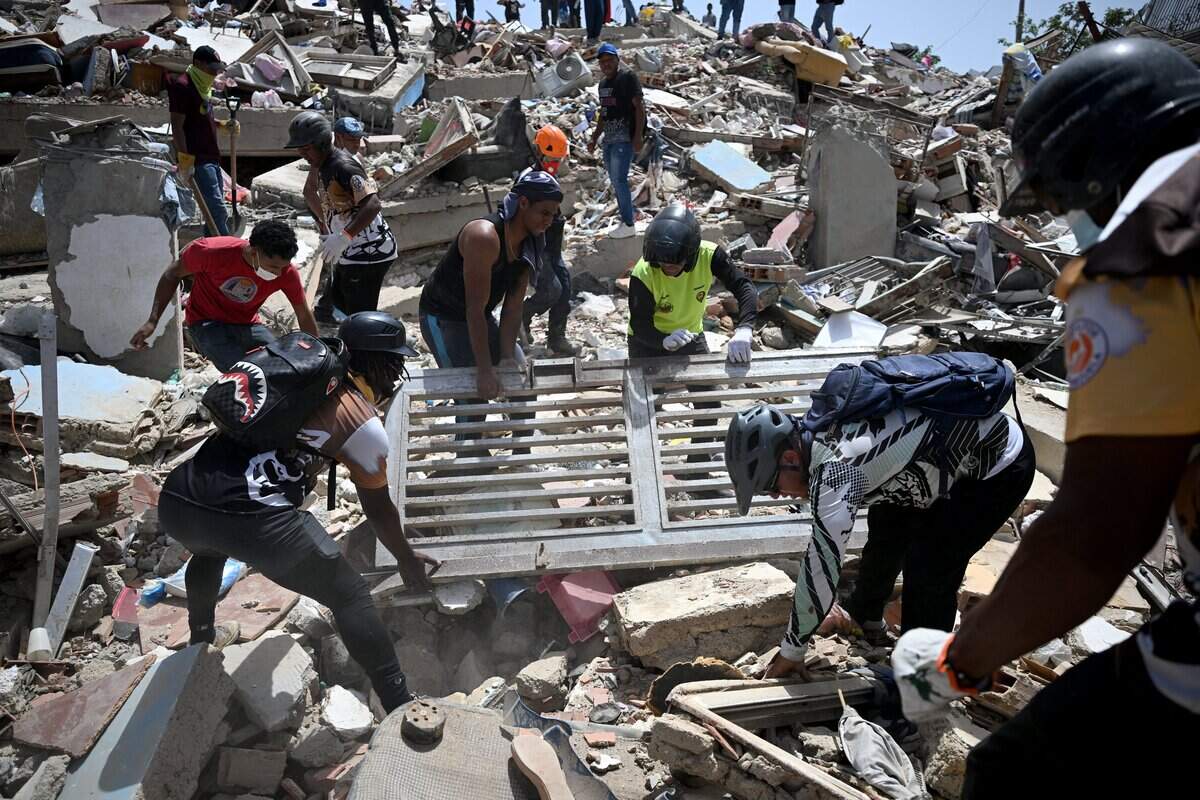
Those teams are working with Venezuelan and international crews in some of the hardest-hit areas, searching for survivors trapped under collapsed residential towers and apartment complexes.
The humanitarian response inside Venezuela has also grown dramatically.
More than 73,736 families have received direct assistance so far, Rodríguez said. Authorities have distributed 15.8 million pounds of food in disaster zones — particularly in La Guaira — along with 16,145 food bags and more than 220,434 hot meals.
The government has established major aid-collection centers at La Carlota in Caracas and Almacenadora Caracas in Catia, urging citizens to channel donations through official distribution networks to avoid logistical bottlenecks.
READ MORE: Want to help earthquake survivors in Venezuela? Here is where you can donate
Rodríguez cited an incident in which volunteers attempted to transport meat and poultry without refrigeration, warning that poorly coordinated aid could create additional health risks.
“If the cold chain is not maintained, instead of helping, that food could create a new problem by causing poisoning,” he said.
Medical systems remain under heavy pressure.
Hospitals have provided more than 5,000 direct emergency interventions while another 7,500 triage evaluations and more than 12,000 medical treatments have been carried out in disaster zones, Rodríguez said.
One of the biggest challenges remains air access into Venezuela.
The earthquakes severely damaged Simón Bolívar International Airport in Maiquetía, the principal gateway serving Caracas, complicating the arrival of international aid.
U.S. teams, including specialized airfield assessment crews, have been working to restore runway capacity so heavy cargo aircraft can continue landing with large shipments of humanitarian supplies.
The United States has also positioned the USS Fort Lauderdale off Venezuela’s coast to support logistics, helicopter operations and emergency deployment of personnel and supplies.
The international rescue operation continued expanding Saturday.
According to Rodríguez, 21 foreign delegations are now participating, contributing 2,242 rescue personnel, 96 search dogs, 40 cargo vehicles, 32 transport vehicles, 103.7 tons of rescue equipment, and 3 tons of medicine.
New arrivals include 16 doctors from Curaçao, rescue and medical teams from Argentina and Qatar, canine units from Puerto Rico and security personnel from Barbados.
These international teams are working alongside more than 30,000 Venezuelan military, police, rescue, medical and psychological support personnel, authorities said.
Despite the large-scale mobilization, officials warn the disaster remains far from under control.
The U.S. Geological Survey has warned the death toll could rise into the thousands, particularly if rescuers are unable to reach survivors buried in heavily damaged urban structures in time.
Beyond the official casualty figures, the true human toll might be far greater as thousands of Venezuelans are still desperately searching for missing relatives and friends.
Social-media platforms, messaging groups and online registries have been flooded with photos, names and pleas for information from families trying to locate loved ones who disappeared during the earthquakes or in the chaotic hours that followed. Many say they have been unable to contact relatives because of widespread power outages, telecommunications failures and the collapse of residential buildings.
Outside hospitals, shelters and damaged apartment towers, anguished families continue waiting for news, clutching photographs and repeatedly checking lists of survivors and the deceased. In many of the hardest-hit neighborhoods of Caracas and La Guaira, residents have gone building by building, asking rescue workers and survivors whether anyone has seen missing family members, neighbors or coworkers.
Meanwhile, time is rapidly running out for those who might still be alive beneath the rubble.
Search-and-rescue experts often describe the first 72 hours after a major earthquake as the most critical window for finding survivors trapped under collapsed structures. With each passing hour, survival odds diminish sharply due to dehydration, crush injuries, internal bleeding and lack of oxygen, though in rare cases survivors can endure for days.
That reality has intensified the urgency of rescue efforts as crews equipped with thermal sensors, listening devices, cameras and search dogs race against time to detect signs of life beneath layers of concrete, steel and shattered glass. Every faint sound, vibration or voice from beneath the debris can mean the difference between life and death.
The search remains most intense in La Guaira, especially in Catia La Mar, Caraballeda and Playa Grande, where entire residential blocks suffered catastrophic structural failures.
Authorities are also trying to manage the growing number of civilian volunteers seeking to join rescue operations.
Rodríguez urged untrained civilians not to self-deploy into disaster zones, warning that rescue work requires precision, coordination and controlled conditions.
“If you want to help, help us by staying home,” he said. “And if you have rescue or medical expertise, go to the Poliedro, register, and we will organize the volunteer teams properly.”
The Poliedro de Caracas, an iconic event center, has been turned into a volunteer-registration site. By early Saturday afternoon, 2,697 volunteers had registered and were being organized into convoys bound for La Guaira.
Authorities also moved to counter misinformation spreading on social media.
After false rumors of tsunami warnings, Rodríguez addressed new viral claims suggesting the Caracas-La Guaira viaduct had suffered major structural damage.
Inspections conducted every 12 hours confirmed the viaduct remains fully operational, he said.
“The viaduct is in perfect condition,” Rodríguez said. “Please do not pay attention to rumors or falsehoods.”
This report was supplemented with information from el Nuevo Herald wire services.
This story was originally published June 27, 2026 at 2:43 PM.